AI Model 'Foresight' Trained on 57 Million NHS Health Records to Predict Future Illnesses


4 Sources
[1]
Medical AI trained on whopping 57 million health records
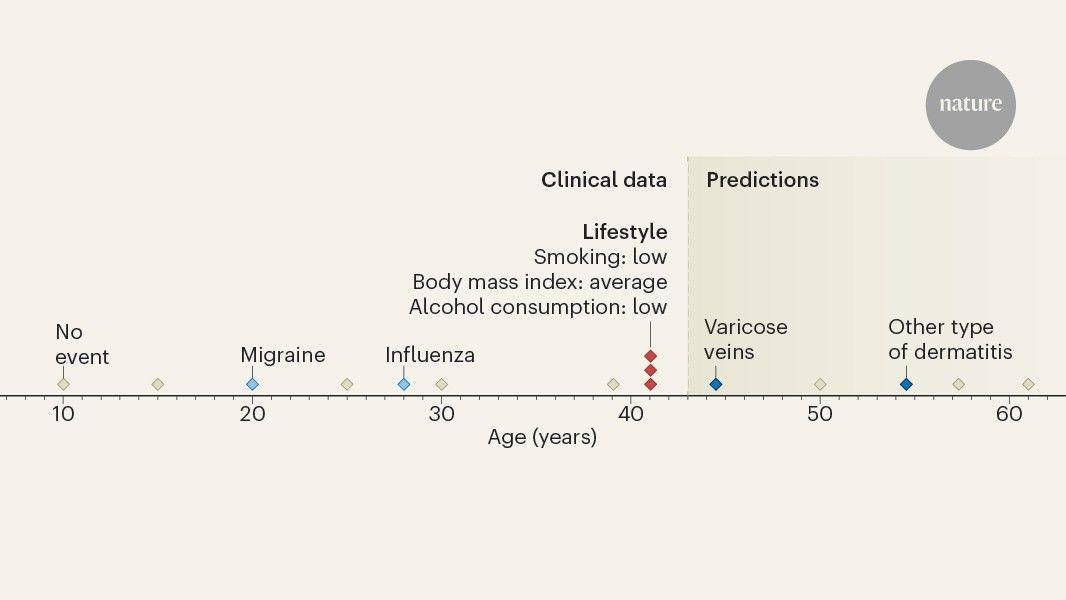
A generative artificial-intelligence (AI) model has been let loose on an entire nation's health records for the first time. The model, called Foresight, predicts hospitalizations, heart attacks and hundreds of other conditions, and researchers trained it on deidentified data from 57 million
[2]
Concerns raised over AI trained on 57 million NHS medical records
An artificial intelligence model trained on the medical data of 57 million people who have used the National Health Service in England could one day assist doctors in predicting disease or forecast hospitalisation rates, its creators have claimed. However, other researchers say there are still
[3]
AI trained on de-identified patient data to predict health care needs in pilot study
Foresight, a generative AI model, learns to predict what happens next based on previous medical events. It's similar to models like ChatGPT, which predicts the next word in a sentence based on what it's seen previously from data across the internet. Foresight is being trained on routinely
[4]
AI to predict future illnesses using NHS patient data
Artificial intelligence will be used to predict future illnesses by analysing all NHS patients' data in a world-first study. The pilot will see a generative AI model, called Foresight, trained to predict disease by using the anonymised health data of 57 million people in England. The model will
Share
Copy Link
Researchers have developed an AI model called Foresight, trained on 57 million NHS patient records, to predict future health outcomes. While promising for preventative healthcare, the project raises privacy concerns.

Groundbreaking AI Model Trained on Massive NHS Dataset
In a world-first study, researchers have developed an artificial intelligence (AI) model called Foresight, trained on the health records of 57 million patients from England's National Health Service (NHS). This generative AI model aims to predict future health outcomes, including hospitalizations, heart attacks, and various other medical conditions
1
.The Scale and Scope of Foresight
Foresight, developed by a team led by researchers from University College London (UCL) and King's College London, utilizes data from multiple NHS sources, including hospital and vaccination records, general practitioner visits, and the UK national death registry. The model has been trained on approximately 10 billion medical 'events' from 2018 to 2023
1
.Dr. Chris Tomlinson, the lead researcher from UCL, emphasized the importance of using national-scale data: "AI models are only as good as the data on which they're trained. Using national-scale data allows us to represent the kaleidoscopic diversity of England's population, particularly for minority groups and rare diseases, which are often excluded from research"
3
.Potential Applications and Benefits
The researchers believe Foresight could revolutionize preventative healthcare by:
- Predicting disease complications before they occur
- Identifying high-risk patient groups
- Addressing healthcare inequalities
- Supporting NHS resource allocation and planning
2
Privacy Concerns and Data Protection
While the potential benefits are significant, the project has raised concerns about data privacy and protection. The researchers claim that all records were "de-identified" before being used to train the AI. However, experts warn that the richness of the data makes it challenging to ensure complete anonymity
2
.Luc Rocher, a data-privacy researcher at the University of Oxford, stated, "Building powerful generative AI models that protect patient privacy is an open, unsolved scientific problem. These models should remain under strict NHS control where they can be safely used"
2
.Related Stories


Current Limitations and Future Plans
Presently, Foresight is limited to use in approximately 100 existing projects related to COVID-19. The model operates within a custom-built "secure" NHS data environment to ensure information isn't leaked and is accessible only to approved researchers
1
2
.In the future, researchers hope to train the model on deeper data sources and expand its scope beyond COVID-related research. However, they emphasize the importance of involving patients and the public in developing guidelines for the model's use and predictions
3
.Government Support and Future Implications
The UK government has expressed support for the project. Wes Streeting, the Health Secretary, stated, "I'm determined that we use this kind of groundbreaking technology to cut down on unnecessary hospital trips, speed up diagnosis times, and free up staff time"
4
.As Foresight continues to develop, it has the potential to transform healthcare delivery in the UK, moving towards a more personalized and preventative approach. However, balancing the benefits of AI-driven healthcare with robust data protection measures remains a critical challenge for researchers and policymakers alike.
References
Summarized by

Navi
[2]
[3]
[4]
Related Stories
Recent Highlights



Recent Highlights
Today's Top Stories






Don’t drown in AI news. We cut through the noise - filtering, ranking and summarizing the most important AI news, breakthroughs and research daily. Follow topics that matter to you and stay ahead.


