AI Models Show Promising Results in Breast Cancer Detection Challenge


2 Sources
[1]
RSNA AI Challenge models show excellent performance for detecting breast cancers on mammograms
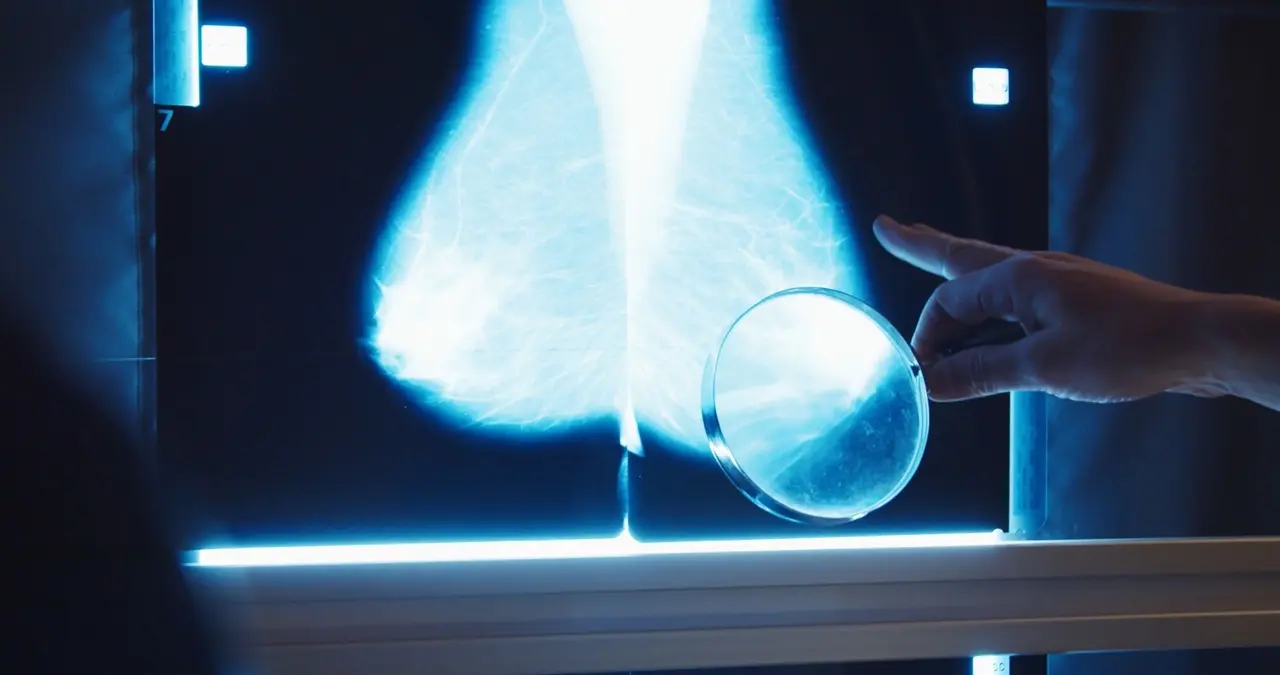
Radiological Society of North AmericaAug 12 2025 Algorithms submitted for an AI Challenge hosted by the Radiological Society of North America (RSNA) have shown excellent performance for detecting breast cancers on mammography images, increasing screening sensitivity while maintaining low recall
[2]
AI challenge models can independently interpret mammograms
Algorithms submitted for an AI Challenge hosted by the Radiological Society of North America (RSNA) have shown excellent performance for detecting breast cancers on mammography images, increasing screening sensitivity while maintaining low recall rates, according to a study published in
Share
Copy Link
AI algorithms from the RSNA Screening Mammography Breast Cancer Detection AI Challenge demonstrate excellent performance in detecting breast cancers on mammograms, potentially improving screening efficiency and patient care.
AI Challenge Yields Promising Results for Breast Cancer Detection
The Radiological Society of North America (RSNA) hosted a groundbreaking AI Challenge in 2023, focusing on breast cancer detection in mammography images. The results, recently published in the journal Radiology, reveal significant advancements in AI-powered breast cancer screening
1
.
Source: Medical Xpress
Challenge Overview and Participation
The RSNA Screening Mammography Breast Cancer Detection AI Challenge attracted over 1,500 teams globally. Participants were tasked with developing AI models to improve the automation of cancer detection in screening mammograms. The challenge provided a training dataset of approximately 11,000 breast screening images from Emory University and BreastScreen Victoria, with participants also allowed to use publicly available data
2
.Impressive Performance Metrics
Dr. Yan Chen, a professor in cancer screening at the University of Nottingham, led the analysis of the submitted algorithms. The research team evaluated 1,537 working algorithms using a separate test set of 10,830 single-breast exams. The results were remarkable:
- Median specificity: 98.7% for confirming absence of cancer
- Median sensitivity: 27.6% for positively identifying cancer
- Median recall rate: 1.7%
Notably, when combining the top 3 and top 10 performing algorithms, sensitivity increased to 60.7% and 67.8%, respectively
1
.Ensemble Approach and Radiologist Comparison

Source: News-Medical
The research team discovered that different AI algorithms were complementary, identifying various cancer features across images. By creating an ensemble of the 10 best-performing algorithms, they achieved performance comparable to that of an average screening radiologist in Europe or Australia
2
.Related Stories


Factors Affecting Algorithm Performance
The study revealed that individual algorithms showed significant performance differences based on various factors:
- Type of cancer (invasive vs. noninvasive)
- Imaging equipment manufacturer
- Clinical site where images were acquired
Overall, the algorithms demonstrated greater sensitivity in detecting invasive cancers compared to noninvasive ones
1
.Potential Impact and Future Directions
The challenge results hold promise for improving breast cancer outcomes worldwide. Many of the AI models developed are open-source, potentially contributing to the advancement of both experimental and commercial AI tools for mammography
2
.Dr. Chen's team plans to conduct follow-up studies, including:
- Benchmarking top Challenge algorithms against commercial products
- Investigating smaller, more challenging test sets with robust human reader benchmarks
- Comparing the utility of these approaches to large-scale datasets
The RSNA continues to host annual AI Challenges, with the current year focusing on models for detecting and localizing intracranial aneurysms
1
.References
Summarized by

Navi
[1]
[2]
Related Stories
Recent Highlights



Recent Highlights
Today's Top Stories



Don’t drown in AI news. We cut through the noise - filtering, ranking and summarizing the most important AI news, breakthroughs and research daily. Follow topics that matter to you and stay ahead.


