AI drives workplace productivity up, but employee workload quietly intensifies as breaks disappear


6 Sources
[1]
AI Might Make Your Job More Fun
I was sitting at my kitchen island a couple of weeks ago teasing out the implications of disruptive innovation theory for the artificial intelligence industry as my wife and two of our close friends were getting ready to watch the series finale of Andor. I knew I should close the laptop, but every
[2]
AI can double output. Human biology can't | Fortune
In recent weeks, Accenture made headlines for linking senior managers' promotion prospects to their use of internal AI tools. In a market defined by automation and efficiency, employees are expected to integrate AI into their daily workflows. Usage can now shape career trajectory. That policy
[3]
Companies Are Making a Major Mistake With AI Adoption -- and It's Driving Away Their Top Talent
When you give people time back, retention improves, quality increases, innovation accelerates and recruitment gets easier. There's a dangerous assumption spreading through corporate America: If AI saves your team 10 hours a week, you should fill those 10 hours with more work. Double the output.
[4]
AI push speeds up work, but quietly shrinks breaks
With AI's quick help, employees tempted to work through breaks between tasks. Top human resources executives and consultants said early signals of the shift are visible as generative AI tools move from experimentation to everyday work. After months of deeper engagement with artificial intelligence
[5]

The AI Story - From Taking Over Jobs to Making People Work Harder
Ever since the AI story caught our collective imagination, it also appears to have generated more chaos than clarity - thanks to the so called AI thought leaders shooting blanks If you aren't confused around the world of AI, you aren't trying hard enough! Old-time tech writers told me that
[6]

AI may actually push employees to work more, study warns
While AI improves efficiency, the saved time is often filled with additional tasks. AI has always been promoted as a tool that can reduce the daily work pressure of the users. Many technology leaders have also, from time to time, predicted that these smart AI tools will free workers from routine
Share
Copy Link
AI tools are accelerating work and boosting productivity by 20-30%, but new research reveals a troubling pattern: employees are working longer hours, taking fewer breaks, and facing intensified workloads. Companies using AI to raise output expectations risk burning out their best talent, with 42% of monitored workers planning to leave within a year.
AI Makes Work More Engaging, But at What Cost?
Researchers at the University of California, Berkeley's Haas School of Business spent eight months tracking what happens when workers gain access to AI tools, and the findings challenge conventional assumptions about workplace productivity
1
. Workers moved faster, tackled broader tasks, and extended their hours into evenings and early mornings—not because management demanded it, but because AI made the work "intrinsically rewarding." Developers describe AI-assisted coding in the language of addiction, with one programmer reporting productivity increases of fivefold while his ability to disconnect dropped proportionally1
. This phenomenon matters because it reveals how generative AI is fundamentally altering the relationship between workers and their jobs, creating conditions where the lines between engagement and exhaustion blur dangerously.
Source: Digit
The Workload Creep Problem Intensifies Across Industries
A SaaS developer recently realized that AI tools reducing his workload were simultaneously erasing his breaks and stretching his work hours
4
. The quick help from AI tempted him to work during short breaks—while waiting for files to load, between meetings, or before lunch—letting work continue instead of fully stepping away. This pattern, which researchers call "workload creep," occurs when productivity gains from automation translate not into reduced effort, but into higher targets, tighter timelines, and greater cognitive load5
. At healthcare technology firm Innovaccer, once AI tools embedded into workflows, the pace of work accelerated rapidly, forcing leadership to consciously reinforce prioritization and manager check-ins to ensure increased speed didn't quietly turn into increased expectations4
.
Source: ET
Companies Mistake Increased Output for Sustainable Performance
The danger emerges when higher measured output is mistaken for sustainable performance
2
. When organizations equate productivity gains with permanent increases in expectation, they effectively borrow against biological reserves. AI can double output, but human biology cannot. Research from ActivTrak examining more than 164,000 employees' digital activity found that after AI adoption, time spent on email, messaging, and chat apps more than doubled while business software usage spiked by 94%5
. The irony: this spike came at the expense of focused, uninterrupted work, which fell 9% for AI users. At Altimetrik, where AI is effectively integrated into engineering workflows for faster drafting, coding assistance, and documentation, the company sees approximately 20-30% productivity improvement4
. The biggest shift involves faster time-to-first-usable output and quicker iteration loops, rather than an immediate reduction in total workload.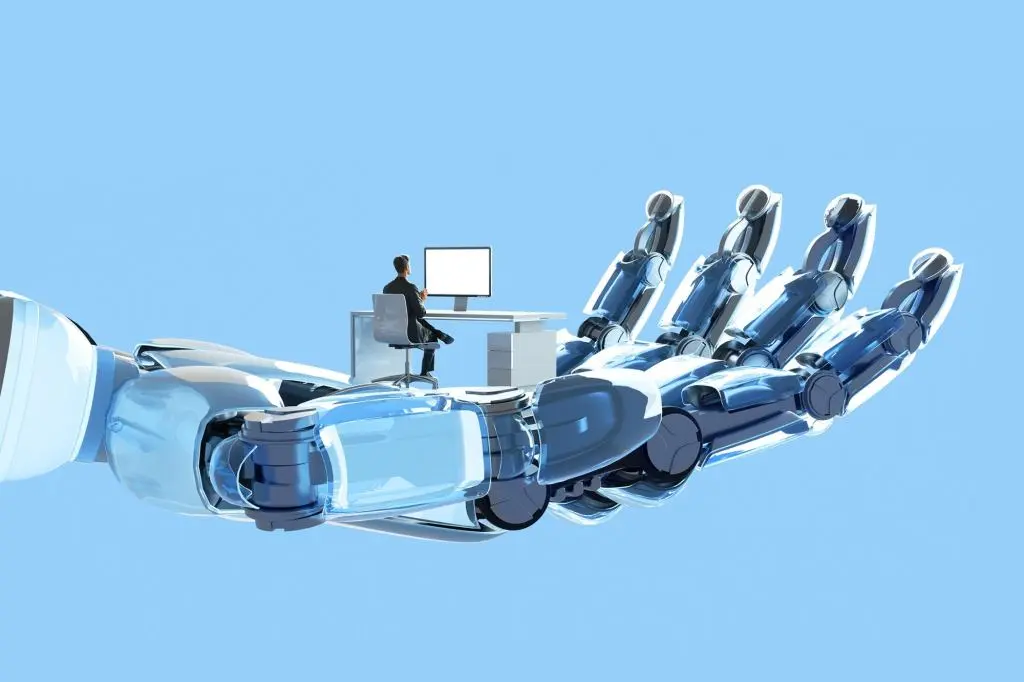
Source: Entrepreneur
The Surveillance Trap Destroys What AI Creates
While AI is creating conditions for engaged, motivated workers from the bottom up, too many managers are using it in service of surveillance
1
. The employee monitoring software market is booming, with AI-powered "bossware" now tracking keystrokes, capturing screenshots, scoring productivity with algorithms, and flagging unusual behavior. The data on this approach is grim: 42% of monitored employees plan to leave within a year, compared with 23% of their unmonitored peers1
. Large majorities of employees say surveillance doesn't improve their productivity and damages trust. This echoes Douglas McGregor's 1960 work "The Human Side of Enterprise," which contrasted Theory X management—people are inherently lazy and must be coerced—with Theory Y, which proposed that people want to contribute and don't need to be driven but unleashed1
.The Economic Cost of Mismanaging AI Adoption
Turnover carries measurable economic consequences
2
. Replacing skilled knowledge workers can cost a significant percentage of annual compensation once recruiting fees, onboarding time, lost productivity, and team disruption are included. Gallup estimates that employee burnout costs the global economy $322 billion annually in turnover and lost productivity3
. The Society for Human Resource Management found that 44% of employees cite burnout as a reason for leaving jobs. When companies use AI tools that genuinely save teams 10 hours per week—520 hours annually per employee—and immediately reallocate that time to more work, they haven't reduced workload but raised the baseline expectation3
. The best people who adopted AI fastest become victims of their own efficiency, updating their LinkedIn profiles within 18 months.Related Stories

Forward-Thinking Strategies for AI Integration
Leading organizations are establishing new approaches to AI adoption
3
. They automate "chore" work—data entry, meeting summaries, email formatting, and status updates that consume 30-40% of knowledge workers' time. One executive implemented AI note-taking tools across her team, saving about three hours per person weekly, with the mental load reduction proving more significant than the time saved. A financial services firm used AI to automate standard client reporting, saving analysts roughly 12 hours weekly, then asked them to spend that time on deep-dive research and relationship building3
. Client satisfaction scores increased 23% within six months while talent retention improved. The ActivTrak study found a sweet spot: employees spending between 7-10% of their total working hours on AI showed maximum productivity, though only 3% of all AI users came within this range5
.What Companies Should Watch For
Accenture recently made headlines by linking senior managers' promotion prospects to their use of internal AI tools
2
. CEO Julie Sweet stated that AI proficiency is mandatory for working at the company and moving up the ranks, following an $865 million business optimization program that included staff reskilling5
. This approach reflects a larger trend across corporate America where companies use AI not just to automate tasks but to raise expectations about how much work humans should produce. The Berkeley researchers found cognitive fatigue accumulating over the eight months they observed1
. The question facing organizations involves whether they'll use AI to extract more labor from their people or extract more humanity from their work. The companies that win won't be those counting tasks completed but those measuring what drives business value: strategic thinking, creative problem-solving, and human judgment that no algorithm can replicate3
.References
Summarized by

Navi
[1]
[3]
Related Stories
AI Productivity Gains Come With a Hidden Cost: Employee Burnout and Longer Workdays
10 Feb 2026•Business and Economy
Harvard study reveals AI brain fry: Workers face mental fatigue managing multiple AI tools
06 Mar 2026•Business and Economy

AI Implementation Increases Workload and Burnout Risk, Study Reveals
23 Jul 2024

Recent Highlights



Recent Highlights
Today's Top Stories



Don’t drown in AI news. We cut through the noise - filtering, ranking and summarizing the most important AI news, breakthroughs and research daily. Follow topics that matter to you and stay ahead.


