AI Productivity Gains Come With a Hidden Cost: Employee Burnout and Longer Workdays


12 Sources
[1]
The first signs of burnout are coming from the people who embrace AI the most
The most seductive narrative in American work culture right now isn't that AI will take your job. It's that AI will save you from it. That's the version the industry has spent the last three years selling to millions of nervous people who are eager to buy it. Yes, some white-collar jobs will
[2]
Using AI at Work May Actually Make Your Days Longer and More Unpleasant, Study Finds
Every company seems determined to integrate AI, but the gains might not have a long shelf life. After an "initial productivity surge," employees who used AI reported more intense workdays and less work-life balance, and they produced lower-quality work overall, according to an ongoing study first
[3]
Using AI actually increases burnout despite productivity improvements, study shows -- data illustrates how AI made workers take on tasks they would have otherwise avoided or outsourced
Often, the pressure to succeed comes from the employees themselves, which could be half the problem. The burning question at the heart of the AI revolution in the workplace is ultimately: Is it worth it? Does productivity improve? Do costs come down? Is it remotely as progressive and
[4]
Researchers Studied Work Habits in a Heavily AI-Pilled Workplace. They Sound Hellish
One could be forgiven for thinking that automation tools would make arduous tasks redundant, and make work more relaxing overall. But this elides an important law of the universe: the ratchet of productivity only turns one way. That is, it's a modern day truism that if automationâ€"AI or
[5]

'We have to learn to embrace the imperfect nature of human solutions...' -- what we lose when AI starts doing all our thinking at work
The hidden mental cost of letting AI do too much of our thinking The AI work dream we were sold went like this: use AI and work gets easier, days feel calmer, and your mind is finally free to focus on what matters. More interesting tasks, more creative thinking, more energy left for life outside
[6]

AI boosts productivity for workers but could hurt them long-term, study finds
The big picture: Companies may need to institute guardrails on what and for how long employees can use AI to boost their tasks to protect those productivity gains and avoid overwork, researchers wrote in Harvard Business Review. Driving the news: The researchers wrote this week that AI increased
[7]

AI Is a Burnout Machine
Some software engineers are finding that AI is speeding up their work, but at a cost: it's also accelerating them towards burnout. Siddhant Khare is one of those programmers. In an interview with Business Insider, he lamented that while AI has made him more productive, it's also led him to feel
[8]

In the workforce, AI is having the opposite effect it was supposed to, UC Berkeley researchers warn | Fortune
AI is making workers more productive, but it could also be burning them out, according to a new study by researchers at the University of California -- Berkeley. The revolution and the skyrocketing productivity AI promised is already taking hold in corporate America, including at an unnamed
[9]

AI Promised to Save Time -- Instead It's Created a New Kind of Burnout - Decrypt
The real shift isn't job loss -- it's work intensification and reorganization. A new study published in Harvard Business Review this week confirmed what many workers already suspected: AI tools don't reduce work, they intensify it. The study cited data from UC-Berkeley and Yale, collected during
[10]
Researchers Studied What Happens When Workplaces Seriously Embrace AI, and the Results May Make You Nervous
Even if AI is -- or eventually becomes -- an incredible automation tool, will it make workers' lives easier? That's the big question explored in an ongoing study by researchers from UC Berkeley's Haas School of Business. And so far, it's not looking good for the rank and file. In a piece for
[11]

AI Promised to Save Time. Researchers Just Said It's Doing the Opposite
An ongoing study, published in the Harvard Business Review, joins growing bodies of evidence that AI isn't reducing workloads at all. Instead, it appears to be intensifying them. Researchers spent eight months examining how generative AI reshaped work habits at a U.S.-based technology company with
[12]

AI adoption increased workload, didn't reduce it, says Harvard study
Without effective guardrails, AI turns work efficiency into employee burnout Automation will free us from drudgery, from repetitive work. Gone will be the tyranny of the overflowing inbox and the never-ending to-do list. Humans will be free to do other creative tasks, with more free time. Doesn't
Share
Copy Link
A Harvard Business Review study tracked 200 tech workers for eight months and found that AI tools led to work intensification rather than relief. Employees took on more tasks, worked longer hours, and experienced burnout despite productivity gains. The research reveals AI's promise to save workers from their jobs may be creating a different problem entirely.
AI Tools Promise Relief But Deliver Work Intensification
The narrative that AI will save workers from their jobs has dominated work culture for three years, but new research published in Harvard Business Review reveals a troubling reality. Researchers from the University of California, Berkeley embedded themselves in a 200-person technology company for eight months, conducting more than 40 in-depth interviews to understand what happens when employees genuinely embrace AI
1
. What they discovered wasn't a productivity revolution but a pattern of employee burnout driven by work intensification.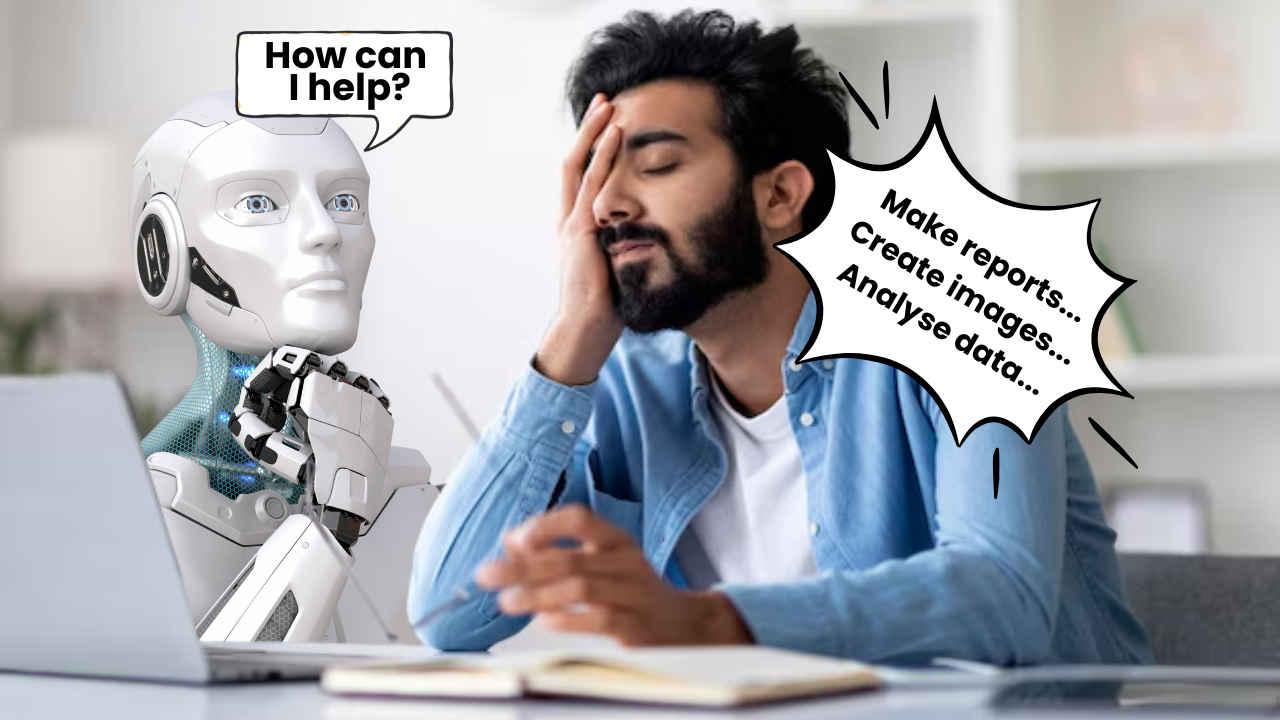
Source: Digit
The company studied offered enterprise-level subscriptions to generative AI products without mandating their use
2
. Employees voluntarily adopted AI tools and initially experienced productivity gains. They worked faster and took on more responsibilities. But the unintended consequences quickly emerged. As one engineer told researchers, "You had thought that maybe, oh, because you could be more productive with AI, then you save some time, you can work less. But then really, you don't work less. You just work the same amount or even more"1
.Workplace Productivity Expands to Fill Every Available Hour
Source: Decrypt
The study documented how AI enabled employees to expand their roles beyond traditional boundaries. Product managers and designers began writing code, researchers took on engineering tasks, and individuals across the organization attempted work they would have outsourced, deferred, or avoided entirely in the past
3
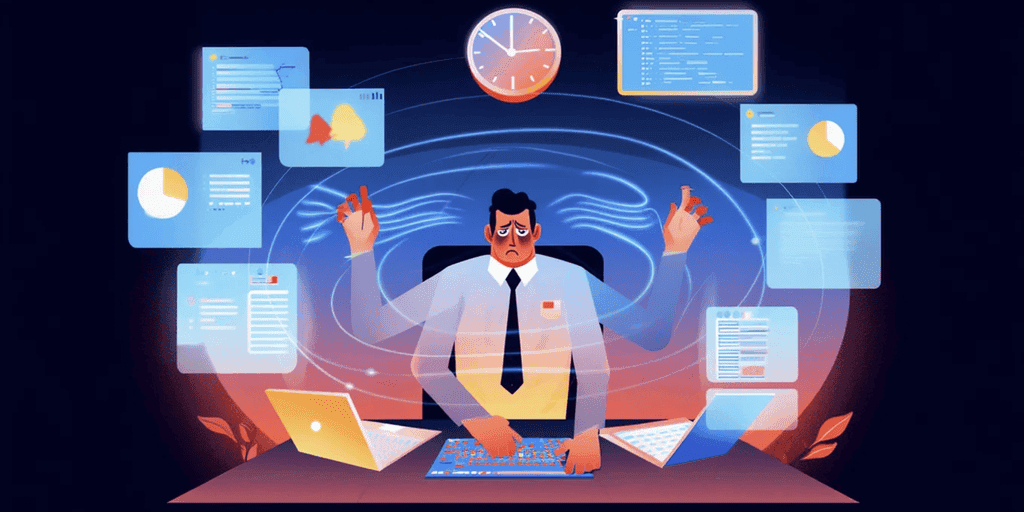
. This task expansion meant employees absorbed work that might previously have justified additional help or headcount .The always-available nature of AI tools blurred work-life boundaries. Workers threw out prompts while eating lunch, waiting for coffee, or during breaks
3
. They submitted queries during meetings and asked quick questions after logging off2
. This conversational style made it difficult to distinguish between work and socializing, resulting in longer workdays and reduced work-life balance.Lower Quality Work and Hidden Mental Cost Emerge

Source: Fortune
After an initial productivity surge, employees produced lower quality work overall
2
. Workers without programming experience used AI to "vibe-code" solutions, then informally requested engineers' help to finish partially completed pull requests3
. Tasks that would have been better handled by professionals instead required additional support to complete.The mental load increased significantly through multitasking. Workers juggled multiple tasks simultaneously as AI worked in the background, forcing them to jump between responsibilities and check AI outputs frequently
3
. Even when employees felt they had a digital partner, their cognitive loads didn't decrease, and expectations to deliver results quickly persisted because they were using AI2
.Ellen Scott, Digital Editor of Stylist and author of Working on Purpose, coined the term "smoothout" to describe this phenomenon—a type of burnout from over-reliance on AI that removes challenge and healthy stress from work
5
. "When we don't have sufficient challenges, or the opportunity for the mental-health-boosting experience of mastery, our sense of accomplishment drops," Scott explains5
.Stress Levels Triple Despite Modest Gains
On Hacker News, one commenter captured the experience: "Since my team has jumped into an AI everything working style, expectations have tripled, stress has tripled and actual productivity has only gone up by maybe 10%. It feels like leadership is putting immense pressure on everyone to prove their investment in AI is worth it"
1
. This matches findings from a 2025 enterprise report from OpenAI showing employees only saved an average of 40 to 60 minutes a week2
.The Berkeley researchers found that augmentation leads to "fatigue, burnout, and a growing sense that work is harder to step away from, especially as organizational expectations for speed and responsiveness rise"
1
. The study confirms AI can augment what employees do on their own, then shows where that augmentation actually leads.Related Stories

Critical Thinking Skills and Human Connection at Risk
Research increasingly links heavy AI use to weaker critical thinking and learning skills
5
. The concept of cognitive offloading—using tools to reduce mental effort—takes on new dimensions with AI that can think with us or instead of us across a wide range of tasks. A 2024 Pew survey found that 64 percent of workers reported being extremely or very satisfied with relationships with co-workers, the most satisfying aspect of jobs, while skills development ranked low at 37 percent .Solutions Require Cultural Shifts
Researchers Aruna Ranganathan and Xingqi Maggie Ye offer solutions centered on work culture and norms. These include protecting time for human connection, prioritizing quality results over speed, and ensuring employees have blocked focus time without AI interruption
2
. Being intentional with AI usage both in and outside of work prevents misuse and maintains quality standards.Scott emphasizes that AI should handle tasks that aren't beneficial for mental or physical wellbeing—the monotonous, administrative work—not the "meaty" parts that create challenge, engagement, and job satisfaction
5
. The industry bet that helping people do more would solve everything. It may turn out to be the beginning of a different problem entirely, one where the pressure to succeed comes from employees themselves rather than explicit mandates3
.References
Summarized by

Navi
Related Stories
Heavy AI Use in Workplace Linked to Burnout and Productivity Paradox, Study Finds
09 Jul 2025•Business and Economy

Harvard study reveals AI brain fry: Workers face mental fatigue managing multiple AI tools
06 Mar 2026•Business and Economy

AI drives workplace productivity up, but employee workload quietly intensifies as breaks disappear
10 Mar 2026•Business and Economy

Recent Highlights



Recent Highlights
Today's Top Stories



Don’t drown in AI news. We cut through the noise - filtering, ranking and summarizing the most important AI news, breakthroughs and research daily. Follow topics that matter to you and stay ahead.


