AI Personal Shoppers: The Next Evolution in E-commerce


3 Sources
[1]
AI personal shoppers hunt down bargain buys
Internet giants are diving deeper into e-commerce with digital aides that know shoppers' likes, let them virtually try clothes on, hunt for deals and even place orders. The rise of virtual personal shoppers springs from generative artificial intelligence (AI) being put to work in "agents"
[2]
AI personal shoppers hunt down bargain buys
New York (AFP) - Internet giants are diving deeper into e-commerce with digital aides that know shoppers' likes, let them virtually try clothes on, hunt for deals and even place orders. The rise of virtual personal shoppers springs from generative artificial intelligence (AI) being put to work in
[3]
AI personal shoppers hunt down bargain buys
The AI adjusts the clothing size to fit, accounting for how fabrics drape, according to Google head of advertising and commerce Vidhya Srinivasan.Shoppers can then set the price they would pay and leave the AI to relentlessly browse the internet for a deal -- alerting the shopper when it finds one,
Share
Copy Link
Internet giants are integrating AI-powered virtual personal shoppers into e-commerce platforms, revolutionizing online shopping experiences with advanced features like virtual try-ons, deal hunting, and autonomous purchasing.
The Rise of AI Personal Shoppers
Internet giants are revolutionizing e-commerce by introducing AI-powered digital assistants that act as personal shoppers. These virtual aides, powered by generative artificial intelligence, are designed to know shoppers' preferences, offer virtual try-on experiences, hunt for deals, and even place orders autonomously
1
2
3
.CFRA Research analyst Angelo Zino describes this development as "basically the next evolution of shopping experiences"
1
2
3
. This shift represents a significant leap in how consumers interact with online retail platforms, potentially reshaping the e-commerce landscape.Google's AI Mode: A New Frontier in Shopping
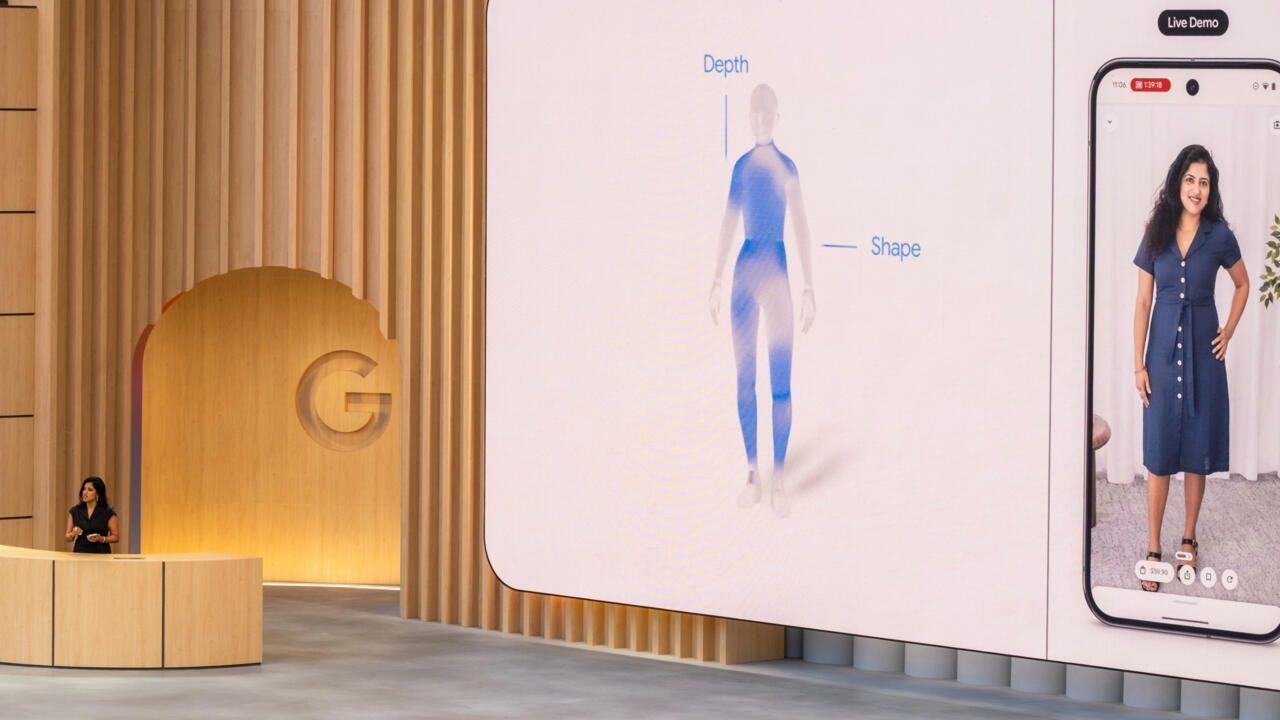
Google has recently unveiled shopping features built into a new "AI Mode" that showcases the potential of these AI assistants
1
2
3
. The technology can merge a user's photo with images of clothing items found online, creating a virtual try-on experience. According to Vidhya Srinivasan, Google's head of advertising and commerce, the AI can adjust clothing sizes to fit and account for fabric draping1
2
3
.
Source: France 24
Moreover, the AI can autonomously search the internet for deals based on a shopper's specified price point. When a suitable offer is found, it alerts the user and can even make purchases using Google's payment platform
1
2
3
.Competition and Market Dynamics
This move by Google is seen as a challenge to Amazon's dominance in the e-commerce sector. Techsponential analyst Avi Greengart notes, "They're taking on Amazon a little bit"
1
2
3
. The integration of AI shopping assistants is not just about improving user experience; it's also a strategy to increase online traffic and create more opportunities for advertising revenue1
2
3
.Other tech giants are also entering this space. OpenAI has added a shopping feature to ChatGPT, while Amazon has introduced a "Buy for Me" mode to its Rufus digital assistant
1
2
3
. Walmart is working on integrating an AI agent into its online shopping portal, and payment networks like Visa and Mastercard have updated their systems to accommodate transactions by digital agents1
2
3
.Related Stories

Implications for Retailers and Consumers
The rise of AI shoppers presents both opportunities and challenges for retailers. Elise Watson of Clarkston Consulting suggests that "retailers must consider how to optimize for this new layer of AI shoppers"
1
2
3
. However, understanding what makes a product attractive to AI agents may prove challenging for retailers.For consumers, these AI assistants offer convenience and potentially better deals. However, they also raise concerns about data privacy and the extent of control users have over their personal information. Google, for instance, plans to refine consumer profiles based on search history and promises that users will need to authorize access to additional information
1
2
3
.The Future of AI in E-commerce

Source: ET
While analyst Zino doesn't expect AI shoppers to cause an immediate upheaval in the e-commerce industry, he sees potential benefits for companies like Google and Meta, which have vast amounts of user data and are at the forefront of AI development
1
2
3
.The integration of AI into e-commerce also raises ethical and legal questions. As Chris Jones, managing director of PSE Consulting, puts it, "The agent economy is here. The next phase of e-commerce will depend on whether we can trust machines to buy on our behalf"
1
2
3
. This sentiment encapsulates the exciting yet uncertain future of AI-driven personal shopping assistants in the evolving landscape of e-commerce.References
Summarized by

Navi
[1]
[2]
Related Stories
AI Shopping Agents: Revolutionizing Online Retail with Promises and Pitfalls
11 Dec 2024•Technology

AI Agents Handle Shopping Autonomously, But Experts Warn of Privacy and Control Risks
23 Apr 2026•Technology

AI Shopping Assistants: The Future of Online Retail or Still a Work in Progress?
02 Dec 2024•Technology

Recent Highlights
1
Microsoft and Nvidia Launch Surface Laptop Ultra: A $2,599 AI-Ready PC With RTX Spark Chip
Technology

2
Trump Consulted Grok AI Before Ordering Venezuela Invasion and Capture of Nicolás Maduro
Policy and Regulation

3
Scientists Build AI Model That Reconstructs Images From Brain Scans in Record Time
Science and Research

Recent Highlights
Today's Top Stories






Don’t drown in AI news. We cut through the noise - filtering, ranking and summarizing the most important AI news, breakthroughs and research daily. Follow topics that matter to you and stay ahead.


