AI-Powered Discovery of Mechanophores Paves Way for Stronger, More Durable Plastics


2 Sources
[1]
AI helps chemists develop tougher plastics
A new strategy for strengthening polymer materials could lead to more durable plastics and cut down on plastic waste, according to researchers at MIT and Duke University. Using machine learning, the researchers identified crosslinker molecules that can be added to polymer materials, allowing them
[2]
AI-guided search uncovers new molecules for stronger, longer-lasting plastics
A new strategy for strengthening polymer materials could lead to more durable plastics and cut down on plastic waste, according to researchers at MIT and Duke University. Using machine learning, the researchers identified crosslinker molecules that can be added to polymer materials, allowing them
Share
Copy Link
Researchers at MIT and Duke University use machine learning to identify new crosslinker molecules that could lead to tougher plastics, potentially reducing plastic waste.
AI-Driven Discovery of Mechanophores
Researchers from MIT and Duke University have made a significant breakthrough in polymer science by leveraging artificial intelligence to identify new molecules that could lead to stronger and more durable plastics. This innovative approach, detailed in a study published in ACS Central Science, has the potential to revolutionize plastic manufacturing and contribute to reducing plastic waste
1
2
.The Power of Mechanophores
The study focuses on a class of molecules known as mechanophores, which change their properties in response to mechanical force. By incorporating these molecules as crosslinkers in polymer materials, scientists aim to create plastics that can withstand greater force before tearing
1
.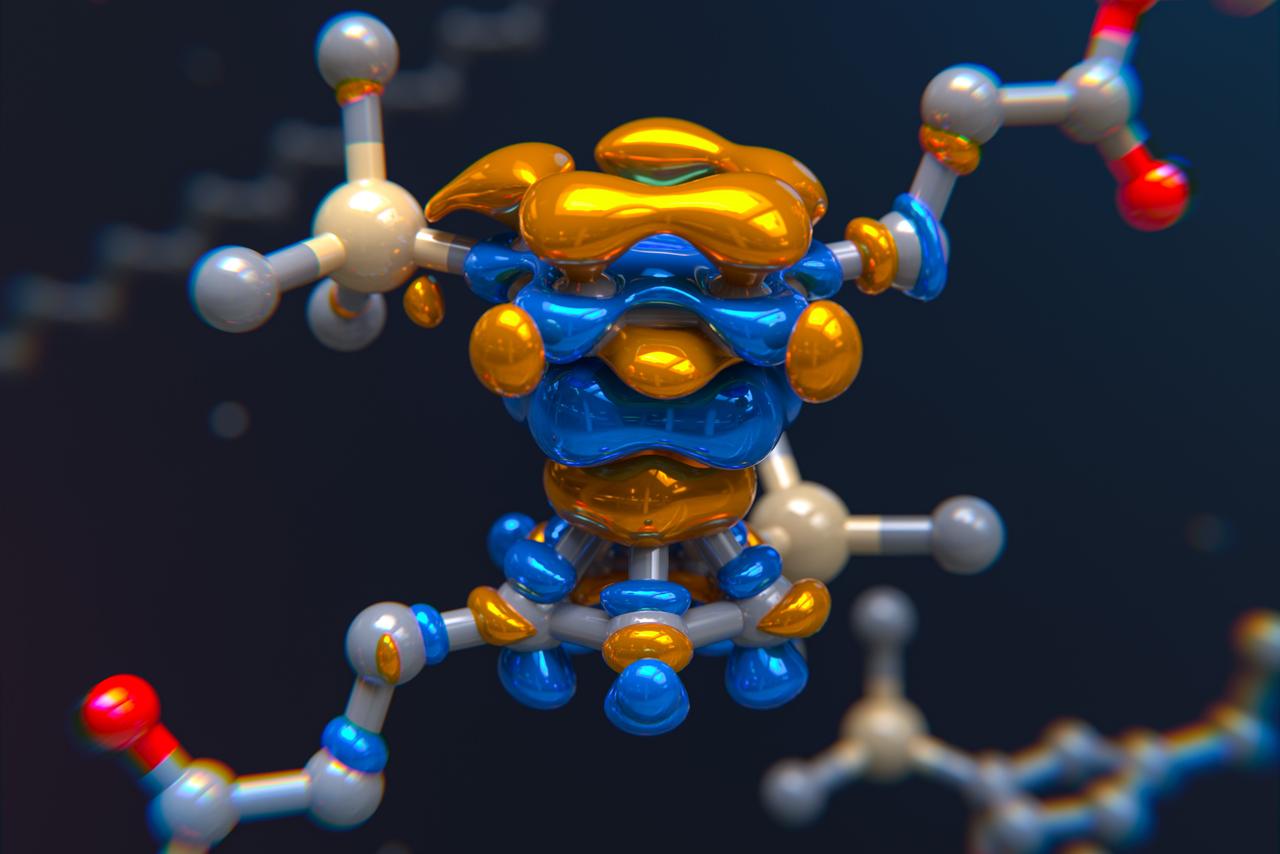
Source: MIT
Heather Kulik, the Lammot du Pont Professor of Chemical Engineering at MIT and senior author of the study, explains, "These molecules can be useful for making polymers that would be stronger in response to force. You apply some stress to them, and rather than cracking or breaking, you instead see something that has higher resilience"
1
.AI Accelerates Research
The research team employed machine learning to dramatically speed up the process of identifying promising mechanophores. Traditionally, evaluating a single mechanophore could take weeks through experiments or days through computational simulations. However, the AI-driven approach allowed researchers to rapidly assess thousands of candidates
2
.Ilia Kevlishvili, MIT postdoc and lead author of the paper, notes, "We knew that we didn't have to worry about the question of synthesizability, at least from the perspective of the mechanophore itself. This allowed us to pick a really large space to explore with a lot of chemical diversity, that also would be synthetically realizable"
1
.Focus on Ferrocenes
The researchers concentrated on a group of iron-containing compounds called ferrocenes, which had not been extensively explored for their potential as mechanophores. Using data from the Cambridge Structural Database, which contains information on 5,000 different ferrocenes, the team trained a neural network to predict the force needed to activate these molecules
2
.Key Findings
The AI-guided search uncovered two main features that likely increase tear resistance in polymers:
- Interactions between chemical groups attached to the ferrocene rings
- The presence of large, bulky molecules attached to both rings of the ferrocene
1
2
These characteristics make the molecules more likely to break apart in response to applied forces, potentially leading to stronger overall materials.
Related Stories

Building on Previous Research
This study builds upon a 2023 discovery by some of the same researchers, which found that incorporating weak crosslinkers into a polymer network can paradoxically make the overall material stronger. Stephen Craig, a professor of chemistry at Duke and co-author of the current study, explains the challenge they faced: "We had this new mechanistic insight and opportunity, but it came with a big challenge: Of all possible compositions of matter, how do we zero in on the ones with the greatest potential?"
1
Implications and Future Prospects
The implications of this research extend beyond academic interest. By developing tougher plastics, there is potential to create more durable consumer products, reduce plastic waste, and improve the sustainability of plastic-based materials
1
2
.As the field of AI-assisted materials science continues to evolve, we can expect further breakthroughs in the development of advanced materials. This study demonstrates the power of combining traditional scientific knowledge with cutting-edge machine learning techniques to accelerate discovery and innovation in chemistry and materials science.
References
Summarized by

Navi
Related Stories
AI in Chemistry breakthrough: Two systems accelerate molecule design and drug discovery by 10x
29 Jan 2026•Science and Research
AI-Driven 'Polybot' Revolutionizes Electronic Polymer Discovery at Argonne National Laboratory
19 Feb 2025•Science and Research

AI Breakthrough: Designing Life-Like Enzymes from Scratch
14 Feb 2025•Science and Research

Recent Highlights
1
Microsoft and Nvidia Launch Surface Laptop Ultra: A $2,599 AI-Ready PC With RTX Spark Chip
Technology

2
Trump Consulted Grok AI Before Ordering Venezuela Invasion and Capture of Nicolás Maduro
Policy and Regulation

3
Scientists Build AI Model That Reconstructs Images From Brain Scans in Record Time
Science and Research

Recent Highlights
Today's Top Stories







Don’t drown in AI news. We cut through the noise - filtering, ranking and summarizing the most important AI news, breakthroughs and research daily. Follow topics that matter to you and stay ahead.


