AI-Powered Hybrid Reading Strategy Reduces Radiologist Workload in Mammography Screening


2 Sources
[1]
Hybrid reading strategy for screening mammography reduces radiologist workload
Radiological Society of North AmericaAug 19 2025 A hybrid reading strategy for screening mammography, developed by Dutch researchers and deployed retrospectively to more than 40,000 exams, reduced radiologist workload by 38% without changing recall or cancer detection rates. The study, which
[2]
AI hybrid strategy improves mammogram interpretation
A hybrid reading strategy for screening mammography, developed by Dutch researchers and deployed retrospectively to more than 40,000 exams, reduced radiologist workload by 38% without changing recall or cancer detection rates. The study, which emphasizes AI confidence, was published in
Share
Copy Link
Dutch researchers develop a hybrid AI-radiologist strategy for mammogram interpretation, reducing radiologist workload by 38% without compromising cancer detection rates.
Innovative AI-Radiologist Hybrid Strategy for Mammogram Interpretation
Dutch researchers have developed a groundbreaking hybrid reading strategy for screening mammography that combines artificial intelligence (AI) and human expertise. This novel approach, recently published in the journal Radiology, has shown promising results in reducing radiologist workload without compromising the quality of breast cancer detection
1
.Study Design and Methodology
The research team, led by Sarah D. Verboom from Radboud University Medical Center, utilized a dataset of 41,469 screening mammography exams from 15,522 women. These exams, conducted between 2003 and 2018 as part of the Dutch National Breast Cancer Screening Program, included 332 screen-detected cancers and 34 interval cancers
2
.The dataset was split into two equal groups:
- Used to determine optimal thresholds for the hybrid reading strategy
- Used to evaluate the reading strategies
The Hybrid Reading Strategy
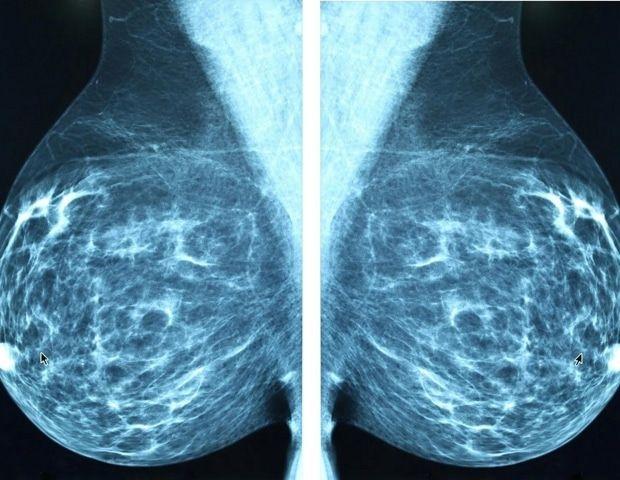
Source: News-Medical
The innovative approach involves AI evaluating every screening mammogram to produce two key outputs:
- Probability of Malignancy (PoM)
- Uncertainty estimate of the prediction
Based on these outputs, the strategy determines the next steps:
- If AI determines a low PoM with certainty: The case is considered normal
- If AI detects a high PoM with confidence: The patient is recalled for further testing
- If AI's prediction is uncertain: The exam is double-read by radiologists
Significant Findings
The implementation of this hybrid strategy yielded remarkable results:
- 38% of cases were classified as certain by AI and could be read solely by the algorithm
- Radiologist reading workload was reduced to 61.9%
- Cancer detection rates (6.6‰ vs 6.7‰) and recall rates (23.6‰ vs 23.9‰) remained comparable to standard double-reading by radiologists
- When AI was certain, its performance improved significantly (AUC 0.96 vs 0.87)
- AI sensitivity (85.4%) nearly matched that of double radiologist reading (88.9%)
Related Stories



Implications for Breast Cancer Screening

Source: Medical Xpress
Verboom emphasized the importance of uncertainty quantification in AI models, stating, "The key component of our study isn't necessarily that this is the best way to split the workload, but that it's helpful to have uncertainty quantification built into AI models"
1
.The researchers noted that if these results were applied in clinical practice, AI would make the decision to recall 19% of women without radiologist intervention. However, they acknowledged that most women prefer to have at least one radiologist read their mammogram
2
.Future Directions
While the results are promising, Verboom emphasized the need for further research, particularly a prospective trial, to determine how this workload reduction could decrease radiologist reading time. She envisions a future where some women might be sent home without radiologist review of their mammograms, based solely on AI determination of normalcy
1
.This study, part of the aiREAD project financed by the Dutch Research Council, Dutch Cancer Society, and Health Holland, represents a significant step towards integrating AI into breast cancer screening programs, potentially addressing workforce shortages and building trust in AI implementation in healthcare.
References
Summarized by

Navi
[2]
Related Stories
Recent Highlights



Recent Highlights
Today's Top Stories



Don’t drown in AI news. We cut through the noise - filtering, ranking and summarizing the most important AI news, breakthroughs and research daily. Follow topics that matter to you and stay ahead.


