AI-Powered Robot Performs Autonomous Gallbladder Surgery, Marking Milestone in Surgical Robotics


6 Sources
[1]
Surgical robots take step towards fully autonomous operations
An AI system trained on videos of operations successfully guided a robot to carry out gall bladder surgery on a dead pig, with minimal human assistance An AI-powered robot was able to remove a gall bladder from a dead pig in what researchers claim is the first realistic surgery by a machine with
[2]
Experimental surgical robot performs gallbladder procedure autonomously
July 9 (Reuters) - An experimental AI-guided robot can autonomously perform a delicate, complicated phase of a common gallbladder operation, marking a major step toward automated medical procedures, researchers said on Wednesday. Existing surgical robots are remotely controlled by surgeons. The
[3]
Robot surgery on humans could be trialled within decade after success on pig organs
AI-trained robot carries out procedures on dead pig organs to remove gall bladders without any human help Automated surgery could be trialled on humans within a decade, say researchers, after an AI-trained robot armed with tools to cut, clip and grab soft tissue successfully removed gall bladders
[4]
AI Controlled Robot Performs Gallbladder Removal With "100 Percent Accuracy"
An AI-controlled robot has autonomously completed a gallbladder removal with "100 percent accuracy." The procedure, conducted by a team of Johns Hopkins University researchers, demonstrated the power of AI, which allowed the robot to make independent decisions and adapt to unexpected complications
[5]

Autonomous gallbladder removal: Robot performs first realistic surgery without human help
A robot trained on videos of surgeries performed a lengthy phase of a gallbladder removal without human help. The robot operated for the first time on a lifelike patient, and during the operation, responded to and learned from voice commands from the team -- like a novice surgeon working with a
[6]

AI- trained robot completes groundbreaking gall bladder operation...
An AI-powered robot has completed a groundbreaking surgical procedure, potentially changing the future of medicine forever. The bot successfully separated the gall bladder from the liver of a dead pig, with experts now exclaiming that automated surgery could be trialled on humans within a
Share
Copy Link
Researchers at Johns Hopkins University have developed an AI-guided robot capable of performing gallbladder removal surgery autonomously, achieving 100% success rate in trials on pig organs. This breakthrough represents a significant step towards fully autonomous surgical procedures.
AI-Powered Surgical Robot Achieves Autonomous Gallbladder Removal
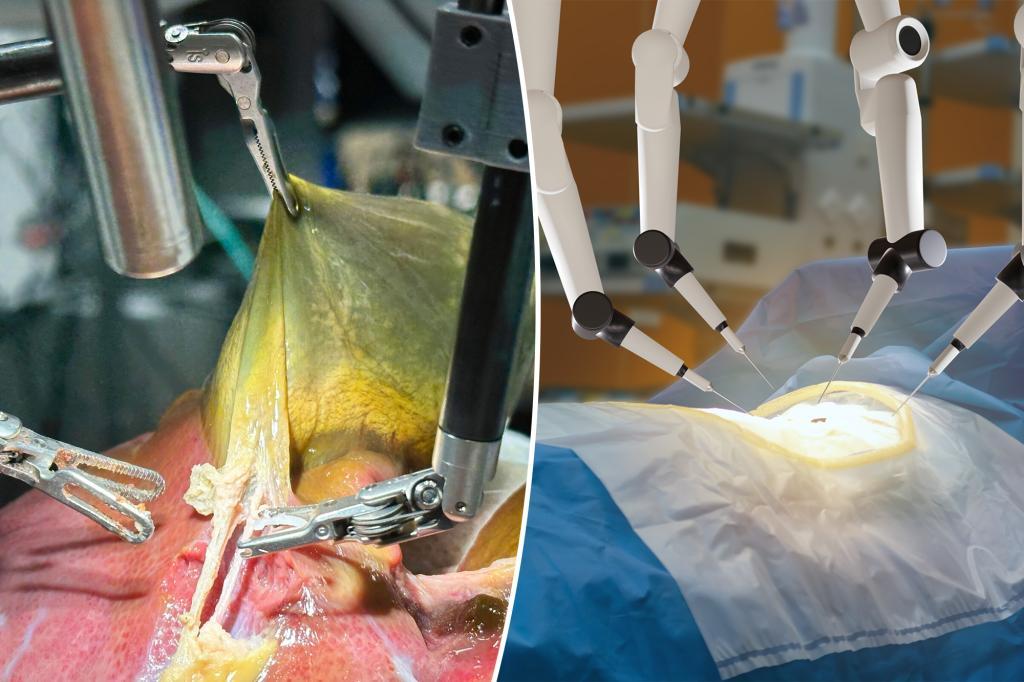
In a groundbreaking development, researchers at Johns Hopkins University have successfully created an AI-guided robot capable of performing gallbladder removal surgery autonomously. The robot, named SRT-H (Surgical Robot Transformer-Hierarchy), achieved a 100% success rate in trials conducted on pig organs, marking a significant milestone in the field of surgical robotics
1
2
3
.
Source: New York Post
Advanced AI Training and Capabilities
The SRT-H robot was trained using a sophisticated AI framework known as language-guided imitation learning. This training involved analyzing 17 hours of video footage, encompassing 16,000 motions made by human surgeons during operations
1
. The robot's AI system operates on two levels:- The first layer observes the surgery through an endoscope and issues plain-language instructions.
- The second layer translates these instructions into precise three-dimensional tool movements
1
.
This advanced AI allows the robot to make independent decisions and adapt to unexpected complications during surgeries, similar to how an autonomous vehicle navigates various road conditions
2
.Successful Trials and Performance
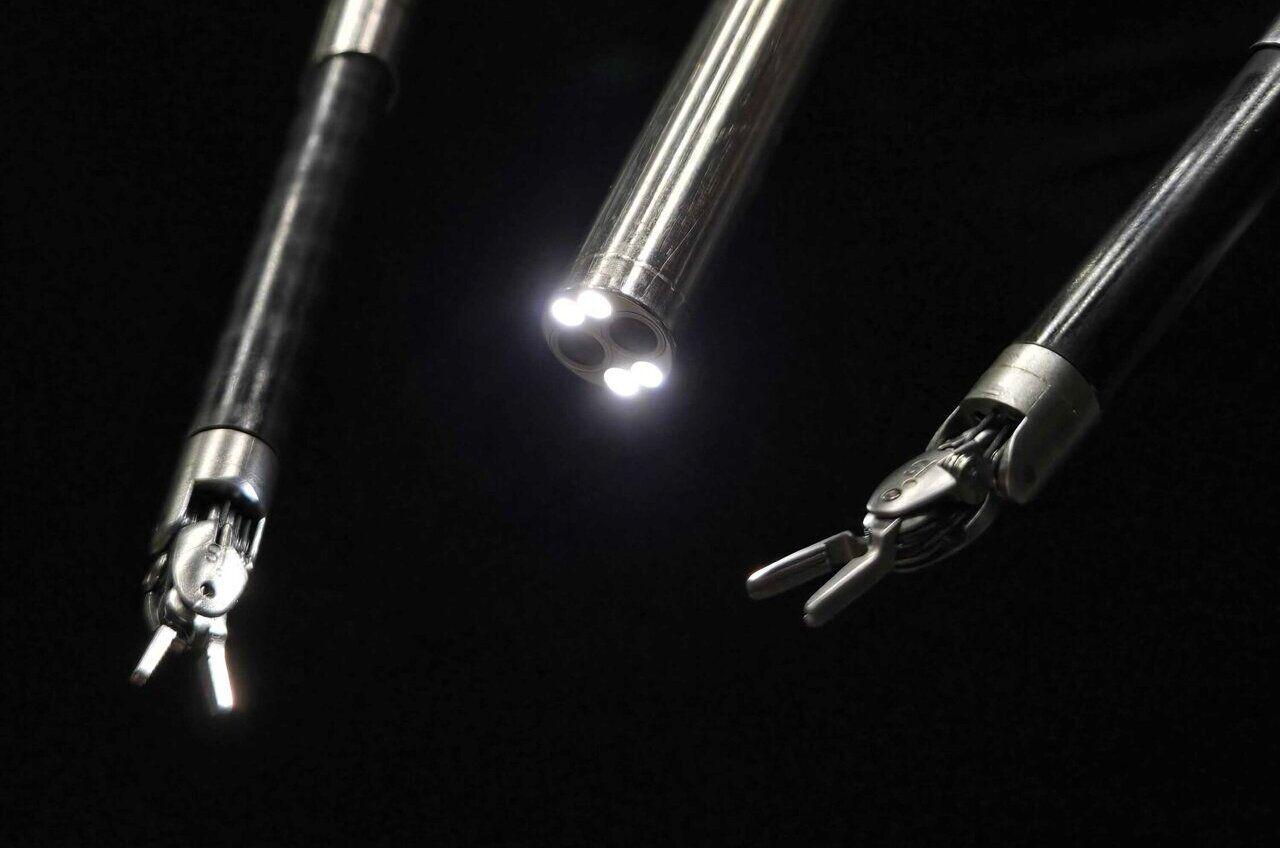
The robot successfully performed the gallbladder removal procedure, which involves 17 separate tasks, eight times with 100% accuracy
1
2
. These tasks included complex actions such as grabbing, clipping, and cutting - skills common in real surgical procedures2
. The robot demonstrated its ability to self-correct, averaging six corrections per operation without human intervention1
3
.While the robot's performance was highly accurate, it did take longer to complete the procedure compared to human surgeons. However, researchers noted that the robot's movements were less jerky and followed shorter trajectories between tasks
3
.
Source: Tech Xplore
Implications for Future of Surgery
This advancement represents a significant step towards clinically viable autonomous surgical systems. Dr. Axel Krieger, the lead researcher, emphasized that this development moves surgical robotics from executing specific tasks to truly understanding surgical procedures
2
4
.The potential applications of such technology are vast:
- Addressing surgeon shortages in underserved regions
- Minimizing human error in surgical procedures
- Providing consistent, high-quality care across different healthcare settings
2
Related Stories
Challenges and Future Directions
Despite the impressive results, several challenges remain before this technology can be implemented in clinical settings:
- Testing on live subjects to account for factors like breathing, bleeding, and unexpected movements
3
- Regulatory approvals and safety considerations
1
- Further reducing the time taken for procedures
4
The research team is now focusing on training the robot for different types of surgeries and working towards achieving the first fully autonomous surgery that requires no human intervention
4
5
.Industry Impact and Market Potential

Source: New Scientist
The global surgical robotics market is rapidly expanding, approaching $10 billion annually with about 2.7 million robotic procedures performed in 2024
2
. This new technology could potentially revolutionize the field, building upon existing systems like Intuitive Surgical's da Vinci Surgical System, which has been used in over 12 million procedures globally since 20002
.As the technology progresses, it opens up the possibility of replicating the skills of the world's best surgeons on a massive scale, potentially transforming surgical care worldwide
3
. While human trials are still years away, researchers estimate that autonomous surgery could be tested on humans within the next decade3
5
.References
Summarized by

Navi
[1]
Related Stories
AI-Powered Surgical Robot Learns to Perform Complex Procedures by Watching Videos
12 Nov 2024•Science and Research

Surgical Robots Learn from Videos: A Leap Forward in Medical AI
31 Dec 2024•Science and Research

First AI-Assisted Brain Tumor Operation Saves Patient's Sight at London Hospital
27 Aug 2026•Health

Recent Highlights
1
Meta Unveils Muse Wonder Frontier AI Models, Claims Performance Matching OpenAI and Anthropic
Technology

2
IMF Report Warns AI Market Correction Could Spark Global Financial Crisis With $1.4T at Risk
Business and Economy

3
OpenAI Releases 722 AI-Generated Math Solutions, Triggering Existential Crisis in Mathematics
Technology

Recent Highlights
Today's Top Stories











Don’t drown in AI news. We cut through the noise - filtering, ranking and summarizing the most important AI news, breakthroughs and research daily. Follow topics that matter to you and stay ahead.


