First AI-Assisted Brain Tumor Operation Saves Patient's Sight at London Hospital


10 Sources
[1]
For the first time, AI guides surgeons through a brain tumor operation
Serving tech enthusiasts for over 25 years. TechSpot means tech analysis and advice you can trust. What just happened? Surgeons at a London hospital used artificial intelligence to help remove a brain tumor from a 48-year-old man facing the risk of losing his sight. The system analyzed live video
[2]
First patient to have brain surgery with real-time AI assistance
The world's first patient to have brain surgery with live artificial intelligence assistance has successfully had his tumour removed. Rhys Hibbert, a father-of-two from Bedfordshire, could have lost his sight without the operation, said surgeons at University College London Hospital. The AI tool
[3]
London surgeons remove brain tumour in first AI-assisted operation of its kind
The system analysed live camera footage at the National Hospital for Neurology and Neurosurgery, helping the team identify nerves and blood vessels near an 11mm pituitary tumour. Surgeons at the National Hospital for Neurology and Neurosurgery in London have removed a brain tumour in what
[4]
World's first vision-guided brain tumor surgery saves man's eyesight
A real-time machine intelligence system has supported a neurosurgeon during a live brain operation for the first time, helping doctors remove a pituitary tumor while protecting the patient's eyesight. The procedure took place at the National Hospital for Neurology and Neurosurgery in London as
[5]

London neurosurgeons perform first successful AI-assisted operation to remove brain tumour
Surgeons aided by real-time analysis of camera footage that identified critical anatomy in brain to be avoided Neurosurgeons in London have performed the world's first successful AI-assisted operation to remove a brain tumour, saving the sight of a 48-year-old man, health officials have said. The
[6]

Doctors Just Used AI to Perform Brain Surgery
Can't-miss innovations from the bleeding edge of science and tech A team of neurosurgeons in London have used AI to help them operate on a man's brain. The AI tool analyzed live footage of the operation and flagged key brain structures like nerves and blood vessels as surgeons removed a large
[7]

World-first: AI guides live UK brain surgery to save patient's sight
A British man has become the first patient in the world to undergo brain surgery guided live by artificial intelligence, in an operation that saved his sight. A man in England has become the first patient to undergo live AI-assisted brain surgery, which protected his sight during the removal of a
[8]

A Tumor Threatened His Sight. Surgeons Used a New Tool to Remove It in a World-First Brain Surgery
Neurosurgeons in England have just carried out the world's first brain tumor removal guided by artificial intelligence. A patient had a non-cancerous tumor removed from his pituitary gland at the National Hospital for Neurology and Neurosurgery in London. The tumor had begun pressing on his optic
[9]

UK Neurosurgeons Perform First AI-assisted Brain Surgery
The surgical procedure remained entirely with the doctors but AI helped analyse images from a live camera feed and inform doctors of areas in the brain that they had to avoid Surgeons in London claimed success in performing the world's first AI-assisted surgery to remove a tumour in the brain that
[10]

AI Assists Surgeons in Complex Brain Tumor Surgery
AI helped doctors plan and carry out a difficult brain tumor operation involving Rhys Hibbert. The technology provided surgeons with additional information as they worked around vital parts of the brain. Rhys Hibbert became the first patient to have an AI assistant helping the doctors while he had
Share
Copy Link
Surgeons at London's National Hospital for Neurology and Neurosurgery successfully removed an 11mm pituitary gland tumor using real-time AI assistance for the first time. The system analyzed live surgical footage to identify critical anatomy, helping protect 48-year-old Rhys Hibbert's vision during the high-risk medical procedure.
Landmark Achievement in Neurosurgery
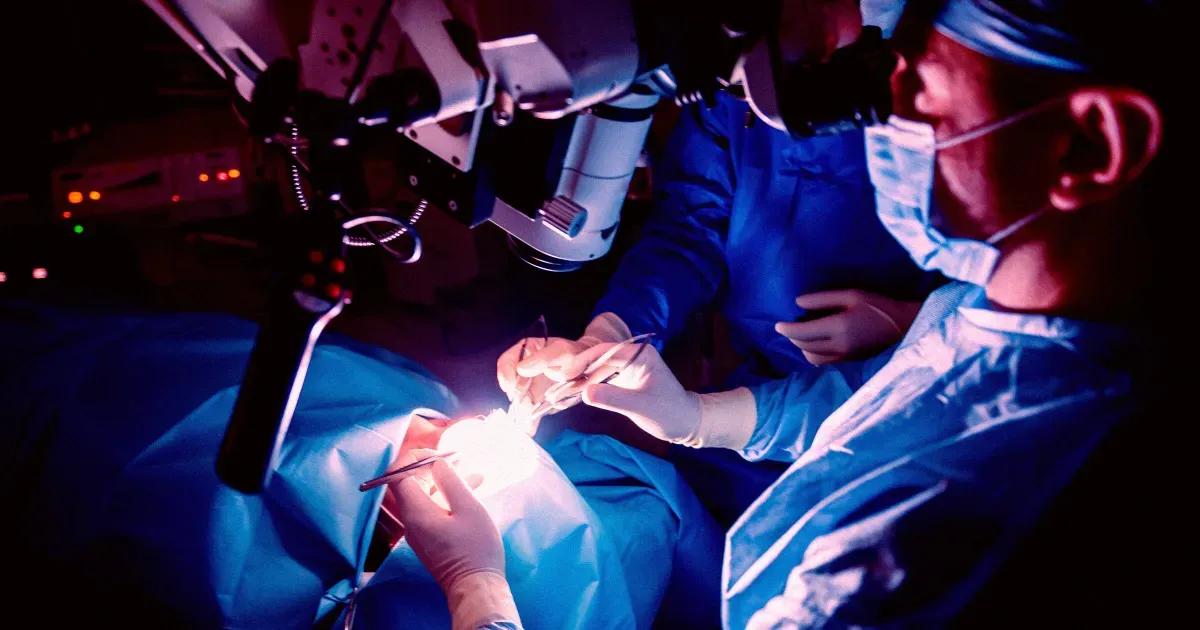
Surgeons at the National Hospital for Neurology and Neurosurgery in London performed the world's first AI-assisted brain tumor operation in May, successfully removing an 11mm pituitary gland tumor while preserving the patient's eyesight
1
2
. The procedure, conducted on 48-year-old Rhys Hibbert, a customer service manager from Bedfordshire, marks a significant milestone in real-time AI assistance during neurosurgery. Details of the operation were withheld until Thursday while Hibbert recovered5
.
Source: Futurism
The AI system analyzed live video from an endoscopic camera during the operation, color-coding and flagging critical anatomy including nerves and blood vessels that surgeons needed to avoid
1
. While the surgical team retained full control throughout the procedure, the technology provided an additional layer of support during one of neurosurgery's most confined and delicate operating environments3
.High-Risk Medical Procedure Demands Precision
The pituitary gland sits at the base of the skull, positioned dangerously close to the optic nerves controlling vision and major blood vessels supplying the brain. Surgical precision matters enormously in this region—a mistake of even a millimeter can cause blindness, stroke, or death
1
. Complication rates for this type of surgery typically range from a 25-50% chance of incomplete tumor removal to a 0.5-2% risk of injuring major blood vessels2
.Hibbert was diagnosed in 2024 after collapsing during a lunchtime walk. Initially managed without surgery, his condition deteriorated with severe hormone imbalances and progressive vision loss that narrowed his peripheral vision
2
. "For 18 years of married life I've always got out of bed and made my wife a cup of coffee, and I wasn't going to let this tumour stop that," Hibbert said2
. Without the operation, he faced going blind5
.How the AI System Works
Developed at University College London's Hawkes Institute, the system was trained on hundreds of annotated videos from previous endoscopic pituitary operations
4
. Dr. Sophia Bano, associate professor in robotics and AI at UCL and the technical lead, explained that the system learned from surgical examples that would take a surgeon many years to encounter1
.
Source: CXOToday
The technology functions similarly to facial recognition on phones but recognizes important and often hidden anatomical structures instead
2
. During the operation, it processed live footage from the endoscope inserted through Hibbert's nose, marking areas where vessels and nerves were most likely located and highlighting safer zones for tumor removal2
. The system runs on NVIDIA Clara IGX platform, designed specifically for real-time medical applications4
.Prof Hani Marcus, who performed the procedure with surgical resident Danyal Khan, noted that the system acts "like an expert second pair of eyes" trained on more operations than most surgeons see in a lifetime
2
. The average UK surgeon performs only 10 to 20 of these operations annually, typically relying on pre-surgical scans to familiarize themselves with patient anatomy2
.Related Stories

Remarkable Patient Outcomes
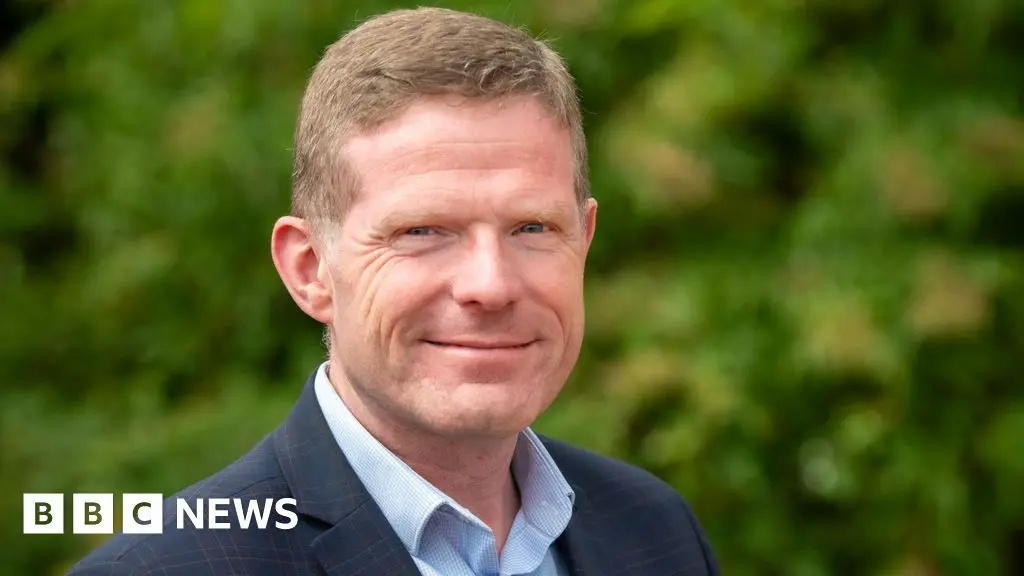
"When I opened my eyes after the operation it felt like I had got 360-degree vision—I hadn't seen that clearly for a year," Hibbert reported
2
. Within a week of surgery, he could walk independently without glasses or walking sticks, and he returned to work within weeks3
4
. His vision continued improving every few days during the eight-week recovery period, and all pre-surgery side effects disappeared2
.
Source: BBC
Future Implications and Development
The clinical trial received funding from the National Institute for Health and Care Research and Google, with additional support from UCLH's Biomedical Research Centre, the Royal College of Surgeons, EPSRC, and Wellcome
4
. Prof Mike Lewis, the NIHR's scientific director for innovation, called it "pioneering surgery" demonstrating advanced AI's potential to support surgeons and improve patient care5
.The research team's long-term ambition extends beyond anatomy identification. They envision developing a type of ChatGPT for surgeons—"another expert in the room they can turn to for advice if they want it—or leave if they disagree with it," Marcus explained
2
. Future versions could track surgical instruments and monitor tissue interactions, providing additional feedback during complex procedures4
.A 2024 paper published in npj Digital Medicine showed that AI assistance raised anatomical annotation accuracy from 70.7% to 77.5%, with particularly strong improvements for medical students whose scores jumped from 66.2% to 78.9%
3
. Researchers previously stated in 2023 that they expected AI assistance in brain surgery within about two years—a timeline they met3
.Hibbert reflected on the historical significance: "The NHNN was founded in 1859 and was the world's first dedicated neurosurgical hospital. So to me, it seems very fitting that the same hospital should also be the world's first to carry out an AI-assisted neurosurgery"
1
. The team now works on expanding the trial to assess broader applications and refine the technology for wider surgical use.References
Summarized by

Navi
[4]
Related Stories
AI Model FastGlioma Revolutionizes Brain Tumor Detection During Surgery
14 Nov 2024•Health

AI models achieve breakthrough accuracy in diagnosing brain tumors from MRI scans
08 Dec 2025•Health
AI-Powered Robot Performs Autonomous Gallbladder Surgery, Marking Milestone in Surgical Robotics
10 Jul 2025•Technology

Recent Highlights
1
Microsoft and Nvidia Launch Surface Laptop Ultra: A $2,599 AI-Ready PC With RTX Spark Chip
Technology

2
OpenAI Releases 722 AI-Generated Math Papers on GitHub, Igniting Fury Among Mathematicians
Science and Research

3
Trump Consulted Grok AI Before Ordering Venezuela Invasion and Capture of Nicolás Maduro
Policy and Regulation

Recent Highlights
Today's Top Stories









Don’t drown in AI news. We cut through the noise - filtering, ranking and summarizing the most important AI news, breakthroughs and research daily. Follow topics that matter to you and stay ahead.


