AI Restores Woman's Voice After 25 Years of Silence


2 Sources
[1]
AI combines with old tech to give a woman her voice back
Thanks to AI technology, Sarah Ezekiel can now speak with the voice that she lost 25 years ago after developing motor neurone disease. Brit Sarah Ezekiel lost her voice after developing motor neurone disease (MND) 25 years ago and ever since has been speaking with what she described as a "posh
[2]
Woman who suffers from motor neuron disease finds her voice after...
An MND sufferer who spoke like a 'robot' for years can now use her own voice - thanks to an old VHS clip of her changing her baby's nappy. Sarah Ezekiel was left without a voice or use of her hands, aged just 34, due to the onset of motor neurone disease in 2000. Her two children, Aviva, 28, and
Share
Copy Link
Sarah Ezekiel, who lost her voice to motor neurone disease 25 years ago, regains her original voice through AI technology, transforming her ability to communicate with her family.
A Voice Restored: Sarah Ezekiel's Journey
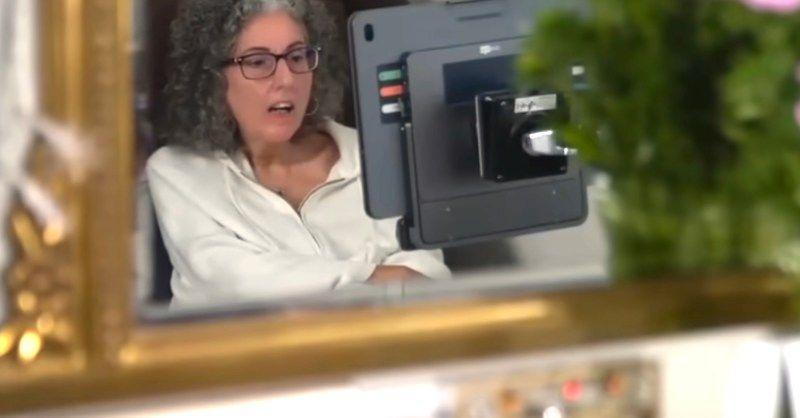
Sarah Ezekiel, a 59-year-old woman from London, has regained her voice after 25 years of silence due to motor neurone disease (MND). Thanks to cutting-edge AI technology, Sarah can now communicate using her original voice, marking a significant breakthrough in assistive technology and emotional reconnection
1
2
.
Source: Digital Trends
The Silent Years
Diagnosed with MND in 2000 at the age of 34, Sarah lost her ability to speak and use her hands. For years, she communicated through a machine with a "posh robot's voice," which she never truly liked. Her children, Aviva (28) and Eric (25), grew up hearing only this synthetic voice from their mother
2
.AI to the Rescue
The turning point came when Smartbox, a Bristol-based technology company, offered to help Sarah regain her voice. The challenge was significant – they only had an eight-second audio clip from an old VHS tape of Sarah changing her daughter's nappy in the 1990s
1
2
.Technological Innovation
Simon Poole from Smartbox led the effort to recreate Sarah's voice:
- Used ElevenLabs' Voice Isolator to separate Sarah's voice from background noise
- Employed AI trained to fill in gaps and predict voice intonation
- Created several audio phrases that closely matched Sarah's original voice
1
2
The Emotional Impact

Source: New York Post
The restoration of Sarah's voice has had a profound effect on her family:
- Sarah: "When I first heard it again, I felt like crying. It's a kind of miracle."
1
- Aviva (daughter): "It has been amazing, really special and emotional, and a lot to process... It's definitely helped me feel more connected to her."
2
- Eric (son): "It really does sound like her... It is a lot more expressive, a lot clearer about how she is feeling."
2
Related Stories

Beyond Communication
This technological breakthrough goes beyond mere communication. It has helped Sarah reclaim her identity and reconnect emotionally with her loved ones. Her daughter Ava remarked, "We can feel who she is as a person -- mum isn't just a disabled person in the corner with a robot that doesn't relate to her."
1
The Future of Assistive Technology
Sarah's story highlights the potential of AI in assistive technology. It demonstrates how combining old and new technologies can have life-changing impacts. As Sarah puts it, "I always tell people with good technology and support, anything and everything is possible. I am excited about the future and what lies ahead."
2
This breakthrough opens up possibilities for others with similar conditions, offering hope for improved quality of life and emotional connections with loved ones.
References
Summarized by

Navi
[1]
[2]
Related Stories
AI Voice Cloning Restores Speech for Those with Motor Neuron Diseases
13 Feb 2025•Technology

AI Gives Voice Back to Israeli Journalist with ALS, Sparking Hope and Concerns
08 Jan 2025•Technology

ElevenLabs pledges free AI voice restoration to 1 million people with permanent voice loss
12 Mar 2026•Technology

Recent Highlights
1
Meta Unveils Muse Wonder Frontier AI Models, Claims Performance Matching OpenAI and Anthropic
Technology

2
IMF Report Warns AI Market Correction Could Spark Global Financial Crisis With $1.4T at Risk
Business and Economy

3
Eight States Sue OpenAI Over ChatGPT Safety Concerns and Unlawful Collection of Children's Data
Policy and Regulation
Recent Highlights
Today's Top Stories










Don’t drown in AI news. We cut through the noise - filtering, ranking and summarizing the most important AI news, breakthroughs and research daily. Follow topics that matter to you and stay ahead.


