AI Reveals Alarming Glacier Loss in Arctic's Svalbard Archipelago


3 Sources
[1]
We built an AI model that analysed millions of images of retreating glaciers - what it found is alarming
University of Bristol provides funding as a founding partner of The Conversation UK. The Arctic has warmed nearly four times faster than the global average since 1979. Svalbard, an archipelago near the northeast coast of Greenland, is at the frontline of this climate change, warming up to seven
[2]
Pioneering research exposes huge loss of glaciers in one of the fastest-warming places on Earth
A new study has revealed the alarming extent glaciers have shrunk over the past 40 years in a global warming hotspot for the first time -- and the biggest retreat has occurred in recent years. The research, led by the University of Bristol and published in Nature Communications, shows the vast
[3]
Pioneering research exposes huge loss of glaciers in one of the fastest-warming places on Earth | Newswise
This figure shows the glacier front retreat rates between 1985 and 2023. The larger darker red circles indicate areas of greatest glacier loss. A new study has revealed the alarming extent glaciers have shrunk over the past 40 years in a global warming hotspot for the first time - and the biggest
Share
Copy Link
A groundbreaking study using AI to analyze satellite imagery has uncovered significant glacier shrinkage in Svalbard, one of the fastest-warming regions on Earth, over the past four decades.

AI-Powered Study Reveals Unprecedented Glacier Loss in Svalbard
A groundbreaking study led by the University of Bristol has employed artificial intelligence to analyze millions of satellite images, revealing alarming glacier loss in Svalbard, an Arctic archipelago experiencing rapid warming. The research, published in Nature Communications, provides unprecedented insights into the scale and nature of glacier retreat in one of Earth's fastest-warming regions
1
.Significant Glacier Shrinkage and Area Loss
The study found that 91% of marine-terminating glaciers across Svalbard have been significantly shrinking. Since 1985, more than 800 km² of glacier area has been lost, equivalent to an area larger than New York City. This translates to an annual loss of 24 km², almost twice the size of London's Heathrow airport
2
.AI's Role in Glacier Analysis
Researchers deployed a novel AI model to analyze millions of satellite images capturing glacier end positions across Svalbard. This innovative approach allowed for quick identification of glacier patterns across large areas, providing an unprecedented level of detail into the scale and nature of glacier loss
3
.Seasonal Cycles and Extreme Events
The study revealed that 62% of Svalbard's glaciers undergo seasonal cycles in glacier calving, a process where large ice chunks break away due to higher ocean and air temperatures. While this phenomenon was previously well-documented in Greenland, it had only been observed in a handful of Svalbard glaciers through manual digitization
1
.2016: A Year of Extreme Retreat
The most significant spike in glacier retreats was detected in 2016 when calving rates doubled compared to the 2010-2015 average. This extreme event coincided with Svalbard's wettest summer and autumn since 1955, including a record 42mm of rain in a single October day. The unusual warmth and ice-free seas likely contributed to this accelerated retreat
1
.Related Stories

Climate Change Implications
Svalbard is warming up to seven times faster than the global average, making it particularly vulnerable to climate change. The study's lead author, Dr. Tian Li, emphasized that the scale of glacier retreats over the past few decades is "astonishing" and highlights the vulnerability of glaciers to climate change
2
.Future Projections and Global Impact
With the increasing frequency of atmospheric blocking and ongoing regional warming, future glacier retreats are expected to accelerate. This could result in greater glacier mass loss, potentially altering ocean circulation and marine life environments in the Arctic. The findings from Svalbard may be indicative of what could happen to similar glaciers across the Arctic, particularly around Greenland
1
3
.References
Summarized by

Navi
[1]
[2]
Related Stories
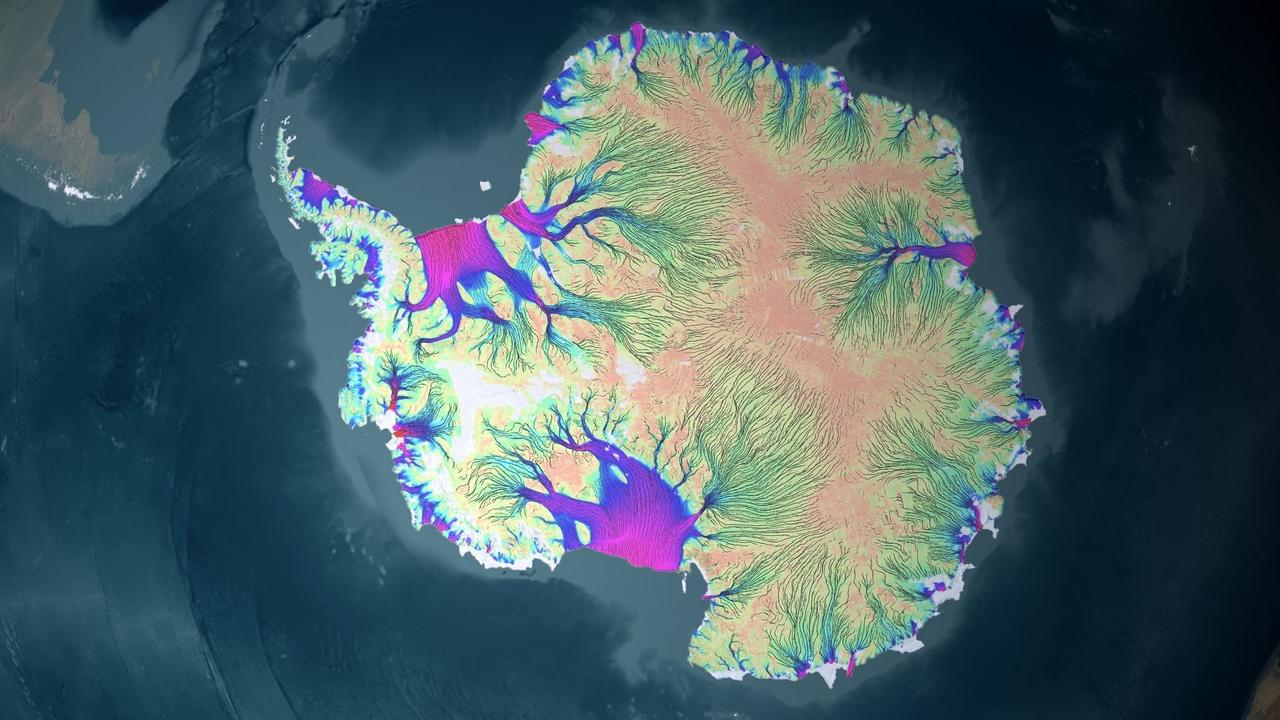
AI Reveals New Insights into Antarctic Ice Flow, Challenging Existing Climate Models
15 Mar 2025•Science and Research
AI Predicts Faster Global Warming, Surpassing Critical Thresholds
11 Dec 2024•Science and Research

AI tackles urgent climate questions as scientists deploy tools for flood prediction and AMOC research
14 Mar 2026•Technology

Recent Highlights



Recent Highlights
Today's Top Stories



Don’t drown in AI news. We cut through the noise - filtering, ranking and summarizing the most important AI news, breakthroughs and research daily. Follow topics that matter to you and stay ahead.


