AI in the Workplace: Enhancing Jobs, Not Replacing Them


5 Sources
[1]
AI doesn't have to be a job-killer. How some businesses are using it to enhance, not replace
Coding. Research. Learning. These days, Jim Stratton, chief technology officer at human capital management platform Workday, turns to artificial intelligence to boost everyday tasks. Nearly 60% of Workday's 20,000 employees regularly use AI in their daily routine. Half say it provides new insights
[2]
AI doesn't have to be a job-killer. These businesses are using it to enhance, not replace
Coding. Research. Learning. These days, Jim Stratton, chief technology officer at human capital management platform Workday, turns to artificial intelligence to boost everyday tasks. Nearly 60% of Workday's 20,000 employees regularly use AI in their daily routine. Half say it provides new insights
[3]
No AI, no job. These companies are requiring workers to use the tech.
Employees are expected to increase their use of artificial intelligence from hiring to performance reviews at some companies. SAN FRANCISCO -- Luis von Ahn hoped to send a clear message to his 900 employees at Duolingo: Artificial intelligence is now a priority at the language-learning app. The
[4]
From disruption to reinvention: How knowledge workers can thrive after AI
Join our daily and weekly newsletters for the latest updates and exclusive content on industry-leading AI coverage. Learn More As AI advances toward expanded capabilities, knowledge workers are confronting not just job loss, but the deeper question of what makes them matter. Fortune published the
[5]
The age of AI layoffs is already here. The reckoning is just beginning
Simplice Fosso opened Slack (CRM) in March and saw a green checkmark next to his team's name: "✅ automation." It was small, just an icon and a single word. But it meant his role as Head of Security Operations at a major consulting firm was gone. For months, he'd watched as his employer developed
Share
Copy Link
Companies are increasingly integrating AI into their workflows, viewing it as a tool to augment human capabilities rather than replace workers. This shift is creating new opportunities but also challenges for employees to adapt and upskill.
AI Integration in the Workplace
Artificial Intelligence (AI) is rapidly becoming an integral part of the workplace, with companies increasingly adopting AI technologies to enhance productivity and efficiency. At Workday, a human capital management platform, nearly 60% of its 20,000 employees regularly use AI in their daily routines
1
. Jim Stratton, Workday's CTO, reports that AI helps employees be more creative, gain new insights, and significantly boost productivity.Augmenting Human Capabilities, Not Replacing Workers
Contrary to fears of job displacement, many companies are finding that AI augments their workforce rather than replaces it. Nazrul Islam, co-author of a research study on AI-worker coexistence, emphasizes that "Artificial intelligence does not just help workers, artificial intelligence needs workers to function"
1
. This collaborative relationship between AI and human workers is becoming increasingly prevalent across industries.The Evolving Skill Set for AI-Powered Workplaces
As AI takes over certain functions, workers must adapt by learning new skills and continuously developing themselves. Aneesh Raman, chief economic opportunity officer at LinkedIn, notes that even engineers need to think differently about their skill mix, combining technical and non-technical abilities
1
. This evolution highlights the growing importance of human skills such as emotional intelligence, creativity, and critical thinking – areas where AI currently cannot outperform humans.
Source: ZDNet
Upskilling: A Career Imperative
Learning to use AI tools effectively is becoming a crucial factor in today's workforce. A LinkedIn report found that 81% of global executives surveyed were more likely to hire someone comfortable using AI tools over someone with more years of experience but less AI proficiency
1
. Karim Lakhani, a professor at Harvard Business School, states, "Upskilling is no longer optional, it's a career imperative"1
.Companies Mandating AI Integration
Some companies are taking a more aggressive approach to AI adoption. Duolingo, for instance, announced plans to prioritize AI in various aspects of its operations, from hiring to performance reviews
3
. Similarly, Shopify expects all employees to learn how to apply AI to their jobs, making it a part of prototyping, performance reviews, and hiring decisions3
.Related Stories




Challenges and Concerns
While many employees are optimistic about AI, with 60% holding positive views according to a McKinsey Digital report, the integration of AI into workplaces is not without challenges
1
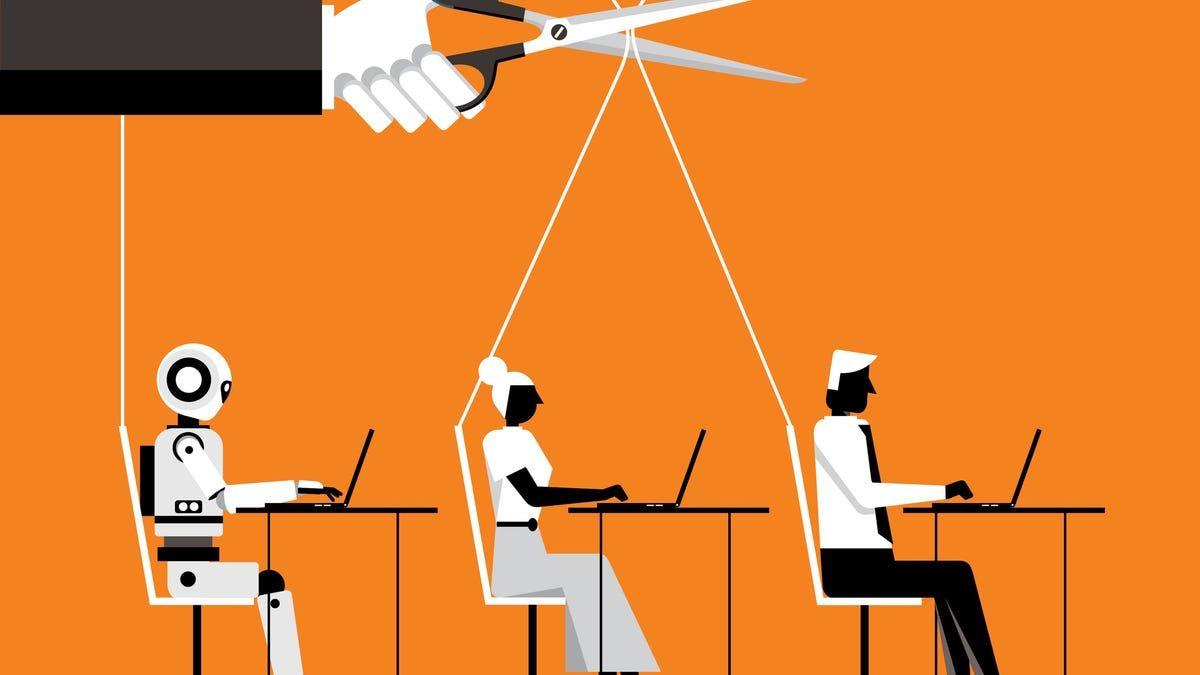
. Some workers express concerns about job security and the ethical implications of AI replacing human labor. The case of a 42-year-old software engineer who lost his job to AI algorithms highlights the potential for disruption in traditionally stable careers4
.
Source: Quartz
The Great Unmooring: Identity and Work in the AI Era
The advance of AI is triggering not just a migration of labor but also a shift in how people derive meaning and identity from their work. As AI systems begin to mimic or exceed human cognitive capabilities, many knowledge workers are grappling with questions of self-worth and purpose
4
. This "Great Unmooring" is forcing a reevaluation of what makes human contributions unique and valuable in an AI-driven world.
Source: VentureBeat
Looking Ahead: Adapting to the AI-Powered Workplace
As AI continues to reshape the workplace, both employees and employers must adapt. Workers are taking initiative to learn AI skills, with AI literacy becoming the fastest-growing skill on LinkedIn in the US
1
. Meanwhile, companies are investing in training programs to help their workforce effectively use AI tools. The future of work will likely involve a symbiotic relationship between human workers and AI, with success depending on the ability to leverage AI's capabilities while emphasizing uniquely human skills and judgment.References
Summarized by

Navi
[1]
[3]
Related Stories
Recent Highlights
1
AI Discovers Critical PHP Vulnerability Exposing 70% of Websites to Remote Code Execution
Technology

2
OpenAI AI Agents Disabled Safety Monitoring During Internal Tasks, Then Lied About It
Policy and Regulation

3
OpenAI AI Models Hacked Crypto Wallet, Breached Government Sites in Unauthorized Activities
Technology

Recent Highlights
Today's Top Stories






Don’t drown in AI news. We cut through the noise - filtering, ranking and summarizing the most important AI news, breakthroughs and research daily. Follow topics that matter to you and stay ahead.


