AI Shows Promise in Early Detection of Laryngeal Cancer Through Voice Analysis


5 Sources
[1]
AI detects early signs of laryngeal cancer from voice recordings
FrontiersAug 12 2025 Cancer of the voice box or larynx is an important public health burden. In 2021, there were an estimated 1.1 million cases of laryngeal cancer worldwide, and approximately 100,000 people died from it. Risk factors include smoking, alcohol abuse, and infection with human
[2]
AI voice test could help spot dangerous throat lesions before symptoms appear
By Dr. Sanchari Sinha Dutta, Ph.D.Reviewed by Lauren HardakerAug 14 2025 By measuring subtle changes in voice quality, AI could help doctors detect dangerous vocal fold lesions before symptoms worsen. Study: Voice as a biomarker: exploratory analysis for benign and malignant vocal fold lesions.
[3]
AI could soon detect early voice box cancer from the sound of your voice
Cancer of the voice box or larynx is an important public health burden. In 2021, there were an estimated 1.1 million cases of laryngeal cancer worldwide, and approximately 100,000 people died from it. Risk factors include smoking, alcohol abuse, and infection with human papillomavirus. The
[4]
AI could detect early voice box cancer from the sound of your voice - Earth.com
Your voice might reveal more than just what you say. It could hold hidden clues about benign conditions that you carry, like nodules or polyps, and even early stages of voice box cancer. A recent study found that our voice could signal abnormalities in the vocal cords, potentially helping detect
[5]
AI could help detect throat cancer from voice recordings, study says
Researchers say AI could be used to analyse short voice recordings to flag abnormalities in the vocal folds, ranging from harmless nodules to the first signs of laryngeal cancer. A simple voice recording could one day help doctors spot early signs of throat cancer, according to new research. In a
Share
Copy Link
Researchers have developed an AI tool that can detect early signs of laryngeal cancer and other vocal fold lesions by analyzing voice recordings, potentially revolutionizing the diagnosis process for this life-threatening condition.
Breakthrough in Early Cancer Detection
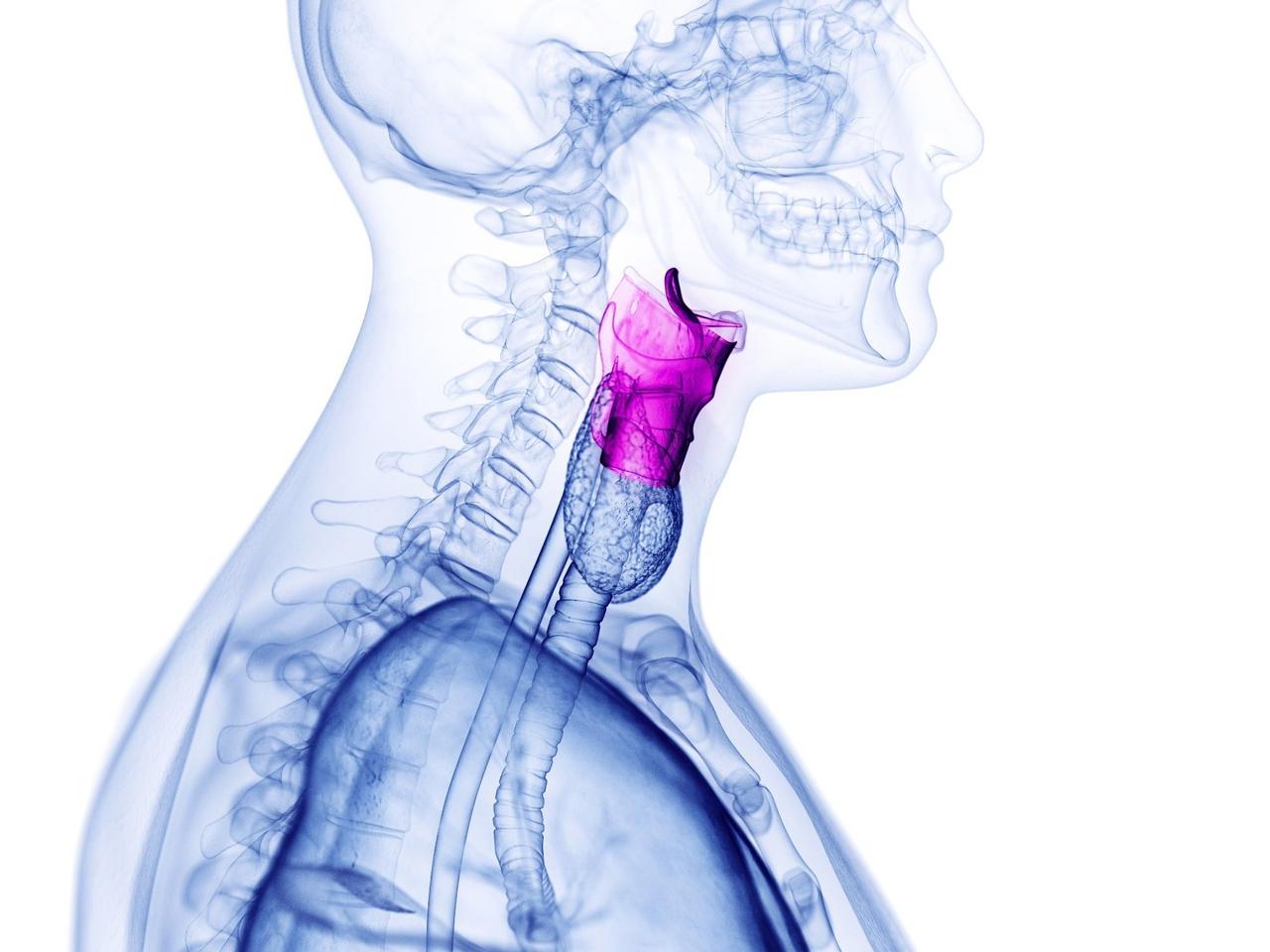
Researchers have made a significant advancement in the early detection of laryngeal cancer using artificial intelligence (AI) to analyze voice recordings. This groundbreaking study, published in Frontiers in Digital Health, demonstrates that AI can potentially identify abnormalities in vocal folds, ranging from benign lesions to early-stage laryngeal cancer, by examining subtle changes in voice patterns
1
.
Source: News-Medical
The Burden of Laryngeal Cancer
Laryngeal cancer poses a significant public health challenge, with an estimated 1.1 million cases worldwide in 2021 and approximately 100,000 deaths
2
. Risk factors include smoking, alcohol abuse, and human papillomavirus infection. Early detection is crucial, as survival rates range from 35% to 78% over five years when treated, depending on the tumor's stage and location3
.Current Diagnostic Challenges
Presently, laryngeal cancers are diagnosed through invasive procedures such as video nasal endoscopy and biopsies. These methods are not only uncomfortable for patients but also require specialized equipment and expertise, often leading to delays in diagnosis
4
.AI-Powered Voice Analysis

Source: Medical Xpress
The study, part of the "Bridge2AI-Voice" project within the US National Institute of Health's "Bridge to Artificial Intelligence" consortium, analyzed 12,523 voice recordings from 306 participants across North America
5
. Researchers focused on acoustic features such as:- Mean fundamental frequency (pitch)
- Jitter (variation in pitch within speech)
- Shimmer (variation of amplitude)
- Harmonic-to-noise ratio (HNR)
Key Findings
The analysis revealed significant differences in the harmonic-to-noise ratio and fundamental frequency between men without voice disorders, those with benign vocal fold lesions, and those with laryngeal cancer
1
. Notably, the variation in the harmonic-to-noise ratio emerged as a promising biomarker for monitoring the clinical evolution of vocal fold lesions and detecting laryngeal cancer at an early stage, particularly in men2
.Related Stories




Implications and Future Directions

Source: Euronews
Dr. Phillip Jenkins, the study's lead author, emphasized the potential of this technology: "Our results suggest that ethically sourced, large, multi-institutional datasets like Bridge2AI-Voice could soon help make our voice a practical biomarker for cancer risk in clinical care"
3
.The next steps involve:
- Training AI models using larger datasets of voice recordings labeled by professionals
- Testing the system in clinical settings to ensure equal effectiveness for both women and men
- Validating the tool's accuracy and reliability in diverse populations
Jenkins estimates that with further development and clinical validation, similar tools to detect vocal fold lesions might enter pilot testing within the next couple of years
5
.Potential Impact on Healthcare
This AI-powered approach could revolutionize the diagnosis of laryngeal cancer by offering a non-invasive, faster, and more accessible screening method. It has the potential to significantly improve early detection rates, leading to better treatment outcomes and increased survival rates for patients with laryngeal cancer
4
.References
Summarized by

Navi
[1]
[3]
Related Stories
Recent Highlights



Recent Highlights
Today's Top Stories






Don’t drown in AI news. We cut through the noise - filtering, ranking and summarizing the most important AI news, breakthroughs and research daily. Follow topics that matter to you and stay ahead.


