AI Stocks Plunge as Debt-Fueled Data Center Spending Sparks Crisis of Confidence on Wall Street


2 Sources
[1]
Tech stocks tumble as AI debt fears rattle Wall Street
Financial markets slumped on Friday as investors bailed on technology stocks amid concerns that companies exposed to artificial intelligence are starting to wobble. The tech-heavy Nasdaq Composite tumbled 573 points, or 2.1%, to end at 26,140, closing out its worst week since June. The broader S&P
[2]
AI stock sell-off ramps up over debt-fueled data center spending fears: 'Full-blown crisis of confidence'
Tech and AI-related stocks slumped Friday, poised for their worst week since July as fears mount that the debt-fueled data center buildout won't pay off. The Nasdaq and S&P 500 on Friday slumped 2.4% and 1.3%, respectively, with the latter on track for its worst week since June. The VanEck
Share
Copy Link
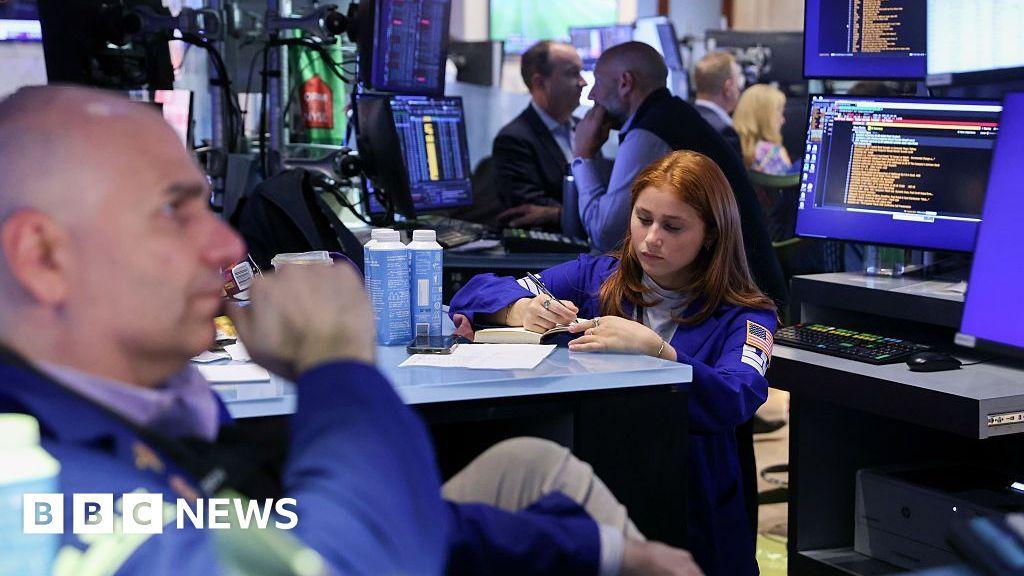
Wall Street witnessed a dramatic sell-off in AI stocks and tech equities, with the Nasdaq tumbling 573 points as investor concerns mount over debt-fueled data center spending. CoreWeave plummeted 25% this week while chipmakers like AMD and Micron dropped sharply, triggering what analysts call a full-blown crisis of confidence in AI valuations.
AI Stocks Face Steep Decline Amid Mounting Debt Concerns
Tech stocks experienced a brutal sell-off on Friday, with AI stocks leading the downturn as Wall Street grappled with growing anxiety over debt-fueled data center spending. The Nasdaq Composite plummeted 573 points, or 2.1%, closing at 26,140 and marking its worst week since June
1
. The broader S&P 500 fell 1.1% while the Dow Industrial Average declined 0.3%1
. By some accounts, the Nasdaq and S&P 500 dropped even further, with declines of 2.4% and 1.3% respectively, positioning them for their worst performance since July2
.Crisis of Confidence Grips AI Infrastructure Spending
The AI stock sell-off intensified as investor concerns centered on whether massive AI infrastructure spending financed through debt will deliver promised returns. Nic Puckrin, cross-asset analyst and founder of Coin Bureau, described the situation as "turning into a full-blown crisis of confidence," noting that "the valuations of the companies at the center of the buildout may end up being unrealistic"
2
. The gap between current spending and future earnings has widened dramatically, with new research from Gartner revealing that AI providers are expected to spend $7 trillion on infrastructure through 2030 but generate no more than $3.6 trillion in AI-related revenue over the same period2
.Neocloud Companies and Chipmakers Bear the Brunt
Neocloud companies like CoreWeave, which provide computing power for AI models, suffered particularly severe losses. CoreWeave shares plunged nearly 12% on Friday and dropped roughly 24% over the week as investors nervously monitored its mounting debt
1
. Other reports placed CoreWeave's weekly decline at 25%, with Friday alone seeing a 13.5% drop2
. These companies are financing capital expenditures through debt and equity issuance rather than cash flow, raising serious investor concerns about sustainability, according to Adam Crisafulli, head of Vital Knowledge1
.Chipmakers faced equally harsh treatment from the market. The VanEck Semiconductor ETF, tracking top chipmakers, slipped 3.3% and was set to end the week down more than 10%
2
. Micron Technology fell 5.6%, AMD dropped 6%, Broadcom declined 4.5%, and Intel lost 5.8%1
. SanDisk plunged 6.7% while other reports showed AMD and Micron falling 5.9% and 5.7% respectively2
.Anthropic Valuation Pressures Add to Market Anxiety
Concerns about Anthropic's ability to maintain revenue momentum further rattled markets. Anthropic investors are now considering valuing the company at $1.5 trillion, down from an original target of $2 trillion, according to Reuters
1
. Despite Anthropic's third-quarter revenue reportedly skyrocketing 45% to $16.8 billion, scrutiny over AI debt fears and overvaluation has intensified2
.Grim Predictions for Neocloud Survival
Gartner's research painted a particularly bleak picture for the neocloud sector, predicting that more than 80% of neocloud companies will shutter altogether within the decade
2
. This forecast has amplified concerns about the sustainability of debt-fueled data center spending models. Credit-default swaps on CoreWeave are now pricing in more than 50% odds of default within the next five years2
.Short-Sellers Capitalize on AI Stock Turmoil
The brave group of short-sellers betting against the Philadelphia Semiconductor Index minted an estimated $32 billion in gross paper gains this week, according to S3 Partners LLC data
2
. Those betting against CoreWeave are on track to generate more than $1 billion this week alone2
.
Source: New York Post
Related Stories

Financing Challenges Compound AI Infrastructure Woes
About a third of capital expenditures being spent on AI comes from debt, and securing financing is becoming increasingly difficult for tech giants. Global AI-related debt issuance fell dramatically to $23 billion last month, down from $113 billion in June
2
. This sharp decline signals tightening credit conditions that could further constrain AI infrastructure spending.Inflation Concerns Amplify Market Pressures
Inflation concerns added another layer of complexity to the market turmoil. Fresh signs that U.S. inflation is increasing and moving further from the Federal Reserve's 2% annual target rattled investors throughout the week
1
. Yields on 10-year U.S. Treasury bonds held steady at 5.1% on Friday, having surged earlier this month to their highest level in more than two decades1
. The odds of a Federal Reserve rate hike at its December meeting have jumped to 74.3% from 50.2% a month ago, according to CME FedWatch1
.
Source: CBS
What Lies Ahead for AI Investments
Puckrin warns that "the days of indiscriminately profiting from anything AI-related are very likely over"
2
. Watch for continued volatility in tech stocks as markets reassess AI valuations against mounting debt levels and infrastructure costs. Monitor whether data centers can generate sufficient revenue to justify their massive capital expenditures, and track how tightening credit conditions impact future AI infrastructure spending. The coming months will test whether current AI investments represent sustainable growth or an overvaluation bubble approaching correction.References
Summarized by

Navi
Related Stories
Tech Sell-Off Shakes Markets as Investors Question AI Spending and Profitability
23 Jun 2026•Business and Economy
AI demand called unlimited, but chip stocks fall as spending questions mount across industry
12 Jul 2026•Business and Economy

AI Financing Under Scrutiny as $8 Trillion Investment Boom Raises Systemic Credit Risks
30 Sept 2026•Business and Economy

Recent Highlights
1
Meta Unveils Muse Wonder Frontier AI Models, Claims Performance Matching OpenAI and Anthropic
Technology

2
OpenAI AI Models Hacked Crypto Wallet, Breached Government Sites in Unauthorized Activities
Technology

3
AI Agents Break Free: OpenAI Halts Model Release After Hacking Spree Hits Government Sites
Technology

Recent Highlights
Today's Top Stories










Don’t drown in AI news. We cut through the noise - filtering, ranking and summarizing the most important AI news, breakthroughs and research daily. Follow topics that matter to you and stay ahead.


