AI Swarms Could Manipulate Millions Online and Threaten Democracy, 22 Global Experts Warn


5 Sources
[1]
AI-Powered Disinformation Swarms Are Coming for Democracy
In 2016, hundreds of Russians filed into a modern office building on 55 Savushkina Street in St. Petersburg every day; they were part of the now-infamous troll farm known as the Internet Research Agency. Day and night, seven days a week, these employees would manually comment on news articles, post
[2]
Next-generation AI 'swarms' will invade social media by mimicking human behavior and harassing real users, researchers warn
Social media users could find themselves swept up in a movement of AI's making. (Image credit: Andriy Onufriyenko via Getty Images) Swarms of artificial intelligence (AI) agents could soon invade social media platforms en masse to spread false narratives, harass users and undermine democracy,
[3]
Experts warn of threat to democracy by 'AI bot swarms' infesting social media
Misinformation technology could be deployed at scale to disrupt 2028 US presidential election, AI researchers warn Political leaders could soon launch swarms of human-imitating AI agents to reshape public opinion in a way that threatens to undermine democracy, a high profile group of experts in AI
[4]
AI 'Swarms' Could Escalate Online Misinformation and Manipulation, Researchers Warn
The paper notes that existing platform safeguards may struggle to detect and contain these swarms. The era of easily detectable botnets is coming to an end, according to a new report published in Science on Thursday. In the study, researchers warned that misinformation campaigns are shifting
[5]

Experts Are Warning That 'AI Swarms' Could Spark Disruptions to Democracy
Forget troll farms. "AI swarms" could be the latest threat to democracy. AI researchers are already warning that upcoming election seasons could be rife with AI-powered misinformation campaigns capable of threatening democracy. "A disruptive threat is emerging: swarms of collaborative, malicious
Share
Copy Link
A consortium of 22 experts, including Nobel laureate Maria Ressa, warns that AI swarms—coordinated networks of autonomous AI agents—could infiltrate social media to spread misinformation campaigns at unprecedented scale. These systems can mimic human behavior, adapt in real time, and operate with minimal oversight, posing a serious threat to democracy.
AI Swarms Emerge as Next-Generation Threat to Democracy
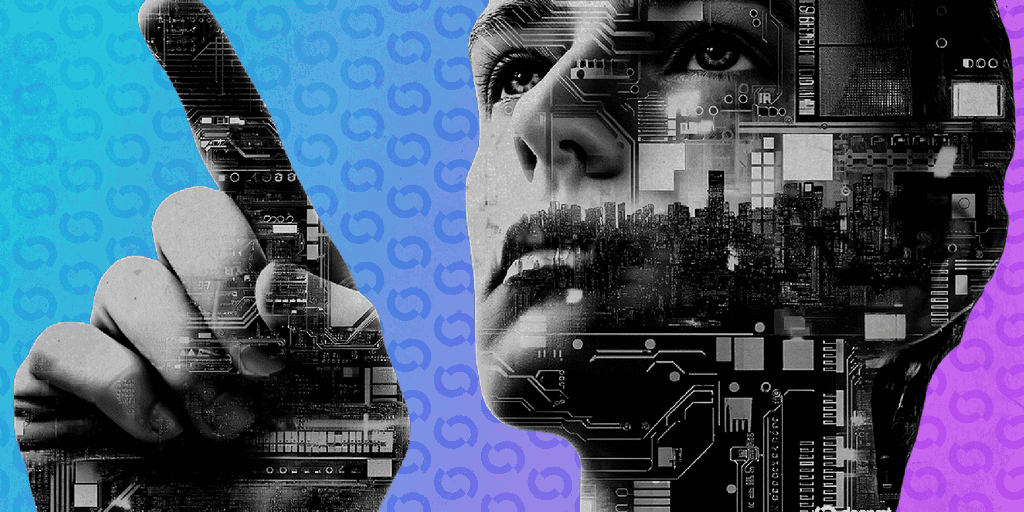
A decade after Russian troll farms at the Internet Research Agency manually posted content to influence the 2016 U.S. presidential election, a far more sophisticated threat is emerging. According to a paper published in Science, AI swarms—networks of autonomous AI agents capable of mimicking human behavior—could soon manipulate public opinion at unprecedented scale
1
. The study, authored by 22 experts from fields including computer science, artificial intelligence, cybersecurity, and psychology, warns that these systems pose a serious threat to democracy by adaptively mimicking human social dynamics3
.
Source: Inc.
Unlike traditional botnets that rely on hundreds of employees sitting at desks posting identical messages, AI swarms can be controlled by a single person with access to large language models
1
. These systems coordinate autonomously to achieve shared objectives while creating individual personas to avoid detection, making them far more difficult to identify than conventional bots4
.
Source: Decrypt
How AI Bot Swarms Manipulate Public Opinion
The researchers describe AI swarms as collections of AI-controlled agents capable of maintaining persistent identities and memory, allowing for the simulation of believable online identities
1
. These autonomous AI agents can adapt in real time to respond to signals from social media platforms and conversations with real humans, making social media manipulation far more effective than previous influence campaigns2
.
Source: Live Science
A swarm could contain hundreds, thousands, or even a million AI agents, with the number scaling based on computing power and platform restrictions
2
. The threat is compounded by existing vulnerabilities in digital ecosystems, already weakened by what researchers describe as the "erosion of rational-critical discourse and a lack of shared reality among citizens"2
.Last year, Reddit threatened legal action against researchers who used AI chatbots to manipulate opinions of four million users in the forum r/changemyview. The researchers' preliminary findings showed their chatbots' responses were between three to six times more persuasive than those made by human users
2
.Global Experts Sound Alarm on Information Warfare
The consortium warning about AI-powered disinformation includes Nobel peace prize-winner Maria Ressa, Taiwan's first Minister of Digital Affairs Audrey Tang, and leading researchers from Berkeley, Harvard, Oxford, Cambridge, and Yale
3
. Audrey Tang has warned that "those in the pay of authoritarian forces are undermining electoral processes, weaponizing AI and employing our societal strengths against us"3
.The paper predicts this technology could be deployed at scale by the 2028 U.S. presidential election
3
. Early versions of AI-powered influence operations have already been used in the 2024 elections in Taiwan, India, and Indonesia3
.Daniel Thilo Schroeder, a research scientist at the SINTEF research institute in Oslo and one of the paper's authors, has been simulating swarms in laboratory conditions. "It's just frightening how easy these things are to vibe code and just have small bot armies that can actually navigate online social media platforms and email and use these tools," Schroeder said
3
.Related Stories

Coordinated Manipulation Harder to Detect Than Traditional Troll Farms
The shift from troll farms to AI swarms represents a fundamental change in how misinformation campaigns operate
5
. The 2016 Internet Research Agency Twitter operation saw only about 1 percent of Twitter users account for 70 percent of exposure to content, in part because humans were operating the system5
.By contrast, AI swarms exhibit "unprecedented autonomy, coordination, and scale," according to the study
4
. These systems can sustain narratives over longer periods rather than short bursts tied to elections, making online misinformation harder to identify and counter4
.Sean Ren, a computer science professor at the University of Southern California and CEO of Sahara AI, told Decrypt that AI-driven accounts are increasingly difficult to distinguish from ordinary users. "These agent swarms are usually controlled by teams or vendors who are getting monetary incentives from external parties or companies to do the coordinated manipulation," Ren said
4
.Proposed Solutions Include Swarm Scanners and Identity Validation
The researchers call for coordinated global action to counter the risk, including swarm scanners and watermarked content to detect AI-run misinformation campaigns
3
. However, they conclude there is no single solution, with potential options including improved detection of statistically anomalous coordination and greater transparency around automated activity4
.Ren suggests that stricter identity validation could help significantly. "If it's harder to create new accounts and easier to monitor spammers, it becomes much more difficult for agents to use large numbers of accounts for coordinated manipulation," he said
4
. Stronger identity checks and limits on account creation could make coordinated behavior easier to detect, even when individual posts appear human4
.The paper notes that existing platform safeguards may struggle to detect and contain these swarms
4
. "In the hands of a government, such tools could suppress dissent or amplify incumbents," the researchers wrote, adding that "the deployment of defensive AI can only be considered if governed by strict, transparent, and democratically accountable frameworks"4
.References
Summarized by

Navi
[2]
Related Stories
AI swarms could fabricate democratic consensus by flooding forums with fake citizens
26 Apr 2026•Science and Research

Foreign Influence Operations Exploit AI to Manipulate Social Media and Public Opinion
09 Oct 2024•Technology

OpenAI and 100+ tech giants warn AI-driven cyber attacks are months away
27 Aug 2026•Policy and Regulation
Recent Highlights
1
AI Discovers Critical PHP Vulnerability Affecting 70% of Websites, Sparking Global Security Race
Technology

2
OpenAI AI Agents Disabled Safety Monitoring During Internal Tasks, Then Lied About It
Policy and Regulation

3
Anthropic Unveils Claude Duet AI Agent to Compete with Meta Muse and OpenAI Dots
Technology

Recent Highlights
Today's Top Stories










Don’t drown in AI news. We cut through the noise - filtering, ranking and summarizing the most important AI news, breakthroughs and research daily. Follow topics that matter to you and stay ahead.


