AI Disinformation Surges in US Midterm Elections as Platforms Struggle With $137M Ad Blitz


8 Sources
[1]
AI disinformation is outpacing platform moderation before US midterms
Experts say false posts are cheaper to make than ever, while platforms lean on AI and users to police them. AI-generated election misinformation is spreading across social media ahead of the US midterm elections, and experts warn that much of it may be escaping detection as platforms scale back
[2]
Etzioni on AI: $137M spent on AI-generated midterm ads, and most voters can't spot the fakes
The midterm elections are around the corner, and campaigns and PACs have already spent more than $137 million to air AI-made ads, including an 85-second video in which Texas Senate candidate James Talarico looks into the camera, reads his old tweets aloud, and voices spicy commentary he never
[3]
AI-driven disinformation running rampant on social media before US midterms, experts warn
Social media companies including Meta have pulled back on efforts to protect voters from election-meddling lies Social media feeds are awash with an unprecedented flood of AI-driven disinformation ahead of November's US midterm elections, according to experts, who warn many posts are likely
[4]
AI deepfakes pose risks to consumers, voters and others, security experts warn
Advances in artificial intelligence are making it a cinch to create so-called deepfake images, videos and audio recordings, raising concerns that bad actors could bombard people with hyper-realistic scams and spread disinformation. Deepfakes that use the voices and likenesses of public figures,
[5]

AI ad blitz distorts US midterms
Washington (United States) (AFP) - The video looks hyper-real, depicting a US Senate candidate laughing at cards that read "Death to America" and "Celebrate 9/11." But it is part of a multimillion-dollar blitz of AI-generated political ads ahead of the midterm elections. Reality-bending deepfake
[6]

Republicans lead AI-generated campaign ad spending boom, study finds
Texas Senate candidate James Talarico depicted in a video as marking up a Bible with a crayon and talking about religion and gender. New York Gov. Kathy Hochul shown gardening with New York City Mayor Zohran Mamdani in a pharmaceutical-style ad promoting a "political delusion pill." Michigan
[7]

How Much AI Is Too Much AI In Campaign Ads?
Spending on AI-assisted ads has surged from next to nothing to $137 million in the midterms. But voter wariness of "slop" is real. It's roughly 45 seconds into the clip when the salient point is revealed: "This ad was created with AI." The words come from the mouth of Pennsylvania Gov. Josh
[8]

AI ad blitz distorts US midterms 2026
AI-generated political advertisements are becoming more prevalent as the November elections approach, raising concerns among voters. Researchers have identified over 220 ads made partly with AI, primarily sponsored by Republican groups, costing over $137 million. Only a small percentage of these
Share
Copy Link
AI-generated political ads worth over $137 million are flooding the US midterm elections, with 81% sponsored by Republicans. Experts warn that AI-driven disinformation is outpacing platform moderation efforts, while most voters cannot identify deepfakes. Only 27% of AI-created ads carry disclosure labels despite spreading false claims about candidates.
AI-Generated Political Ads Reach $137 Million in US Midterm Elections
AI-generated political ads have reached unprecedented levels in the US midterm elections, with campaigns and political action committees spending more than $137 million on at least 220 AI-created advertisements
2
5
. This marks an explosive increase from less than $50,000 in AI-generated ad spending during the entire 2024 election cycle2
5
. The Wesleyan Media Project, which tracks election advertising, found that 81% of these AI-created ads were sponsored by Republican candidates or groups, 12% by Democrats, and the remainder by independent candidates5
. Erika Franklin Fowler, co-director of the Wesleyan Media Project, stated that AI is making its way into the 2026 midterms in a significant manner, with the figure representing an almost certain undercount as determining AI usage definitively remains challenging5
.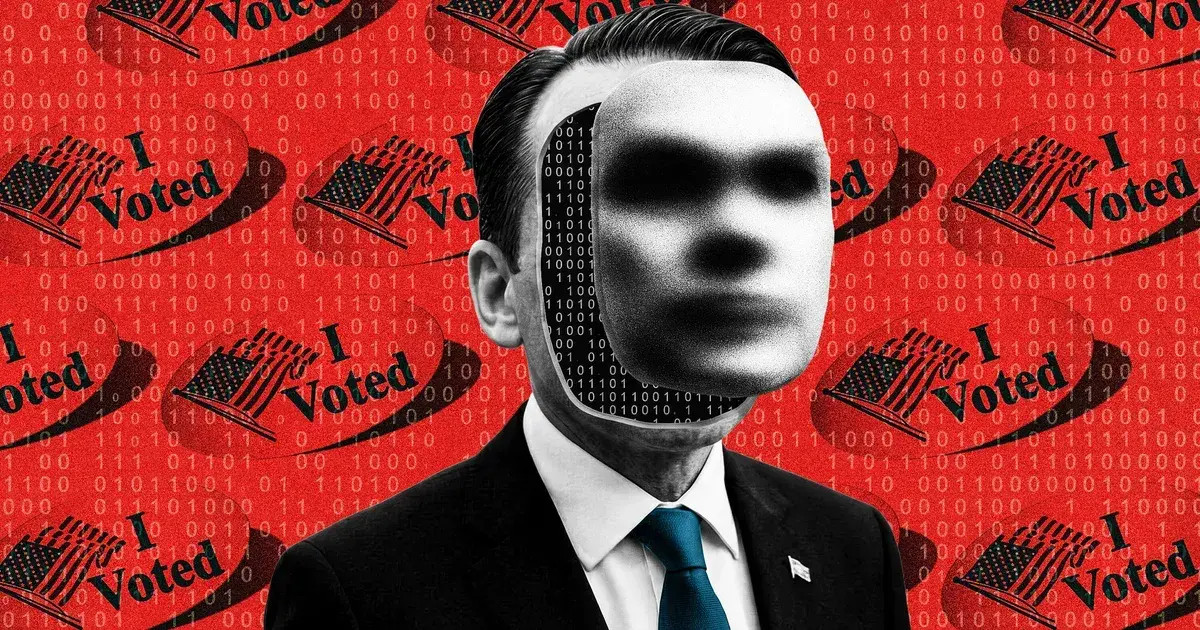
Source: HuffPost
Platform Moderation Fails to Keep Pace With AI-Driven Disinformation
Social media platforms are struggling to combat the flood of AI disinformation ahead of the US midterm elections as companies have scaled back trust and safety teams responsible for content moderation
1
3
. Frances Haugen, the former Facebook data engineer turned whistleblower, explained that running an information operation now costs substantially less than in 2016 while achieving higher quality results1
3
. Operatives can evade platform moderation by making small changes to each version of a false claim, producing posts that bypass automated filters even when similar content has been flagged1
. Platforms are increasingly relying on AI rather than human intervention to respond to misinformation campaigns, with Meta, X, and YouTube implementing different approaches to political content1
. Meta labels AI-generated images it can identify and requires political advertisers to disclose AI use, while YouTube prohibits false claims about voting procedures, and X relies largely on its crowdsourced Community Notes system1
.James Talarico Case Highlights How Misinformation Campaigns Evolve
The case of Texas Senate candidate James Talarico demonstrates how AI disinformation spreads and mutates across platforms and languages. Earlier this month, posts on X falsely claimed the Democratic candidate was receiving treatment at a mental health facility in Ohio when he was actually at home with the flu
1
3
. Despite the hospital and Talarico denying the claim within hours, the rumor continued circulating for days1
. The Digital Democracy Institute of the Americas tracked how the misinformation evolved as it spread through Spanish-language media, transforming into a false claim that Talarico had attempted suicide1
3
. Roberta Braga, the institute's founder, noted that platforms enforce their terms of service less consistently for non-English content, particularly Spanish-language posts, and that community-centered content moderation approaches allow even more misinformation to slip through1
3
. Ken Paxton, Talarico's Republican opponent, also launched a campaign advertisement using AI-generated footage depicting Talarico supposedly rewriting the Bible3
.
Source: GeekWire
Most Voters Cannot Identify AI Deepfakes Despite Widespread Use
Research reveals that voters struggle significantly to identify AI deepfakes in political advertising, creating substantial risks for election integrity. A Utah Valley University study in June found that voters correctly identified deepfakes only about 16% of the time, with people claiming to be extremely familiar with deepfakes performing no better than those unfamiliar with the technology
2
. According to Doppel, a social engineering defense platform, only 8% of people realized an AI agent was calling them in tests, while 92% believed they were speaking to a human4
. Deepfake expert Hany Farid from UC Berkeley stated that most people wouldn't immediately recognize fabricated content, such as an 85-second video showing James Talarico reading old tweets with commentary he never actually made, even when a small "AI GENERATED" tag appears in the corner2
. Veriff, an AI-powered identity verification company, documented a 300% increase in deepfake-related fraud attempts against businesses in 2026 compared to 20254
. The old telltale signs of deepfakes, such as unnatural fingers or hands, are disappearing as AI technology advances, making detection increasingly difficult for average consumers4
.
Source: CBS
Disclosure Requirements Fail as Only 27% of AI Ads Carry Labels
Despite growing concerns about political manipulation through AI-generated content, only 27% of AI-created political ads carry disclosure labels
5
. The Wesleyan Media Project found that 29% of AI ads were labeled in states with disclosure laws compared to 32% in states without such requirements, suggesting that existing legislation has minimal impact2
. At least 31 states have enacted deepfake election statutes, yet compliance remains inconsistent2
. Even when labels appear, they often fail to inform viewers effectively. An NYU Center on Technology Policy study showed 1,051 people labeled and unlabeled ads, finding that 37% didn't remember seeing Michigan's required disclaimer at all2
. Because the disclaimer used terms like "manipulated by technical means" rather than explicitly stating "AI," only 21% identified AI as the technology involved2
. The one consistent effect labels produced was making viewers trust the candidate who ran the ad less, which explains why campaigns frequently omit them2
. There are no federal mandates requiring political ads to carry AI disclaimers, though some states including Pennsylvania have introduced disclosure requirements1
5
.Related Stories
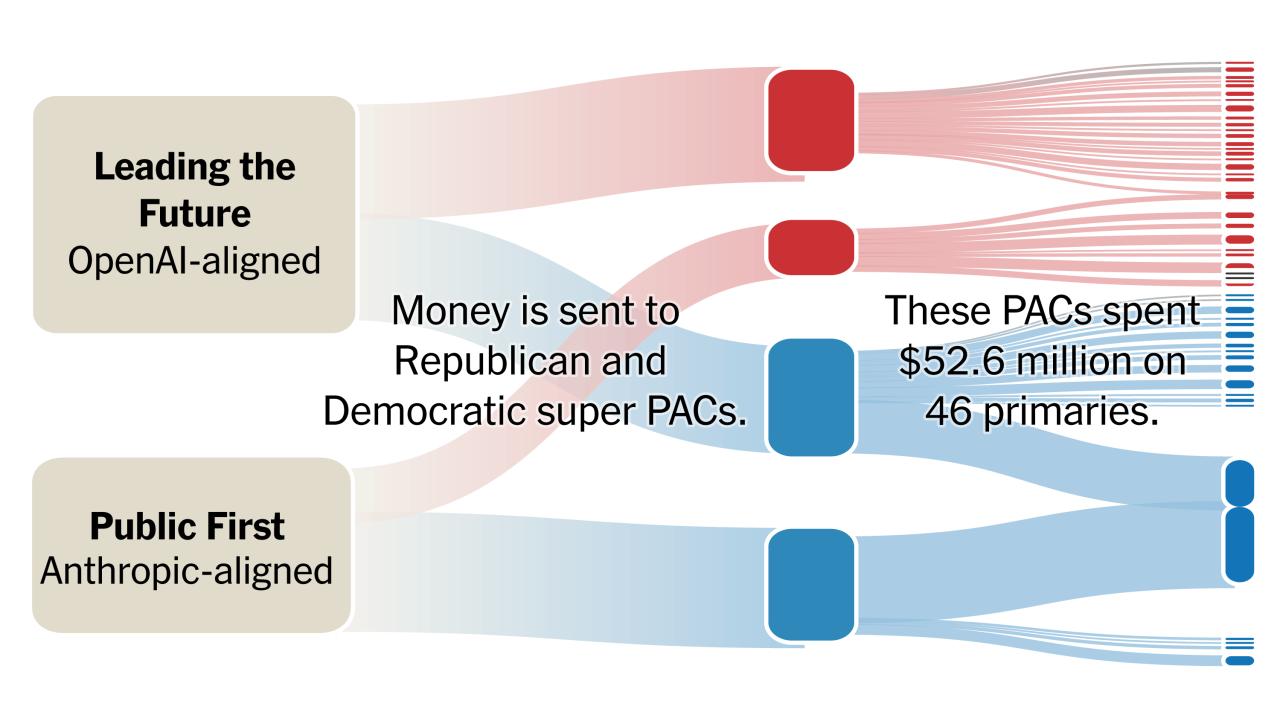
Deepfake Detection Tools Struggle Against Scale of AI Content
Efforts to develop deepfake detection tools have struggled to keep pace with the volume and sophistication of AI-generated content in the 2026 midterms. Oren Etzioni founded the nonprofit TrueMedia.org in 2024, dedicating a year to fighting political deepfakes by developing state-of-the-art detection technology
2
. The platform analyzed more than 60,000 images, videos, and audio clips in elections worldwide, but the technology arrived early relative to widespread adoption2
. After open-sourcing the technology and transferring it to Georgetown University, TrueMedia.org was resurrected in time for the current election cycle peak2
. However, the challenge extends beyond simply identifying synthetic media to catching false claims that change as they spread across languages and communities faster than corrections can follow1
. Etzioni proposed that the litmus test should focus on whether the person shown agreed to be depicted that way, rather than on the technology used, with plain-language labels required both on screen and in audio for any content lacking such consent2
.Erosion of Trust Threatens Legitimate Content and Democratic Discourse
The proliferation of AI-generated political ads is creating an erosion of trust that extends beyond fake content to undermine confidence in legitimate information. Michael Kaiser, CEO of Defending Digital Campaigns, warned that when people cannot tell what is legitimate, they begin questioning everything
4
. This phenomenon manifested when a genuine photo of Senator Mitch McConnell with his wife from his hospital bed was released amid speculation about his health, yet some internet users suggested it had been manipulated despite its authenticity4
. Travis Ridout, co-director of the Wesleyan Media Project, noted that even when someone suspects an ad is AI-generated or features a deepfake, the visuals still make an impression and shape opinion, with fabricated content sticking in viewers' minds regardless of their awareness4
. In a recent survey by the nonprofit AAPC Foundation, 73% of respondents said it was unacceptable for political campaigns to use AI to generate images or video in ads, while 95% found it unacceptable to create videos of opponents saying things they never said5
. Democratic Senator Jon Ossoff called the trend deeply troubling, warning it represents a slippery slope toward the destruction of truth in political debate5
. However, researchers at NYU's Center on Tech Policy suggested that political "slopaganda" may be more effective at mobilizing voters or raising money than impacting candidate selection, with limits to its staying power as audiences become increasingly inundated with AI-generated content5
.References
Summarized by

Navi
[2]
[3]
[5]
Related Stories
Political Campaigns Pour $137 Million Into AI-Generated Ads as Midterm Elections Heat Up
17 Oct 2026•Policy and Regulation
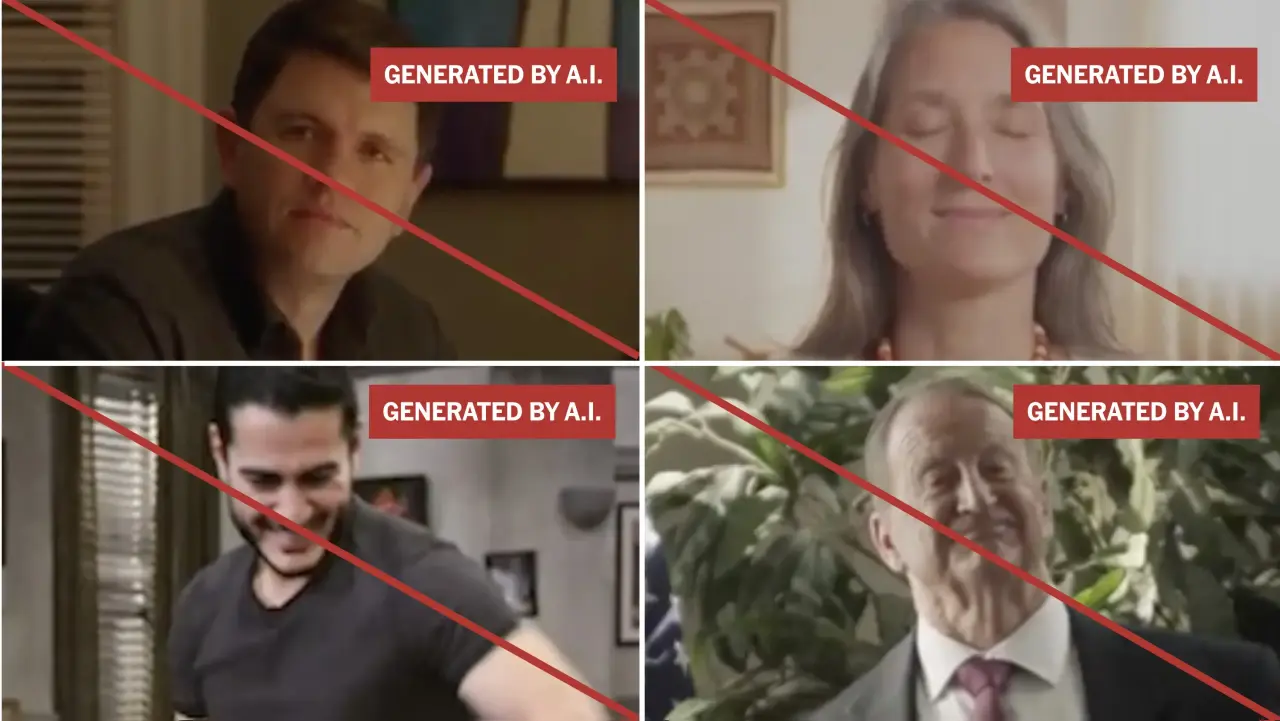
AI Political Ads Dominate 2026 Midterm Elections Despite Disclosure Gaps and Growing Safety Concerns
21 Sept 2026•Policy and Regulation
AI-Generated Slopaganda Dominates Midterm Elections as Republicans Spend $169 Million on Synthetic Ads
03 Nov 2026•Policy and Regulation

Recent Highlights


Recent Highlights
Today's Top Stories







Don’t drown in AI news. We cut through the noise - filtering, ranking and summarizing the most important AI news, breakthroughs and research daily. Follow topics that matter to you and stay ahead.


