AI's Growing Influence on the 2024 U.S. Presidential Election: Opportunities and Challenges


6 Sources
[1]
'If You Can Keep It': AI In This Election And Beyond : 1A
A woman holds a American flag during a naturalization ceremony. It's a technology that promises to bring radical change to many facets of our life - from the arts to healthcare and business. During the 2024 election season, experts warn it could also shake up the world of politics. We're talking
[2]
4 ways AI can be used and abused in the 2024 election, from deepfakes to foreign interference
Barbara A. Trish does not work for, consult, own shares in or receive funding from any company or organisation that would benefit from this article, and has disclosed no relevant affiliations beyond their academic appointment. The American public is on alert about artificial intelligence and the
[3]
AI deepfakes a top concern for election officials with voting underway
PHOENIX -- In the final weeks of a divisive, high-stakes campaign season, state election officials in political battleground states say they are bracing for the unpredictable and emergent threat posed by artificial intelligence, or AI. "The number one concern we have on Election Day are some of
[4]
Will AI Trickery and Deepfake Crash the US Presidential Election Party?
Per research, 39% of Americans believe AI will be misused with harmful intent during the presidential campaign, while only 5% think it will be primarily for good. With the US presidential elections less than a month away, widespread concerns have been raised about the potential of AI in the spread
[5]
AI-generated images have become a new form of propaganda this election season
An image that was likely created with artificial intelligence tools that purported to show a young survivor of Hurricane Helene. The image got millions of views online, even after its provenance was questioned. hide caption After images of the devastation left by Hurricane Helene started to spread
[6]

How to spot AI deepfakes that spread election misinformation
Generative AI systems, such as ChatGPT, are trained on large datasets to create written, visual or audio content in response to prompts. When fed real images, some algorithms can produce fake photos and videos known as deepfakes. Content created with generative artificial intelligence (AI) systems
Share
Copy Link
As the 2024 U.S. presidential election approaches, artificial intelligence emerges as a powerful and potentially disruptive force, raising concerns about misinformation, deepfakes, and foreign interference while also offering new campaign tools.

AI's Emergence as a Political Tool
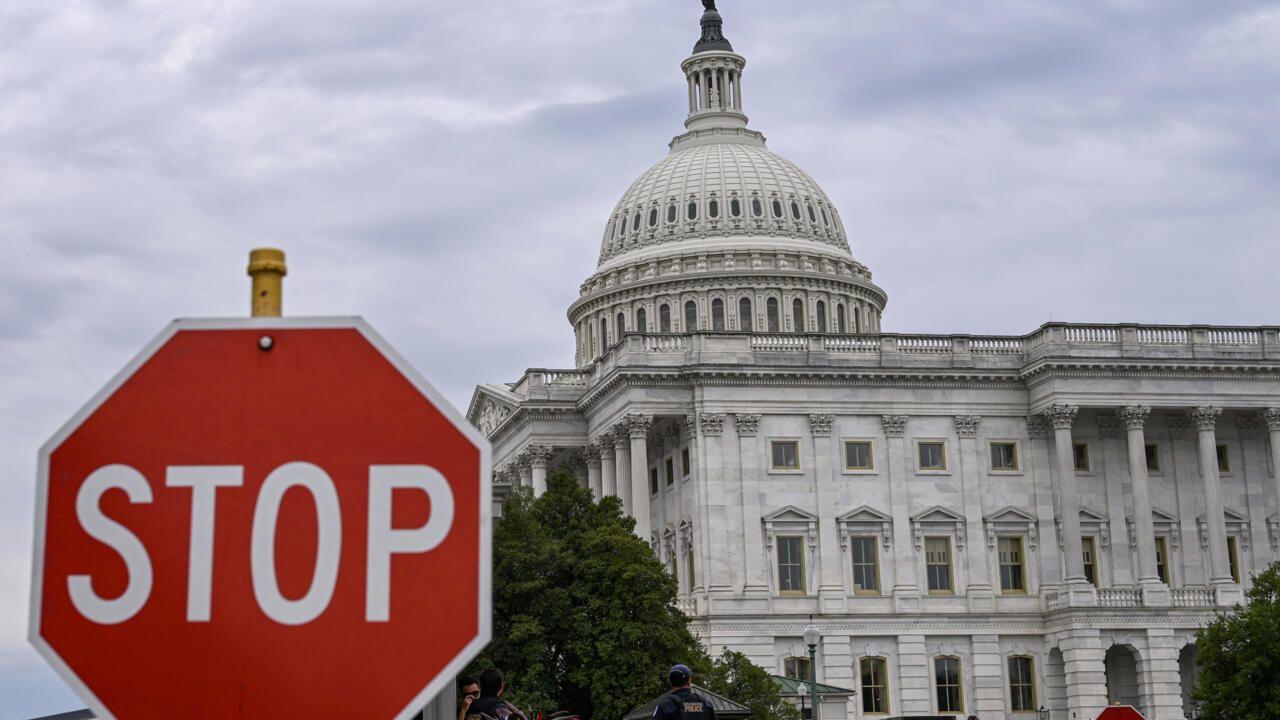
As the United States gears up for the 2024 presidential election, artificial intelligence (AI) has emerged as a powerful and potentially disruptive force in the political landscape. This election cycle marks the first time that AI technology will play a significant role, raising both opportunities and concerns for candidates, voters, and election officials alike
1
2
.Deepfakes and Misinformation
One of the most pressing concerns surrounding AI in the election is the proliferation of deepfakes – highly convincing fabricated images, audio, and video produced by generative AI. These deepfakes have the potential to spread misinformation rapidly and influence public opinion. Notable examples include:
- An AI-generated robocall impersonating President Joe Biden before the New Hampshire primary
2
- A fake image of Taylor Swift endorsing Donald Trump, which gained millions of views online
3
4
- AI-generated videos of political figures in compromising situations
4
The ease of creating and disseminating such content has raised alarms among election officials and cybersecurity experts. According to a Pew Research Center poll, over 57% of U.S. adults are very concerned about AI being used to create and distribute fake or misleading information about candidates and campaigns
4
5
.Foreign Interference and Disinformation Campaigns
U.S. intelligence officials have warned that foreign adversaries, particularly Russia and Iran, are actively using AI to influence the election
1
3
. OpenAI reported shutting down a secret Iranian effort to manipulate U.S. voter opinion using its tools3
. The Department of Justice has also highlighted Russia's use of AI to feed political disinformation onto social media platforms3
.Regulatory Challenges and Industry Response
The rapid advancement of AI technology has outpaced regulatory efforts. In January 2024, the Federal Election Commission decided not to impose new rules on AI use in politics ahead of the election
1
. However, some states, like California, have attempted to limit the use of AI in producing misleading political ads5
.Tech companies have taken some steps to address these concerns:
- OpenAI launched image detection tools to identify fake content
5
- Google announced that its AI chatbot, Gemini, will not answer election-related queries
5
- Social media platforms have pledged to label AI-generated content
5
Related Stories



AI as a Campaign Tool
Despite the risks, campaigns are increasingly using AI as a strategic tool. From automating voter outreach to creating personalized campaign messages, AI is reshaping how political campaigns operate
2
4
. This has led to debates about the ethical use of AI in politics and its potential impact on voter perception.Preparing for an AI-Influenced Election
Election officials and cybersecurity experts are working to prepare for potential AI-driven disruptions. In Arizona, for example, officials have conducted tabletop exercises to simulate AI-related election day scenarios
3
. Voter education initiatives are also being launched to help the public identify AI-generated content and combat misinformation3
5
.As the election approaches, the full impact of AI on the democratic process remains to be seen. While it offers new opportunities for engagement and efficiency, the technology also presents significant challenges to electoral integrity and public trust. Balancing innovation with safeguards will be crucial in navigating this new frontier of political campaigning.
References
Summarized by

Navi
[2]
Related Stories
Recent Highlights



Recent Highlights
Today's Top Stories





Don’t drown in AI news. We cut through the noise - filtering, ranking and summarizing the most important AI news, breakthroughs and research daily. Follow topics that matter to you and stay ahead.


