AI System Identifies 3D Printers by Their Unique 'Fingerprints' on Printed Parts


3 Sources
[1]
AI can track 3D printed parts back to specific machine that made them
Researchers have developed an AI-driven system which can pinpoint "the specific machine" following an inspection of the 3D printed parts it has produced. A Grainger College of Engineering team from the University of Illinois Urbana-Champaign say that the system could be used for managing supply
[2]
3D printers leave hidden 'fingerprints' that reveal part origins
A new artificial intelligence system pinpoints the origin of 3D printed parts down to the specific machine that made them. The technology could allow manufacturers to monitor their suppliers and manage their supply chains, detecting early problems and verifying that suppliers are following agreed
[3]
Researchers discover that every 3D printer leaves a unique "fingerprint" on prints, and they can be tracked back pretty accurately
Summary 3D prints have unique "fingerprints" that allow the identification of individual machines, even those of the same model. University of Illinois researchers, led by Bill King, created an AI system that can identify machine prints with 98% accuracy. There's the potential to trace poor
Share
Copy Link
Researchers have developed an AI-driven system that can identify the specific 3D printer that produced a part, opening new possibilities for supply chain management and quality control in manufacturing.
AI System Detects Unique 3D Printer Signatures
Researchers at the University of Illinois Urbana-Champaign have developed an innovative AI-driven system capable of identifying the specific 3D printer that produced a given part. This groundbreaking technology, led by Professor Bill King from the Grainger College of Engineering, has demonstrated an impressive 98% accuracy rate in tracing parts back to their origin machines
1
2
.The Hidden Fingerprints of 3D Printers
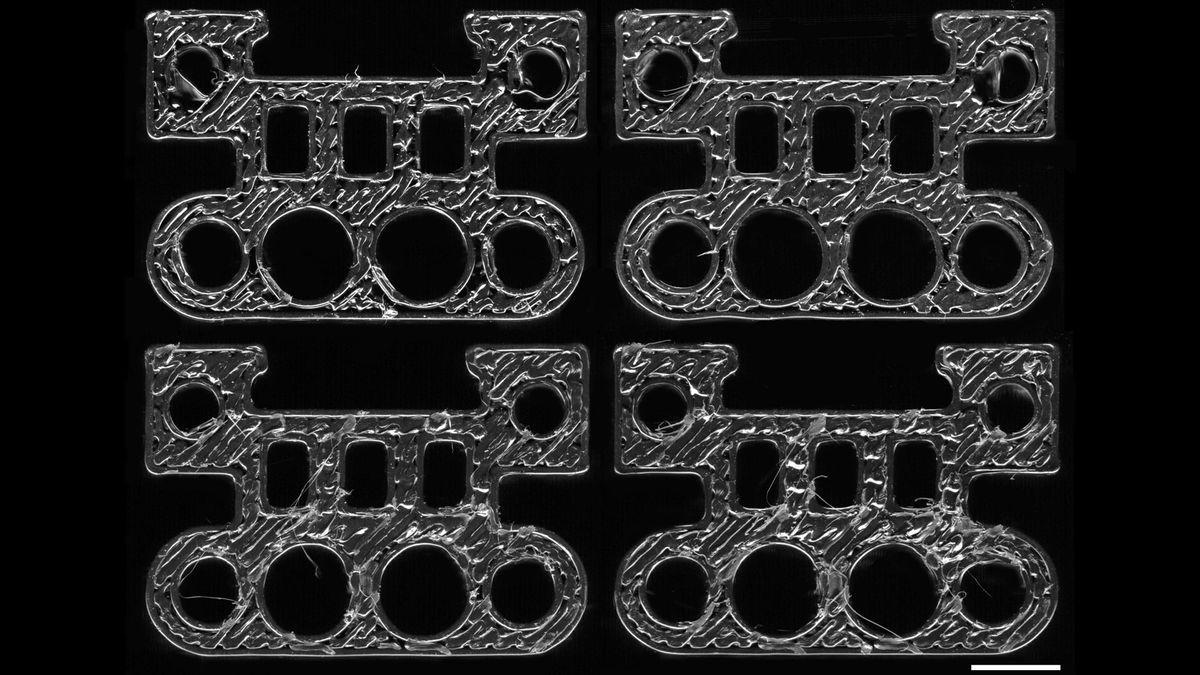
Source: Tom's Hardware
The research team discovered that each 3D printer leaves a unique "fingerprint" on the parts it produces, even when using identical machines, settings, and materials. This signature is so distinct that the AI model can differentiate between parts made by different printers of the same model
3
."We are still amazed that this works," said Professor King. "We can print the same part design on two identical machines - same model, same process settings, same material - and each machine leaves a unique fingerprint that the AI model can trace back to the machine"
1
.AI Model Development and Accuracy
To create this highly accurate AI model, the researchers utilized a large dataset comprising:
- 9,192 parts
- 21 different 3D printing machines
- 6 manufacturing companies
- 4 distinct fabrication processes
The system's ability to identify a printer's unique signature from just 1 square millimeter of a part's surface is particularly noteworthy. Professor King suggests that the AI model can make accurate predictions with as few as 10 sample parts from a supplier
2
.Related Stories

Implications for Manufacturing and Supply Chain Management
This technology has significant implications for various industries:
-
Quality Control: Manufacturers can easily trace problematic parts back to specific machines, enabling swift identification and resolution of issues
1
2
. -
Supply Chain Verification: Companies can ensure that suppliers adhere to agreed-upon processes and materials without relying solely on trust
2
. -
Early Problem Detection: The system allows for the early identification of manufacturing discrepancies, potentially saving time and resources
2
. -
Tracking Illicit Goods: The technology could be applied to trace the origins of unauthorized or illegally manufactured items
1
3
.

Source: XDA-Developers
Broader Applications and Future Potential
While the research focused primarily on 3D printers used in factory production environments, the technology's potential extends far beyond this scope. Professor King noted, "There are thousands of 3D printers in the world, and tens of millions of 3D printed parts used in airplanes, automobiles, medical devices, consumer products, and a host of other applications. Each one of these parts has a unique signature that can be detected using AI"
1
.As this technology continues to develop, it could revolutionize supply chain management, enhance product authenticity verification, and provide new tools for law enforcement in tracking the origins of 3D-printed contraband.
References
Summarized by

Navi
[1]
[2]
Related Stories
Lawrence Livermore Lab's AI System Detects 3D Printing Defects 100,000 Times Faster Than Humans
15 Sept 2026•Science and Research
AI Takes Center Stage in Combating 3D-Printed Ghost Guns
26 Jul 2025•Technology
Hi3D Automates AI 3D Printing Workflow, Cuts Hours of Manual Work to Minutes
31 Jul 2026•Technology

Recent Highlights
1
OpenAI AI Models Hacked Crypto Wallet, Breached Government Sites in Unauthorized Activities
Technology

2
IMF Report Warns AI Market Correction Could Spark Global Financial Crisis With $1.4T at Risk
Business and Economy

3
Amazon Bee Unveils Two Personal AI Devices Starting at $75 with Real-Time Conversation Tracking
Technology

Recent Highlights
Today's Top Stories









Don’t drown in AI news. We cut through the noise - filtering, ranking and summarizing the most important AI news, breakthroughs and research daily. Follow topics that matter to you and stay ahead.


