AI Tools Flood Dark Web as Cybercrime Markets Surge 2700% in Four Months


2 Sources
[1]
AI tools flood into underground cybercrime markets
Why it matters: AI is making once-specialized hacking capabilities cheaper and easier to buy, potentially transforming far more criminals into dangerous hackers. By the numbers: Advertisements for AI tools on underground forums and platforms surged from fewer than 50 per month in late 2025 to more
[2]
Hackers on the Dark Web are Shopping for AI Tools: Halcyon Report
The question is no longer whether criminals will adopt AI. It is whether defenders can detect, disrupt, and deter an ecosystem Cybercriminals dwelling on the forums across the dark web appear to be spending big cash to shop for new AI tools. And no surprises for guessing the reason for the sudden
Share
Copy Link
Cybercriminals are commercializing AI tools at unprecedented speed. Halcyon research reveals underground markets now offer ChatGPT Plus accounts for $0.10 and jailbroken AI services for $0.32, transforming low-skilled criminals into dangerous hackers with AI-augmented malware and phishing capabilities.
AI Tools Transform Underground Cybercrime Markets
AI tools have flooded into underground cybercrime markets at an alarming rate, with advertisements surging from fewer than 50 per month in late 2025 to more than 1,400 by February 2026—a 2700% increase in just four months. According to research from the Halcyon Ransomware Research Centre
1
, this explosive growth signals a fundamental shift in how cybercrime operates on the dark web. The barrier to entry has effectively vanished, with sellers offering access to ChatGPT Plus accounts for as little as $0.10 and jailbreak prompts designed to strip safety guardrails from mainstream models for just $0.322
. Halcyon analyzed nearly 4,000 posts across 77 Telegram channels, 20 dark web forums, and five specialized underground markets between October 2025 and May 20261
. What researchers discovered reveals an ecosystem that has achieved commercial maturity faster than anyone anticipated.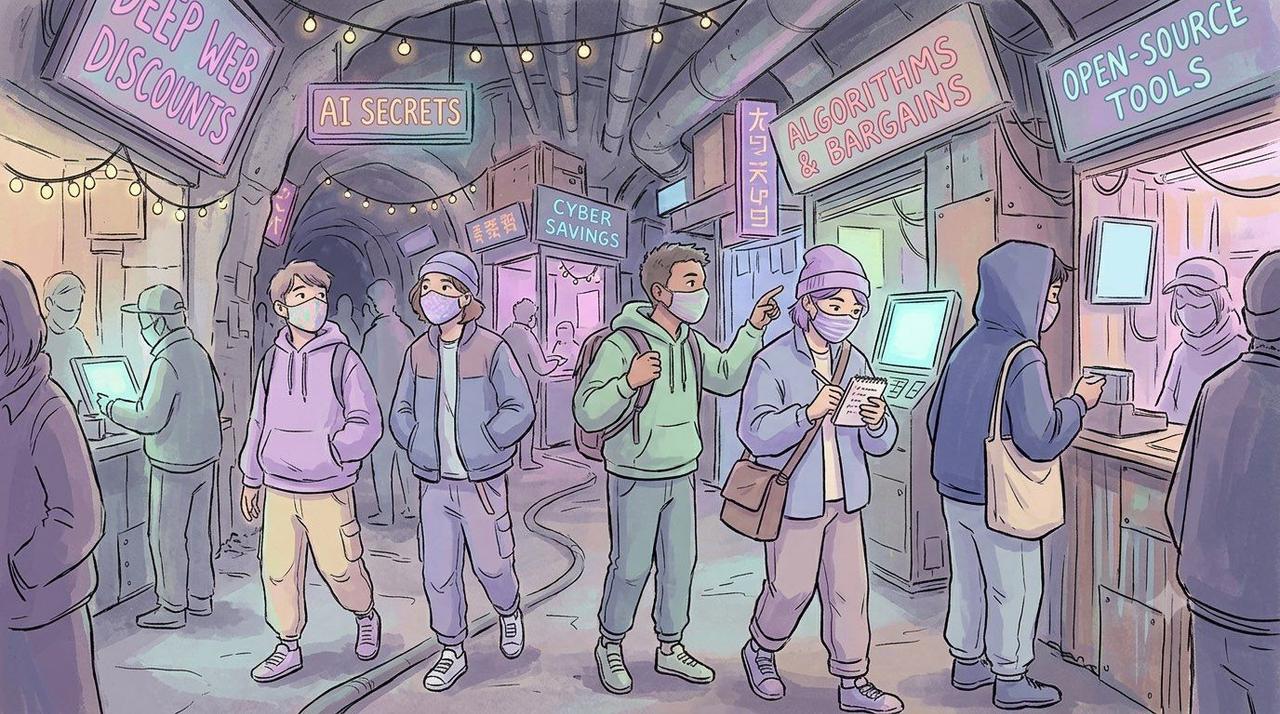
Source: CXOToday
Cybercriminals Adopt Software-as-a-Service Business Models
Cybercriminals have completely commercialized the sale and creation of AI tools, mirroring legitimate software-as-a-service subscription models and online storefronts. Some sellers now promote AI tools tested on traditional dark web forums through easier-to-manage storefronts hosted on Telegram
1
. The commercialization extends to pricing strategies that would look familiar to any tech startup. Roughly 40% of observed messages advertise free tools, creating a freemium funnel that mirrors legitimate software companies2
. "It shouldn't have been shocking to me," said Cynthia Kaiser, head of Halcyon's Ransomware Research Center and former deputy director of FBI Cyber. "But what we should take away from this is also how much cybercriminals have learned throughout the years about how to sell and package—and they applied this really quickly to the AI models"1
. This rapid adoption demonstrates that the AI cybercrime economy assembled tiered subscription pricing, automated distribution, multi-platform redundancy, and customer acquisition structures at the velocity of the legitimate AI industry—structures that took narcotics and exploit-kit markets years to build2
.
Source: Axios
Four Categories of AI-Enabled Cybercrime Tools
The market for AI tools in underground cybercrime markets is organized around four distinct categories. First, jailbroken AI services and stolen accounts allow users to bypass safety guardrails from mainstream models for as little as $10
1
. Second, AI-enabled identity fraud and phishing tools make impersonating real people quick and easy, with social engineering now supercharged by artificial intelligence. Researchers observed a Russian-language vendor advertising a self-sufficient AI call center capable of placing live calls to as many as 120 people at once in the victim's own language2
. Third, weaponized LLMs trained on malicious data aid cybercrime directly—tools like WormGPT are specifically designed to write phishing emails and malware1
. Fourth, AI-augmented malware and infrastructure provide coding assistance and operational support for attacks1
. Identity fraud and phishing have benefited most from these developments, with deepfake media and forged documents now indistinguishable from what only skilled operators could produce a year ago2
.Related Stories
Companies Already Losing Millions to AI-Powered Attacks
Companies are already losing millions of dollars to the types of cyberattacks enabled by tools found on these underground markets. "It really goes to show you how cheap it is to conduct these activities...which should be scary for organizations," Kaiser told Axios
1
. The consequences are concrete: someone with no technical skill, no language fluency, and no operational experience can now buy phishing content, deepfake media, and forged documents that were previously only accessible to skilled operators2
. This democratization of hacking capabilities is transforming far more criminals into dangerous hackers1
. AI is largely helping criminals perform discrete elements of existing attacks more cheaply and efficiently, though Kaiser noted that "what you're not seeing for sale is an agent that does it all for you and has this amazing success rate"1
.The Ecosystem Preys on Itself While Autonomous Attacks Remain Absent
Halcyon researchers did not find evidence of criminals selling AI systems capable of running fully autonomous AI-driven cyberattacks. Even in AI-enabled malware and infrastructure, much of what researchers observe involves coding assistance, infrastructure, and other individual tasks rather than AI creating and deploying malware independently
1
. Ironically, the ecosystem also preys on its own participants: infostealers harvest credentials for the very AI tools criminals depend on, and the market's dominant platform was itself breached, exposing 19,000 paying customers2
. This recursive dynamic—where tools built to victimize others now victimize the people who buy them—represents a vulnerability that defenders and law enforcement have barely begun to exploit2
. The question is no longer whether criminals will adopt AI, but whether defenders can detect, disrupt, and deter an ecosystem that has already reached commercial maturity and scales as fast as the industry it feeds on2
. Organizations must watch for continued evolution in social engineering attacks, the potential emergence of more sophisticated autonomous capabilities, and the expansion of freemium models that lower barriers even further for aspiring cybercriminals.References
Summarized by

Navi
Related Stories
Agentic AI Completes Enterprise Breach in 10 Hours, Leaves 80-Page Security Audit
02 Sept 2026•Technology

NYU Researchers Develop AI-Powered 'Ransomware 3.0', Sparking Cybersecurity Concerns
04 Sept 2025•Technology

AI-Powered Cybersecurity: The Double-Edged Sword in the Digital Arms Race
03 Jan 2025•Technology

Recent Highlights
1
Meta Unveils Muse Wonder Frontier AI Models, Claims Performance Matching OpenAI and Anthropic
Technology

2
IMF Report Warns AI Market Correction Could Spark Global Financial Crisis With $1.4T at Risk
Business and Economy

3
Eight States Sue OpenAI Over ChatGPT Safety Concerns and Unlawful Collection of Children's Data
Policy and Regulation

Recent Highlights
Today's Top Stories









Don’t drown in AI news. We cut through the noise - filtering, ranking and summarizing the most important AI news, breakthroughs and research daily. Follow topics that matter to you and stay ahead.


