AI Data Centers Consumed 222 Billion Liters of Water in 2025 as Tech Giants Deploy New Cooling Tech


7 Sources
[1]
AI's water use is a problem, but shifting from electricity to solar or wind power could help
"Protect our water," "Water for people not AI," "Don't mess with our water," declare protest signs from Texas to New Mexico to Arizona. Angered by water use, energy consumption and pollution, locals are increasingly protesting the rapid expansion of data centers in the United States as tech
[2]
Tech giants claim they can curb AI data centres' thirst for water
As opposition to water-hungry data centres grows in the US, tech giants say new cooling systems can curb demand - but using less water may require more electricity. AI's boom has a water problem. Data centres are facing growing public anger in the United States over the amount of water and
[3]
AI data centers are less thirsty now, tech giants say
New York (AFP) - Data centers are running into a wall of public anger in the United States over their thirst for water and power. The tech giants spending billions of dollars on them say the water part, at least, is solvable. Data centers are the warehouses full of computer servers that run the
[4]
The hard physics and complex economics of AI's insatiable hunger for power
The hard physics and complex economics of AI's insatiable hunger for power Data centers, the windowless, anonymous, boxy structures that few people even notice, have become a rare unifying force across the polarized American landscape this year. Everyone seems to hate them. The explosion in data
[5]

Yes, every AI prompt uses water and electricity. But how guilty should you really feel? The answer might surprise you
Apparently, I could whip out my phone, right now, and ask ChatGPT 38,000 questions before using as much water as it takes to grow a single California almond! At least, that's the claim OpenAI boss Sam Altman made on the Sources podcast last week - and it sounds reassuringly precise for anyone
[6]

AI data centers: AI data centers are less thirsty now, tech giants say
Data centers are running into a wall of public anger in the United States over their thirst for water and power. "There are incentives," Ren said, but they have more to do with public relations amid the growing backlash to data centers across the United States. Data centers are running into a wall
[7]

How Much Water Does AI Use? Why Data Centers Tell the Bigger Story
Per-query water estimates range from a fraction of a milliliter to hundreds, depending on the model, workload, and measurement method Efficiency per query can improve while total water demand still rises, since AI computing volume grows faster than efficiency gains The sharper concern is local:
Share
Copy Link
AI data centers consumed 222 billion liters of water globally for cooling in 2025, sparking protests across the US. Tech giants like Nvidia, Microsoft, and Google now claim closed-loop cooling systems and renewable energy can slash AI water consumption by up to 86% while improving water-use efficiency by 25-37%.
AI Water Consumption Reaches 222 Billion Liters Amid Growing Public Backlash
AI data centers consumed 222 billion liters of water worldwide for cooling in 2025, according to Rystad Energy
2
3
. Without adaptive measures, that figure could nearly triple to 644 billion liters by 20302
. This surge in AI's water footprint has triggered more than 130 protests across dozens of US states, with demonstrators carrying signs declaring "Water for people not AI" and "Don't mess with our water"1
. A Heatmap survey found that three-quarters of Americans now oppose new data center construction in their communities4
. The issue has become a talking point in upcoming midterm elections as activists challenge AI's environmental impact.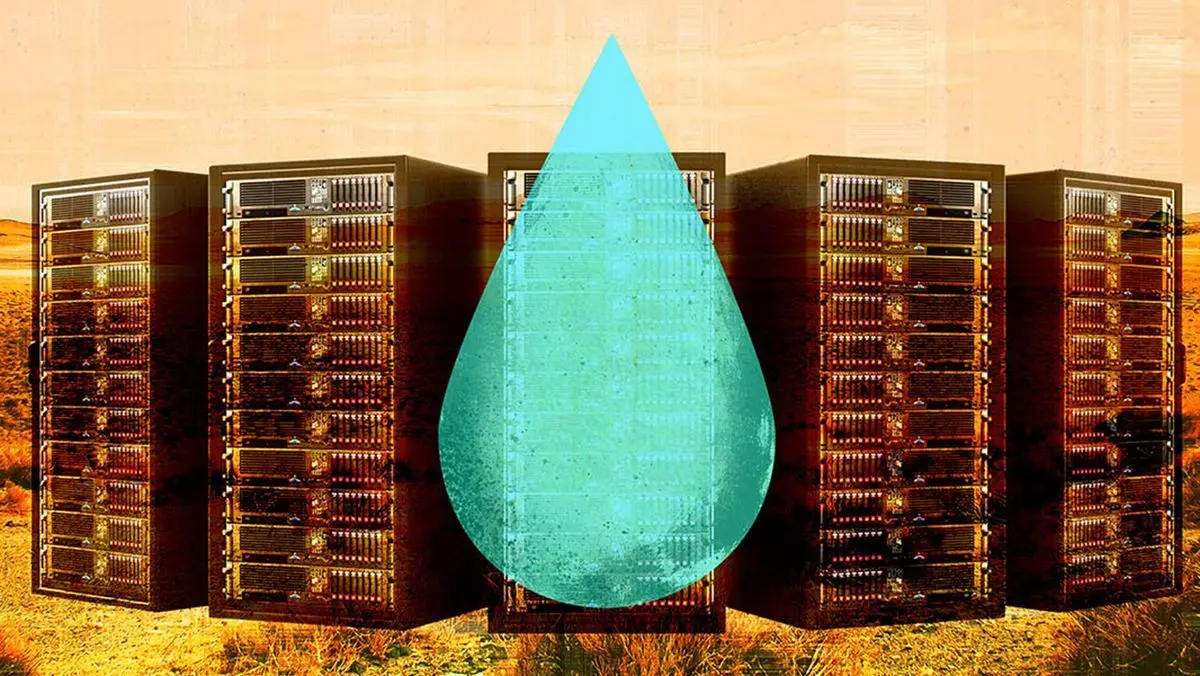
Source: Live Science
Tech Giants Deploy Closed-Loop Cooling to Address Water Crisis
Nvidia claims its DSX system can eliminate AI water consumption almost entirely at some facilities through closed-loop cooling
2
3
. The system flows liquid directly through servers at 45°C, warmer than the typical 32°C used in most closed-loop systems in 20242
. "Simple fans circulating the air" are often sufficient, though extreme climates may still require evaporative cooling, said Josh Parker, Nvidia's head of sustainability2
. Microsoft, Amazon Web Services, and Meta also use closed-loop cooling systems involving no net water loss3
. Between 2022 and 2025, Microsoft improved water-use efficiency by 25% while AWS achieved 37% improvement2
, despite both hyperscalers using more water overall as they expanded operations.The Trade-Off Between Water and Electricity Consumption
"There's a pretty direct trade-off between how much water is used and how much energy is used" for temperature control, said Andy Masley, an independent researcher covering AI data centers
2
. Liquid cooling reduces water consumption but requires more electricity to cool the sealed pipes, typically by blowing air over them. Data centers consumed roughly 4.4% of all electricity in the United States in 2023, a figure projected to triple by 20284
. Globally, data center power consumption is on track to double by 2030, reaching an amount equivalent to Japan's entire annual electricity consumption4
. A single large data center can consume up to 5 million gallons of water daily, equivalent to a city of 50,000 people4
.Renewable Energy and Strategic Siting Could Cut AI's Water Footprint by 86%
Shifting AI data centers from coal or gas to renewable energy could significantly reduce AI water consumption, according to Fengqi You of Cornell University
1
. Much of AI electricity consumption comes from burning fossil fuels, with water used to cool steam after spinning electricity-generating turbines. Solar and wind power require little to no water to operate. Strategic siting in water-rich regions with ample renewable energy sources—like Montana, Nebraska, parts of Texas, and South Dakota—instead of water-stressed areas like Arizona, New Mexico, and Southern California could reduce AI's future water footprint by up to 86%1
. You's group predicted that by 2030, US AI data centers could consume 731 billion to 1,125 billion liters annually—the latter roughly equivalent to New York City's annual drinking water supply1
.Per-Query Water Use Varies Wildly Across AI Applications
Google's 2025 study found that a median text prompt to Google Gemini used 0.24 watt-hours of electricity and 0.26 milliliters of water—roughly five drops
5
. OpenAI boss Sam Altman claimed an average ChatGPT query uses 0.34 watt-hours and 0.32 milliliters of water5
. However, these figures mask enormous variation. Processing 100,000 tokens could require almost 40 watt-hours before generating a response5
. Image generation uses around 60 times more energy than text generation on average5
. Shaolei Ren of UC Riverside estimated in 2024 that drafting a short email with GPT-4 consumed 500 milliliters of water, though this figure is already outdated as AI models have become more efficient1
.
Source: Stuff
Related Stories

Hidden Water Costs and the Challenge of Measuring AI's Environmental Impact
Water consumed directly by data center cooling systems represents only part of AI's total water footprint. In the United States, indirect water use for generating electricity and manufacturing chips and servers can be twice the amount AI data centers consume directly
2
3
. There is no industry-wide standard governing how companies report environmental, social, and governance efforts, making comparisons difficult2
. Elon Musk's SpaceX, now a major player in AI data centers after acquiring xAI, has never published an ESG report and received MSCI's lowest ESG score in June3
. "Because water is generally much cheaper than electricity," companies have less incentive to cut water use on cost grounds alone, said Ren2
. Incentives are driven more by public relations amid growing backlash.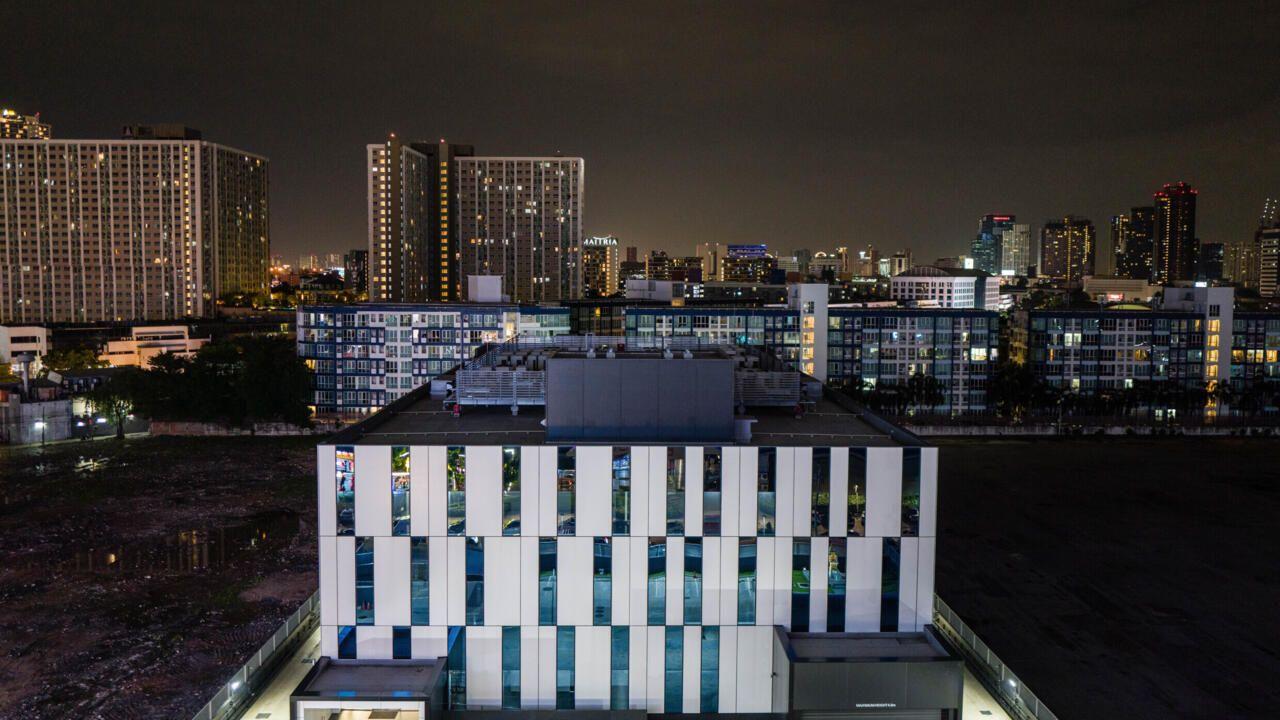
Source: France 24
Why Generative AI Defies Traditional Software Economics
Generative AI has shattered the traditional economics of software, forcing the technology sector to cope with new challenges in thermodynamics and resource scarcity
4
. "Traditional software has very low marginal cost because computation happens primarily on the user's device or cheaper multitenant infrastructure," said Andrew Marshall of Yugabyte. "AI inference incurs a real computational cost for every interaction"4
. A single query to ChatGPT requires up to 10 times more electricity than a traditional Google search4
. Generating a five-second video using generative AI models consumes as much electricity as running a household microwave oven nonstop for over an hour4
. The energy and resource demands of AI are experiencing Jevons Paradox: even as processing becomes more efficient, demand increases to the point that total usage outweighs per-unit savings. Fitch Group estimates the top five hyperscalers will spend $750 billion on data center construction this year, with three-quarters earmarked for AI4
.References
Summarized by

Navi
[1]
Related Stories
AI's voracious appetite for energy threatens climate goals as data centers consume record power
24 Jun 2026•Science and Research
The Hidden Environmental Cost of AI: ChatGPT's Massive Energy Consumption
20 Sept 2024

Google and Amazon report record energy use as AI data centers challenge climate goals
01 Jul 2026•Business and Economy
Recent Highlights
1
Meta Unveils Muse Wonder Frontier AI Models, Claims Performance Matching OpenAI and Anthropic
Technology

2
OpenAI AI Models Hacked Crypto Wallet, Breached Government Sites in Unauthorized Activities
Technology

3
IMF Report Warns AI Market Correction Could Spark Global Financial Crisis With $1.4T at Risk
Business and Economy

Recent Highlights
Today's Top Stories






Don’t drown in AI news. We cut through the noise - filtering, ranking and summarizing the most important AI news, breakthroughs and research daily. Follow topics that matter to you and stay ahead.


