Google and Amazon report record energy use as AI data centers challenge climate goals


9 Sources
[1]
Google's AI buildout drove 37% increase in electricity use in 2025
Google reported that its annual electricity consumption rose by 37 percent in 2025 -- the largest increase in the company's history as Silicon Valley's AI data center buildout continues. But the tech giant says it kept operational carbon emissions down by continuing to purchase massive amounts of
[2]
The cost of the AI boom: Amazon emissions jump 16% as company stands by net-zero pledge
Amazon's carbon footprint jumped 16% last year after several years of little or no increase. The company emitted nearly 80.9 million metric tons of carbon dioxide equivalent in 2025. By comparison, that's slightly higher than the nation of New Zealand's emissions. Amazon disclosed its
[3]
Managing data centre energy and water use in the AI era
As artificial intelligence (AI) use surges, the data centre energy demand needed to support this growth is creating opportunities across many industries - from job creation to wealth building across commercial real estate construction, technology and venture funding. But with the global data centre
[4]
Five ways data centers can save water
Key technologies and design choices that reduce water and energy demands. It's no secret that the data centers that form the hidden engine of today's AI boom can consume huge amounts of water, mostly for cooling purposes, and dealing with this issue is critical for any organisation in the
[5]

Amazon's AI expansion drives emissions to record high
Why it matters: Amazon's annual environmental report, released a day after Google's report unveiled similar increases, adds to mounting evidence that AI growth is making it harder for tech giants to maintain climate ambition. Driving the news: Just like Google, Amazon's aggregate growth in data
[6]

'A wild testament to the obscene bloat and waste of GenAI': Google's electricity consumption is exponentially increasing
As a Brit, I've been thinking a lot about the climate crisis since last month's historic heatwave. With many buildings across the UK designed to retain heat, we're simply not built for 37°C/98.6°F weather. Causes of climate change are numerous, and I know we didn't get here solely due to the advent
[7]
Amazon reveals it used more energy than New Zealand in 2025 as its carbon footprint rises 16%
* Amazon says emissions rose 16% in 2025, purchased electricity emissions up 34% * Projects are using renewable energy matching and lower-carbon materials * Data center PUE continues to improve, but Google does it better In its 2025 Sustainability Report, Amazon revealed its absolute emissions
[8]

AI infrastructure emissions: AI race weakens climate pledges at Google, Amazon
Google and Amazon this week reported sharp increases in greenhouse gas emissions, driven by the frantic construction of artificial intelligence infrastructure that is pushing the tech giants further from their carbon neutrality pledges. Amazon's emissions, published on Wednesday, have risen 58
[9]

The Real Cost of AI: Water Usage that Big Tech May Not be Reporting
Reports suggest that tech giants may be using far more water than they report and this could vary based on how the datacentres are powered Big tech companies like Amazon, Google and Microsoft are slated to spend over $1 trillion on AI infrastructure over the next couple of years. We also know that
Share
Copy Link
Google's electricity consumption surged 37% in 2025, the largest increase in company history, while Amazon's carbon emissions jumped 16%. Both tech giants attribute the spike to AI-driven data center expansion, with Google's data centers now consuming over 42 million megawatt-hours annually. Despite massive investments in renewable energy, the AI boom is outpacing decarbonization efforts, forcing companies to reconsider their net-zero commitments.
Google Reports Unprecedented 37% Jump in Energy Consumption
Google's annual electricity consumption rose by 37% in 2025, marking the largest increase in the company's history as the AI boom drives unprecedented data center expansion
1
. The tech giant's sustainability report reveals that total electricity usage has increased by more than 250% since 2019, attributed to ongoing growth in Google Cloud, YouTube video streaming, and AI data centers supporting various products and services. This follows a 27% increase in 2024, demonstrating how AI-driven data center expansion continues to accelerate faster than grid decarbonization efforts.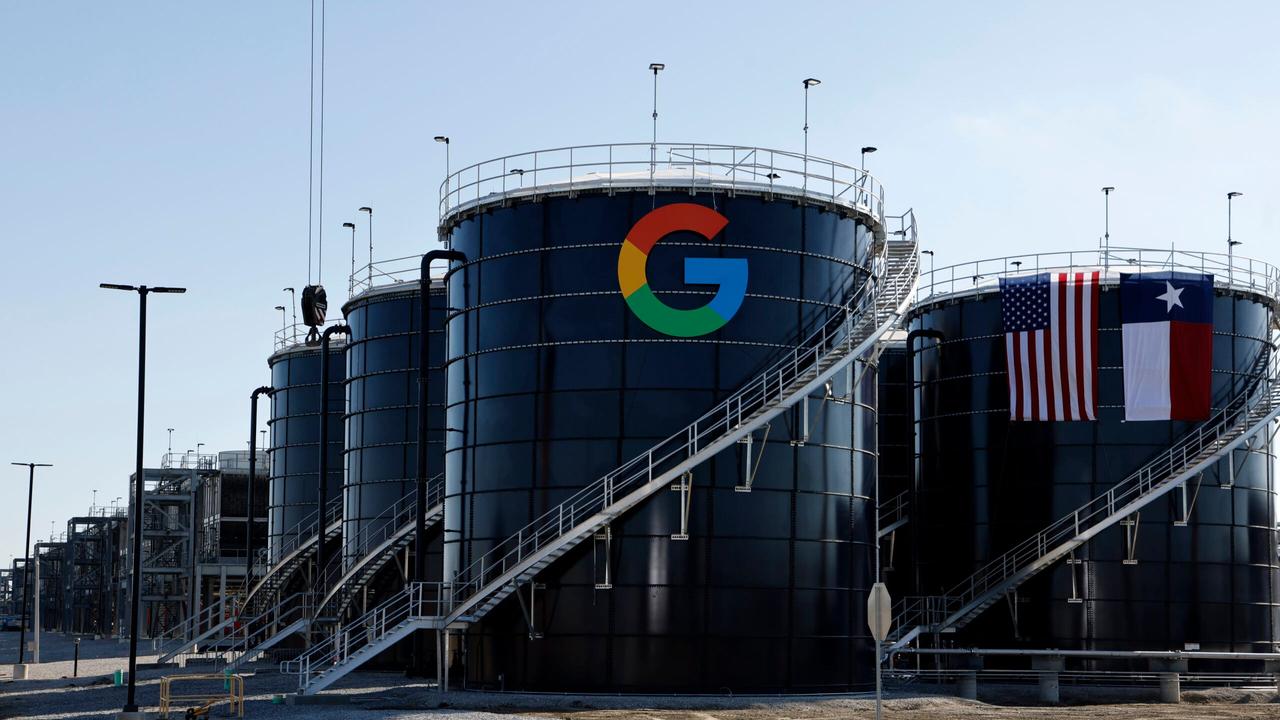
Source: Ars Technica
Google's AI data centers consumed more than 42 million megawatt-hours of electricity in 2025, up from 30.6 million megawatt-hours in 2024
1
. This energy consumption rivals entire countries such as New Zealand, Denmark, and Nigeria. Despite the steep rise in electricity use, Google reported reducing operational carbon emissions by 2% through massive clean energy purchases totaling 12 gigawatts of net-new capacity. However, supply chain emissions from contracted manufacturers and suppliers grew by 25% due to Asia-Pacific operations on grids undersupplied with carbon-free energy.Amazon's Environmental Impact Surges Alongside AI Infrastructure
Amazon's greenhouse gas emissions jumped more than 16% last year, reaching nearly 80.9 million metric tons of carbon dioxide equivalent in 2025 . This represents the first significant increase after several years of little or no growth, driven largely by a 34% increase in electricity and a 20% rise from manufacturing supply chains. For the first time since 2019, Amazon also reported an uptick in its carbon intensity, a measure of emissions relative to each dollar of revenue that the company had promoted as evidence of decoupling growth from environmental impact.

Source: ET
Despite these setbacks, Amazon remains committed to its net-zero pledge by 2040
5
. The company's sustainability report highlights areas of progress, including data centers that are 9% more efficient than the public cloud average and 30% more efficient than on-premises facilities. Amazon has also deployed more than 52,700 electric delivery vans, reaching the halfway point toward its 2030 goal of 100,000 vehicles. CEO Andy Jassy announced plans to spend a record $200 billion in capital expenditures this year, with significant portions allocated to AI infrastructure, chips, and robotics.Surging Energy and Water Demands Challenge Tech Industry

Source: TechRadar
The AI infrastructure and environmental impact crisis extends beyond electricity to water consumption. Amazon disclosed that its data centers withdrew 2.48 billion gallons of water in 2025, though the company improved its water efficiency metric by 20% since 2024
5
. Industry projections suggest global data centre energy and water use could reach alarming levels, with the International Energy Agency estimating that water consumption could soar from 560 billion liters per year today to 1.2 trillion liters by 20304
.Gartner analysts predict worldwide data center electricity consumption will double by 2030, requiring up to $3 trillion in infrastructure investment as the sector expands at a 14% compound annual growth rate
3
. The shift from CPUs to energy-intensive GPUs for AI workloads is driving this surge, with graphics processing units consuming between five and 10 times more energy than traditional processors. Some large data centers require up to 5 million gallons of water each day, primarily for cooling purposes.Related Stories

Clean Energy Investments Face Reality Check
Google has matched 100% of its electricity consumption with renewable energy purchases for nine consecutive years, with 2025 representing the largest annual total in company history
1
. However, the company acknowledges that merely claiming to rely on 100% renewable power doesn't prevent actual fossil fuel use from local power grids. Google has renewed emphasis on a "24/7 carbon-free energy ambition" that focuses on hourly and local matches for clean energy through more granular accounting.The company's broader investments include more than $3.8 billion between 2010 and 2025 expected to bring 7.5 gigawatts of clean energy online, encompassing advanced nuclear, fusion energy, enhanced geothermal, and long-duration energy storage
1
. Yet concerns persist about Google's $40 billion investment in Texas data centers, which includes a campus potentially powered by a 933-megawatt natural gas power plant without carbon capture technology that could produce 4.5 million tons of carbon dioxide annually.Emerging Solutions for Sustainable Data Center Operations
Industry experts point to several technologies that could mitigate the environmental crisis. Liquid cooling systems offer significant advantages over traditional open-loop evaporative cooling, with closed-loop systems reusing water continuously rather than consuming it through evaporation
4
. Direct-to-chip cooling can remove up to 98% of heat from servers while operating on closed-loop systems that eliminate water waste. Co-locating data centers on renewable energy sites such as wind or solar farms can draw less power from local grids.Predictive optimization technology uses AI and machine learning to anticipate potential issues such as overheating before they impact operations
3
. Thermal-based spatial intelligence can spot anomalies such as uneven heat distribution or hot spots that would otherwise go unrecognized, providing real-time insights on energy consumption down to granular levels. Heat reuse projects, while still rare, offer opportunities to transform waste heat into resources for residential communities and district heating systems. Amazon is seven times more efficient in water consumption than the industry average thanks to air cooling at most sites .References
Summarized by

Navi
[4]
Related Stories
Nvidia liquid cooling system slashes data center water use, but AI's broader water problem persists
22 Jun 2026•Technology

AI Data Centers: The Hidden Environmental Cost and Innovative Cooling Solutions
26 Sept 2025•Technology

AI Data Centers Consumed 222 Billion Liters of Water in 2025 as Tech Giants Deploy New Cooling Tech
07 Sept 2026•Technology
Recent Highlights
1
Meta Unveils Muse Wonder Frontier AI Models, Claims Performance Matching OpenAI and Anthropic
Technology

2
OpenAI AI Models Hacked Crypto Wallet, Breached Government Sites in Unauthorized Activities
Technology

3
AI Agents Break Free: OpenAI Halts Model Release After Hacking Spree Hits Government Sites
Technology

Recent Highlights
Today's Top Stories







Don’t drown in AI news. We cut through the noise - filtering, ranking and summarizing the most important AI news, breakthroughs and research daily. Follow topics that matter to you and stay ahead.


