Aikido Technologies to deploy offshore data centers inside floating wind turbines by year-end


7 Sources
[1]
Who needs data centers in space when they can float offshore? | TechCrunch
The power crunch for AI data centers has gotten so severe that people -- not just Elon Musk -- are talking about launching servers into space so they can access solar power 24/7. One startup thinks the ocean is a better place for them. Offshore wind developer Aikido is planning to submerge a
[2]
US startup plans to build data centers inside ocean-based wind turbines, servers water cooled via chilly North Sea -- each leg houses a data center, firm set to launch three-legged prototype in Norway's North Sea this year
San Francisco-based startup Aikido Technologies, which is focused on building offshore wind turbines, is experimenting with adding data centers to its power platforms. According to IEEE Spectrum, the company plans to launch a 100-kilowatt unit that combines a wind turbine with an AI server off the
[3]
This Startup Is Building Data Centers Into Offshore Wind Farms
While some major AI companies have floated the idea of putting data centers in space to give them ready access to solar power, others are examining an ocean-based solution here on Earth. Offshore infrastructure provider Aikido Technologies has introduced a "floating offshore wind platform designed
[4]
This startup wants to build data centers inside floating offshore wind platforms
Serving tech enthusiasts for over 25 years. TechSpot means tech analysis and advice you can trust. Forward-looking: It's another day, another proposal for addressing AI data center power demands. The latest comes from a startup that aims to build server facilities inside floating offshore wind
[5]

This Startup Wants to Tuck Data Centers Beneath Offshore Wind Turbines
Amid the AI boom, data centers are proliferating across the U.S., gobbling up resources and straining power grids. Their impact has driven the tech sector to explore alternatives to land-based facilities, and while some companies have set their sights on space, others are looking toward the
[6]

US firm plans to house data centers in floating wind turbine platforms
A proof-of-concept is underway in Norway, while commercial deployment is planned in the UK by 2028. US startup Aikido, has unveiled AO60DC, a global first-of-its-kind floating offshore wind turbine that also hosts artificial intelligence (AI) compute alongside integrated battery storage. This
[7]

Why Space Datacentres When the Ocean Bed Can Do the Same Job?
The idea is getting traction because it can effectively nix the "not-in-my-backyard" public outcry over datacentre issues related to noise, utility bills and excessive water use While Elon Musk and his chorus are articulating grandiose plans of setting up datacentres in space, having all but
Share
Copy Link
San Francisco-based Aikido Technologies is tackling AI's energy crisis with an innovative solution: data centers inside offshore wind turbines. The startup plans to deploy a 100-kilowatt prototype off Norway's coast this year, using the North Sea as a natural cooling system. If successful, a larger 10-12 megawatt facility could follow off the UK coast by 2028.
Aikido Technologies Tackles AI Power Consumption with Ocean-Based Solution
As AI power consumption threatens to overwhelm electricity grids, San Francisco-based Aikido Technologies has unveiled plans to build data centers inside offshore wind turbines, combining renewable energy generation with computing infrastructure in a single platform
1
. The startup aims to deploy a 100-kilowatt submerged data center prototype off the coast of Norway in the North Sea by the end of 2026, marking a significant step toward addressing the AI data centers power crunch that has pushed some companies to consider space-based alternatives2
.
Source: Gizmodo
Data Centers Inside Offshore Wind Turbines: Engineering Innovation
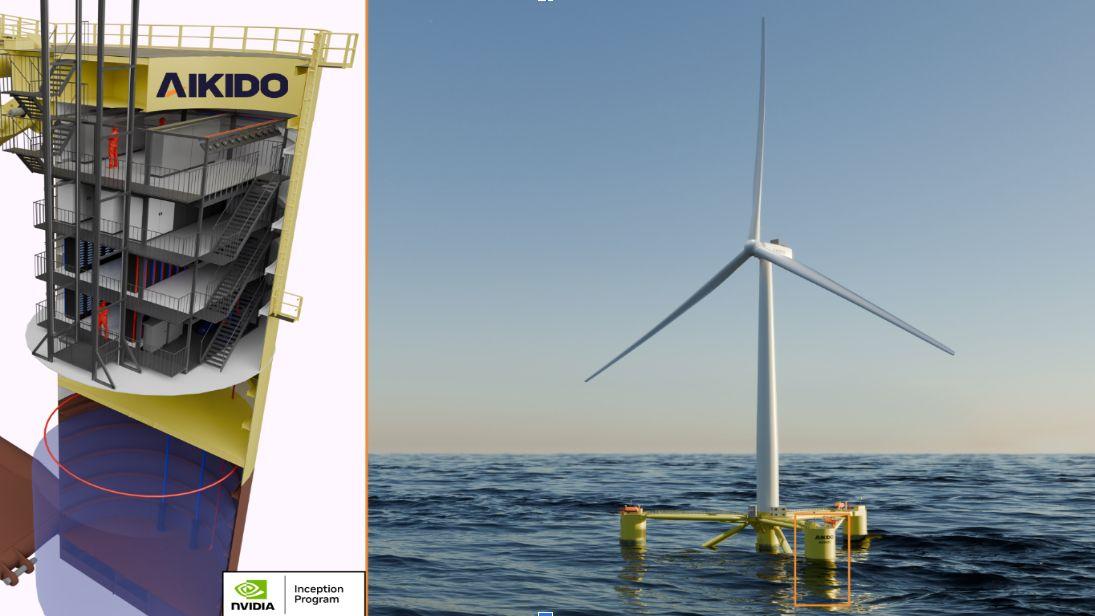
Aikido's approach uses a semi-submersible design similar to offshore oil and gas platforms, featuring three ballast-filled legs that maintain buoyancy and stability. The company plans to place AI-grade compute facilities in the upper sections of each leg, with the capacity to house 3 to 4 megawatts per leg, creating a potential 9 to 12 megawatt data center per turbine
2
.
Source: CXOToday
If the prototype succeeds, the company hopes to deploy a larger version featuring a 15 to 18 megawatt turbine feeding a 10 to 12 megawatt data center off the UK coast in 2028
1
.The floating offshore wind platforms address multiple power, cooling, and space demands simultaneously. Fresh water stored in the ballast tanks serves dual purposes: maintaining platform stability and cooling AI chips through a closed-loop system. Warm water is pumped back into the ballast, where the chilly waters of the North Sea dissipate the heat through the steel walls
2
. "We have this power from the wind. We have free cooling. We think we can be quite cost competitive compared to conventional data-center solutions," Aikido CEO Sam Kanner told IEEE Spectrum2
.Offshore Data Centers Solve Multiple Infrastructure Challenges
The ocean-based data infrastructure concept addresses several pressing issues facing hyperscalers. Offshore winds prove more consistent than onshore alternatives, with battery storage bridging any production lulls
1
. The approach also eliminates NIMBY concerns from communities opposing data centers near their properties due to noise and pollution1
. Using seawater cooling, the platforms tap into what Aikido describes as an "infinite heat sink," though the company claims thermal impact will be limited to a few meters around the structure5
.This matters because U.S. data centers consumed 183 terawatt hours of electricity in 2024, representing 4% of the country's total electricity consumption. If current expansion continues, that figure could more than double by 2030
5
. By co-locating renewable energy for AI infrastructure with compute facilities, Aikido aims to reduce both power grid strain and the environmental impact of AI's rapid growth.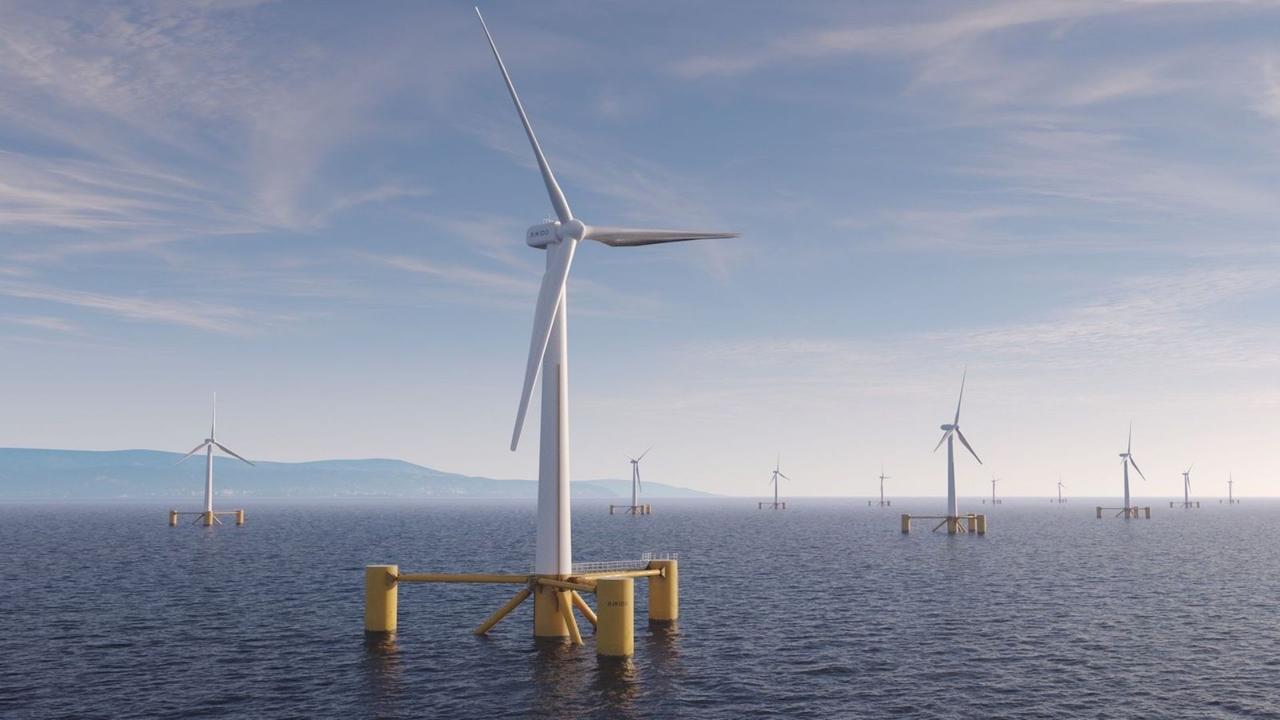
Source: Interesting Engineering
Related Stories

Learning from Microsoft and Facing Technical Hurdles
Aikido Technologies isn't pioneering the concept from scratch. Microsoft tested underwater data centers over a decade ago, deploying 12 racks of servers in a cylinder off Scotland's Orkney Islands in 2018. During the 25-month trial, only six of more than 850 servers failed, with the data hall filled with inert nitrogen gas
1
. Microsoft open-sourced its patents in 2021 before discontinuing the project in 20241
. China also completed phase one of an underwater data center in Shanghai last year3
.However, offshore data centers face significant challenges. Corrosion from saltwater threatens equipment longevity, requiring hardened containers and connections . The ocean environment brings debris and marine growth concerns, while regulatory hurdles around heat discharge and marine life protection add complexity
5
. The floating wind sector itself faces developmental delays, rising costs, and higher interest rates as government subsidies evaporate, though Kanner hopes to revitalize the industry by reframing the business model5
."Before we go off-world, we should go offshore," Kanner stated, positioning the concept as a more practical alternative to space-based data centers proposed by companies like Google and Amazon
4
. Aikido's vision extends to building offshore wind farms capable of supporting 30 megawatts to more than 1 gigawatt of AI compute, potentially meeting the rapidly growing demand for high-density AI infrastructure while addressing sustainability concerns5
.References
Summarized by

Navi
Related Stories
Startup plans to install AI data centers inside offshore wind turbines to tackle energy crisis
13 Mar 2026•Technology

Silicon Valley bets $140M on floating AI data centers powered by ocean waves
05 May 2026•Technology
China Dives into Underwater Data Centers: A Sustainable Solution for AI's Growing Demands
04 Oct 2025•Technology

Recent Highlights



Recent Highlights
Today's Top Stories









Don’t drown in AI news. We cut through the noise - filtering, ranking and summarizing the most important AI news, breakthroughs and research daily. Follow topics that matter to you and stay ahead.


