Silicon Valley bets $140M on floating AI data centers powered by ocean waves


8 Sources
[1]
Silicon Valley bets on floating AI data centers powered by ocean waves
Silicon Valley investors such as Palantir co-founder Peter Thiel have bet hundreds of millions of dollars on deploying AI data centers powered by waves in the middle of the world's oceans -- a move that coincides with tech companies facing mounting challenges in building AI data center projects on
[2]
Can floating data centres meet AI's huge energy demand?
A US start-up is putting autonomous data centres in the ocean, powered by wave energy, but experts warn that the harsh environment could make maintenance challenging The data centres powering the AI boom already use more electricity than some small countries, and the International Energy Agency
[3]
Peter Thiel backs $1bn ocean data centre start-up powered by waves
Peter Thiel is leading a $140mn investment in a US start-up that plans to use wave energy to fuel giant fleets of floating data centres, as Silicon Valley's search for AI power pushes into exotic new frontiers. Panthalassa, which has spent a decade developing its ocean energy technology, uses the
[4]
This startup just raised $140 million to build wave-powered AI data centers at sea
Serving tech enthusiasts for over 25 years. TechSpot means tech analysis and advice you can trust. Bottom line: Panthalassa wants to move a chunk of the AI infrastructure stack off land and into deep water, running neural network workloads on towers that live entirely on wave power and seawater
[5]

Data centers at sea: Oregon's Panthalassa nets $140M led by Peter Thiel for wave-powered AI
Wave energy had largely been bobbing around in the background of the U.S. clean energy sector -- until now. On Monday, Oregon-based Panthalassa announced a $140 million round led by Peter Thiel. The new funding from the PayPal co-founder and others will allow the startup to finish building its
[6]

Using the ocean to power data centers
There are two global problems you probably don't like to think about. First, burning gas and coal is still heating up the planet. Second, the thousands of AI data centers popping up all over the country consume enormous amounts of power, which produces even more carbon pollution - and drives up our
[7]

Forget Space Data Centers, This Peter Thiel-Backed Start Up Raised Millions To Fuel Ocean-Powered Compute
A Peter Thiel-backed startup, Panthalassa, has secured $140 million in a funding round aimed at propelling its AI-powered sea technology. Led by Thiel, the funding round witnessed participation from a mix of new and returning investors such as John Doerr, Marc Benioff's TIME Ventures, Max
[8]

Inside the giant floating ocean balls Silicon Valley is betting $200M on
Tech investors are pouring more than $200 million into a futuristic plan to build floating AI data centers powered by ocean waves -- a wild new approach aimed at dodging the growing headaches of building massive server farms on land, according to Ars Technica. Startup Panthalassa is behind the
Share
Copy Link
Peter Thiel and Silicon Valley investors are backing Panthalassa's ambitious plan to deploy wave-powered AI data centers in the world's oceans. The startup raised $140 million to build autonomous floating platforms that generate electricity from ocean waves while cooling AI chips with seawater. But the approach faces significant challenges, from satellite latency to maintenance in harsh ocean conditions.
Silicon Valley Invests in Ocean-Based Data Center Projects
Peter Thiel, co-founder of Palantir and PayPal, is leading a $140 million investment in Panthalassa, a startup developing floating AI data centers powered entirely by ocean waves
3
. The Series B funding round values the Oregon-based company at close to $1 billion and includes prominent Silicon Valley investors such as Salesforce CEO Marc Benioff, PayPal co-founder Max Levchin, and early Google investor John Doerr3
5
. The investment reflects mounting pressure on tech companies to find sustainable solutions for AI's energy needs as traditional land-based infrastructure struggles to keep pace with demand.
Source: Benzinga
The new capital will help Panthalassa complete a pilot manufacturing facility near Portland, Oregon, and accelerate deployment of its wave-riding "nodes" designed to generate electrical power directly in the ocean
1
. Instead of transmitting renewable energy to shore, these autonomous floating data centers would power onboard AI chips and transmit inference tokens to customers worldwide via satellite communication1
.How Wave-Powered Data Centers Work
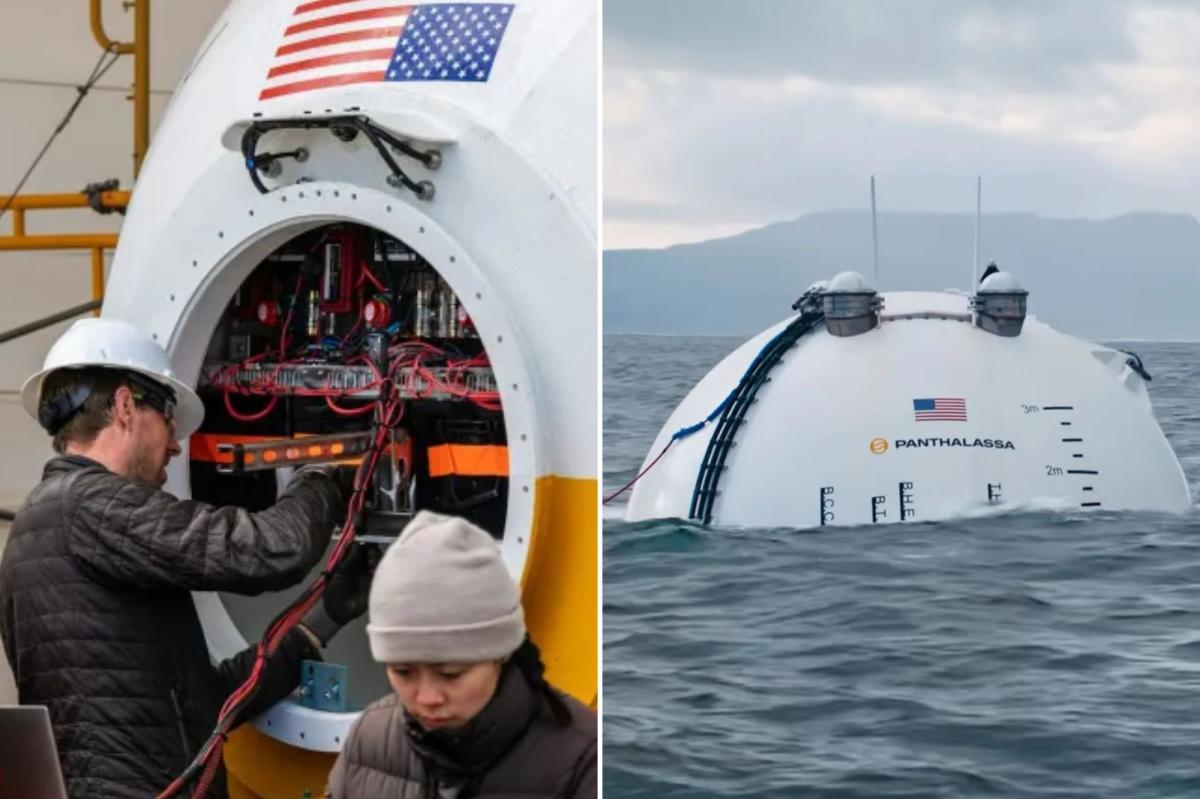
Each Panthalassa node resembles a massive steel sphere sitting atop a tube-like structure, standing approximately 85 meters tall—nearly as tall as London's Big Ben or New York's Flatiron Building
1
3
. The platform uses wave motion to drive water upward through the tube into a pressurized reservoir, where it spins a turbine generator producing electricity for AI chips housed in hermetically sealed containers below the surface1
3
.
Source: GeekWire
"Panthalassa's idea transforms an energy transmission problem into a data transmission problem," Benjamin Lee, a computer architect at the University of Pennsylvania, told Ars Technica
1
. CEO Garth Sheldon-Coulson, a former AI and energy researcher at Bridgewater Associates, explained that "one of the key insights that we had was that it's very important to use the electricity in place. We will never be transmitting electricity back to shore"3
4
.The nodes also leverage seawater cooling, offering significant advantages over traditional data centers that consume vast amounts of electricity and fresh water for cooling
1
. "Ocean-based compute might offer a massive cooling advantage because the ambient temperature is so low," Lee noted1
.Addressing AI's Huge Energy Demand
The International Energy Agency projects that data centers powering AI could consume 945 terawatt-hours annually by 2030—exceeding Japan's entire electricity consumption
2
. Panthalassa's wave-powered AI approach aims to bypass overwhelmed electrical grids and deliver carbon-free computing in international waters2
.Sheldon-Coulson describes ocean waves as "twice-concentrated sunlight" because they're created by wind, which is generated by solar heat. "The waves are like a battery for sunlight and we can be capturing from it 24/7," he told the Financial Times
3
4
. He believes wave and wind power, alongside solar and nuclear, are the only clean sources capable of generating "tens of terawatts" of energy3
.Harsh Ocean Conditions and Technical Challenges
Despite the promise of offshore computing solutions, significant obstacles remain. "Wave power is an old technology and it can work, but the ocean is a harsh environment," says Jonathan Koomey, a former Lawrence Berkeley National Laboratory researcher and expert in data center energy consumption. "The salt and the waves are effective at causing trouble for machinery"
2
.Panthalassa designed its nodes to withstand these conditions by making them largely solid with no hinges, flaps, or gearboxes that might break down
3
4
. Company job listings describe the goal of nodes "surviving for more than a decade in the harshest ocean conditions" while lasting "without human maintenance or intervention"1
.Latency issues present another hurdle. Relying on satellite links like Starlink to transmit data between nodes and customers means dealing with limited bandwidth and signal delays compared to fiber-optic cables
1
2
. "Satellites could communicate perhaps hundreds of megabits per second per terminal, which is feasible for real-time responses to prompts and queries," Lee explained. "But frequent communication and coordination between nodes may be challenging"1
.This makes the platforms most practical for neural network workloads that run for hours or days before returning results—like training advanced models or running scientific simulations—rather than consumer-facing AI applications requiring fast response times
2
4
.Related Stories

From Prototypes to Commercial Deployment
Source: New York Post
Panthalassa has tested several earlier prototypes, including Ocean-1 in 2021 and Ocean-2 during a three-week sea trial off Washington state in February 2024
1
5
. The Ocean-3 prototype is scheduled for testing in the northern Pacific Ocean later in 2026, with commercial deployments planned for 20271
5
.The nodes are assembled on land, towed horizontally behind boats, then flipped upright in deep water before using their hull shape to self-propel to designated locations without engines
3
4
. Sheldon-Coulson told CBS he hopes to eventually deploy thousands of nodes1
.Broader Context of Data Centers at Sea
Panthalassa's approach is more ambitious than previous ocean-based efforts. Microsoft's Project Natick experimented with underwater servers in 2015 and 2018, showing that sealed, seawater-cooled systems could achieve lower failure rates than land-based systems, though Microsoft decided against commercialization
1
. Chinese companies have deployed underwater data centers near Hainan Island and Shanghai, while Singapore's Keppel is constructing a floating data center1
.Other companies exploring offshore solutions include Aikido Technologies, which is developing floating data centers integrated with offshore wind platforms, and Mitsui O.S.K., studying ship-based computing systems
2
. The funding surge also parallels growing interest in space-based data centers harnessing solar energy, with Starcloud raising $170 million in March 20265
.Whether autonomous floating data centers can scale remains uncertain. Jacqueline Davis at the Uptime Institute notes that "power and networking are the top two root causes of data center outages" and "can each be uniquely difficult to manage in a remote environment with little to no staff"
2
. For now, Panthalassa is betting that offshore computing powered by ocean waves can provide a sustainable solution for AI's energy needs faster than expanding land-based infrastructure.References
Summarized by

Navi
[2]
Related Stories
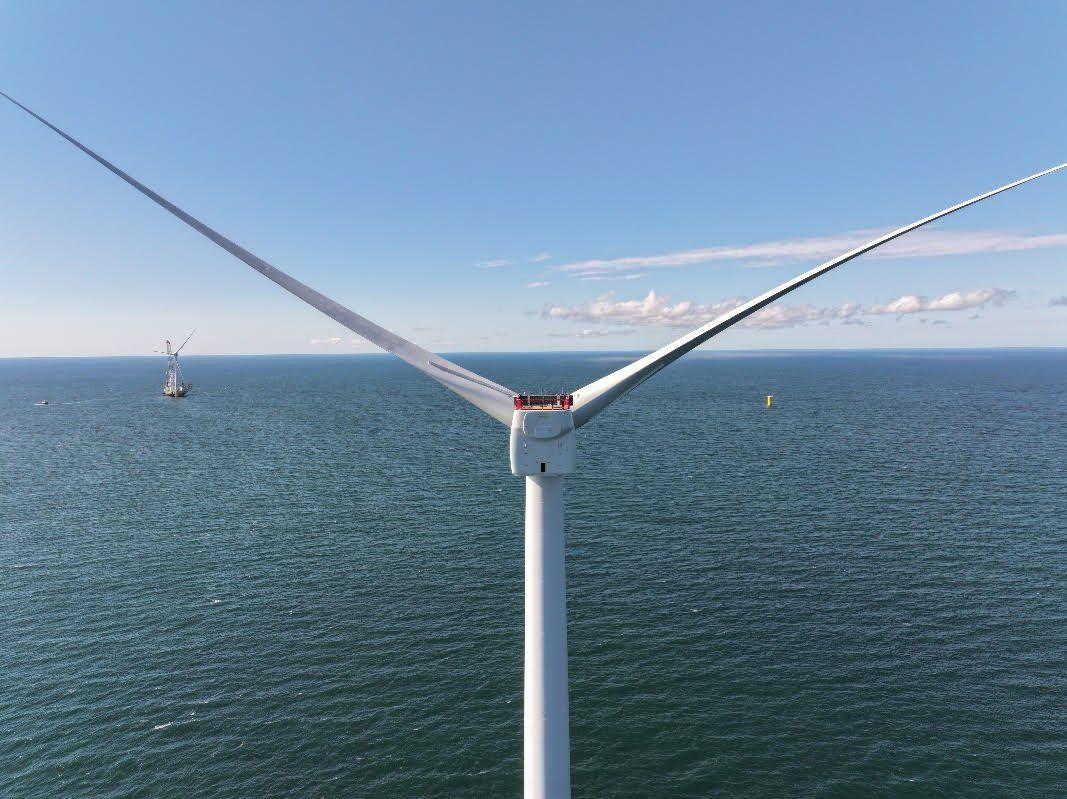
Aikido Technologies to deploy offshore data centers inside floating wind turbines by year-end
05 Mar 2026•Technology
Startup plans to install AI data centers inside offshore wind turbines to tackle energy crisis
13 Mar 2026•Technology

China Dives into Underwater Data Centers: A Sustainable Solution for AI's Growing Demands
04 Oct 2025•Technology

Recent Highlights



Recent Highlights
Today's Top Stories









Don’t drown in AI news. We cut through the noise - filtering, ranking and summarizing the most important AI news, breakthroughs and research daily. Follow topics that matter to you and stay ahead.


