Alibaba's Joe Tsai: Open-Source AI Is Europe's Only Route to True AI Sovereignty


2 Sources
[1]
Joe Tsai: open source is 'the only way to go' for AI sovereignty
Alibaba's chairman told a Turin audience that Europe has the talent to compete. His answer for AI sovereignty is open models, trained on European data and run on European infrastructure. Alibaba co-founder and chairman Joe Tsai says open-source AI is the only way for Europe to become independent
[2]
Alibaba's Joe Tsai says open-source AI is Europe's best path to tech independence
Tsai argued that Europe needs to get serious about the compute layer specifically -- building the data center capacity to train models and run inference on European infrastructure. He said the region is not making the most of its AI research talent, which U.S. and Chinese labs frequently recruit
Share
Copy Link
Alibaba chairman Joe Tsai told a Turin audience that open-source AI is Europe's only path to technological independence. Speaking at Wave by Vento, he urged the region to train models on local data and build own compute infrastructure, leveraging its industrial base and AI research talent to avoid dependency on closed systems from the US or China.
Alibaba Chairman Calls Open-Source AI Europe's Independence Strategy
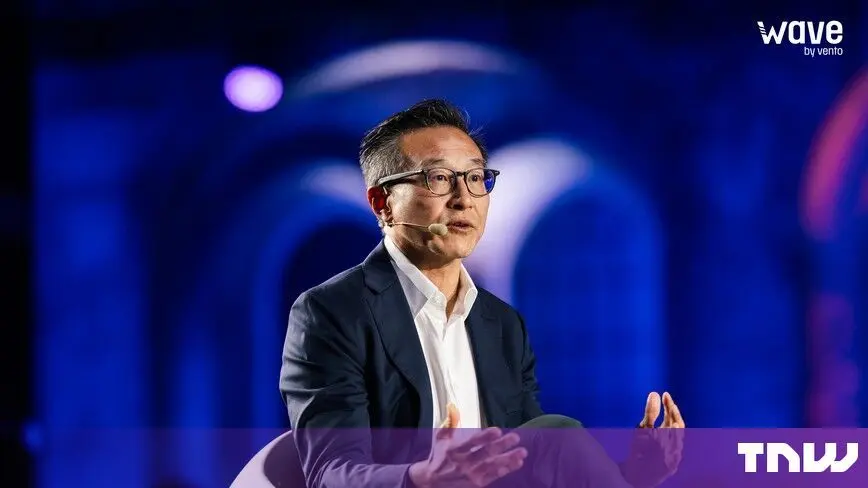
Alibaba co-founder and chairman Joe Tsai delivered a direct message to European leaders and investors at Wave by Vento in Turin on Wednesday: open-source AI represents the continent's only viable path to AI sovereignty. Speaking in a session titled "The Other Side of the Story," Joe Tsai emphasized that Europe must embrace open models, train them on European data, and run them on local infrastructure to achieve true technological independence
1
. "Open source is the opportunity for Europe... That's the approach Europe can take to truly be independent. We talk about technology independence, we talk about AI sovereignty in Europe. I think the open source approach is the only way to go," Tsai stated during the interview led by James Anderson, managing partner of Lingotto Innovation1
.
Source: The Next Web
Why Europe Needs Its Own AI Infrastructure
Tsai warned that no country should fully trust another nation's technology, as political shifts or changing circumstances could result in access being cut off. This applies equally to American and Chinese technology, making multiple options essential for European firms' competitive edge
1
. The ECB's Christine Lagarde echoed similar concerns in September, warning that Europe risks being isolated without developing its own AI capabilities. The missing piece, according to Tsai, is computing power. Europe needs to "get serious" about building data centers with the capacity to train models and run inference on European infrastructure2
. Alibaba Cloud demonstrated this commitment by opening data centers in France in June, showing how companies can establish local infrastructure to support regional AI ambitions1
.Proprietary Industrial Data as Europe's Competitive Advantage
Tsai identified proprietary industrial data from European factories as an untapped resource that could give the region a significant advantage. Industrial companies around Turin and across Europe hold valuable manufacturing data they would be reluctant to send to closed models controlled by foreign entities
1
. "In many countries in Europe, we still have large industrial bases here," Tsai noted, drawing parallels to how Chinese factories leverage manufacturing data to train models2
. By taking open-weight models and training them further on this proprietary industrial data, European companies can build specialized AI systems that run in their own data centers, avoiding dependency on closed systems while maintaining control over sensitive information1
.Talent Exists But Investment Infrastructure Lags
Addressing concerns about Europe's ability to compete with the US and China, Tsai emphasized that talent is not the problem. Europeans make up 20% to 30% of staff at some US frontier labs, demonstrating the region's strong AI research talent pool
1
. However, Anderson pointed to a critical gap: Europe lacks companies that reinvest cash flows into AI infrastructure the way US hyperscalers, Tencent, or ByteDance do. Tsai revealed that Alibaba uses about $25bn annually in free cash flow from e-commerce to fund its AI push, doubling capital spending on computing infrastructure each year for the past three years1
. By comparison, US hyperscalers together will invest around $1tn this year, a scale that neither China nor Europe currently matches1
.Related Stories

How Scarcity Drives Innovation in AI Development
When asked whether US chip restrictions had pushed Chinese companies to innovate, Tsai confirmed they had, comparing the situation to growing up without wealthy parents. "If you are scraping all along, that drives you," he said
1
. Despite US curbs on chip supplies, Chinese companies continue to open-source their work on model design and inference efficiency while publishing research papers. Tsai contrasted this with closed US labs that no longer publish because they want to protect their competitive advantages1
. China's complete supply chains for electric vehicles, batteries, and robots, combined with accounting for about 30% of global industrial production, provide additional edges in AI development1
.Open Models Enable True Independence and Cost Savings
Tsai compared open-weight models to recipes that anyone can take and improve, offering a path to avoid dependency on closed systems. Companies can run these models in their own data centers, train them on proprietary data, and no longer depend on the original developer
1
. This approach also eliminates ongoing costs associated with accessing closed models, making it financially attractive for European firms. Mistral, the Paris-based AI company, demonstrated this approach by releasing its Large 4 model with open weights on Tuesday, just before Tsai's speech1
. Tsai predicted that within five years, AI will be embedded in every business just as the internet is today, making current conversations about AI as a separate technology obsolete1
.References
Summarized by

Navi
[1]
Related Stories
China's Open-Source AI Push Creates 'Death Zone' for US Models as Competition Shifts to Ecosystems
30 Jul 2026•Business and Economy

Meta and Alibaba retreat from open-source AI as monetization pressures reshape industry strategy
06 Apr 2026•Technology

Europe trails US and China in AI race despite €200 billion push to close infrastructure gap
27 Jan 2026•Policy and Regulation

Recent Highlights



Recent Highlights
Today's Top Stories









Don’t drown in AI news. We cut through the noise - filtering, ranking and summarizing the most important AI news, breakthroughs and research daily. Follow topics that matter to you and stay ahead.


