Amazon deploys over 1 million robots as AI-driven automation reshapes warehouse jobs


2 Sources
[1]
Andy Jassy Says Robots Will Replace Many Repetitive Warehouse Jobs -- Amazon Already Has Over 1 Million Ma
Amazon.com Inc. (NASDAQ: AMZN) CEO Andy Jassy said the company now has more than a million robots in its fulfillment network and expects many repetitive jobs that people do to be handled by robots, but noted that Amazon will "always have a lot of teammates" in its fulfillment centers. Jassy Says
[2]
Amazon Puts a Million Robots Behind Its AI Ambitions | PYMNTS.com
But another milestone deserved attention: Amazon now has more than a million robots working in its fulfillment network. That figure puts a physical dimension on an AI discussion usually dominated by chips and data centers. Amazon expects robots to handle more repetitive work, lower delivery costs
Share
Copy Link
Amazon CEO Andy Jassy announced the company now operates over 1 million robots in its fulfillment network, with plans to automate many repetitive warehouse jobs. The retail giant doubled its robotic arm fleet in 2026 and is developing AI models to program robots for complex tasks, signaling a major workforce transformation ahead.
Amazon Crosses Million-Robot Milestone in Fulfillment Network
Amazon CEO Andy Jassy disclosed during the company's third-quarter earnings call that the e-commerce giant now operates more than 1 million robots across its fulfillment network
1
2
. This milestone marks a significant acceleration in Amazon's AI-driven automation efforts, with Jassy emphasizing that the current impact remains small compared to what the company expects over the next five years. The robots in fulfillment network are already delivering measurable improvements in cost structure, productivity, and safety, with the company reporting record-low safety numbers across its operations.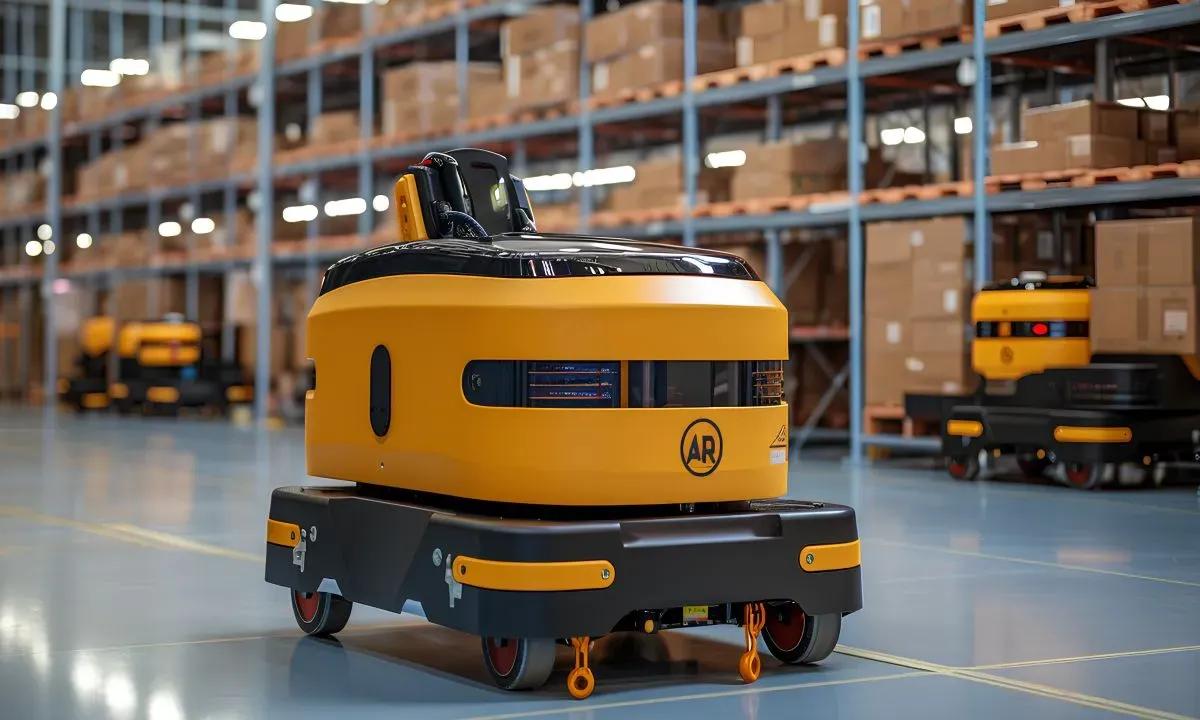
Source: PYMNTS
Repetitive Warehouse Jobs Face Automation Wave
Amazon CEO Andy Jassy made clear that many repetitive warehouse jobs currently performed by human workers will transition to robotic systems. "I think you'll see we will always have a lot of teammates in our fulfillment centers, but I think a lot of the jobs that we have that are more repetitive, that we have humans doing, will be done by robots," Jassy stated during the earnings call
1
. However, the company has not disclosed specific numbers on how many positions will be affected or provided a concrete timeline for the transition. This shift reflects Amazon's strategic focus on deploying automation where it improves productivity, safety, cost structure, and delivery efficiency.Robotic Arms and AI Models Drive Physical Automation
Chief Financial Officer Brian Olsavsky revealed that Amazon doubled its fleet of robotic arms, including Cardinal and Sparrow systems, during 2026
1
2
. Beyond hardware expansion, the company is developing robotics foundation models with AI models to program robots for increasingly complex physical tasks. These AI-driven automation initiatives aim to make robots easier to program and capable of handling more sophisticated warehouse operations. New fulfillment designs, particularly same-day facilities, are being built with heavy reliance on robotics from the ground up, signaling a fundamental shift in how Amazon structures its logistics operations.Last-Mile Delivery and Future Robotics Applications
Amazon is exploring how robots could assist with last-mile delivery, potentially covering the final hundred yards to customers' doors
2
. The company evaluates each robotics deployment by asking whether it leads to comparable or better productivity, safety, cost structure, and time to delivery. This methodical approach ensures that Amazon robots contribute meaningfully to operational goals rather than serving as mere technological showcases. The focus on delivery efficiency extends beyond warehouse walls, positioning robotics as integral to the entire fulfillment chain.AWS Powers Enterprise AI Adoption Beyond Physical Automation
While Amazon robots dominate the physical automation narrative, Amazon's AI ambitions extend deeply into digital territory through AWS. Jassy described a future where agents become embedded in everyday business software, stating, "I believe virtually every modern enterprise production application will be rewritten to be agentically capable"
2
. AWS reported 39% revenue growth to $46 billion, driven partly by tools like Bedrock AgentCore, which saw customers deploy twice as many agents during Q3 as in the previous three quarters combined. Ready-made offerings include Amazon Q, adopted by companies including 3M and Southwest Airlines, and Amazon Connect for contact centers.Related Stories
Massive Capital Expenditures Signal Long-Term Commitment
Amazon expects approximately $220 billion in cash capital expenditures this year, with meaningfully higher spending planned for 2027
2
. This investment surge reflects the company's commitment to both physical robotics infrastructure and AI computing capabilities. Free cash flow swung from a $14.8 billion inflow to a $42.4 billion outflow over the trailing 12 months, driven largely by AI investment. Despite missing third-quarter revenue estimates at $201.94 billion versus the $202.31 billion consensus, and earnings of $1.89 per share versus $1.97 expected, Amazon continues prioritizing long-term automation capabilities over short-term financial metrics1
.Workforce Implications and Broader Industry Concerns
Earlier in 2026, Amazon reportedly laid off about 100 employees in its robotics organization responsible for building warehouse automation systems
1
. The workforce transformation concerns extend beyond Amazon, with Microsoft co-founder Bill Gates warning that AI could displace workers so extensively that governments may struggle to fund support programs. Gates noted that business incentive structures favor automation: "It's hire the robot, fire the human and don't look back." As enterprise AI adoption accelerates and Amazon robots become more capable, the retail giant's approach to balancing automation with human employment will likely influence industry-wide practices for years to come.References
Summarized by

Navi
[1]
Related Stories
Amazon Deploys One Millionth Robot and Launches DeepFleet AI Model for Warehouse Optimization
01 Jul 2025•Business and Economy

Amazon's Automation Push: Balancing Efficiency and Employment Concerns
21 Oct 2025•Technology

Amazon's $35 Billion Robotics Investment: Revolutionizing Retail Efficiency and AI Integration
26 Feb 2025•Business and Economy

Recent Highlights
1
OpenAI's AI Models Disprove 27-Year Exponential Time Hypothesis, Rendering Decades of Research Obsolete
Science and Research

2
Google DeepMind unveils Genie 4 world model with audio and 2-minute interactive simulations
Technology

3
Microsoft AI Diagnostic Tool Beats Doctors With 83% Accuracy on Complex Medical Cases
Health

Recent Highlights
Today's Top Stories







Don’t drown in AI news. We cut through the noise - filtering, ranking and summarizing the most important AI news, breakthroughs and research daily. Follow topics that matter to you and stay ahead.


