Amazon Warns Engineers Against Tokenmaxxing as AI Usage Fails to Prove Productivity


15 Sources
[1]
Amazon tells engineers to stop 'tokenmaxxing' to look productive -- says AI will be central to software development, but usage is not the goal, new guidelines claim
Amazon still expects AI to sit at the center of software engineering, but says usage alone is not proof of productivity Amazon wants its engineers to quit chasing token counts, warning that heavy AI usage does not automatically mean better work. In updated engineering guidelines published on
[2]
Amazon sends chills through its workforce with mixed message memo about AI use
A lot of software engineers feel bleak about the future of the profession There's a ridiculously simple test you can use to figure out whether AI mandates at a given company are well-considered, or are being shoved out the door by out-of-touch buffoons: What happens when an engineer documents that
[3]
Amazon's anti-tokenmaxxing memo says engineers should be pickier about using AI
* Amazon discouraged teams from relying solely on token usage or code generation as measurements of AI adoption, calling them "deeply flawed" in an internal memo. * Companies are grappling with rising AI costs and how to reliably measure whether the tools lead to a boost in productivity. * Amazon
[4]
Amazon warns engineers against "tokenmaxxing" as it shifts focus from AI usage to actual productivity
Serving tech enthusiasts for over 25 years. TechSpot means tech analysis and advice you can trust. Big quote: Amazon is telling its engineering teams to judge AI coding tools by the software they help deliver, not the volume of tokens they consume. The updated engineering guidelines warn against
[5]
Amazon tells tokenmaxxing devs to slow their AI roll
Focus more on what matters, please, like creating useful software and accomplishing company goals Maximize value, not token usage, Amazon has told its engineers, citing concerns about rising AI costs and complexity. Amazon made the strategy shift public on Tuesday in a note to engineering teams
[6]

Amazon rewrites its software engineering playbook for an era when AI writes the code
Last month, a small team inside Amazon Web Services called Velocity Labs went from concept to the public release of a new open-source AI model in less than a week. The group, whose existence hasn't been previously reported, was formed in April. Velocity Labs has about 35 people, most of them in
[7]

Amazon to Employees: For the Love of God, Stop Tokenmaxxing
Instead of hitching a ride on the AI bandwagon, sometimes it's quicker to just get out and walk. Amazon is (once again) pleading with its workforce to stop using AI indiscriminately. In an internal memo published to Amazon's website on Tuesday, the company described "tokenmaxxing" -- the once
[8]

Amazon tells engineers AI usage metrics are 'deeply flawed'
The company says the metrics can raise costs when used as targets. It still expects AI at the centre of engineering, and wants managers to study the least and most AI-heavy teams. Amazon says token usage, AI tool adoption and counts of code changes are "deeply flawed" ways to measure its
[9]

Amazon warns engineers just using more AI doesn't make them more productive, says they should avoid tokenmaxxing
* Amazon urges developers not to blindly focus on AI tool usage * The era of the "Renaissance Developer" using all kinds of AI is here * It also urges workers to shun tokenmaxxing, and focus on building a deeper connection with customers Amazon has told its engineers to look beyond simply using
[10]

Amazon warns against tokenmaxxing and tells engineers that using more AI doesn't necessarily mean they're doing better work | Fortune
Companies have pushed their employees to use AI to be more productive, but some have started questioning whether embracing it for every task is a good idea. Amazon is the latest to urge employees to use AI, but to use it judiciously. The e-commerce giant published a memo on Tuesday revising its
[11]

Amazon warned engineers AI usage metrics are 'deeply flawed'
The company's revised software engineer guideline says token usage and code changes should be weighed with care and judgment Amazon $AMZN published a revised role guideline for software development engineers on Tuesday that discourages "tokenmaxxing," the habit of leaning heavily on AI tools
[12]

Amazon Warns Engineers Against AI Productivity Traps in Lat
Engineering teams should approach AI adoption metrics with caution to avoid negative impacts on costs and complexity. As concerns grow over AI's impact on software engineering jobs, Amazon has issued a memo outlining what it expects from its engineers as AI reshapes software development. While
[13]

Amazon asks engineers to reconnect with customers as AI reshapes software development
A company-wide memo also suggested managers to look closely at teams using the least and the most AI; understand what holds back adoption and whether heavy users deliver more. Amazon has asked its software engineers and managers to connect more with their customers and understand their businesses
[14]

Amazon Tells Engineers Outcomes, Not Tokenmaxxing, Define AI Success | PYMNTS.com
Terkowitz contrasted that metric with input metrics such as token usage or adoption of AI tools, and with throughput metrics such as code changes and reviews. "We are all aware of how deeply flawed these metrics are, primarily because they are disconnected from what matters," Terkowitz wrote in
[15]

Amazon updates AI guidance: focus on results, not token counts
Internal memo says teams should cut tools that don't help customers Amazon has updated its internal guidance on generative AI and is telling employees to stop treating heavy tool use as evidence of good work. According to a reported internal memo, the company says "tokenmaxxing" is deeply flawed
Share
Copy Link
Amazon published updated engineering guidelines telling software development engineers to stop inflating AI token usage to appear productive. The company shut down its internal KiroRank leaderboard in May after employees gamed the system, and now emphasizes that AI adoption must drive actual results, not just higher token consumption.
Amazon Redefines AI Usage Standards for Engineers
Amazon published updated engineering guidelines on October 27 that explicitly warn software development engineers against tokenmaxxing—the practice of deliberately inflating AI token consumption to appear productive on internal dashboards
1
. The internal memo, originally circulated in September and authored by VP and distinguished engineer Terk Terkowitz, marks a significant shift in how the company measures AI productivity2
. Amazon emphasizes that metrics such as AI tool adoption rates, AI token consumption, code changes, and code reviews become "deeply flawed" when disconnected from actual results3
. The company shut down KiroRank, an internal leaderboard that ranked employees by token usage, in May after discovering widespread gaming of the system1
.
Source: TechSpot
Long-Term Outcomes Over Token Metrics
The engineering guidelines establish that Amazon will measure success through long-term outcomes rather than input metrics. "We believe that it is best to measure, and be measured by, long-term outcomes," the company stated
4
. This approach directly challenges the assumption that heavy AI usage automatically translates to better work. Amazon recommends examining teams at both ends of AI adoption—those using AI the least and those burning the most tokens—to determine whether adoption genuinely improves delivery5
. The company has not imposed token caps on employees, according to an Amazon spokesperson3
. However, the guidance warns that turning metrics into targets encourages wasteful behavior that conflicts with Amazon's emphasis on frugality and simplicity, potentially raising both compute bills and software complexity1
.
Source: The Register
MeshClaw Abuse and Gaming Internal Systems
The tokenmaxxing problem emerged prominently in May when Amazon employees were found using MeshClaw, an internal AI agent capable of deploying code and interacting with Slack, to artificially inflate their token counts
1
. Workers spun up junk tasks specifically to climb the KiroRank leaderboard amid pressure to demonstrate usage of company tools2
. The new guidelines explicitly address this behavior, stating that using metrics as targets instead of measures could "drive negative outcomes, increasing costs, and increasing complexity"5
. Amazon's approach mirrors actions taken by other tech companies—Meta implemented similar measures with "Claudenomics" for 85,000 employees during the same period2
.When AI Tools Don't Help
The engineering guidelines explicitly validate situations where AI tools fail to improve work. "If your work does not benefit from current AI tooling, that is a finding, not a failing," Amazon stated
3
. Engineers who can explain where AI does not yet help their work are demonstrating judgment rather than resistance to adoption, according to the memo5
. This stance acknowledges that not every task benefits from AI intervention. The company wants software development engineers thinking more critically about how AI can improve delivery for customers and business units, rather than finding arbitrary places to apply the technology5
. Despite these caveats, Amazon remains committed to AI's central role: "We are certain that whatever future best practices are, AI will be at the center of software engineering practice"1
.Related Stories

Industry-Wide Token Cost Concerns
Amazon's concerns reflect broader industry struggles with AI costs and return on investment. Uber president and COO Andrew Macdonald said in May that higher token usage has not yet translated into useful consumer features, noting "that link is not there yet"
1
. This admission came after Uber's CTO revealed the company had exhausted its entire 2026 Claude Code budget by April4
. Accenture executives acknowledged in leaked audio obtained by 404 Media in June that token spending climbs rapidly as companies move from simple chatbots to agentic workflows, with no reliable way to predict task costs or value1
. The consulting firm is building an advisory tool called Token IQ to help clients manage expenses4
. OpenAI CEO Sam Altman previously acknowledged that AI token costs had become "a huge issue" as companies faced mounting bills from heavy AI use1
.Andy Jassy's AI Vision and Workforce Implications
Under CEO Andy Jassy, Amazon has rapidly integrated AI across its sprawling operations. Jassy stated earlier this year that the technology will "change the scope and speed" of everyday work
1
. He has suggested that automation could shrink the company's corporate workforce over the next few years, though he expects it to create "other jobs"3
. Amazon reportedly announced another 250 job cuts this week, though the company has not explicitly linked these reductions to AI implementation2
. The timing of the engineering guidelines has created anxiety among software engineers about career prospects in the AI era. At GitHub Universe, speakers noted that agents now start roughly 40% of pull requests2
. Microsoft issued similar guidance in August, with EVP Jay Parikh telling developers: "Tokenmaxxing is not what we are optimizing for. I want all of us focused on maximizing outcomes that move the needle for our customers and our business"5
. This industry-wide shift suggests companies are moving away from the throw-AI-at-everything approach toward more measured adoption strategies that balance cost with genuine productivity gains.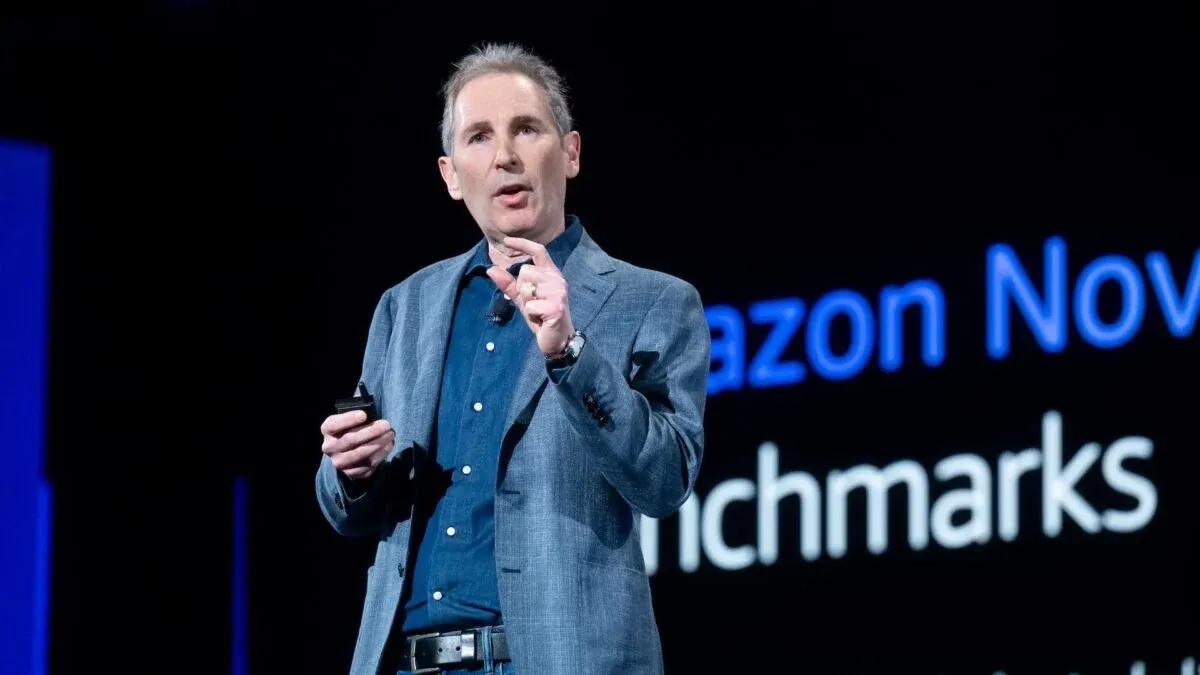
Source: Gizmodo
References
Summarized by

Navi
[4]
[5]
Related Stories
Amazon employees are tokenmaxxing to meet AI usage targets as pressure mounts across Big Tech
12 May 2026•Technology

AI Costs Surge 10x Despite Token Price Drops as Companies Grapple With Usage Explosion
06 Jul 2026•Business and Economy

Amazon Requires Senior Engineer Sign-Off After AI Coding Tools Linked to Major Outages
10 Mar 2026•Technology

Recent Highlights


Recent Highlights
Today's Top Stories






Don’t drown in AI news. We cut through the noise - filtering, ranking and summarizing the most important AI news, breakthroughs and research daily. Follow topics that matter to you and stay ahead.


