12 Sources
[1]
Amazon launches an AI shopping assistant for the search bar, powered by Alexa+ | TechCrunch
Whether you like it or not, Amazon continues to put AI at the center of the shopping journey. The company announced Wednesday "Alexa for Shopping," its new personalized AI shopping assistant, powered by Alexa+. Notably, the experience will replace Rufus, its generative AI shopping assistant that launched in 2024. According to the company, Alexa for Shopping is designed to offer a voice- and touch-enabled shopping experience across mobile, desktop, and Echo Show smart displays. While Rufus focused on helping customers discover and compare products, Alexa for Shopping is meant to provide more personalized recommendations and automate the shopping experience across Amazon and other online retailers. Now available to U.S. customers, Alexa for Shopping can answer anything from "What's a good skincare routine for men?" to "When did I last order AA batteries?" Users can type their question into the main search bar or the dedicated Alexa for Shopping chat window, and Alexa will provide tailored answers, recommendations, and even create custom shopping guides. The company says the assistant understands customers' habits, preferences, and purchase history to bring "that connected, personalized assistance to how you shop" and to make the assistant "more personal and more helpful over time." Beyond answering questions, Alexa for Shopping can compare products, track prices, and even schedule recurring orders for essentials like pet food or paper towels. If you want to automatically add something to your cart when it goes on sale, you can just tell Alexa, "Add this sunscreen to my cart if the price drops to $10." Additionally, the assistant can also go beyond Amazon's marketplace, shopping other online stores and using its "Buy for Me" feature to handle the purchase for you, which could be seen as convenient but also a little controversial, given the growing concern around AI autonomy and privacy. The launch of Alexa for Shopping comes on the heels of Amazon introducing its 30-minute delivery service, "Amazon Now," in dozens of U.S. cities, and a new AI-powered feature that generates real-time conversational audio responses to customer product questions.
[2]
Alexa Replaces Rufus as Amazon's AI Shopping Assistant: Here's What's New
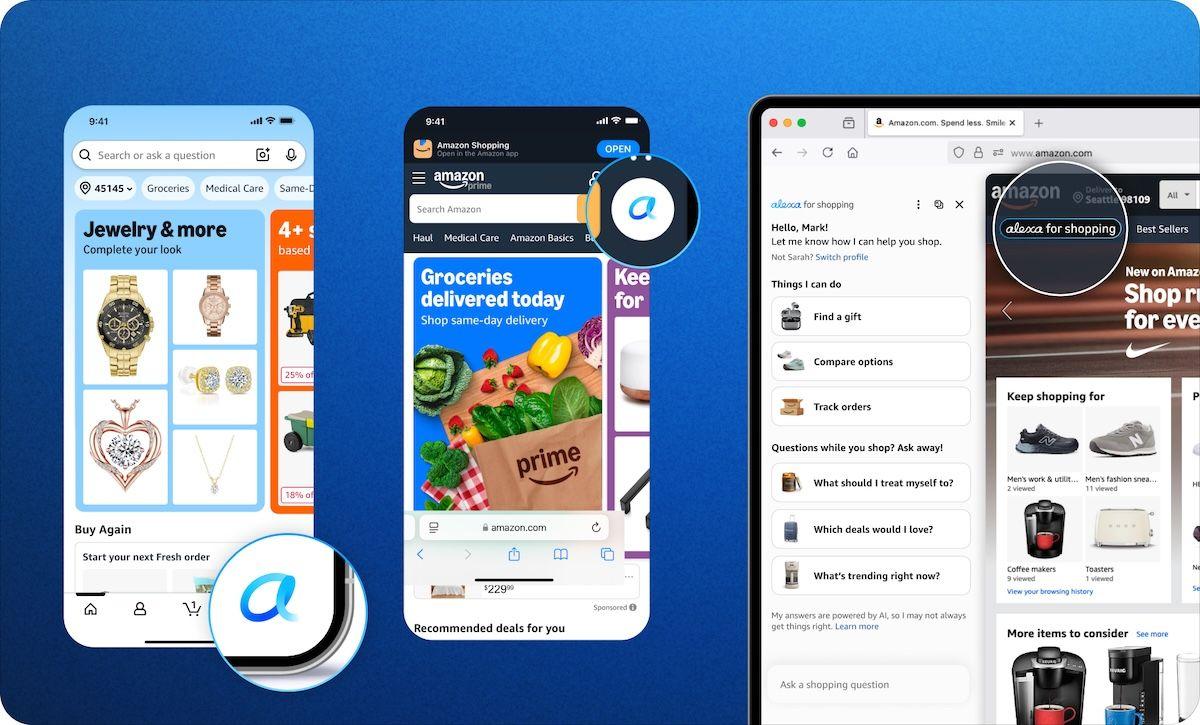
'Alexa for Shopping' is free for all users and begins rolling out in the US next week. Amazon is replacing Rufus with a new AI assistant called "Alexa for Shopping." The new assistant combines the personalized knowledge and context of LLM-powered Alexa+ with Rufus' product expertise to deliver a more helpful shopping experience, Amazon says. Like Rufus, Alexa for Shopping is free for all users. You don't need a Prime subscription or an Echo device to access it. The assistant will begin rolling out to users in the US via the Amazon app and website starting next week. It will also be available on the Echo Show, which is getting the full Amazon shopping experience for the first time. How to Use Alexa for Shopping To interact with Alexa using voice or text, tap the search bar or the Alexa icon in the bottom navigation bar. When you enter a query in the search bar, the feature automatically understands you're seeking Alexa's help and will direct your question toward it. In addition to product recommendations, the AI assistant can provide answers to general questions like "What's a good skincare routine for men?" or "How to plan a unicorn-themed birthday party." You can also ask questions about your purchase history and delivery status. In search results, you can select multiple products and ask Alexa to compare them side by side. The assistant also generates an AI overview at the top of the search result to give "you a quick summary of a product category and what to look for before you start browsing," Amazon says. Once you enter the product details page, you can ask Alexa about its price history. You can also set price alerts by providing prompts like, "add this sunscreen to my cart if the price drops to $10." If you need products added to your cart at regular intervals, Alexa can help with that, too. Tap the "+" button in the new chat interface and select Scheduled Actions. Then ask the assistant to add dog treats, cleaning supplies, or other regular items to your cart at specific times. The shopping assistant should remember your conversations with Alexa across devices and use that info to provide personalized responses. For example, you could just say, "Please suggest supplies for my science fair project that we talked about." If you have discussed someone's age or birthday in the past, you could ask for a suitable gift as the date approaches. Another major advantage of the sync between Alexa and your Amazon history is that you can get troubleshooting tips for products you purchased by providing short prompts. For example, you can say, "an E07 error code is flashing on my dishwasher," and the assistant will check the dishwasher or detergent pod you bought to provide a relevant response. You can check out all these features in the Amazon app starting next week. Just make sure you're using the latest version of the app and are logged in to your Amazon account.
[3]
Amazon ditches Rufus chatbot, launches Alexa shopping agent in AI strategy pivot
Wall Street sees 'changing of the guard in AI' as Intel, AMD shares soar while Nvidia lags Amazon is evolving its strategy as the e-commerce industry grapples with the rise of AI shopping bots. OpenAI, Google and Perplexity have rolled out research tools and agents over the past year that threaten to disrupt how people shop online. Some of those efforts have stumbled, and it's unclear whether consumers are ready to hand off the task of completing a purchase to bots. Daniel Rausch, Amazon's top Alexa executive, said the new offering is superior to other AI shopping tools because it has access to valuable data, such as customer reviews and a vast product catalog. It can also reliably tell a user whether a product is in stock, or estimated delivery times, Rausch said. "As I'm using it, I'm just realizing why other AI efforts have struggled with shopping because it's not just scraping web results and then putting things in a conversation," Rausch said in an interview. Earlier this year, OpenAI significantly altered its AI shopping plans. The company ended Instant Checkout, a tool that let users check out directly from ChatGPT, in favor of working with retailers to create dedicated apps in its chatbot. OpenAI said at the time that shopping apps would enable users to make purchases "more seamlessly." Rausch said he wasn't surprised "others have basically had to undo a bunch of features" that were incomplete or disjointed. "It's just not worth it," he said. "Shopping is not something you do as a side quest." Amazon has been reluctant to partner with rival AI platforms and open up its site to external shopping agents. CEO Andy Jassy has said the company is "having conversations with" and expects to partner with third-party agents, though Amazon continues to block many bots from accessing its site. At the same time, it has also launched "Buy for Me," which uses AI to purchase products on a customer's behalf, including products sold on other retailers' websites. The tool sparked backlash from some retailers who said they never opted in to the program. By inserting Alexa for Shopping into search results, Amazon is taking advantage of valuable real estate for promotion. The move could prove disruptive to Amazon's millions of third-party sellers, who pay top dollar to promote their listings and rank higher in traditional search results. The ads, which Amazon refers to as sponsored product listings, account for most of the company's advertising revenue. Alexa for Shopping will feature ads where they're relevant and when they "enhance" the shopping experience, Rausch said, adding that it's not designed to "narrow" search results "It's there to, in some cases, expose even more products for customers, depending on where you are in the journey," he said.
[4]
Amazon puts Alexa inside the search bar as agentic commerce heats up
The unified Alexa for Shopping assistant absorbs Rufus and arrives in the main search flow as Amazon sues to keep external AI agents like Perplexity's Comet off its marketplace. Amazon is moving its AI shopping assistant into the main search bar. Starting this week, US customers typing into the search field on Amazon.com or in the Amazon app will be routed through Alexa for Shopping, a unified version of the company's Rufus chatbot and its Alexa+ assistant that returns conversational answers, product comparisons, up to a year of price history, and personalised shopping guides alongside the standard product listings. The Rufus brand is being retired from the shopping interface. The chatbot, launched in 2024 and used by more than 300 million customers in 2025, is being folded into the Alexa for Shopping name across Amazon's app, website, and Echo devices. Amazon says the new assistant can also automate reordering of household staples, track prices, alert customers to new products in tracked categories, and build out shopping carts based on stated preferences. It is available without a Prime membership, an Echo device, or the standalone Alexa app, and is free for any signed-in US account. The structural change is that the AI now sits inside the default search flow rather than behind a separate icon. Rufus, in its original form, was accessible but optional. Alexa for Shopping reframes the search box itself as a conversational interface, in the same way Google's AI Overviews changed what happens after a query on Google.com. Amazon's own framing is that the move makes the assistant "agentic," meaning able to complete multi-step tasks like comparison, cart construction, and reorder, on the customer's behalf. The competitive backdrop is what makes the placement significant. OpenAI launched Instant Checkout in September 2025 with Stripe and an open-source Agentic Commerce Protocol that lets ChatGPT complete purchases inside its own interface. Google is building Buy for Me into Gemini and runs its A2A agent-to-agent protocol with 150-plus supporting organisations. Perplexity's Comet browser has had a Buy with Pro feature since late 2024, with checkout via PayPal across 5,000-plus merchants. In China, Alibaba integrated its Qwen AI directly into Taobao for end-to-end agentic shopping last quarter. Each of those routes the buy flow through someone other than Amazon. The Perplexity case sharpens the picture. Amazon sued the AI search company in November, alleging its Comet shopping agent was accessing Amazon.com in violation of the site's terms and creating problems for ad-impression measurement. A federal judge granted Amazon a preliminary injunction in March; Perplexity took the case to the Ninth Circuit, which has temporarily paused parts of the order while the appeal is heard. The legal argument is over agent access, but the commercial argument is over who captures the high-intent search query at the top of the funnel. That is what Alexa for Shopping is designed to defend. Amazon's $56 billion advertising business, all of it built around sponsored placements inside search and product pages, depends on Amazon being the first and last surface a buyer touches. If a third-party AI agent does the comparison and the click on a customer's behalf, the sponsored slot loses its target. The internal answer is to make Amazon's own AI assistant the most fluent shopper on Amazon.com, with access to the price history, recommendation graph, and account-level purchase data that an external agent does not have. Whether it works as a product is a separate question. Amazon has tried to make Alexa the front door to its shopping business for the better part of a decade, with mixed results. Voice shopping never reached the share the company once projected, and the original Rufus chatbot, while widely used, has been described in trade reporting as more useful for product research than for closing transactions. The unification with Alexa+ is also a tacit acknowledgement that running two AI assistants, one for the home and one for the cart, was confusing to customers and expensive to maintain.
[5]
Amazon unifies Alexa+ and Rufus as AI rivals move into online shopping
Amazon.com and Alexa are finally talking to each other. The tech giant on Wednesday announced Alexa for Shopping, a new capability that connects its Rufus e-commerce chatbot with its Alexa+ assistant, aiming to unify product research, user preferences and shopping activities across Amazon's apps, websites and Echo devices. The move comes as consumers increasingly turn to popular AI assistants like OpenAI's ChatGPT and Google's Gemini for shopping advice. By creating a more integrated AI shopping experience, Amazon is aiming to keep that research and the resulting purchases on its own platforms. Several of Amazon's new features reflect the broader push into agentic AI, which takes action on a customer's behalf. For example, Alexa for Shopping can monitor prices and automatically purchase an item when it hits a target, or restock household essentials on a schedule. With the integration, Amazon is retiring the "Rufus" name from its shopping interface, replacing the chatbot with Alexa for Shopping branding in its app and on its website. Amazon says Rufus will continue to power parts of the experience behind the scenes. Broader landscape: ChatGPT, Gemini and Perplexity have all launched shopping features in recent months, with Google enabling in-chat checkout from retailers like Walmart and Wayfair. (OpenAI pulled back on its in-chat checkout feature in March after it failed to gain traction). Amazon is also looking to keep rival AI agents off its platform: A federal judge in March blocked Perplexity's Comet browser from shopping on Amazon on behalf of users, though the order was stayed pending appeal. In a statement at the time, Amazon called it "an important step in maintaining a trusted shopping experience for Amazon customers." On the product front, Amazon is betting that a unified and personalized experience will matter more to customers than the ability to compare products across retailers in a general-purpose AI assistant. Rollout details: Alexa for Shopping will roll out in the U.S. over the coming week, the company says. It will be available for free to customers signed into an Amazon account through the Amazon Shopping app and Amazon.com, with no Prime membership, Echo device or Alexa app required. The company is also bringing the full Amazon shopping experience to Echo Show devices, starting with Alexa+ customers on the latest Echo Show 15 and 21, with other devices to follow. Use cases and features: Rajiv Mehta, Amazon's vice president of Conversational Shopping, said the company saw customers starting shopping "missions" in one place and restarting them somewhere else because Rufus and Alexa didn't share memory or context. The idea is that "the customer doesn't have to think about where they started a discussion with Amazon," Mehta said in an interview with GeekWire. The feature uses what customers have already told Amazon once, then makes that context available on other Amazon devices, sites, and apps. For example, citing his own usage, Mehta said a customer could brainstorm a science fair project with Alexa on an Echo device, then open the Amazon app and ask for supplies without re-explaining the project. Or a shopper could research laptops in the Amazon app, set a price alert, and get notified on their Echo when the price drops, and buy it with a voice command. Other features in Alexa for Shopping include: * Asking questions directly in the main Amazon search bar, rather than opening a separate chat window. * Scheduled actions that automate tasks like restocking household essentials, getting alerts when a favorite author releases a new book, or adding a product to a cart when it drops below a set price. * Custom shopping guides for big purchases that compare features, prices and reviews across Amazon and the web. * Product price history expanded to a full year, up from 30 and 90 days. Privacy implications: Amazon says customers will be able to review and manage their Alexa interactions and conversations through the Alexa Privacy Dashboard. Mehta said customers can delete specific Alexa for Shopping conversations and opt out of having those interactions stored as part of the shared context between Alexa and Amazon's shopping services. Amazon's evolution: Rufus launched in 2024 and was used by more than 300 million customers in 2025, according to the company. On Amazon's most recent earnings call, CEO Andy Jassy said monthly active users of Rufus were up more than 115% and engagement was up nearly 400% year over year. Jassy compared third-party AI shopping agents to the early days of search engines referring business to e-commerce. Those agents lack personalization features and shopping history and often can't get pricing or product information right, he said, noting that customers who want to shop at a specific retailer will often start with its own assistant as a result. Amazon's ambition, Jassy said, is to develop "the best shopping assistant anywhere."
[6]
Amazon is shoving Alexa Plus right into the site's search bar
The e-commerce giant announced on Wednesday that it's rolling out Alexa for Shopping. This new search experience will combine Alexa Plus' context and personalization capabilities with Rufus, the shopping assistant bot that summarizes product reviews and offers purchase suggestions. As a result, Alexa for Shopping will also be replacing Rufus. When the tool rolls out, you'll be able to ask questions in the search bar or in the dedicated chat window. Depending on the context of your query, the AI will offer purchase suggestions, shopping guides, product comparisons, product overviews, and even up to a year of product price history. You'll also be able to use the tool to schedule routine purchases, shop at other retailers from across the web, tell Alexa to add something to your cart, and ask for details on family members or pets.
[7]
Your Amazon search bar is now just an Alexa+ chatbox in disguise
Karandeep Singh Oberoi is a Durham College Journalism and Mass Media graduate who joined the Android Police team in April 2024, after serving as a full-time News Writer at Canadian publication MobileSyrup. Prior to joining Android Police, Oberoi worked on feature stories, reviews, evergreen articles, and focused on 'how-to' resources. Additionally, he informed readers about the latest deals and discounts with quick hit pieces and buyer's guides for all occasions. Oberoi lives in Toronto, Canada. When not working on a new story, he likes to hit the gym, play soccer (although he keeps calling it football for some reason🤔) and try out new restaurants in the Greater Toronto Area. Amazon is tearing down the walls. It is no longer leveraging separate assistants for separate platforms. Instead, it is bringing Alexa everywhere, and that's manifesting in the form of Alexa for Shopping on Amazon. Related I tried Amazon Alexa+, and I've never been this excited about a smart home assistant before It's what a smart home assistant should be like Posts 3 By Andy Boxall The e-commerce giant announced earlier today that it is bringing Rufus and Alexa+ together to create 'Alexa for Shopping' for the Amazon app and website. The company describes it as the world's "best, most personalized AI assistant for shopping." It brings together Rufus's product expertise and Amazon shopping history with Alexa+'s personalized knowledge and context. "What you share with Alexa on your Echo and other Alexa-enabled devices informs your shopping experience on Amazon, and your conversations, browsing, and purchases on Amazon make Alexa more helpful across all your experiences, including on Amazon.com," wrote the tech giant. According to Amazon, Alexa for Shopping can help you find products, compare different categories and items, offer recommendations, track prices, buy items at a pre-determined target price, reorder essentials, manage your cart, and even "shop from other online stores across the web." The addition is a massive win, mainly for those already deep in the Amazon ecosystem, and that's because the assistant knows how to carry over context from your impromptu smart home speaker conversations to your mobile shopping cart. That's the main selling point here. Continuity. Previously, if you talked to your Echo device about something, that context did not travel to Amazon. With Alexa for Shopping, it does. Here are some examples of many that the tech giant shared: Your daughter has a science fair at school coming up, and you brainstorm ideas with Alexa on your Echo. You land on a homemade volcano. The next day in the Amazon Shopping app, you ask Alexa for Shopping "please suggest supplies for my science fair project that we talked about." Alexa for Shopping recommends supplies for the homemade volcano, you add them to your cart, and they're on your doorstep that evening. Your dishwasher stops working. You type into the search bar on your Amazon app: "An E07 error code is flashing on my dishwasher." Since you previously researched the best detergent pods for your Bosch dishwasher with Alexa+ on your Echo Show, it has learned what type of dishwasher you own. Alexa for Shopping shares that error message for your dishwasher signals a drying problem and offers a set of troubleshooting tips to try before calling a technician. Resetting the dishwasher does the trick. As part of the new integration, you'll be able to ask questions right within the Amazon search bar. There's also a separate Alexa for Shopping chat window. Subscribe to our newsletter for AI shopping insights Curious how AI features like Alexa for Shopping will reshape shopping? Subscribe to our newsletter for clear, expert coverage and analysis of AI-powered retail developments, so you can follow what matters. Get Updates By subscribing, you agree to receive newsletter and marketing emails, and accept our Terms of Use and Privacy Policy. You can unsubscribe anytime. Elsewhere, as part of the development, the e-commerce giant is bringing the complete Amazon app shopping experience to your Echo Show smart display. Users will be able to browse, search, and shop the full Amazon catalog right on their Echo Show with voice, touch, or both. The new Alexa for Shopping experience will roll out to all U.S. customers over the coming week. Alexa for Shopping will be available to all signed-in users, regardless of the Prime status. Learn more about the development here.
[8]
Amazon pushes Alexa toward automated shopping
Why it matters: AI shopping assistants are quickly moving from search boxes to software agents that can track prices, remember preferences, recommend products and eventually make purchases for consumers. Driving the news: Alexa for Shopping rolls out to U.S. customers Wednesday on the Amazon app, Amazon.com and Echo devices, Rajiv Mehta, Amazon's vice president of conversational shopping, told Axios. * Customers don't need a Prime membership or Echo device to use it. * The assistant replaces Rufus, which Amazon launched in 2024 as its AI shopping assistant. More than 300 million customers used Rufus in 2025, Mehta said. * Customers may need to restart their app or browser session to see the update. How it works: Amazon wants shopping conversations to follow customers from device to device, cutting down on repeated searches and questions across platforms, Mehta said. * A customer could brainstorm a child's science fair project with Alexa on an Echo device, then later open the Amazon app and ask for supplies without repeating the full context. * A shopper researching a laptop in the Amazon app could set a price alert, get notified later through an Echo device when the price drops and ask Alexa to buy the item. Zoom in: Amazon is putting conversational AI directly into the shopping flow, letting consumers ask questions in the main search bar instead of opening a separate chatbot. * Alexa for Shopping can generate buying guides, compare products side-by-side and surface AI-generated summaries on search and product pages. * Amazon also is expanding product price history to a full year. * Echo Show devices are getting a redesigned shopping experience that looks more like Amazon's app and website, letting customers browse, compare and buy products by voice, touch or both. What we're watching: Amazon is leaning into "agentic" shopping tools that can act on a customer's behalf. * Auto-Buy can purchase a product automatically once it hits a target price. * Scheduled Actions can add items to a cart or surface recommendations for customer review before checkout. * Alexa for Shopping can also reorder household staples, track prices and alert customers about new products. Yes, but: The experience relies heavily on Amazon retaining shopping and conversational history across devices.
[9]
Alexa for Shopping is a chatty new AI assistant with some cool tricks to make you spend at Amazon
Alexa now remembers your plans and turns them into shopping lists After years of using Alexa to answer questions, control smart homes, play music, and handle everyday tasks, Amazon has found a more obvious job for it. Alexa is now becoming your personal assistant, built to help you shop more often and with fewer pauses between thinking about a product and adding it to your cart. Amazon is rolling out Alexa for Shopping to U.S. customers on the Amazon Shopping app, Amazon.com, and Echo Show devices. It combines the existing Rufus shopping chatbot with Alexa+ personalization, enabling the assistant to use product knowledge, shopping history, browsing behavior, past purchases, preferences, and Alexa conversations to improve recommendations. The assistant is free for signed-in Amazon customers and does not require Prime, an Echo device, or the Alexa app. Amazon is also bringing the full shopping experience to Echo Show devices, where users can browse, search, and shop the Amazon store using voice, touch, or both. The rollout will reach all U.S. customers over the coming week. How useful can Amazon's AI personal shopper be? An AI shopping assistant from the world's largest online retailer may sound a little suspicious, and honestly, it should. But other than driving purchases, Alexa for Shopping is also designed to help shoppers compare products, check price history for up to a year, set price alerts, reorder essentials, build carts through conversational prompts, schedule routine purchases, and get recommendations based on their needs, preferences, and past orders. Recommended Videos For everyday shoppers, the feature could mean less digging to find the right product or a better deal. Like if you are choosing between two Kindles, Alexa can compare them side by side instead of making you jump between product pages. If a laptop is too expensive, it can watch the price and alert you when it hits your budget. If you keep buying the same cleaning products or snacks every month, it can add them to your cart through a simple prompt instead of making you search for each item again. Where do smart shopping tools turn into spending momentum? Alexa for Shopping can carry context across Amazon and Alexa-enabled devices. For example, if you discuss a science-fair volcano project with Alexa on Echo, the Amazon app can later suggest the supplies you need for that same project. If you ask Alexa to remember a nephew's birthday, Alexa for Shopping can later suggest age-appropriate gifts that arrive on time. Basically, Alexa for Shopping can remember what you were planning, connect it to Amazon's catalog, and help turn an idea into a cart without making you start from scratch. It is clever, convenient, and very likely to make you hit the checkout button.
[10]
Amazon Brings New AI Features to its Online Shopping System - Phandroid
Amazon recently announced that it's bringing major changes to how users can shop within the platform with Alexa for Shopping, which combines its Rufus platform, user preferences and product integration, all with AI running on the backend. Amazon says that the new feature grabs data from across the web, Amazon.com purchase histories, as well as real-time Alexa conversations to create a more "personalized" AI shopping assistant. The update now allows customers to engage with Alexa directly through the main Amazon search bar to ask complex questions or generate tailored shopping guides for major purchases, and the AI will also provide category-specific insights, product comparisons, and even a 12-month price history directly on search and product pages. Amazon says that it's also designed the system to better automate otherwise time-consuming tasks like deal-finding, cart-building, and managing routine replenishment based on personalized shopping patterns. Alexa for Shopping is available to all Amazon customers regardless of Prime membership status or Echo device ownership; the feature will be integrated into the standard Amazon Shopping app and website, and users can also access the full store experience to the Echo Show, with support for voice commands for shopping. With all that being said, the rollout begins this week for all customers in the United States -- it should be noted though that users should update their Amazon Shopping app to get the new feature.
[11]
Amazon Fuses Alexa+ and Rufus Into Personalized AI Shopping Assistant | PYMNTS.com
By completing this form, you agree to receive marketing communications from PYMNTS and to the sharing of your information with our sponsor, if applicable, in accordance with our Privacy Policy and Terms and Conditions. Alexa for Shopping will be available to U.S. customers on the Amazon Shopping app and website as well as Echo Show devices, the company said in a Wednesday (May 13) press release. In addition, for the first time, the full Amazon store experience is now available on Echo Show, according to the release. Alexa for Shopping combines Amazon's artificial intelligence shopping assistant Rufus, which 300 million customers used in 2025, and the company's voice assistant Alexa+, which is available on hundreds of millions of devices. This combination brings together the product expertise and Amazon shopping experience of Rufus and the personalized knowledge and context of Alexa+, the release said. With this data, Alexa for Shopping can help users by finding products, comparing products, providing personalized recommendations, tracking prices, buying items at the user's target price, reordering items, and growing more personalized and helpful with each conversation, per the release. "Alexa for Shopping is like having an expert personal shopper who already knows you and remembers your preferences, your past purchases, and your conversations, and carries that knowledge and understanding of you across your phone, laptop and Echo devices," Rajiv Mehta, vice president of conversational shopping at Amazon, said in the release. "Whether you're comparing products, tracking a price drop, or continuing research you started yesterday, you don't have to start over." Amazon said in another Wednesday press release that with the full Amazon store experience is now available on Echo Show, users will see on that device the same visual experience they see on the Amazon website and app. With the help of Alexa+, Echo Show users can compare products, check reviews and order by voice, touchscreen, or both, according to the release. This capability became available to Alexa+ customers on Echo Show 15 and 21 on Wednesday, and it will soon be extended to other devices. "Since launching Alexa+, customers have been completing purchases on their Echo Show devices at three times the rate of original Alexa," Amazon said in the release. "This builds on that momentum by introducing a new way to shop that combines a rich visual experience with the convenience of a personalized, conversational AI assistant." Amazon CEO Andy Jassy said during an April 29 earnings call that customers using Alexa+ are talking to the voice assistant twice as much, completing purchases on devices three times more, streaming music 25% more and using smart home functions 50% more. Jassy also said during the call that Rufus had seen year-over-year increases of 115% in active users and 400% in engagement.
[12]
Amazon Launches New AI Shopping Assistant
Amazon launched a new AI shopping assistant called Alexa for Shopping, bringing its Rufus feature that offers customers product information on its digital platforms together with its Alexa+ personalized assistant. Alexa for Shopping will use the information customers share with their Alexa devices to provide personalized recommendations and guidance, manage carts, reorder products, buy items at customers' target price and shop from other online stories. "Alexa for Shopping uses what it knows about you and its product expertise to make finding and buying what you need more convenient," Amazon said. Customers will be able to ask Alexa questions in the Amazon search bar, order it to compare products, schedule purchases and get AI overviews at the top of search results.
Share
Copy Link
Amazon unveiled Alexa for Shopping, retiring its Rufus chatbot in favor of a unified AI-powered shopping assistant integrated directly into the search bar. The move comes as OpenAI, Google, and Perplexity push into online shopping with their own AI agents, threatening Amazon's $56 billion advertising business built on sponsored product listings.
Amazon announced Wednesday the launch of Alexa for Shopping, a new AI shopping assistant that replaces the company's Rufus chatbot and integrates directly into the main search bar across its app, website, and Echo Show devices. The unified assistant, powered by Alexa+ and available free to all U.S. customers starting next week, marks a strategic shift in how Amazon positions AI within the shopping journey
2
. Unlike Rufus, which sat behind a separate icon, Alexa for Shopping reframes the search box itself as a conversational interface, automatically routing customer queries through the AI assistant4
.
Source: TechCrunch
The Rufus chatbot, launched in 2024 and used by more than 300 million customers in 2025, is being retired from the shopping interface, though Amazon says it will continue to power parts of the experience behind the scenes
5
. According to CEO Andy Jassy, monthly active users of Rufus were up more than 115% and engagement increased nearly 400% year over year on the company's most recent earnings call5
.Alexa for Shopping combines the personalized knowledge and context of LLM-powered Alexa+ with Rufus' product expertise to deliver what Amazon describes as a more helpful, personalized shopping experience
2
. The AI-powered shopping assistant understands customer habits, preferences, and purchase history to provide tailored product recommendations and conversational answers1
.Rajiv Mehta, Amazon's vice president of Conversational Shopping, explained that the integration solves a problem where customers started shopping "missions" in one place and had to restart them elsewhere because Rufus and Alexa didn't share memory or context
5
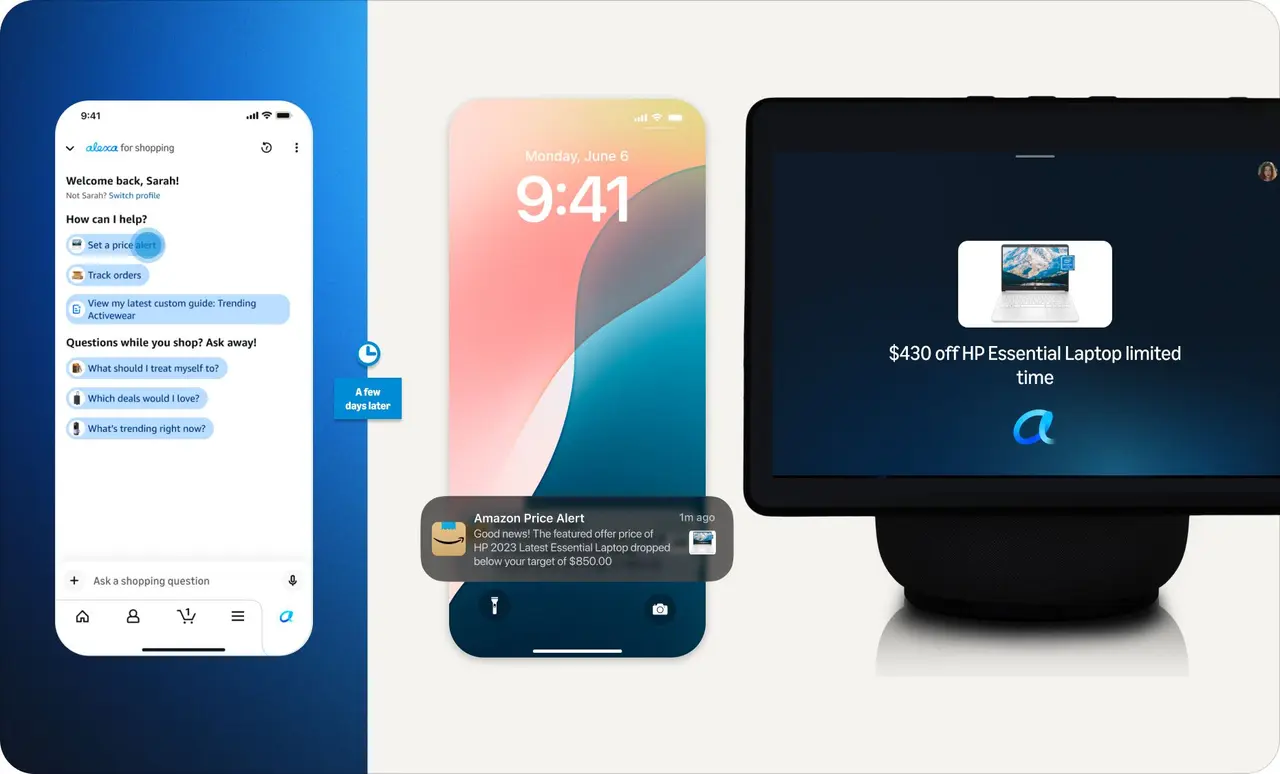
. For example, a customer could brainstorm a science fair project with Alexa on an Echo device, then open the Amazon app and ask for supplies without re-explaining the project. The assistant remembers conversations across devices and uses that information to provide personalized responses2
.
Source: GeekWire
Amazon's new offering reflects the broader industry push into agentic commerce, where AI takes action on a customer's behalf
4
. Alexa for Shopping can monitor prices and automatically add items to a cart when they hit a target price, such as "add this sunscreen to my cart if the price drops to $10"1
. The assistant also handles scheduled actions, automating tasks like restocking household essentials such as pet food or paper towels at regular intervals2
.Beyond product comparison and price history tracking—now expanded to a full year, up from 30 and 90 days—the assistant generates custom shopping guides for major purchases and provides AI overviews at the top of search results
2
5
. The Buy for Me feature can even purchase products on a customer's behalf from other online retailers, though this has sparked backlash from some retailers who said they never opted into the program1
3
.Related Stories
The timing of Amazon's launch reflects the company's need to defend its marketplace as OpenAI, Google, and Perplexity roll out AI shopping bots that threaten to disrupt how people shop online
3
. OpenAI launched Instant Checkout in September 2025 with Stripe and an open-source Agentic Commerce Protocol, though the company significantly altered its plans earlier this year, ending the tool in favor of working with retailers to create dedicated apps in ChatGPT3
. Google is building Buy for Me into Gemini and runs its A2A agent-to-agent protocol with more than 150 supporting organizations4
. Perplexity's Comet browser has offered a Buy with Pro feature since late 20244
.
Source: Axios
Daniel Rausch, Amazon's top Alexa executive, said the new offering is superior to other AI shopping tools because it has access to valuable data such as customer reviews, a vast product catalog, real-time stock information, and estimated delivery times
3
. "As I'm using it, I'm just realizing why other AI efforts have struggled with shopping because it's not just scraping web results and then putting things in a conversation," Rausch said, adding that "shopping is not something you do as a side quest"3
.Amazon has been reluctant to partner with rival AI platforms and continues to block many AI shopping bots from accessing its site
3
. The company sued Perplexity in November, alleging its Comet shopping agent was accessing Amazon.com in violation of the site's terms and creating problems for ad-impression measurement4
. A federal judge granted Amazon a preliminary injunction in March, though Perplexity took the case to the Ninth Circuit, which has temporarily paused parts of the order while the appeal is heard4
.The legal argument centers on agent access, but the commercial stakes involve who captures the high-intent search query at the top of the funnel
4
. Amazon's $56 billion advertising business, built around sponsored product listings in search results, depends on Amazon being the first and last surface a buyer touches4
. The move could prove disruptive to Amazon's millions of third-party sellers, who pay top dollar to promote their listings and rank higher in traditional search results3
. Rausch said Alexa for Shopping will feature ads where they're relevant and when they "enhance" the shopping experience, but insisted it's not designed to "narrow" search results3
.Summarized by
Navi
[1]
1
Business and Economy

2
Technology

3
Technology