Amazon Burns $42.4 Billion in Cash as AI Spending Reaches Historic $220 Billion


8 Sources
[1]
Amazon to report Q3 earnings after the bell with AI spend under scrutiny
* Wall Street is paying close attention to Amazon's cloud growth and artificial intelligence spending. * Amazon Web Services sales are projected to grow 38%, marking a fifth consecutive quarter of revenue expansion. * The company will hold a conference call with investors to discuss the results
[2]
Amazon's $42.4 Billion Cash Burn Delivers Final Blow In a Rough Week For AI
Only one of the four AI hyperscalers reported positive free cash flow in this round of earnings. Amazon just reported its third-quarter earnings, which show it's now the latest AI hyperscaler to disappoint the market with below-expectations revenue and a spiraling cash burn. The company's free
[3]
Amazon shares sink as it spends heavily on AI
Driving the news: Amazon reported Thursday that its free cash flow was negative $42.4 billion over the 12 months ended Sept. 30, 2026, compared with a positive $14.8 billion in the year ended Sept. 30, 2025. * The company attributed the swing primarily to a $94.8 billion increase in purchases of
[4]
Amazon shares sink as spending on AI overshadows growth in cloud unit | Fortune
Amazon's cloud computing unit is growing steadily, keeping pace with AI demand, but the e-commerce giant's massive spending on AI data centers and weaker advertising performance are worrying investors. Amazon on Thursday reported third-quarter revenue of $201.9 billion, slightly missing
[5]

Amazon's biggest cash burn in history: Why $42 billion vanished in just a year?
Amazon has reported the record losses of $42.4 billion free cash flow deficit in the last 12 months ending on September 2026 as spending on artificial intelligence (AI) and cloud infrastructure has increased. The capital expenditure of the company has reached $77.3 billion in the third quarter.
[6]

Amazon Stock Takes a Beating, but Munster Sees AI Powerhouse, Jim Cramer Calls Earnings 'Very, Very Good'
On Thursday, Amazon.com, Inc. (NASDAQ:AMZN) drew sharply different reactions after its third-quarter earnings report, with analysts highlighting booming AI demand and AWS growth. Amazon shares fell 4.25% to close at $243.79 during Thursday's regular session and dropped another 7.30% to $225.99 in
[7]

Amazon shares drop 7% as holiday forecast misses Wall Street targets By Investing.com
Investing.com -- Amazon missed quarterly top- and bottom-line estimates, sending shares of the company down 7.5% premarket. The e-commerce and tech giant's negative free cash flow also ballooned, amid elevated spending on artificial intelligence. The Seattle, Washington-based firm's results come
[8]

Amazon lifts its cloud business and burns through cash
Amazon posted weaker-than-expected Q3 results, despite strong growth in its AWS cloud division, driven by demand for artificial intelligence infrastructure. The group also reaffirmed its $220bn capital spending program for 2026, reigniting concerns about the profitability of this strategy and its
Share
Copy Link
Amazon reported its largest-ever cash burn of $42.4 billion in Q3 2026 as AI infrastructure investment surged. Despite AWS revenue jumping 39% to $46 billion, the company's advertising business slowed to 12% growth and shares dropped 6.5% after missing revenue expectations at $201.9 billion.
Amazon Reports Record Cash Burn Amid Massive AI Infrastructure Push
Amazon disclosed a staggering negative free cash flow of $42.4 billion for the 12 months ending September 30, 2026, marking the company's largest cash burn in history
1
2
. This dramatic swing from a positive $14.8 billion free cash flow in the same period last year stems primarily from Amazon AI spending that reached unprecedented levels3
. The company attributed this shift to a $94.8 billion increase in property and equipment purchases tied directly to AI infrastructure investment3
. Amazon's capital expenditures hit $77.3 billion in the third quarter alone, more than doubling the $35.1 billion spent during the same period last year5
. The company expects total 2026 capital expenditures to reach $220 billion, with CEO Andy Jassy indicating spending will climb even higher in 20271
.Amazon's Q3 earnings showed revenue of $201.9 billion, up 12% year-over-year but falling short of analyst expectations of $202.2 billion
3
4
. Net income totaled $20.7 billion, also missing estimates of $21.4 billion, with the decline partly attributed to gains recorded a year earlier from the company's investment in Anthropic4
. Investor concerns over AI spending intensified as shares plummeted 6.5% in after-hours trading3
. To fund this aggressive expansion, Amazon increased its long-term debt from $65.6 billion at the end of 2025 to $173.1 billion by September 2026, while simultaneously reducing cash reserves from $87 billion to $56 billion5
.
Source: Benzinga
AWS Revenue Acceleration Masks Broader Business Concerns
Amazon Web Services growth provided a bright spot amid the Amazon cash burn, with third-quarter sales rising 39.3% to $45.98 billion, exceeding Wall Street targets and marking the highest growth rate in nearly five years
4
5
. This represented AWS's fifth consecutive quarter of revenue acceleration, with sales projected to grow 38% according to StreetAccount estimates1
. Andy Jassy revealed on an Andreessen Horowitz podcast that Amazon's cloud capacity is "largely sold out" for next year, with significant commitments already secured for 20281
. The company maintains some capacity for on-demand services and its Bedrock inference service, but "largely sold out all the big chunks" with "a good chunk of '28 sold out" as well1
.
Source: Market Screener
However, the robust cloud computing performance couldn't offset weakness in Amazon's core retail and advertising business. The advertising segment grew just 12% year-over-year in Q3, a sharp deceleration from the previous quarter's 26% growth and falling below analyst expectations of $20.82 billion according to StreetAccount
3
4
. Amazon's chief financial officer Brian Olsavsky noted that Prime Day shifted from Q3 to Q2 this year, slightly impacting year-over-year comparisons2
. For the current quarter, Amazon projected sales between $240 billion and $247 billion with operating income between $28.5 billion and $33.5 billion, the latter range falling below analyst predictions4
.AI Agents Emerge as Competitive Threat to Amazon's Advertising Model
The rise of AI agents presents a strategic challenge to Amazon's lucrative advertising business, with Meta's Muse agent gaining particular traction among consumers
3
. Amazon blocked Meta's Muse AI agent from shopping on its platform during the third quarter, stating it received no advance notice that Muse would access its webstore and never agreed to participate1
. This move aligns with Amazon's broader stance on third-party agents, having blocked dozens of external agents including Perplexity, which the company sued last year over allegations the startup concealed its AI shopping bots1
. Bank of America analyst Justin Post noted that "Muse traction will likely drive questions on Amazon's agentic strategy"3
.As consumers increasingly turn to AI agents to research products and make purchases, they bypass sponsored ads on Amazon's site that serve as a key profit driver
1
4
. Amazon has responded by investing heavily in Alexa for Shopping, its rebranded Rufus AI shopping chatbot launched in May1
. The company reported that more than 400 million shoppers have used the assistant, with users of Alexa for Shopping's agentic features growing more than eight times since the start of the year1
. Jassy claimed that customer interactions with the tool surged 570% year-over-year, and U.S. customers using Alexa for Shopping spend 50% more per order than those who don't2
. Deutsche Bank analysts wrote that "the key question is whether Amazon can accommodate third-party agents on terms that preserve attractive monetization"1
.Related Stories

Anthropic Partnership Reveals Deep Cloud Computing Commitments
Amazon's relationship with Anthropic illustrates the scale of AI-related capital expenditures driving the company's cash burn. According to Anthropic's IPO prospectus made public this week, the AI lab has committed to spending at least $110 billion on Amazon cloud services from May through April 2036, regardless of actual usage
4
. This represents part of Anthropic's total commitment of at least $389.9 billion in compute spending with companies including Microsoft, Alphabet, and SpaceXAI4
. Amazon has invested approximately $18 billion in Anthropic and committed to invest up to another $15 billion4
. Around one-fifth of AWS's backlog was due to Anthropic's computing commitments as of June5
.Jassy defended the company's AI strategy on the earnings call, asserting that Amazon is "very well positioned for what's happening in AI"
2
. He cited initiatives like Trainium, Amazon's custom-designed AI accelerator chips seeking to challenge Nvidia's dominance, and Bedrock, Amazon's AI model marketplace2
. Amazon Web Services CFO John Felton told Axios earlier this month that he's "comfortable about what we're doing" with capex, noting a nearly $500 billion order backlog as of Q23
. However, these comments came after Gartner research analysts estimated that more than $3.5 trillion in AI infrastructure spending "could be exposed to impairment" by the end of 20303
. Collectively, Amazon, Microsoft, Alphabet, and Meta Platforms are expected to spend more than $700 billion on capital expenditures in 2026, mostly on data centers4
. Amazon was the last hyperscaler to report earnings this round, and of the four, only Microsoft reported positive free cash flow2
.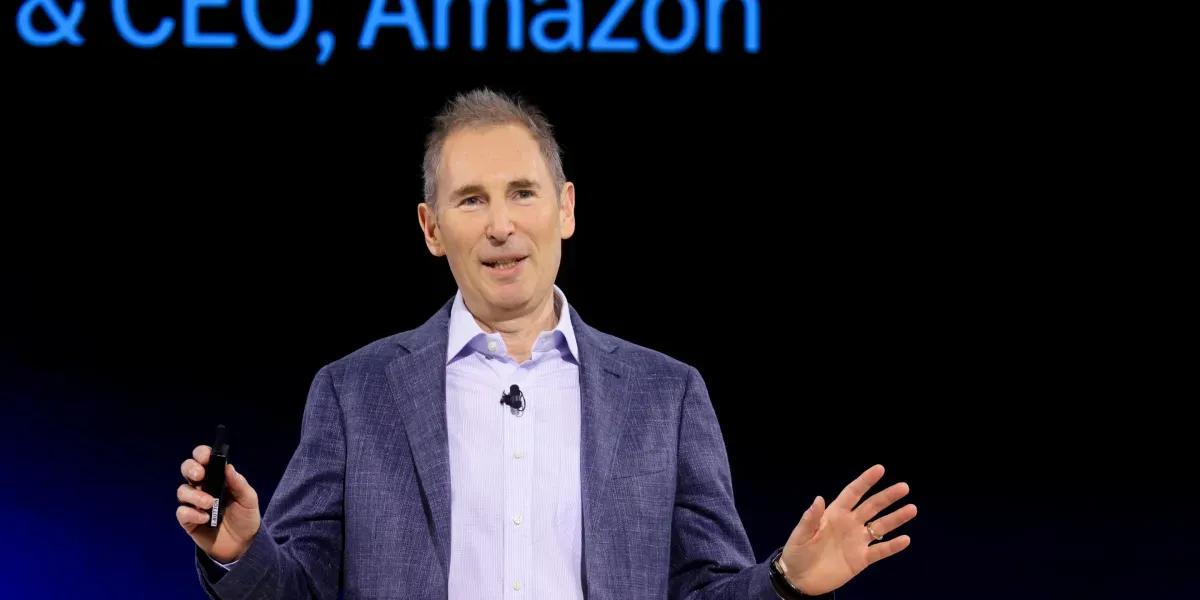
Source: Fortune
References
Summarized by

Navi
Related Stories
Amazon Web Services Growth Soothes AI Spending Fears With 37% Revenue Jump
29 Jul 2026•Business and Economy

Amazon unveils $200 billion AI spending plan as shares plunge on investor concerns over returns
06 Feb 2026•Business and Economy

Amazon Web Services posts fastest growth in 15 quarters as AI demand fuels cloud sales jump
29 Apr 2026•Business and Economy

Recent Highlights


Recent Highlights
Today's Top Stories












Don’t drown in AI news. We cut through the noise - filtering, ranking and summarizing the most important AI news, breakthroughs and research daily. Follow topics that matter to you and stay ahead.


