AMD Invests $1 Billion in Meta as Helios Rack Systems Begin Testing for AI Infrastructure


7 Sources
[1]
AMD to invest $1bn in Meta as its Helios racks start running there
AMD's first Helios rack systems are installed and being tested at Meta, the chipmaker said. With Nvidia's $3bn, the two chipmakers are putting $4bn into Meta's AI fundraising. AMD will invest $1bn in Meta's equity offering, the chipmaker said on Tuesday, 27 October. It made the pledge in a release
[2]
AMD and Meta advance strategic partnership to power Meta's Superintelligence Infrastructure
Advanced Micro Devices, or AMD, is teaming up with Meta to enhance its superintelligence infrastructure. As part of this strategic partnership, AMD plans to invest a whopping $1 billion into Meta's projects. This collaboration aims to push the envelope on advanced technologies and improve how
[3]
Meta Is The Lead Customer For AMD's 6th Gen EPYC CPUs, Deploys Millions of EPYC Chips & Will Leverage Next-Gen Instinct MI500 And Rack-Scale Solutions
AMD & Meta are advancing their strategic partnership by deploying millions of EPYC CPUs, including 6th Gen Venice chips. Meta & AMD Strengthen Their Partnership Through EPYC CPU, Instinct GPU, & Rack-Scale Deployments Today, AMD and Meta announced further deepening of their strategic partnership
[4]
AMD to Invest $1 Billion in Meta Equity Offering as AI Partnership Expands; Helios Systems Begin Testing
Advanced Micro Devices (AMD) plans to invest $1 billion in Meta Platforms' equity offering as the two companies expand their collaboration to support Meta's growing artificial intelligence infrastructure requirements. . Announced on Tuesday, the investment highlights AMD's expanding relationship
[5]

AMD stock rallies on expanded Meta AI infrastructure deal and broader chip rally By Investing.com
Investing.com -- Shares of Advanced Micro Devices Inc (NASDAQ:AMD) advanced 5.4% in Tuesday afternoon trading, lifted by an expanded artificial intelligence partnership with Meta Platforms Inc. alongside broader industry tailwinds following Anthropic's initial public offering filing. The rally
[6]

Advanced Micro Devices, Inc. and Meta Platforms, Inc. Advance Strategic Partnership to Power Meta Platforms, Inc.?S Superintelligence Infrastructure
Advanced Micro Devices, Inc. highlighted its deep strategic partnership with Meta Platforms, Inc., announcing AMD Helios rackscale solutions are running at Meta Platforms, Inc., AMD EPYC processors power Meta Platforms, Inc.?s Muse AI agent, and AMD technologies provide Day-0 support for Meta
[7]
AMD and Meta strengthen their strategic AI partnership
AMD has announced an expansion of its strategic partnership with Meta across CPUs, GPUs, networking, systems and software to support the social media giant's superintelligence services and infrastructure. In addition, it will invest $1bn in a Meta stock offering. The collaboration builds on
Share
Copy Link
AMD commits $1 billion to Meta's equity offering as its first Helios rack systems enter testing at Meta's facilities. The expanded partnership positions AMD as a key supplier for Meta's superintelligence infrastructure, with millions of EPYC processors deployed and Instinct GPUs powering AI workloads.
AMD Commits $1 Billion to Meta's Equity Offering
AMD announced it will invest $1 billion in Meta's equity offering, deepening a strategic partnership that spans years of technical collaboration
1
. The investment comes as part of Meta's massive $35 billion share sale launched to fund AI infrastructure spending, with the broader plan reaching up to $95 billion1
. The common stock portion was raised to $25 billion, with investor demand reaching five times the shares on offer. Shares were priced at $625 each, representing a 2.7% discount to Friday's close1
. Combined with Nvidia's $3 billion pledge, the two semiconductor giants are contributing $4 billion to Meta's fundraising efforts1
. AMD shares rallied 5.4% following the announcement, making it among the top gainers in the semiconductor complex5
.Helios Rack Systems Enter Testing Phase at Meta
AMD's first Helios rack systems are now installed and undergoing testing at Meta's facilities, marking a significant milestone in the AMD and Meta partnership
1
. The chipmaker expects broader deployment in the near future as testing progresses4
. Helios rack systems represent AMD's rack-scale solution, packing 72 GPUs per rack to deliver high-density computing power1
. "With Helios now running at Meta, we are taking that partnership to a new scale in the superintelligence era," said Lisa Su, chair and CEO of AMD2
. The companies are building and deploying AI infrastructure at gigawatt scale, shaping future generations of silicon, software and systems to enable Meta's superintelligence models and services3
.Meta Deploys Millions of AMD EPYC Processors
Source: Wccftech
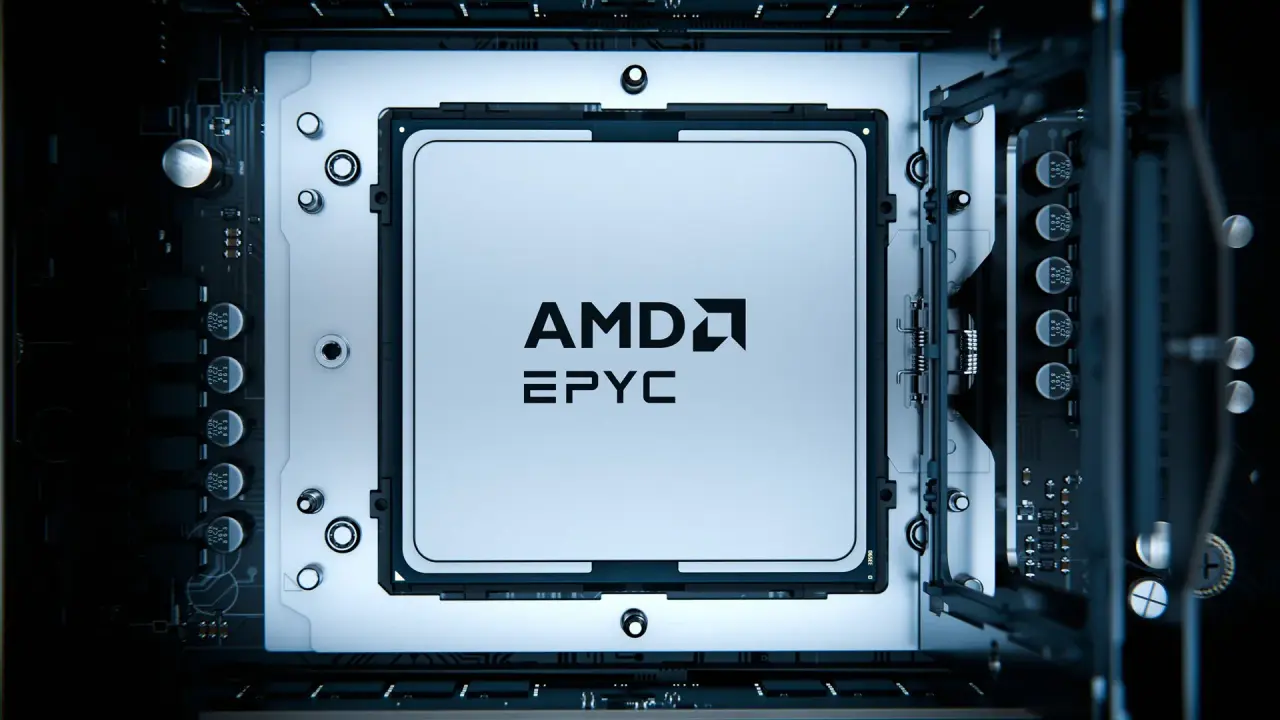
Meta has deployed millions of EPYC processors across multiple generations, with AMD EPYC processors forming the foundation of Meta's infrastructure
3
. The social media giant serves as the lead customer for AMD's 6th Gen EPYC CPUs, based on the Zen 6 core architecture3
. These 6th Gen EPYC CPUs power the computing behind Meta's Muse personal AI agent, handling the processing requirements for the AI assistant1
4
. Meta is also collaborating with AMD on future processor designs, including a chip called Verano optimized for Agentic AI workloads3
. This positions AMD as a critical supplier across Meta's computing environment, from general-purpose processing to specialized AI acceleration.AMD Instinct GPUs Power Meta's AI Models
Meta is using AMD Instinct GPUs in production for training and operating recommendation engines, two core functions that drive user experience across Meta's platforms
1
3
. The company served as an early design customer for the Instinct MI450 series and will deploy a custom Instinct GPU built specifically for its workloads1
3
. This collaboration will shape AMD's next-generation GPUs, the Instinct MI500 series, as the companies work together on hardware-model co-design1
. AMD delivered day-zero support for Meta's Muse Spark Open models on Instinct GPUs, along with Muse Glimmer support on AMD's Ryzen AI PCs and Radeon GPUs1
3
. Meta's technical paper details optimizations that delivered up to 1.5x improvement in end-to-end training throughput on AMD hardware3
.Related Stories

Software Collaboration Strengthens Open-Source Ecosystem
The AMD and Meta partnership extends beyond hardware into software optimization, with both companies advancing ROCm through PyTorch contributions
3
. The companies have expanded their software collaboration to large-scale AI training, optimizing recommendation models on Instinct MI350X GPUs and contributing improvements to PyTorch, Triton and ROCm3
. Meta's technical paper represents the first hyperscaler report on productionizing AMD GPUs for large-scale training, with contributions upstreamed to open-source ecosystems3
. This work ensures developers can leverage AMD GPUs out of the box, lowering barriers to adoption. Meta deploys a heterogeneous fleet comprising Nvidia GPUs, AMD GPUs and proprietary MTIA accelerators to reduce costs and mitigate vendor lock-in3
.Chipmakers Deepen Ties with Hyperscale Customers
Source: The Next Web
The AMD investment in Meta reflects a broader trend of semiconductor companies taking equity stakes in their largest customers. AMD has participated in 25 funding rounds in 2026, up from just two in 2022, while Nvidia has joined 121 rounds this year
1
. AMD previously committed up to $5 billion to invest in Anthropic, which plans to run Claude on Helios systems1
. These strategic investments cement balance-sheet and operational ties between chip suppliers and AI developers, securing long-term hardware allocations as hyperscaler demand intensifies5
. The multi-year co-design roadmap positions Meta as an early-stage partner for AMD's future architectures, giving both companies visibility into upcoming technology requirements5
. "AMD has been a key partner in building out the compute that's running our frontier models," said Mark Zuckerberg, Meta's founder and CEO2
. As technology companies race to secure merchant silicon allocations, AMD's expanded agreement with Meta signals sustained tier-one hyperscale demand and positions the chipmaker to compete more effectively against rivals in the AI infrastructure market5
.References
Summarized by

Navi
Related Stories
Meta and AMD forge $60 billion AI chip deal as Zuckerberg diversifies compute infrastructure
25 Feb 2026•Business and Economy
Meta strikes up to $100 billion AI chips deal with AMD, could acquire 10% stake in chipmaker
18 Feb 2026•Technology

Meta Platforms commits millions of AI GPUs from Nvidia in expanded infrastructure partnership
18 Feb 2026•Technology

Recent Highlights


Recent Highlights
Today's Top Stories





Don’t drown in AI news. We cut through the noise - filtering, ranking and summarizing the most important AI news, breakthroughs and research daily. Follow topics that matter to you and stay ahead.


