23 Sources
[1]
AMD and Anthropic reach $5 billion AI infrastructure deal
AMD says it's going to invest up to $5 billion in Anthropic, while helping to expand the AI company's computing power, according to an announcement on Wednesday. As part of the new partnership, Anthropic will deploy up to 2 gigawatts of AMD's Instinct MI450 AI GPUs using the chipmaker's new Helios rack-scale system, as reported earlier by The Wall Street Journal. The companies plan to deploy the first gigawatt in the first half of 2027, building upon recent data center deals Anthropic has reached with SpaceX and TeraWulf. Anthropic has also signed AI infrastructure deals with Google, Broadcom, and Amazon, with rumors suggesting that it could reach an agreement with Meta as well. AMD and Anthropic will also launch a "multi-year engineering collaboration," where AMD will use Anthropic's Claude across its software development, engineering, and product development. "By partnering with AMD across the stack, we are securing the capacity we need and optimizing it for training and serving Claude," Tom Brown, Anthropic co-founder and chief compute officer, says in the press release.
[2]
AMD to invest up to $5 billion in Anthropic, WSJ reports
July 22 (Reuters) - Advanced Micro Devices (AMD.O), opens new tab has signed a deal with artificial intelligence startup Anthropic for tens of billions of dollars worth of AI servers and will invest up to $5 billion in the company, the Wall Street Journal reported on Tuesday. The agreement covers up to 2 gigawatts of AMD's next-generation Instinct MI450 chips, with deliveries set to begin in the first half of 2027, the report said. Industry executives have said 1 gigawatt of computing power, enough to power roughly 750,000 U.S. homes, can cost around $50 billion. Anthropic will use the chips in its own data centers and through leased capacity from cloud providers, according to the report. Reuters could not immediately verify the report. AMD did not immediately respond to a Reuters request for comment, while Anthropic said it would release a statement soon. The deal marks a significant win for AMD as the chipmaker seeks to challenge Nvidia's dominance in the fast-growing AI hardware market and expand its roster of major AI customers. Reporting by Rashika Singh in Bengaluru; Editing by Jonathan Ananda Our Standards: The Thomson Reuters Trust Principles., opens new tab
[3]
AMD to invest up to $5bn in Anthropic in chip deal
AMD has struck a multibillion-dollar deal with Anthropic, which includes the US chipmaker making an up to $5bn investment in the creator of Claude Code. Anthropic has committed to buying tens of billions of dollars of AMD's latest AI server chips, boosting the chipmaker's challenge to Nvidia. This will add 2 gigawatts of computing capacity to Anthropic's platform, with the first gigawatt -- equivalent to the power output of a single nuclear reactor -- due to come online in the first half of next year. The deal adds AMD's processors to Anthropic's increasingly diverse portfolio of AI infrastructure, which also includes chips from Nvidia, Amazon and Google. The Wall Street Journal first reported the deal. AMD's up to $5bn investment in Anthropic is dependent on meeting certain milestones. AI companies are racing to lock in computing capacity amid an industry-wide semiconductor shortage that has sent chip stocks surging in the past few months. AMD shares are up more than 140 per cent so far this year. "Access to compute is central to keeping Claude at the frontier and meeting demand from our customers," said Tom Brown, co-founder and chief compute officer at Anthropic.
[4]
AMD to invest up to $5 billion in Anthropic as part of computing power deal
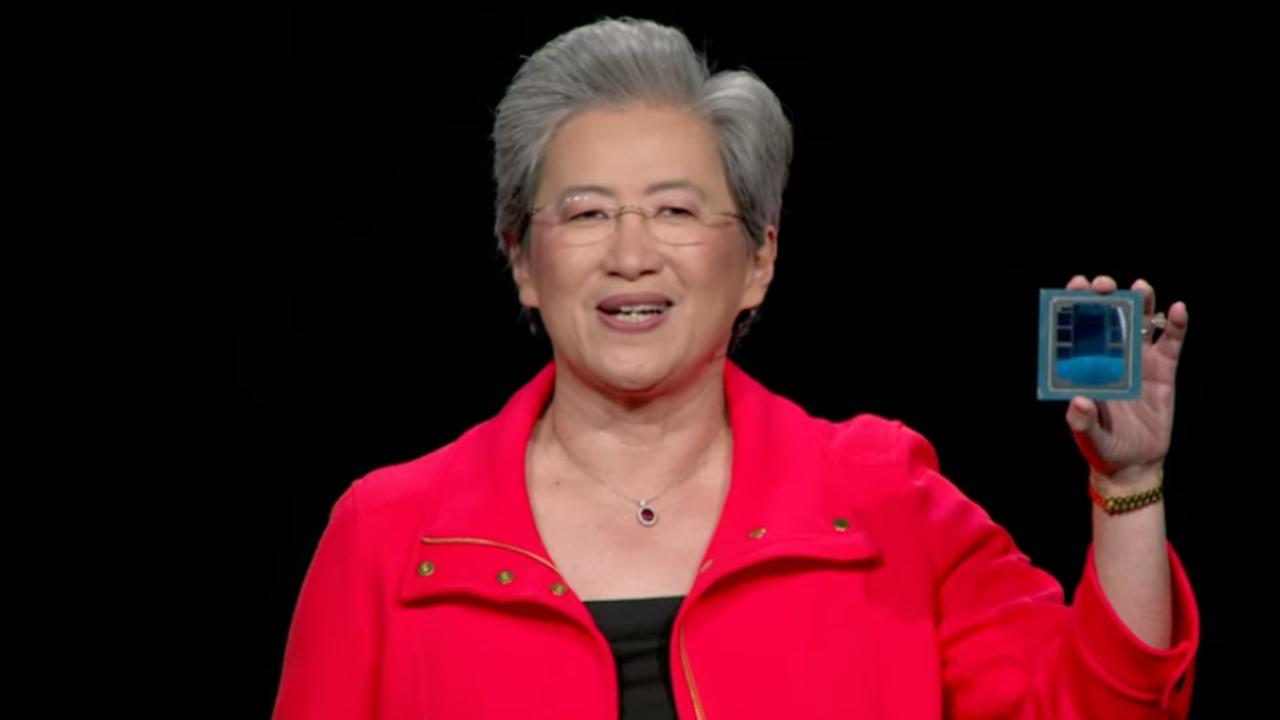
Advanced Micro Devices on Wednesday announced a strategic partnership with Anthropic and said it will invest up to $5 billion in the artificial intelligence company. As part of the deal, the chipmaker said Anthropic will deploy 2 gigawatts of its AMD Instinct MI450 Series graphics processing units, or GPUs, in AMD Helios rack-scale solutions. The first gigawatt, a measure of power that's become a common metric for describing AI data center capacity, will be deployed in the first half of next year, according to a release. "We are thrilled to deepen our partnership with Anthropic and deploy AMD Helios at gigawatt scale," AMD CEO Lisa Su said in a statement. AMD has been one of the major beneficiaries of the AI boom because it's one of the companies that makes the GPUs that can train models and run large workloads. It competes directly with Nvidia, which dominates the market, but it has inked deals with a number of high-profile players in the industry, including Anthropic's rival OpenAI.
[5]
AMD is investing $5 billion in Anthropic and deploying 2 gigawatts of Helios GPUs to run Claude
AMD will invest up to $5B in Anthropic and deploy 2GW of MI450 GPUs. Claude will accelerate ROCm development. First GW ships H1 2027. Anthropic already uses MI355X GPUs. AMD and Anthropic announced a strategic partnership on Tuesday that commits AMD to invest up to $5 billion in Anthropic and deploy up to 2 gigawatts of AMD Instinct MI450 Series GPUs in Helios rackscale solutions to run Claude. Deployment of the first gigawatt begins in the first half of 2027. Anthropic is already using AMD's MI355X GPUs and will now scale to MI455X accelerators paired with EPYC "Venice" CPUs and Pensando networking. The engineering collaboration may matter more than the hardware. AMD and Anthropic will use Claude to optimise workloads for AMD Instinct GPUs and accelerate ROCm software development. AMD will also adopt Claude broadly across its engineering and product development teams. ROCm is AMD's answer to Nvidia's CUDA, and its software gap has been the primary reason AI developers default to Nvidia hardware even when AMD's specs are competitive. If Claude can materially improve ROCm's developer experience, AMD addresses the problem that has held it back for years, using its customer's AI to fix its own software. Anthropic's compute strategy is now genuinely multi-vendor. Anthropic signed its biggest compute deal with Google and Broadcom, and has separate arrangements with Amazon (Trainium chips, 5GW), CoreWeave (Nvidia GPUs), and SpaceX (Colossus data centres). Adding 2GW of AMD Helios gives Anthropic what Tom Brown, its chief compute officer, called the ability to "map the right workloads to the right hardware." Diversifying away from any single chip vendor reduces dependency risk at a time when compute is the binding constraint on frontier model development. For AMD, the $5 billion equity investment mirrors Nvidia's playbook. Nvidia invested $2 billion in Nebius and has taken stakes in multiple AI infrastructure companies to lock in hardware demand. AMD is doing the same: investing in a customer to guarantee that its chips, not Nvidia's, run a meaningful share of the world's most capable AI models. Lisa Su called it "a major platform for the next generation of AI infrastructure." Whether Helios can compete with Nvidia's NVL72 at production scale is the question the first gigawatt will answer.
[6]
AMD and Anthropic sign chip deal worth up to $5 billion
Deployment of the first gigawatt is set to begin in the first half of 2027, the company said. The chips will be housed in AMD Helios rack-scale solutions featuring AMD Instinct MI455X GPUs alongside AMD EPYC "Venice" CPUs, AMD Pensando networking, and ROCm software. Anthropic's compute strategy under the deal splits between direct ownership and rented capacity -- the company will acquire some AMD chips outright for its own facilities while securing the remainder through cloud providers or neoclouds, according to the Wall Street Journal. AMD and Anthropic are working together to identify data centers for the chips, AMD CEO Lisa Su said.
[7]
Anthropic and AMD partner for 2GW AI chip deal
AMD said it will invest up to $5bn into Anthropic, marking its first equity investment into the AI giant. Anthropic is teaming up with AMD for 2GW of its latest-generation chips in a bid to boost AI capacity and meet growing demands. The Wall Street Journal reported that the deal between the companies is worth "tens of billions of dollars". The partnership comes as Anthropic competes for enterprise market dominance for its AI tools and preps for a blockbuster initial public offering expected to value the company at more than a $1trn. As per the agreement, Anthropic will deploy up to 2 GW of AMD Instinct MI450 Series GPUs in Helios rack-scale solutions. The first gigawatt is expected to be deployed in the first half of 2027. The deal builds on Anthropic's existing use of AMD chips and comes as demand for Claude sees no signs of stopping as the company's tech permeates across industries. For AMD, the deal represents a "major expansion" at the "centre of the global AI infrastructure buildout". In addition, the two companies are launching a multi-year engineering collaboration to use Claude for software development at AMD. The chipmaker also announced an equity investment of up to $5bn into Anthropic - its first investment into the AI giant. "Access to compute is central to keeping Claude at the frontier and meeting demand from our customers," said Tom Brown, Anthropic's chief compute officer and one of the company's co-founders. "By partnering with AMD across the stack, we are securing the capacity we need and optimising it for training and serving Claude. Running across a diversified range of hardware lets us map the right workloads to the right hardware." The company received global praise this year following a major disagreement with the US government over the usage of its AI systems, which was followed by a temporary restriction on the export of some of its latest models. "We are thrilled to deepen our partnership with Anthropic and deploy AMD Helios at gigawatt scale," said Dr Lisa Su, the chair and CEO of AMD. "This collaboration brings together Anthropic's leadership in frontier AI with the full strength of AMD high-performance computing. Together, we will accelerate AI adoption at scale and establish Helios as a major platform for the next generation of AI infrastructure." Earlier this week, Anthropic's $1.5bn settlement offer to quash a major AI copyright case against the company was approved. The company is set to pay around $3,000 to the people behind some 500,000 individual pieces of works. Don't miss out on the knowledge you need to succeed. Sign up for the Daily Brief, Silicon Republic's digest of need-to-know sci-tech news.
[8]
Anthropic to buy up to two gigawatts of GPU capacity from AMD
Anthropic PBC will purchase up to two gigawatts worth of graphics cards from Advanced Micro Devices Inc. as part of a multibillion deal announced today. The partnership also has several other components. Notably, AMD will invest up to $5 billion in Anthropic and use Claude to speed up its software development efforts. The artificial intelligence developer is adopting AMD's MI450 series of graphics processing units. It will install the GPUs in appliances based on the latter company's Helios rack design. According to AMD, each Helios system (pictured) includes 72 graphics cards that together provide up to 1.4 exaflops of performance when processing FP8 data. Another core selling point of the appliance is that it includes 31 terabytes of HBM4 memory. That gives Helios 50% more capacity than Nvidia Corp.'s flagship Vera Rubin systems. AMD's appliance also provides 43 terabits per second of scale-out bandwidth, a metric that measures how fast it can move data to and from the other racks in an AI cluster. Helios includes not only GPUs but also central processing units and Pensando data processing units. The latter chips perform more than a dozen infrastructure management tasks. They track hardware reliability metrics such as latency, perform load balancing and encrypt traffic. AMD and Anthropic will start deploying the hardware in the first half of 2027. Additionally, they will launch a multi-year effort to make the former company's software development workflow more efficient. AMD plans to "broadly adopt" Claude as part of the effort. The initiative will place particular emphasis on speeding up the development of ROCm, a software platform that ships with Helios. It includes a compiler that turns customers' AI models into an AMD-compatible format. Additionally, ROCm provides tools that boost the performance of training and inference workloads. "Together, we will accelerate AI adoption at scale and establish Helios as a major platform for the next generation of AI infrastructure," said AMD Chief Executive Officer Lisa Su. The deal is the latest in a series of high-profile hardware contracts inked by AMD since the start of the year. Earlier this week, the chipmaker revealed that Microsoft Corp. is deploying Helios in its cloud data centers. In February, Meta Platforms Inc. announced plans to purchase up to 6 gigawatts worth of graphics cards from AMD. The Facebook parent's initial order is for a custom GPU based on the MI450 chip series that Anthropic is adopting. Meta also plans to expand its use of AMD's CPUs. Meta, Anthropic and other major players in the AI market are purchasing chips from multiple suppliers to avoid supply chain bottlenecks. The latter company's deal with AMD comes a few months after it committed to buying billions of dollars worth of AI accelerators from Google LLC and Broadcom Inc. Around the same time, Anthropic announced plans to purchase up to 1 gigawatt of additional GPU capacity from Nvidia.
[9]
AMD and Anthropic Partner on 2 GW Helios AI Infrastructure Powered by Instinct MI450
AMD and Anthropic have announced a strategic partnership that will significantly expand the deployment of AMD AI hardware over the coming years. Under the agreement, Anthropic plans to deploy up to two gigawatts of AI compute capacity using AMD's upcoming Helios rack-scale platform built around the Instinct MI450 Series accelerators. The first phase of the rollout, representing approximately one gigawatt of compute capacity, is scheduled to begin during the first half of 2027. The deployment will utilize AMD Helios rack-scale systems featuring Instinct MI455X GPUs, EPYC "Venice" server processors, Pensando networking technology, and the ROCm software platform. Rather than delivering standalone GPUs, AMD is providing a complete rack-level AI infrastructure solution designed for large-scale training and inference workloads. Helios integrates compute, networking, and software into a unified platform intended to improve scalability and deployment efficiency for hyperscale AI clusters. Anthropic will use the new infrastructure to expand the compute resources supporting its Claude family of AI models. The company already operates AMD Instinct MI355X accelerators, making this agreement a substantial extension of its existing AMD deployment. Anthropic says access to additional compute capacity is becoming increasingly important as AI models continue to grow in size and enterprise demand for inference services accelerates. Operating across multiple hardware platforms also allows workloads to be matched with the most appropriate computing architecture. The collaboration extends beyond hardware. AMD and Anthropic have agreed to a multi-year engineering partnership focused on improving AMD's AI software ecosystem. Anthropic's Claude models will assist AMD engineers with optimizing workloads for Instinct GPUs while accelerating development of ROCm, AMD's open software platform for AI and high-performance computing. AMD also plans to deploy Claude across its engineering and product development teams to support software development and internal engineering workflows. In addition to the infrastructure and software collaboration, AMD disclosed plans to make a strategic equity investment in Anthropic valued at up to $5 billion in the future. Although specific investment terms were not announced, the commitment illustrates the strategic importance both companies place on the long-term partnership. Similar collaborations between AI model developers and semiconductor vendors have become increasingly common as competition for AI compute capacity intensifies. For AMD, the agreement represents one of the largest publicly announced AI infrastructure deployments centered on its upcoming Instinct MI450 Series accelerators. Combined with Helios rack-scale systems, EPYC processors, Pensando networking, and ROCm software, the partnership demonstrates AMD's continued effort to position itself as a provider of complete AI infrastructure rather than individual hardware components. If deployment proceeds according to schedule beginning in 2027, the project will become one of the largest AMD-powered AI installations announced to date.
[10]
AMD to invest up to $5 billion in Anthropic; AI startup to buy up to 2 GW of chips
AMD plans to invest up to $5 billion in Anthropic, alongside a major AI chip supply deal starting 2027. The move strengthens AMD's position against Nvidia while helping Anthropic secure critical computing capacity to meet rising AI demand through owned and cloud-based infrastructure. Advanced Micro Devices said on Wednesday it would invest up to $5 billion in Anthropic and the artificial intelligence startup would buy up to 2 gigawatts of AMD's latest-generation AI chips, beginning in the first half of 2027. AMD has been seeking to expand its foothold in the fast-growing AI chip market as developers look to diversify beyond Nvidia, while Anthropic has been racing to secure computing capacity to meet growing demand for its AI services. US MarketsPowered By As on 22 Jul 2026, 01:30 AM IST S&P 500 Top Gainers Western Digital548.39(12.51%) Micron Technology970.82(12.17%) Teradyne374.04(12.07%) Seagate Technology Hldgs891.83(11.14%) Gainers" S&P 500 Top Losers Danaher179.01(-10.99%) MSCI561.74(-10.14%) Coterra Energy32.56(-8.62%) Tyler Technologies299.74(-5.73%) Losers" The Wall Street Journal earlier reported that Anthropic would use some of the chips at its own data centers and lease additional capacity through cloud providers and neocloud operators. The report added that AMD was in talks to provide a financial backstop for Anthropic's future data-center leases. AMD Chief Executive Lisa Su said the companies' engineering teams had been working together for some time and that large-scale AI computing deployments require long-term planning. The investment will be tied to certain deployment milestones, AMD said.
[11]
QUICK SPARK: AMD's AI Forecast Grew $900 Billion In One Year - Advanced Micro Devices (NASDAQ:AMD)
Advanced Micro Devices, Inc's (NASDAQ:AMD) biggest announcement at its Advancing AI event wasn't a new chip -- it was a much bigger vision for the AI economy. The company now expects the AI accelerator market to reach $1.4 trillion by 2030, up from more than $1 trillion at its November 2025 Analyst Day and more than $500 billion at last year's Advancing AI event. In roughly a year, AMD has nearly tripled its estimate of the long-term AI opportunity. AI Moves Beyond Chatbots The company attributed the increase to the rapid rise of agentic AI, arguing that next-generation AI systems will require far more computing power as they move beyond chatbots to autonomous tasks. AMD also raised its forecast for the data center processor market to $220 billion by 2030, up from $120 billion just a few months ago. JPMorgan analyst Harlan Sur said the updated forecasts highlight "management's rising confidence in the breadth and durability of the AI buildout through the end of the decade," calling it "a net positive for our entire sector." The firm added that AMD's expanding portfolio of chips, AI systems and software positions it to benefit across multiple parts of the AI infrastructure market, even as it maintains a Neutral rating on the stock due to valuation. Image: Shutterstock Market News and Data brought to you by Benzinga APIs To add Benzinga News as your preferred source on Google, click here.
[12]
AMD Lands Anthropic In 2GW Instinct MI450 Deal, Backing It With A $5 Billion Equity Bet
AMD and Anthropic have announced a strategic partnership to deploy up to 2 Gigawatts of AMD Instinct MI450 GPUs through Helios AI racks. Helios AI Racks With Instinct MI450 GPUs See Major 2GW Partnership AMD Bags Anthropic As Strategic Partner A few months ago, we reported that AMD was in talks with a major AI firm to secure them as a customer for the upcoming Instinct MI450 series GPUs, the chips powering the Helios AI rack-scale system. Today, that customer is officially announced by AMD, and as such, Anthropic will become one of the company's key partners moving forward to deploy up to 2 Gigawatts of Instinct MI450 capacity using the Helios AI Rack. AMD is committing up to $5 billion in Anthropic as a strategic equity investment. "We are thrilled to deepen our partnership with Anthropic and deploy AMD Helios at gigawatt scale," said Dr. Lisa Su, chair and CEO, AMD. "This collaboration brings together Anthropic's leadership in frontier AI with the full strength of AMD high-performance computing. Together, we will accelerate AI adoption at scale and establish Helios as a major platform for the next generation of AI infrastructure." "Access to compute is central to keeping Claude at the frontier and meeting demand from our customers," said Tom Brown, co-founder and chief compute officer, Anthropic. "By partnering with AMD across the stack, we are securing the capacity we need and optimizing it for training and serving Claude. Running across a diversified range of hardware lets us map the right workloads to the right hardware." Although no figure for how many GPUs that would end up being is mentioned, but its going to be a lot. The first gigawatt deployment is expected in the first half of 2027, and will allow Anthropic to further expand its AI and compute capabilities in powering Claude operations. The Helios rack deployed at Anthropic's data centers will utilize the Instinct MI455X GPUs, the latest EPYC Venice CPUs, and Pensando networking solutions, all supported by the ROCm software stack. The Helios AI platform is purpose-built for next-generation AI training and inference, as AMD puts it, and delivers performance, efficiency, and scale that is required for advanced AI workloads in the Agentic era. Anthropic has previously been leveraging AMD's Instinct MI355X GPUs, & MI455X brings a major leap in capabilities. The MI455X offers a 10x performance increase over the MI355X. Anthropic will also engage in a multi-year collaboration to utilize Claude to accelerate AMD's own software deployment. In this collab, Claude will be used to optimize workloads for AMD Instinct GPUs and accelerate ROCm software development. AMD will also leverage Claude across its engineering and product development teams to accelerate chip development. Follow Wccftech on Google to get more of our news coverage in your feeds.
[13]
AMD and Anthropic Announce Strategic Partnership to Advance AI Software Development
Anthropic is scaling its compute infrastructure to serve strong and growing demand for Claude, and its adoption of AMD Helios at gigawatt scale represents a major expansion of AMD's position at the center of the global AI infrastructure buildout. AMD announced a strategic partnership to deploy up to 2 gigawatts of AMD Instinct MI450 Series GPUs in AMD Helios rack-scale solutions, with deployment of the first gigawatt beginning in the first half of 2027. The extraordinary pace of AI adoption is driving rapid growth in demand for training and inference capacity. Anthropic is scaling its compute infrastructure to serve strong and growing demand for Claude, and its adoption of AMD Helios at gigawatt scale represents a major expansion of AMD's position at the center of the global AI infrastructure buildout. Anthropic will deploy AMD Helios rack-scale solutions featuring AMD Instinct™ MI455X GPUs, part of the AMD Instinct MI450 Series, together with AMD EPYC™ "Venice" CPUs, AMD Pensando™ networking and ROCm™ software. Purpose-built for next-generation AI training and inference, Helios delivers the performance, efficiency and scale required for the most demanding AI workloads. This deployment builds on Anthropic's existing use of AMD Instinct MI355X GPUs. In addition, AMD and Anthropic are launching a multi-year engineering collaboration to use Claude to accelerate AMD software development. Specifically, the teams will use Claude to optimize workloads for AMD Instinct GPUs and accelerate ROCm software development. AMD will also broadly adopt Claude across its engineering and product development teams. AMD has committed to make a strategic equity investment of up to $5 billion in Anthropic in the future. "We are thrilled to deepen our partnership with Anthropic and deploy AMD Helios at gigawatt scale," said Dr. Lisa Su, chair and CEO, AMD. "This collaboration brings together Anthropic's leadership in frontier AI with the full strength of AMD high-performance computing. Together, we will accelerate AI adoption at scale and establish Helios as a major platform for the next generation of AI infrastructure." "Access to compute is central to keeping Claude at the frontier and meeting demand from our customers," said Tom Brown, co-founder and chief compute officer, Anthropic. "By partnering with AMD across the stack, we are securing the capacity we need and optimizing it for training and serving Claude. Running across a diversified range of hardware lets us map the right workloads to the right hardware." Today's announcement marks a major milestone in the partnership between AMD and Anthropic. By combining gigawatt-scale deployment and deep engineering collaboration, the companies are building a long-term foundation to accelerate the development and deployment of next-generation AI infrastructure.
[14]
AMD's Anthropic and OpenAI Deals Power $2 Trillion AI Ambitions - Advanced Micro Devices (NASDAQ:AMD)
At a company event on Wednesday, AMD unveiled new data-center products, including updated microprocessors, an AI accelerator and the Helios server rack. AMD said its new offerings compare favorably with rival products. Anthropic Deal Expands AMD's AI Reach AMD also announced a strategic partnership with Anthropic and said it may invest up to $5 billion in the AI company in the future. Under the deal, Anthropic will deploy 2 gigawatts of AMD Instinct MI450 Series GPUs in AMD Helios rack-scale systems, with the first gigawatt expected in the first half of 2027, Reuters reported on Wednesday. Tom Brown, co-founder and compute head at Anthropic, told Reuters on Wednesday that access to compute remains central to keeping Claude competitive and meeting customer demand. The deal also adds to AMD's broader AI customer momentum. AMD previously announced a multiyear OpenAI agreement that could generate tens of billions of dollars in annual revenue and gave OpenAI the option to buy up to about 10% of the chipmaker. Helios Moves Into Production Su said AMD sees the high-performance AI computing market reaching a $2 trillion opportunity over the next four to five years. She said AMD's Helios rack-scale system and Venice processors are now in full production, marking a major step-up in AI capability. She said the newest Helios systems deliver more than 30 times the performance of the previous generation. Customer Scale And Efficiency Su said OpenAI and Meta have discussed multi-gigawatt-scale MI450 deployments, while Anthropic plans to deploy up to 2 gigawatts of MI450 in Helios systems starting in the first half of 2027. She said customers are focused on tokens per dollar as AI usage grows. Su said Helios offers more performance than competing systems, with a 10% to 15% performance advantage and up to a 30% benefit in tokens per dollar, helping customers improve productivity while expanding AI compute. NVIDIA Competition Intensifies AMD continues to challenge Nvidia, which still dominates AI accelerators and generates far more AI data-center revenue. The company projected the AI accelerator market could reach $1.4 trillion by 2030 and said its broader 2030 opportunity could reach $2 trillion across AI accelerators, CPUs and related data-center markets, Bloomberg reported on Thursday. Partnerships Broaden Opportunity OpenAI executive Sachin Katti told Bloomberg on Thursday that the company expects to deploy Helios at massive scale as it expands AI infrastructure. AMD also announced a partnership with Cerebras Systems Inc. (NASDAQ:CBRS) to combine Helios and Cerebras servers for AI customers focused on faster response times. Cerebras CEO Andrew Feldman told Bloomberg that the companies aim to move ahead of Nvidia in that segment, with the first deployment expected in Cerebras data centers in the fourth quarter before broader commercial availability. AMD Price Action: Advanced Micro Devices shares were up 0.95% at $544.79 during premarket trading on Friday. The stock is approaching its 52-week high of $584.73, according to Benzinga Pro data. Photo via Shutterstock Market News and Data brought to you by Benzinga APIs To add Benzinga News as your preferred source on Google, click here.
[15]
UBS raises AMD stock price target to $730 after AI Day
Wall Street usually takes a few days to digest a product event. However, UBS took less than one. Advanced Micro Devices (AMD) concluded its Advancing AI 2026 keynote in San Francisco on July 23. By the following morning, UBS analyst Timothy Arcuri had already raised his price target on the stock to $730 from $700, keeping a buy rating. The speed of his response says something. The event gave analysts enough hard information to rebuild their models on the spot. AMD shares traded near $532 on Friday, July 24, up about 3.2% over five days and up roughly 138% year to date. The stock carries a market value of about $867 billion and a price-to-earnings ratio above 170, which means the bar for justifying any target is high. Why UBS moved its AMD price target within a day of AI Day Arcuri did not raise his target because AMD showed a faster GPU. He raised it because AMD gave him a bigger number for the server processor business, and that business carries better margins than anything else the company sells. UBS now believes AMD's server CPU gross margin runs roughly 1,000 basis points, or 10 percentage points, above the company's corporate average. That margin figure is the whole argument. If the highest-margin product line is also the fastest-growing one, every extra dollar of server CPU revenue lifts company-wide profitability, rather than just company-wide sales. Arcuri told clients this could create a margin cushion that lets AMD price its 2027 MI500 accelerator aggressively and take more GPU share without wrecking profits, TipRanks reported. SOPA Images / Getty Images What UBS now expects AMD to earn in 2027 and 2028 The revised model runs well past next year, which is unusual for a note written overnight. UBS projects AMD server CPU revenue of approximately $35 billion in calendar 2027, rising to roughly $60 billion in calendar 2028. For context, according to AMD's earnings release, the entire company's revenue in the first quarter of 2026 was $10.3 billion. Here is how the UBS earnings math stacks up. UBS earnings per share estimates for AMD * 2027: Approximately $19 per share, roughly in line with the Street * 2028: About $27.57 per share, with Arcuri suggesting the figure could approach $30 * 2027 data center GPU revenue: Approximately $44 billion The 2028 estimate carries almost all the weight in this target increase, since UBS is roughly in line with Wall Street's consensus on 2027 but well above it on 2028. The AI Day disclosures that changed analyst models AMD did not just show slides. It moved several timelines forward and put a much larger number on the market it plans to serve. CEO Lisa Su told the audience during AMD's press release that the server CPU market will grow to about $220 billion by 2030, up from roughly $25 billion today. AMD already holds 46% of server CPU revenue share. The company also confirmed its Helios rack-scale system has entered full production, with shipments starting at the end of the third quarter and a broader ramp in the fourth. The customer commitments behind the forecast Forecasts are cheap. Signed capacity is not. * OpenAI: Up to six gigawatts of AMD GPUs, starting with MI450 deployments in the second half of 2026 * Meta: A separate six-gigawatt agreement on a similar timeline * Anthropic: Up to two gigawatts of Helios capacity, with the first gigawatt beginning in the first half of 2027 * Microsoft (MSFT): Azure instances built on both the MI455X and the Venice CPU Those commitments give the $220 billion figure something to stand on, though most of the revenue arrives in 2027 and later. Why the server chip business drives AMD earnings more than GPUs do This is the part most investors miss, and it explains why five separate firms raised targets after the same event. A GPU handles the heavy parallel math behind AI model training. A CPU handles the general-purpose work that surrounds it, including the logic that decides what an AI system does next. Agentic AI, where software takes multi-step actions on its own, leans heavily on that second category. More agents running means more CPU sockets, not just more accelerators. AMD's data center segment generated $5.8 billion in the first quarter, up 57% year over year. It was driven by EPYC processors and Instinct GPU shipments, the company's SEC filing shows. The CPU half of that segment carries the fatter margin. How AMD stock compares with its peers and the broader market Here is where AMD sits against the names investors most often compare it to. AMD versus the field, year to date 2026 * AMD: Up about 138% * Philadelphia Semiconductor Index: Up 72.7% as of July 21 * Nvidia (NVDA): Up 11% * S&P 500: Up 8.07%, closing at 7,408.30 on July 23 AMD has outrun both its sector index and its largest competitor by a wide margin this year. The stock traded as high as $584.73 over the past 52 weeks and as low as$149.22, a range that shows how quickly sentiment on this name moves. That performance is also the risk. A stock priced at 170 times earnings has already banked a large share of the good news UBS is forecasting. What still has to happen before AMD reaches $730 Arcuri's target implies roughly 35% gains from current levels over 12 months. Several specific things need to go right first. 4 milestones the bull case depends on * Helios ships on schedule. Initial shipments must begin at the end of the third quarter, with the fourth-quarter ramp holding. * Supply keeps up. UBS cited TSMC's recent capital spending increase as the reason it grew more comfortable, so any advanced-node bottleneck reopens the question. * Gigawatt commitments convert to revenue. Stage announcements from OpenAI, Meta, and Anthropic have to appear in reported results starting in 2027. * Second-quarter results confirm the pace. AMD guided to about $11.2 billion in revenue with a non-GAAP gross margin near 56%, and the company reports on Aug. 4. That August report is the nearest checkpoint. It covers the first quarter in which the 2nm EPYC Venice ramp begins contributing. Where the UBS view could go wrong for AMD investors No analyst target is a guarantee, and this one carries specific vulnerabilities. The 2028 estimate carries most of the weight in this model. It leans on a market size AMD itself provided, plus a share assumption that stretches three years into the future. Su said the company is still targeting more than 50% of the server CPU market, a goal that requires Intel and Arm-based competitors to keep losing ground. Analyst views also vary widely. Recent targets range from Jefferies at $640 and Benchmark at $685 to KeyBanc at $725 and Arcuri's $730. That's a difference of roughly $90 on the same company after the same event. Investors who already own AMD have watched a 138% gain this year and may reasonably choose to trim rather than add. Those looking to start a position have a defined checkpoint on Aug. 4, rather than a reason to rush. The takeaway for AMD investors UBS raised its AMD target to $730 from $700 because AI Day gave the firm two things it did not have before: a $220 billion server CPU market forecast for 2030, and confirmation that Helios is in production with named gigawatt-scale customers. The server processor line carries real weight in that estimate, alongside the accelerator business. UBS puts server CPU gross margin to roughly 10 percentage points above AMD's corporate average. That means every dollar of server CPU growth lifts company-wide earnings more than a dollar of lower-margin revenue would. Arcuri has also framed that margin cushion as the factor that gives AMD room to price its 2027 MI500 aggressively, using the CPU business's profitability to support share gains on the GPU side. UBS is betting on nearly $30 in 2028 earnings per share, on a stock that already trades above 170 times earnings. Second-quarter results on Aug. 4 will show whether the Venice ramp is delivering the required revenue. The Arena Media Brands, LLC THESTREET is a registered trademark of TheStreet, Inc. This story was originally published July 26, 2026 at 6:03 AM.
[16]
AMD Partners with Anthropic for Multi-Gigawatt AI Compute Deployment
AMD and Anthropic today announced a strategic partnership to deploy up to 2 gigawatts of AMD Instinct MI450 Series GPUs in AMD Helios rack-scale solutions, with deployment of the first gigawatt beginning in the first half of 2027. The extraordinary pace of AI adoption is driving rapid growth in demand for training and inference capacity. Anthropic is scaling its compute infrastructure to serve strong and growing demand for Claude, and its adoption of AMD Helios at gigawatt scale represents a major expansion of AMD's position at the center of the global AI infrastructure buildout. Anthropic will deploy AMD Helios rack-scale solutions featuring AMD Instinct™ MI455X GPUs, part of the AMD Instinct MI450 Series, together with AMD EPYC™ "Venice" CPUs, AMD Pensando™ networking and ROCm™ software. Purpose-built for next-generation AI training and inference, Helios delivers the performance, efficiency and scale required for the most demanding AI workloads. This deployment builds on Anthropic's existing use of AMD Instinct MI355X GPUs. In addition, AMD and Anthropic are launching a multi-year engineering collaboration to use Claude to accelerate AMD software development. Specifically, the teams will use Claude to optimize workloads for AMD Instinct GPUs and accelerate ROCm software development. AMD will also broadly adopt Claude across its engineering and product development teams. AMD has committed to make a strategic equity investment of up to $5 billion in Anthropic in the future. "We are thrilled to deepen our partnership with Anthropic and deploy AMD Helios at gigawatt scale," said Dr. Lisa Su, chair and CEO, AMD. "This collaboration brings together Anthropic's leadership in frontier AI with the full strength of AMD high-performance computing. Together, we will accelerate AI adoption at scale and establish Helios as a major platform for the next generation of AI infrastructure." "Access to compute is central to keeping Claude at the frontier and meeting demand from our customers," said Tom Brown, co-founder and chief compute officer, Anthropic. "By partnering with AMD across the stack, we are securing the capacity we need and optimizing it for training and serving Claude. Running across a diversified range of hardware lets us map the right workloads to the right hardware." Today's announcement marks a major milestone in the partnership between AMD and Anthropic. By combining gigawatt-scale deployment and deep engineering collaboration, the companies are building a long-term foundation to accelerate the development and deployment of next-generation AI infrastructure.
[17]
AMD's customer list keeps growing, and Nvidia should notice
AMDsigned a multibillion-dollar chip and investment deal with Anthropic on Wednesday, July 22, its second major AI infrastructure agreement in three days. Two days earlier, AMD's Azure deal with Microsoft sent shares up as much as 5%. This time, AMD shares fell 2.5% in premarket trading, according to Seeking Alpha. The reaction says more than the deal itself. Jefferies analysts had already predicted an Anthropic announcement at AMD's Advancing AI event this week, according to TipRanks. Investors priced that in before the companies confirmed it. Anthropic's deal goes beyond a chip order Anthropic will deploy up to 2 gigawatts of AMD's MI450 accelerators starting in the first half of 2027, according to the press release. That capacity runs through AMD's Helios racks, which pair MI455X GPUs with EPYC Venice CPUs, Pensando networking, and ROCm software. AMD will also invest up to $5 billion in Anthropic. That detail matters more than the chip order itself. It turns a customer into a financial stakeholder, tying AMD's balance sheet to Anthropic's growth instead of just its purchase orders. This isn't the first time something like this has happened. AMD is also in discussions to backstop some of Anthropic's future data center leases, according to Seeking Alpha, which cited a person familiar with the matter. That kind of arrangement lets Anthropic secure computing capacity without carrying the full financial risk on its own books. We are thrilled to deepen our partnership with Anthropic and deploy AMD Helios at gigawatt scale. The companies added an engineering partnership on top of that. AMD will use Anthropic's Claude models to improve its own chip design, CEO Lisa Susaid. A chipmaker using an AI lab's own models to build better chips is a feedback loop few competitors can offer. The market is grading AMD on a tougher curve now Wall Street had already raised the bar before July 22. Goldman Sachs, UBS, and Rosenblatt lifted their AMD price targets after the Monday, July 20, Microsoft news, with targets running as high as $700, as AMD's earlier deal showed. A deal that analysts already expected does less to move a stock than a surprise would. That is the cost of a winning streak. Every new customer raises the bar for the next one. AMD cleared the Anthropic hurdle on Wednesday, but it had already built that hurdle for itself two days earlier. That dynamic will only intensify as more hyperscalers weigh similar agreements. Investors who bought AMD ahead of the July 20 rally already captured the upside from expectations. Anyone buying now is betting on execution, not on rumor. I-HWA CHENG / Getty Images AMD is filling the customer list Nvidia once had alone Meta, OpenAI, Oracle and Microsoft had already adopted Helios before July 22. Anthropic makes five major AI labs and hyperscalers running AMD's rack scale system within about a year. Nvidia still controls more than 95% of data center GPUs, according to CNBC, a dominance built in part on the absence of a credible alternative supplier. AMD's Venice server chips have also drawn more early customers than any earlier EPYC generation, according to my earlier reporting. That suggests the diversification away from a single vendor extends beyond GPUs alone. Anthropic benefits most directly from the July 22 deal. It gains guaranteed capacity and financial backing from the same company supplying its chips. AMD benefits, too, locking in years of demand that justifies its own spending on manufacturing capacity. The bigger shift here is not about one chip deal. It is about how AI companies and their suppliers now share risk. When a chipmaker invests billions directly into the customer buying its hardware, the relationship stops looking like a vendor contract and starts looking like a joint venture. That structure may become the norm as AI infrastructure spending climbs into the hundreds of billions. The question worth watching is not whether AMD keeps signing customers. It is how many of them become financial partners too, and what that means for who controls the next generation of AI hardware. The Arena Media Brands, LLC THESTREET is a registered trademark of TheStreet, Inc. This story was originally published July 23, 2026 at 5:03 PM.
[18]
Anthropic Picks AMD for Next-Gen GPUs in Deal Worth $5 Billion
AMD picks Anthropic as its next major AI chip customer in a multibillion-dollar partnership that includes up to $5 billion in investment and next-generation GPU deployments beginning in 2027. AMD has teamed up with AI startup Anthropic for its next major AI chip customer. The deal also includes an investment commitment of up to $5 billion, marking one of the company's biggest partnerships in the artificial intelligence market. The agreement is expected to be worth tens of billions of dollars in AI chips and infrastructure. As part of the deal, Anthropic will deploy up to 2 gigawatts of AMD's next-generation Instinct MI450 GPUs, with deliveries set to begin in the first half of 2027. The chips will power Anthropic's own data centres as well as third-party cloud, or "neocloud," infrastructure. The two companies will also work together to identify locations for future data centre deployments. will be tied to deployment milestones under the agreement. The partnership also includes an engineering collaboration, with AMD planning to use Anthropic's Claude AI models to improve the performance of its chips and AI software. Anthropic already uses AI hardware from , Google and Amazon. Adding AMD's accelerators expands its computing options as demand for AI infrastructure continues to rise. For , the deal adds another high-profile AI customer as it competes more aggressively with NVIDIA. It also reflects the growing importance of long-term computing capacity, with leading AI companies seeking multiple hardware suppliers to support the development and deployment of advanced AI models.
[19]
Jefferies raises AMD stock price target on AI momentum By Investing.com
Investing.com - Jefferies raised its price target on Advanced Micro Devices Inc. stock (NASDAQ:AMD) to $640 from $515 while maintaining a Buy rating on the shares. The semiconductor giant, with a market capitalization of $880 billion, has surged 152% year-to-date and 108% over the past six months. However, InvestingPro analysis suggests the stock is currently overvalued relative to its Fair Value, placing it among the most overvalued stocks in the market. The firm cited AMD's Advancing AI day presentation, which highlighted the company's server leadership and expanded AI customer base. AMD announced two additional key customers and unveiled a roadmap that Jefferies said could position the company ahead of Nvidia Corp. AMD's Helios product will begin ramping in September, with AI revenue potentially exceeding Jefferies' $26 billion estimate for next year. The firm's analysis suggests revenue could reach $80 billion to $90 billion in calendar year 2028, assuming multiple gigawatt deployments across four lead customers. The company generated $37.45 billion in revenue over the last twelve months, with analysts forecasting 43% revenue growth for the current fiscal year. Anthropic and OpenAI discussed plans for rapid deployment of Helios, while AMD introduced ROCm.AI to streamline the implementation process. AMD projected a server market exceeding $200 billion across three tiers, with agentic servers approaching 50% of the total addressable market in future years. AMD's Venice product is ramping later this year. The company did not commit to a specific market share target beyond stating it will exceed 50%, though Jefferies sees potential for $50 billion in revenue by calendar year 2028. For deeper insights, InvestingPro offers a comprehensive Pro Research Report on AMD, one of 1,400+ US equities covered, along with 20 additional ProTips to help investors make informed decisions. In other recent news, Advanced Micro Devices Inc. (AMD) has seen significant developments that may interest investors. Jefferies raised its price target for AMD to $640, maintaining a Buy rating, citing the company's advancements in AI and server leadership. Benchmark also increased its price target to $685, highlighting AMD's recent wins in cloud infrastructure, including Microsoft's expansion of its Azure infrastructure around AMD Helios. Additionally, KeyBanc reiterated an Overweight rating with a $725 price target, attributing this to strong demand in server CPU and AI sectors. AMD's CEO, Lisa Su, announced a partnership with Cerebras Systems to offer a combined product for fast inference, expected to hit the market later this year. This collaboration aims to strengthen AMD's position in the AI market. Furthermore, AMD appointed Alan Smith as a corporate fellow, acknowledging his contributions to GPU architecture and AI computing products. These developments underscore AMD's strategic moves in AI and cloud computing sectors. This article was generated with the support of AI and reviewed by an editor. For more information see our T&C.
[20]
Why is Advanced Micro Devices stock gaining after the close? By Investing.com
Investing.com -- Advanced Micro Devices stock rose 2.7% in after-hours trading to reach $554.50, powered by a combination of a landmark AI infrastructure deal with Anthropic and a major product reveal at the company's Advancing AI 2026 conference in San Francisco. AMD and Anthropic announced a strategic partnership to deploy up to 2 gigawatts of AMD Instinct MI450 Series GPUs in AMD Helios rackscale solutions, with deployment of the first gigawatt beginning in the first half of 2027. AMD committed up to $5 billion in milestone-contingent equity to take a stake in Anthropic, while Anthropic in turn committed to purchasing tens of billions of dollars in AMD chips over the deal's term. Separately, AMD unveiled its Helios AI Rack at the Advancing AI 2026 event, projecting a $1.4 trillion AI accelerator market by 2030, and announced the MI455 GPU featuring 320 billion transistors built on TSMC's 2nm/3nm process with 432GB of HBM4 memory, delivering dramatically higher performance than its predecessor. On the analyst front, Wells Fargo projected AMD's data center GPU revenue could reach $40.6 billion by 2027, assigning an Overweight rating with a $615 price target. The Anthropic deal brought AMD's total announced AI compute commitments to approximately 14 gigawatts across three frontier AI companies, reinforcing the bull case heading into the company's August 4 earnings report. Bank of America's semiconductor desk also added Micron Technology to the firm's U.S. 1 List with a $1,550 price target, a call that reads as a broader endorsement of the AI-memory-and-compute stack that AMD anchors. On the macro side, IDC raised its 2026 full-year AI infrastructure spending forecast, with the Advancing AI 2026 conference widely expected to serve as a major inflection point for the stock, as analysts anticipated the commercial launch of the Zen 6 "Venice" EPYC server processor and a detailed roadmap update for the MI455X Helios GPU platform. The NASDAQ finished the regular session up 0.4%, while the S&P 500 was essentially flat, meaning AMD's after-hours advance reflected company-specific momentum well beyond the broader tape. Alphabet's strong second-quarter results -- with revenue reaching $119.8 billion, up 24% year-over-year -- also lifted sentiment across the technology sector. Together, the Anthropic supply agreement, the MI455 GPU debut, and a supportive analyst backdrop created a compelling combination for AMD investors. For AMD, the traction represents a material challenge to Nvidia's dominance in AI training hardware, with AMD's willingness to invest billions in customer equity and collaborate on software optimization signaling a strategy of closing the gap with its larger rival. With the stock trading near $554.50 in after-hours -- still below its 52-week high of $584.73 -- investors appear to be pricing in continued execution ahead of the August earnings report. This article was generated with the support of AI and reviewed by an editor. For more information see our T&C.
[21]
AMD slips despite upbeat comments from Jefferies
'Advances in AI have strengthened AMD's undisputed leadership position in the server market, while the AI story has taken shape with two new blue-chip customers and a roadmap that could potentially put AMD ahead of Nvidia,' it highlights. According to the US investment bank, AMD's Helios solution will enter its ramp-up phase in September, with AI-related revenue likely well above its estimate of $26bn for calendar year 2027. Jefferies adds that it could reach between $80bn and $90bn in 2028, versus a previous estimate of $36bn, thanks to multi-gigawatt deployments at the four largest customers. 'Anthropic and OpenAI have both pointed to a rapid ramp-up of Helios, and the newly introduced ROCm software platform for AI should make this process even easier,' Jefferies continues. The US firm also highlights Venice, which is set to ramp up later this year and allow AMD to widen its lead over rivals in CPUs, namely Intel and ARM.
[22]
AMD rises 2% on blockbuster Anthropic AI deal as broader tech rebound lifts sector By Investing.com
Investing.com -- In a major move aimed at loosening Nvidia's stranglehold on the AI chip market, Advanced Micro Devices has sealed a blockbuster deal with Anthropic worth tens of billions of dollars for next-generation artificial intelligence servers. The agreement -- first reported by The Wall Street Journal -- gave Wall Street an early spark. Shares of AMD rose 2% midday as tech stocks rebounded, reversing earlier weakness ahead of the opening bell. The multi-year deal marks one of AMD's most significant enterprise wins to date. Anthropic will purchase up to 2 gigawatts of AMD's upcoming Instinct MI450 chips, with deliveries scheduled to begin in the first half of 2027. In return, AMD is deepening its financial commitment, pledging up to $5 billion in direct investment into Anthropic as key deployment milestones are met -- the chipmaker's first equity check into the AI firm. "We have very much wanted to be a major part of their infrastructure," AMD Chief Executive Lisa Su said, noting that engineering teams from both companies have been working behind the scenes for months. Wall Street analysts highlighted the deal as a structural shift in how mega-scale AI compute contracts are structured. Barclays analyst Tom O'Malley noted that unlike previous agreements, AMD did not need to issue stock warrants to secure the commitment. "Today's announcement shows that equity is no longer on the table for LT chip agreements and is a marker to show which direction the puck is moving in a supply-constrained world," O'Malley wrote in a note to clients. "This should manifest in more chip-friendly deals in the future and gives us further confidence on an end to financial incentives." O'Malley pointed out that previous deals with OpenAI and Meta included significant warrant allocations, raising market concerns that future large-scale commitments would require similar dilution. Barclays also noted that dollar-per-gigawatt pricing is creeping higher than the ~$15 billion per GW seen in earlier deals as CPU intensity accelerates. While O'Malley expressed slight surprise at the stock's initial volatility -- noting a customer expansion wasn't expected ahead of tomorrow's Analyst Day -- he emphasized that the deal reinforces confidence in expanding architectural demand and an updated server CPU total addressable market (TAM) inching toward $200 billion. For Anthropic, the deal secures critical computing capacity in an increasingly constrained supply environment. The AI powerhouse currently spreads its heavy training and inference workloads across a mix of silicon, including Google's Tensor Processing Units (TPUs), Amazon's Trainium chips, and Nvidia's GPUs. Under the new terms, Anthropic will deploy AMD's chips directly in its own data centers while leasing additional capacity through major cloud providers and specialized "neocloud" partners. Su emphasized that building out infrastructure on this scale requires massive lead times. "You can't just wake up one morning and say, 'Oh, I want a gigawatt of compute tomorrow,'" she said. "You actually have to plan 12, 18, 24 months in advance." AMD is also exploring options to provide a financial backstop for Anthropic's future data-center leases, according to a person with direct knowledge of the talks -- a growing industry trend as chipmakers scramble to help top-tier AI startups finance the exorbitant infrastructure costs of the frontier model era.
[23]
AMD reportedly struck a major deal with Anthropic, the WSJ says
The report says the deal would cover AMD supplying AI servers worth several tens of $bn, representing capacity of up to 2 gigawatts of next-generation chips, branded Instinct MI450, to be delivered starting in the first half of 2027. Also according to the New York-based business daily, the partnership would bolster AMD's competitive position against the AI chip industry leader, Nvidia, while giving Anthropic much-needed computing power. The WSJ adds that the supply agreement would be accompanied by an investment of up to $5bn by AMD in Anthropic, its first investment in the AI specialist, as certain deployment milestones are reached.
Share
Copy Link
AMD announced a strategic partnership with Anthropic that includes investing up to $5 billion and deploying 2 gigawatts of computing capacity using its next-generation MI450 AI GPUs. The deal positions AMD to compete with Nvidia in the AI hardware market while securing critical computing power for Anthropic's Claude AI model as the industry faces a semiconductor shortage.
The AMD Anthropic deal marks a significant milestone in the AI hardware market, with AMD committing to invest up to $5 billion in the AI company while deploying massive computing resources. According to the announcement, Anthropic will deploy up to 2 gigawatts of computing capacity using AMD Instinct MI450 AI GPUs through the chipmaker's new Helios rack-scale system
1
. The first gigawatt is scheduled for deployment in the first half of 2027, with industry executives estimating that 1 gigawatt of computing power—enough to power roughly 750,000 U.S. homes—can cost around $50 billion2
. This strategic partnership positions AMD to compete with Nvidia more aggressively as AI companies race to secure computing capacity amid an industry-wide semiconductor shortage that has sent chip stocks surging, with AMD shares up more than 140 percent so far this year3
.
Source: Analytics Insight
Beyond hardware deployment, the companies are launching a multi-year engineering collaboration where AMD will use Anthropic's Claude AI model across its software development, engineering, and product development teams
1
. This collaboration addresses a critical challenge for AMD: ROCm, the company's answer to Nvidia CUDA, has long suffered from a software gap that causes AI developers to default to Nvidia hardware even when AMD's specifications are competitive5
. If Claude can materially improve ROCm's developer experience, AMD tackles the problem that has held it back for years. Tom Brown, Anthropic's co-founder and chief compute officer, stated, "By partnering with AMD across the stack, we are securing the capacity we need and optimizing it for training and serving Claude"1
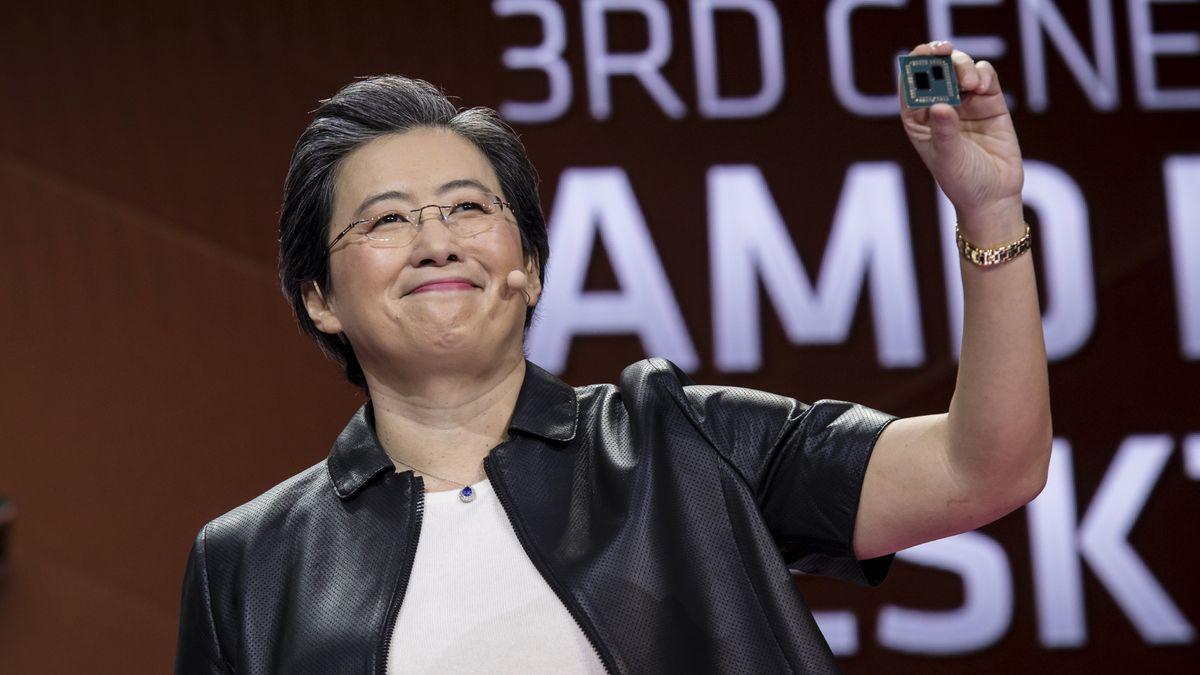
. AMD CEO Lisa Su called the deal "a major platform for the next generation of AI infrastructure"5
.
Source: ET
The computing power deal adds AMD's processors to Anthropic's increasingly diverse portfolio of AI infrastructure, which already includes AI chips from Nvidia, Amazon, and Google
3
. Anthropic has signed separate arrangements with Amazon for Trainium chips and 5 gigawatts of capacity, CoreWeave for Nvidia GPUs, and SpaceX for Colossus data centers5
. This multi-vendor approach reduces dependency risk at a time when compute is the binding constraint on frontier model development. "Access to compute is central to keeping Claude at the frontier and meeting demand from our customers," Brown noted3
. The deal represents a significant win for AMD as the chipmaker seeks to challenge Nvidia's dominance and expand its roster of major AI customers2
.
Source: SiliconANGLE
Related Stories
AMD's up to $5 billion equity investment in Anthropic mirrors Nvidia's strategy of investing in customers to lock in hardware demand, similar to Nvidia's $2 billion investment in Nebius and stakes in multiple AI infrastructure companies
5
. AMD has been one of the major beneficiaries of the AI boom because it makes GPUs that can train models and run large workloads, competing directly with Nvidia while inking deals with high-profile players including Anthropic's rival OpenAI4
. Anthropic is already using AMD's MI355X GPUs and will now scale to MI455X accelerators paired with EPYC "Venice" CPUs and Pensando networking5
. Whether AMD's Helios can compete with Nvidia's NVL72 at production scale in data centers remains the critical question that the first gigawatt deployment will answer as AI server chips become increasingly vital to next-generation AI infrastructure.Summarized by
Navi
31 Jul 2024

10 Jun 2025•Business and Economy

04 Nov 2025•Business and Economy

1
Science and Research

2
Technology

3
Technology