AMD CEO Lisa Su dismisses AI bubble fears as Goldman Sachs warns of datacenter investment risks


14 Sources
[1]
AMD CEO Lisa Su Says Concerns About an AI Bubble Are Overblown
Lisa Su leads Nvidia's biggest rival in the AI chip market. When asked at WIRED's Big Interview event if AI is a bubble, company said "Emphatically, from my perspective, no." Earlier this year, WIRED said that AMD CEO Lisa Su was "out for Nvidia's blood." The American chipmaker is still small
[2]
AMD CEO Lisa Su 'emphatically' rejects talk of an AI bubble -- says claims are 'somewhat overstated'
AMD CEO says long-term demand for compute will justify today's rapid data-center buildout. AMD CEO Lisa Su used her appearance at WIRED's Big Interview conference in San Francisco to push back against growing speculation that the AI sector is overheating. Asked whether the industry is in a bubble,
[3]
AI datacenter boom could end badly, Goldman Sachs warns
Bank sketches four scenarios in which monetization falters or demand swamps supply by 2030 Goldman Sachs warns that datacenter investments may fail to pay off if the industry is unable to monetize AI models, but hedges its bets by saying that demand could also overwhelm available capacity by
[4]
AI Business Deals Are Getting a Bit 2008-ish
The complex financial ties binding the sector together could become everyone's collective downfall. A company that most people have never heard of is among the year's best-performing technology firms -- and a symbol of the complex, interconnected, and potentially catastrophic ways in which AI
[5]

AMD and IBM's CEO doesn't see an AI bubble, just $8 trillion in data centers
Serving tech enthusiasts for over 25 years. TechSpot means tech analysis and advice you can trust. Editor's take: Normal people are now shelling out hundreds of dollars for modest RAM upgrades, while the companies powering the AI boom are looking forward to even more market hysteria. And despite
[6]
Tech leaders fill $1T AI bubble, insist it doesn't exist
Even as enterprises defer spending and analysts spot dotcom-era warning signs Tech execs are adamant the AI craze is not a bubble, despite the vast sums of money being invested, overinflated valuations given to AI startups, and reports that many projects fail to make it past the pilot stage. HPE
[7]

AI data center boom sparks fears of glut amid lending frenzy | Fortune
For the skeptics, those are some of the examples of why the artificial intelligence data center boom is getting out of hand. There's a frenzy of development going on to support the AI revolution, and with it an insatiable demand for debt to fund it. Some estimate the overall infrastructure
[8]

The AI boom is a loop-de-loop economy. Here's how
To some on Wall Street, the AI boom looks less like a broad-based revolution and more like a roller-coaster that keeps adding speed and very few riders. Chip giants send money into GPU clouds and model labs that already live on their hardware. Those clouds borrow against racks of GPUs and sign
[9]

AI's $400 bn problem: Are chips getting old too fast?
New York (AFP) - In pursuit of the AI dream, the tech industry this year has plunked down about $400 billion on specialized chips and data centers, but questions are mounting about the wisdom of such unprecedented levels of investment. At the heart of the doubts: overly optimistic estimates about
[10]

AMD's Lisa Su doesn't believe there's an AI bubble: 'Emphatically, from my perspective, no'
As AI continues to balloon and pull in even more investment, one of the fiercest debates (other than copyright, ethics, and the environment) is about whether or not it's a bubble. AMD's Lisa Su has weighed in on the debate. Recently, in an interview with Wired, the AMD chief was asked if she
[11]

AI's $400 billion problem: Are chips getting old too fast?
In pursuit of the AI dream, the tech industry this year has plunked down about $400 billion on specialized chips and data centers, but questions are mounting about the wisdom of such unprecedented levels of investment. Building data centers requires raising significant capital, Luria points
[12]

AI's $400 billion problem: Are chips getting old too fast?
In pursuit of the artificial intelligence dream, the tech industry this year has plunked down about $400 billion on specialized chips and data centers, but questions are mounting about the wisdom of such unprecedented levels of investment. At the heart of the doubts: overly optimistic estimates
[13]
View: AI bubble is real and it will birth giants - The Economic Times
The AI boom is creating a bubble, but it is a necessary one. Similar to past industrial bubbles, it is building future infrastructure. Companies are investing heavily in data centers and technology. While a correction is expected, strong AI companies will emerge to redefine intelligence. This
[14]
A bursting bubble would be great for AI
AI's rapid expansion is fuelled by massive infrastructure spending, but real progress often comes from scarcity, not abundance. When resources tighten, innovation tends to accelerate, as seen in past energy and agricultural crises. A cooling AI investment bubble could push the industry toward
Share
Copy Link
AMD CEO Lisa Su emphatically rejects concerns about an AI bubble, calling them overblown as her company secures a 6-gigawatt GPU deal with OpenAI. But Goldman Sachs warns that datacenter investments could fail if the AI industry can't monetize its models, while IBM's CEO estimates the sector has committed to $8 trillion in infrastructure that may never generate adequate returns.
AMD CEO Rejects AI Bubble Concerns Amid Massive Infrastructure Bets
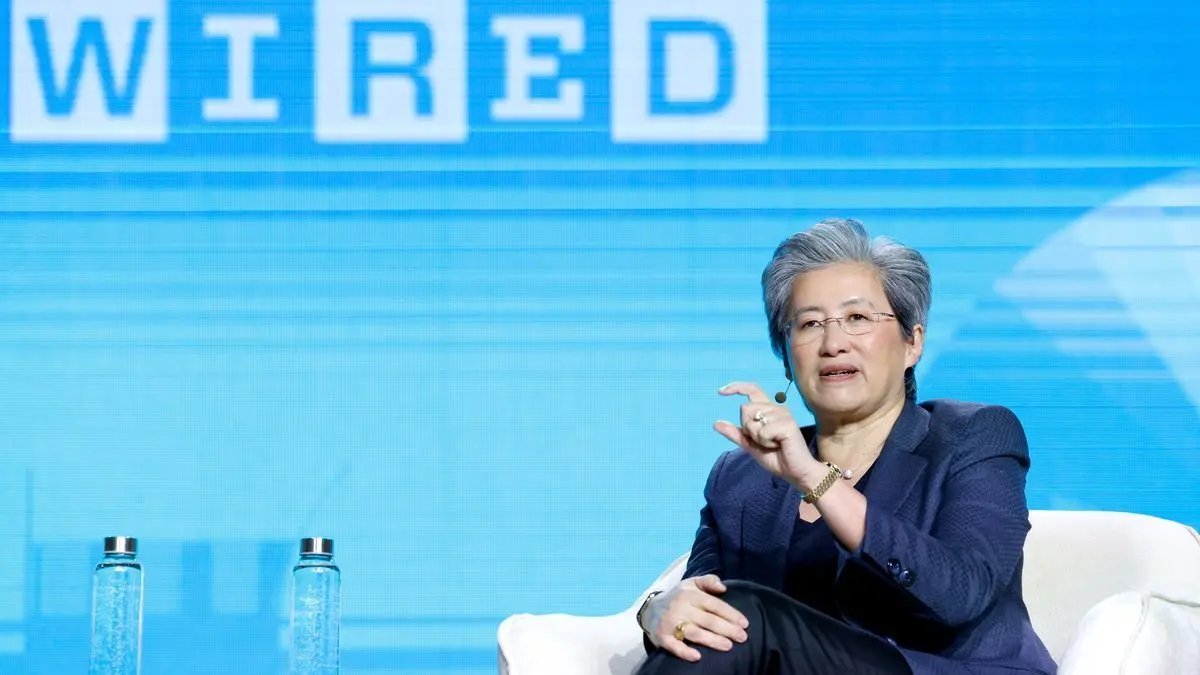
AMD CEO Lisa Su used her appearance at WIRED's Big Interview conference in San Francisco to emphatically push back against growing speculation about an AI bubble. When asked directly whether the tech industry is experiencing a bubble, Su responded with a firm no, arguing that such concerns are "somewhat overstated" and that AI is still in its infancy
1
.
Source: Tom's Hardware
Her confidence comes as AMD prepares for one of its largest commitments to date: a deal with OpenAI to deploy 6 gigawatts of Instinct GPUs over several years, with the first gigawatt scheduled for the second half of next year
2
.Since becoming CEO in 2014, Lisa Su has transformed AMD from a struggling chipmaker with a $2 billion market cap into a $353 billion company positioned as Nvidia's primary rival in the AI chip market
1
. The OpenAI partnership includes an unusual equity arrangement where the AI company secured the option to buy up to 160 million AMD shares at a penny each once deployment milestones are met, effectively giving OpenAI a 10 percent stake in AMD1
. Su framed this structure as a way to align long-term incentives around infrastructure delivery rather than short-term product availability2
.Goldman Sachs Warns of Datacenter Investment Risks
While AMD bets big on sustained demand for computing power, Goldman Sachs has issued a starkly different assessment. The investment bank warns that datacenter investments may fail to pay off if the AI industry proves unable to monetize its models effectively
3
. Analyst Omdia forecasts that capital expenditure on data centers will reach $1.6 trillion by 2030, growing 17 percent annually3
. Yet doubts persist about return on investment, with many business leaders unconvinced that AI justifies the expense.Goldman Sachs sketched four scenarios for how the AI datacenter boom might unfold by 2030. In its base case, datacenter occupancy peaks at around 93 percent sometime next year before supply constraints ease after 2027
3
. A more pessimistic scenario suggests that if users refuse to pay for AI tools—Microsoft has reportedly struggled to convince customers to pay $30 per seat for Copilot—monetization plans will collapse, leading to excess capacity and forcing operators to lower lease rates3
. Another scenario sees corporate spending on cloud services decline as companies seek to reduce costs, causing datacenter occupancy to fall even as AI demand remains steady3
.The $8 Trillion Infrastructure Question
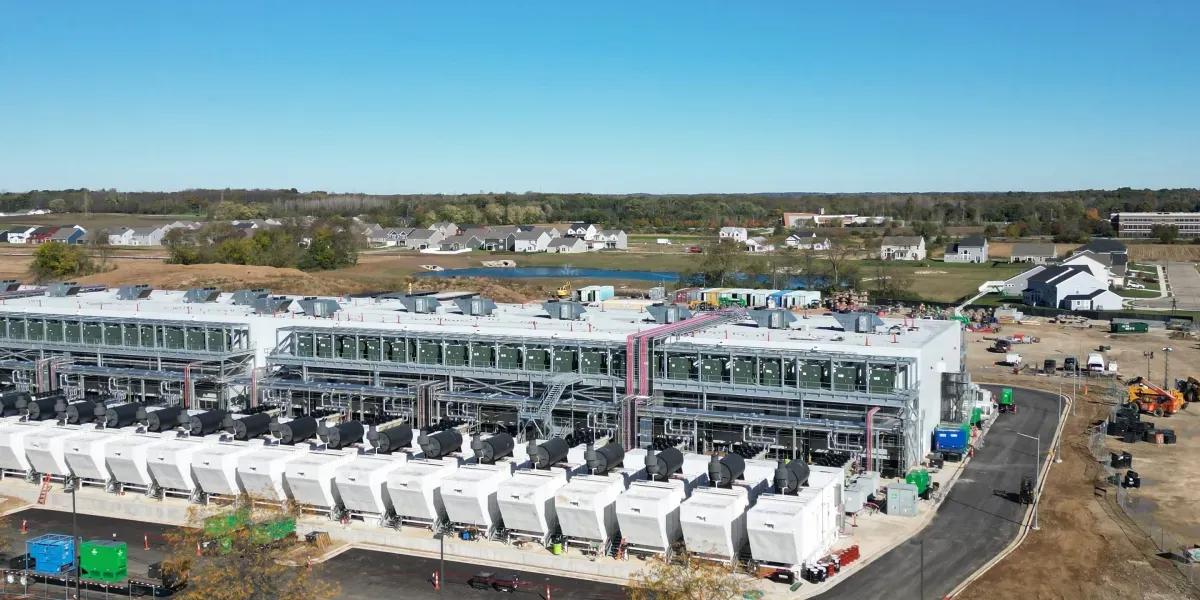
IBM CEO Arvind Krishna offers perhaps the most sobering perspective on infrastructure costs. Krishna estimates that a single one-gigawatt AI datacenter requires around $80 billion to build
5
. The AI industry has collectively announced plans for approximately 100 gigawatts of capacity, which would require $8 trillion to actually construct5
.
Source: Japan Times
To recoup that investment, AI ventures would need to generate $800 billion in profit annually just to cover interest payments—a figure no company in the sector approaches
5
.The financial complexity extends beyond raw infrastructure costs. CoreWeave, a former crypto-mining firm turned datacenter operator, exemplifies the circular financing arrangements now common in the AI industry
4
. The company expects $5 billion in revenue this year while spending roughly $20 billion, covering the gap with $14 billion in debt, much of it from private-equity firms at high interest rates4
. CoreWeave uses Nvidia's money to buy Nvidia's chips and then rents them back to Nvidia, while Microsoft accounts for as much as 70 percent of its revenue4
.Related Stories

Export Restrictions and China Market Challenges
AMD faces additional complexity navigating export restrictions. Su confirmed that AMD will pay a 15 percent tax on MI308 chips it plans to resume shipping to China under revised export rules
1
. The US government halted sales in April before reopening a licensing process over the summer2
. AMD has told investors that the original export restrictions would create up to $800 million in inventory and purchase-commitment charges, making re-entry on known terms a positive step despite the additional fee2
.What Keeps Tech Leaders Focused on Speed Over Competition
Su addressed pressure from hyperscalers like Google and Amazon that are expanding their in-house silicon portfolios. "When I look at the landscape, what keeps me up at night is 'How do we move faster when it comes to innovation?'" Su said
1
. She argued that AMD's challenge isn't matching any single rival but advancing its own roadmap quickly enough to capture the next wave of deployments2
. Her view is that each generation of AI models raises performance expectations, supporting sustained investment in training and inference clusters.Some investors have begun exercising caution. French multinational Axa told Bloomberg it is "exercising greater caution on the artificial intelligence build-out" when backing financing for the sector
3
. Norway's $2 trillion sovereign wealth fund also expressed caution about investing directly in data centers due to the sector's high volatility3
. These financial risks echo patterns from the 2008 financial crisis, when wealth tied up in obscure overlapping arrangements led to economic catastrophe4
.
Source: The Register
References
Summarized by

Navi
[2]
[3]
[4]
Related Stories
AI Infrastructure Buildout Hits Turbulence as Neoclouds Crash and Credit Risks Spike
23 Oct 2026•Business and Economy
Big Tech's AI ambitions fuel $300 billion borrowing boom as Wall Street shows investor fatigue
24 Apr 2026•Business and Economy

AI demand called unlimited, but chip stocks fall as spending questions mount across industry
12 Jul 2026•Business and Economy
Recent Highlights



Recent Highlights
Today's Top Stories






Don’t drown in AI news. We cut through the noise - filtering, ranking and summarizing the most important AI news, breakthroughs and research daily. Follow topics that matter to you and stay ahead.


