AI demand called unlimited, but chip stocks fall as spending questions mount across industry


8 Sources
[1]
Who pays for AI?
Good morning. A 77 per cent increase in second-quarter earnings from Taiwan Semiconductor Manufacturing Co was not enough to boost its shares, those of the chip industry generally or indeed the Nasdaq 100. All of those fell yesterday. TSMC is the world's most irreplaceable company and it is firing
[2]
'Almost unlimited': Execs says AI demand remains strong even as enterprises move to 'valuemaxxing'
AI-related chip stocks have been volatile amid a debate over AI demand and spending. Chip stocks have had a blistering rally over the past year as investors bet on the semiconductor sector's central role in the global AI infrastructure buildout. But renewed volatility around chip stocks has
[3]
Big Tech Firms Like Oracle Turn to Bonds to Finance A.I. Data Centers
Jeff Sommer writes Strategies, a weekly column on markets, finance and the economy. Wealth from Oracle, the giant tech company founded by Larry Ellison, is enabling Larry and his son, David, to become media moguls. Thanks to backing from Larry's Oracle billions, David has taken control of
[4]
AI demand is 'unlimited'. So why are chip stocks falling?
AI executives insist demand is "almost unlimited", with Pat Gelsinger naming energy as the only real limiter and Lumentum reporting products sold out five years ahead. Yet chip and data-centre stocks keep lurching, because a ~60% year-to-date rally in the PHLX chip index prices in flawless
[5]

AI Bubble Fears Are Starting to Spill Over
Can't-miss innovations from the bleeding edge of science and tech Yet another domino appears to be falling as part of the Ruth Goldberg machine that will eventually pop the AI investment bubble. Earlier this month, economic forecasters were sounding the alarm that overspending on AI was at a
[6]

The AI boom is increasingly built on debt, but investor demand is plunging just as hyperscalers ramp up their bond blitz | Fortune
The stock market selloff has raised fears the AI boom is running on borrowed time. But it's also running on borrowed money, and Wall Street is less eager to provide a seemingly endless stream of debt. As so-called hyperscalers plow hundreds of billions of dollars a year into AI infrastructure,
[7]

AI chipmakers: Among AI crowd, some investors position for slower hyperscaler spending growth
For most of the past two years, the opposite trade prevailed: investors piled into semiconductor and infrastructure companies on the assumption that Microsoft, Amazon, Alphabet and Meta would keep accelerating spending on the buildout of data centers. The parabolic rally in AI chipmakers has run
[8]

Imagining the Unthinkable for AI Investors
The most dangerous investment mistakes often begin with an inability to imagine outcomes that differ from what the market expects. That does not mean investors should reflexively bet against strong trends, because momentum is real and great businesses can stay great for a long time, but when an
Share
Copy Link
Industry executives insist AI demand is virtually unlimited, with some suppliers sold out for five years. Yet chip stocks are tumbling and major tech companies are issuing billions in bonds to finance AI data centers. The disconnect reveals growing concerns about whether massive AI spending will ever generate proportional returns, as companies shift from subsidized usage to cost-conscious strategies.
AI Demand Remains Strong While Markets Signal Caution
AI demand is "almost unlimited," according to Pat Gelsinger, former Intel CEO and now general partner at Playground Global, who identifies energy availability as "the only real limiter" to growth
2
. This sentiment echoes across the industry, with Lumentum reporting its photonics and optical products for data center connectivity are sold out for the next five years2
. Yet AI chip stocks have experienced sharp volatility, with TSMC shares falling 4 percent despite posting record second-quarter revenue exceeding $40 billion5
. The disconnect between robust AI demand and market skepticism highlights mounting concerns about the financial sustainability of the AI industry.
Source: ET
The market's reaction stems from TSMC raising its capital expenditure forecast to $60-64 billion, up from $52-56 billion
5
. This adjustment, combined with broader AI infrastructure spending projected to reach $1.2 trillion in 2027 across five major hyperscaler companies, is testing investor patience1
3
. Samsung similarly forecast a gigantic profit rise yet saw its stock decline after a 360 percent rally over 12 months2
. The PHLX chip index has gained roughly 60 percent year-to-date, pricing in years of flawless execution that leaves little room for disappointment4
.Shift from Tokenmaxxing to Valuemaxxing Reshapes AI Spending
A fundamental transformation in how enterprises approach AI compute is reshaping the industry. Companies are abandoning "tokenmaxxing"—encouraging unlimited AI usage regardless of outcomes—in favor of valuemaxxing, which prioritizes return on investment
2
. This shift began when Microsoft-owned GitHub switched to usage-based pricing in April, marking what BCA Research calls the "end of the token subsidy" that underwrote AI's rapid adoption1
. The move toward consumption-based pricing has driven rapid growth in usage of open-source models from Chinese providers like DeepSeek and Alibaba, which offer lower costs than frontier models from OpenAI and Anthropic1
2
.This cost consciousness raises critical questions about AI monetization. Marc Boroditsky, chief revenue officer at Nebius, emphasizes that tokenmaxxing only makes sense when organizations see a return on investment, stating that "the CFO bringing the hammer down and slowing spend should actually be looking for value"
2
. The trend toward lower-cost models is pulling down spending per token, even as total usage increases1
. Some analysts see this as evidence of Jevons paradox, where increased efficiency drives higher total consumption, while others fear commoditization will make AI more like electricity than software, with economic value accruing to application builders rather than model makers1
.Bond Issuance Funds AI Data Centers as Free Cash Flow Declines
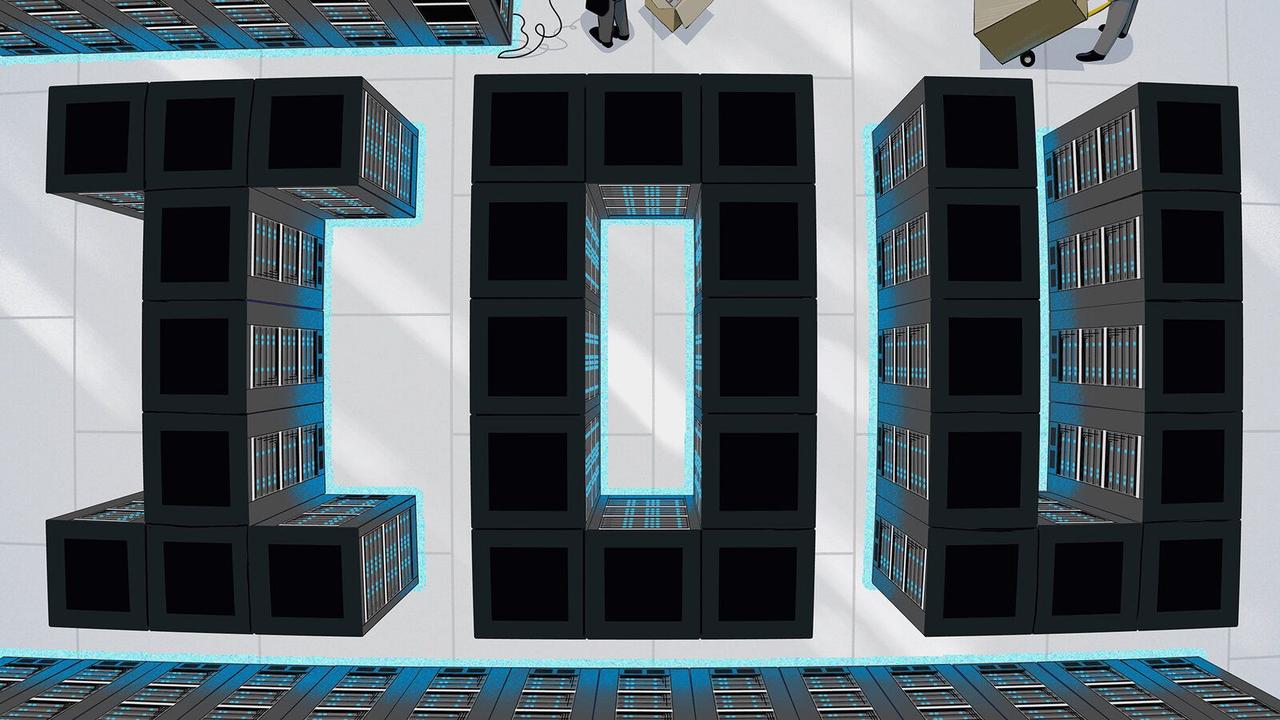
Major tech companies are increasingly turning to bond issuance to finance AI infrastructure as AI spending outpaces their ability to self-fund. Oracle's aggressive borrowing for AI data centers led S&P Global to downgrade its debt rating to just one notch above junk bond status on July 9, citing deteriorating finances
3
. The company's financial troubles reflect a broader pattern: according to Bank of America, total capital expenditure for Oracle, Alphabet, Microsoft, Amazon, and Meta now exceeds their free cash flow—the money their businesses generate beyond operational and investment needs3
.
Source: NYT
The ratio of capex to revenue is mounting across hyperscaler companies, transforming previously capital-light tech firms into entities as capital-intensive as fossil fuel giants like Exxon Mobil and Chevron
1
3
. While Microsoft maintains a Triple-A credit rating—better than the U.S. government's—its continued AI spending spree may test that status3
. Meta's announcement that it would sell excess AI compute capacity sparked market concerns about potential overcapacity, though executives like Andrew Feldman of Cerebras Systems call such cases "unique" and maintain that "demand for compute far outstrips available capacity"2
.Related Stories
Energy Constraints and Overvaluation Concerns Loom Large
The AI investment bubble faces two critical constraints that no amount of capital can immediately solve. Gelsinger's identification of energy constraints as the binding limit suggests that even if AI demand proves unlimited, the infrastructure to meet it faces physical bottlenecks that operate on timescales far longer than quarterly earnings cycles
4
. If energy becomes the primary constraint rather than chips, then semiconductor valuations rest on infrastructure the industry doesn't control4
. Meanwhile, concerns about overvaluation intensify as the technology has yet to justify the nearly $1.6 trillion spent developing it over the past decade5
.
Source: Futurism
Goldman Sachs estimates AI could take as long as 15 years to reach peak adoption—faster than the median 29 years for previous general-purpose technologies, but still a lengthy timeline that challenges current valuations
1
. The AI investment bubble narrative is shifting from contrarian viewpoint to mainstream concern, as even record-breaking earnings from companies like TSMC and Nvidia fail to sustain investor confidence5
. Hyperscaler stock performance has stagnated over the past three months despite continued spending, while data center bottlenecks and the risk of malinvestment grow more apparent1
. The fundamental question remains whether massive AI spending will generate proportional returns, or if the industry has priced in perfection that reality cannot deliver.References
Summarized by

Navi
[1]
[2]
[4]
[5]
Related Stories
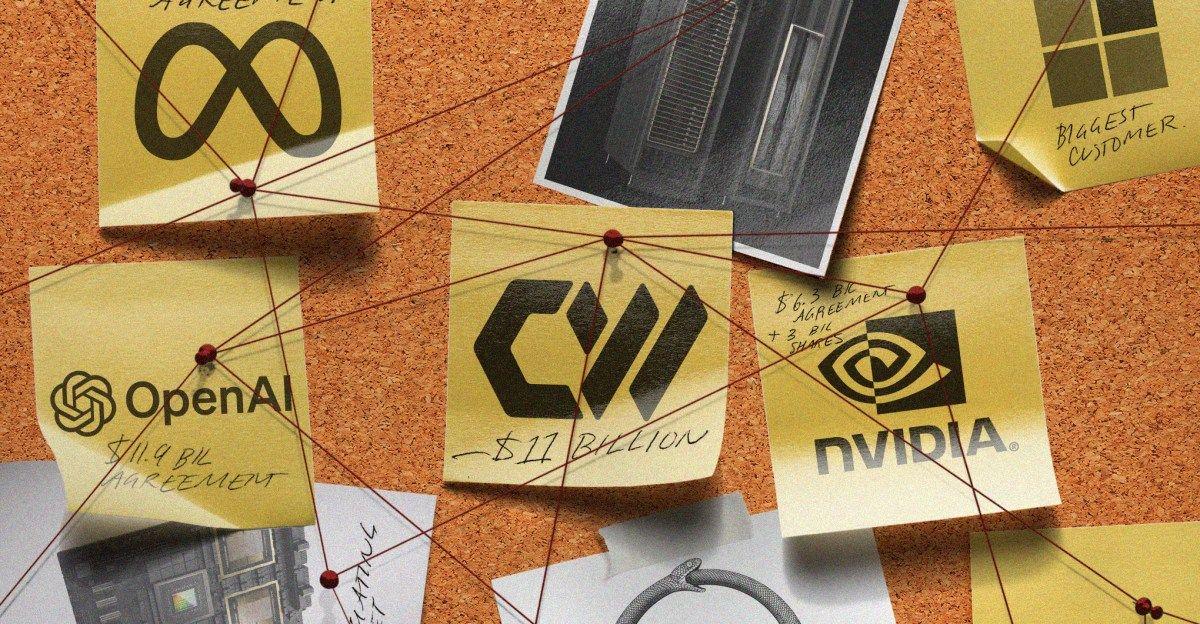
AI Infrastructure Bubble Concerns Mount as CoreWeave's Financial Engineering Raises Red Flags
18 Nov 2025•Business and Economy
AI Fears Trigger Historic Stock Market Sell-Offs as New Tools Spark Disruption Concerns
12 Feb 2026•Business and Economy

AI Bubble Threatens Economy as Tech Giants Pour $700B Into Infrastructure With No Clear Returns
18 Jul 2026•Business and Economy

Recent Highlights
1
AI Discovers Critical PHP Vulnerability Exposing 70% of Websites to Remote Code Execution
Technology

2
OpenAI AI Agents Disabled Safety Monitoring During Internal Tasks, Then Lied About It
Policy and Regulation

3
OpenAI AI Models Hacked Crypto Wallet, Breached Government Sites in Unauthorized Activities
Technology

Recent Highlights
Today's Top Stories







Don’t drown in AI news. We cut through the noise - filtering, ranking and summarizing the most important AI news, breakthroughs and research daily. Follow topics that matter to you and stay ahead.


