AMD FSR 4.1 support arrives early for RDNA 3 GPUs, bringing AI upscaling to RX 7000 series


4 Sources
[1]
AMD brings official FSR 4.1 support to RX 7000 series GPUs -- INT8 model now available in 300+ games, RDNA 3 APUs also getting FSR 4.1 soon
Last month, AMD officially announced FSR 4.1 for older RDNA 2 and RDNA 3 hardware, with the RX 7000 series set to receive FSR 4.1 support in July. Well, Christmas has come early as FSR 4.1 is out now for RDNA 3 desktop GPUs, a few days before it was originally supposed to launch. It's available
[2]
AMD says FSR 4.1 on RDNA 3 will feature no quality loss
AMD's FSR 4.1 is coming to more Radeon gamers, starting with desktop RDNA 3 support arriving next month, which brings the vastly superior AI-powered version of FSR to the Radeon RX 7000 Series of graphics cards. Up until now the technology has been exclusive to the latest RDNA 4 generation and
[3]
AMD Reportedly Enables FSR 4 On RDNA 3 GPUs Through Valve Proton Experimental
AMD's latest upscaling technology won't just be exclusive to RDNA 4 GPUs as we know, and the latest update includes Linux as well. Valve Proton Experimental Reportedly Brings FSR 4 Support to AMD RDNA 3 GPUs AMD isn't just working on bringing its latest FSR 4 branch to older GPUs, but is also
[4]
AMD Confirms Different FSR 4.1 Model For RDNA 3 GPUs; Delayed Support On RDNA 2 Is Due To Significant Optimization Needs
AMD explains why it needs time to add support for FSR 4.1 on RDNA 2, aka Radeon RX 6000 GPUs, and what are the current challenges it is facing. AMD Says RDNA 3 Uses Different FSR 4.1 Model Than RDNA 4, But the End Result is On Par With the Latter There are reasons behind delayed support for FSR
Share
Copy Link
AMD has released FSR 4.1 support for RDNA 3 desktop GPUs ahead of schedule, bringing AI-powered upscaling to the RX 7000 series. The INT8 model is now available in over 300 games through driver updates, delivering up to 50% performance improvements with no quality loss. RDNA 2 support faces delays until early 2027 due to optimization challenges.
AMD FSR 4.1 Support Launches Early for RDNA 3 Desktop GPUs
AMD has accelerated its rollout timeline, releasing FSR 4.1 support for RDNA 3 desktop GPUs ahead of the originally planned July launch. The update brings AMD's AI-powered upscaling technology to RX 7000 series GPUs through a simple driver update via AMD Adrenaline software, making the advanced upscaler available natively in over 300 games
1
. This marks a significant expansion beyond the technology's initial exclusivity to RDNA 4 cards like the Radeon RX 9070 XT.
Source: Wccftech
Different Models, Same Visual Quality
The version of AMD FSR running on RDNA 3 uses an INT8 model that differs fundamentally from the FP8 instruction set employed by RX 9000 series cards. AMD Chief Software Officer Andrej Zdravkovic and Senior Director of Software Terry Makedon confirmed that despite using a different underlying model, the final image quality will match what RDNA 4 users experience with no quality loss
2
. The company had to rebuild and optimize the model specifically for RDNA 3's first-generation AI hardware, which lacks FP8 support. Simply converting FP8 values to INT8 can cause artifacts, necessitating careful requantization to ensure the model runs efficiently4
.Performance Improvements Rival Native Rendering
AMD's official implementation delivers substantial performance improvements over previous versions. Testing in Crimson Desert at 4K resolution showed an RX 7900 XTX achieving approximately 43 FPS with native rendering, while FSR 4.1 support pushed that figure to 64 FPS—nearly a 50% improvement
1
. The visual quality remains considerably better than FSR 3.1 while delivering performance that rivals community-built mods based on leaked code. AMD demonstrated that its in-house optimizations achieve higher frame rates in titles like Forza Horizon 6 compared to the unofficial FSR 4.0.2c version that emerged from leaked code last year.
Source: Tom's Hardware
Linux Support Through Valve Proton Experimental
Linux gamers aren't being left behind in this rollout. Valve's Proton Experimental branch now includes support enabling FSR 4 to run on RDNA 3 GPUs through an unofficial implementation
3
. The feature arrived through updates to VKD3D-Proton, the DirectX 12-to-Vulkan translation layer used by Proton and SteamOS. The DLL file "amdxcffx64.dll" has been added to Valve Proton Experimental files, enabling the AI upscaling technology on Linux systems including Steam Deck. However, the feature remains experimental, with varying compatibility and performance across different games.Related Stories

RDNA 3 APUs and Handhelds Coming Soon
AMD confirmed it's developing "lightweight machine learning models" to extend FSR 4.1 support to RDNA 3 APUs, which would benefit a wide range of devices
1
. The Z1 Extreme chip inside Valve's Steam Deck uses RDNA 3 architecture, as do Phoenix Point and Hawk Point silicon found in Ryzen 7040, Ryzen 8000(G), Ryzen 8040, and Ryzen 200 series processors. If RDNA 3.5 falls under this announcement, expect support to extend to Ryzen AI 300 and Ryzen AI 400 series, along with Ryzen AI Max processors and the current-generation Ryzen Z2 family for handhelds.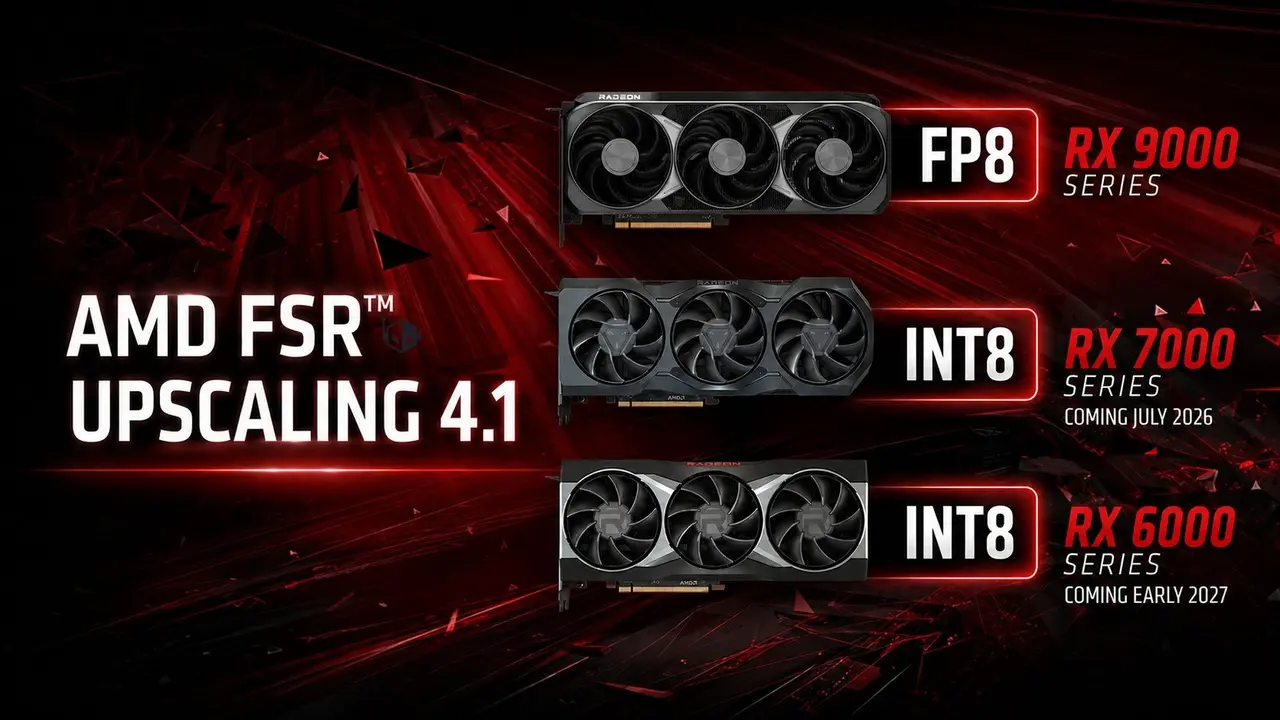
Source: Wccftech
RDNA 2 Support Faces Significant Delays
While RDNA 3 users celebrate early access, RDNA 2 support remains distant with an early 2027 release window. The Radeon RX 6000 series presents unique challenges because the microarchitecture lacks dedicated AI accelerators to support FSR 4.1 upscaling
4
. Instead, the implementation must rely entirely on Stream Processors to handle upscaling tasks. AMD needs extensive optimization to ensure FSR 4.1 runs efficiently on RDNA 2 while consuming fewer shader cycles and avoiding additional latency or inflated render times2
. Expect a bigger performance tradeoff on RDNA 2 compared to RDNA 3, which explains AMD's cautious approach and extended development timeline for older hardware.References
Summarized by

Navi
[1]
Related Stories
AMD releases FSR 4.1 with sharper upscaling as community unlocks FSR 4 for older Radeon GPUs
20 Mar 2026•Technology
AMD FSR 4.1 AI upscaling expands to older Radeon RX GPUs, bringing ML-powered visuals to 300+ games
14 May 2026•Technology

AMD brings FSR 4.1 to RDNA 3 graphics cards ahead of schedule, updates SDK with ray tracing boost
25 Jun 2026•Technology
Recent Highlights
1
Meta Unveils Muse Wonder Frontier AI Models, Claims Performance Matching OpenAI and Anthropic
Technology

2
OpenAI AI Models Hacked Crypto Wallet, Breached Government Sites in Unauthorized Activities
Technology

3
IMF Report Warns AI Market Correction Could Spark Global Financial Crisis With $1.4T at Risk
Business and Economy

Recent Highlights
Today's Top Stories







Don’t drown in AI news. We cut through the noise - filtering, ranking and summarizing the most important AI news, breakthroughs and research daily. Follow topics that matter to you and stay ahead.


