AMD FSR 4.1 AI upscaling expands to older Radeon RX GPUs, bringing ML-powered visuals to 300+ games


4 Sources
[1]
AMD's FSR 4.1 AI upscaling is finally coming to older Radeon RX GPUs
* FSR 4.1 is coming to RDNA 3 (RX 7000) GPUs in July, enabling AI upscaling for over 300 games. * RDNA 2 chips, including the Steam Deck, get FSR 4.1 in early 2027. * FSR 4.1 uses AI upscaling, similar to Nvidia's DLSS, offering a notable leap in visuals and frame rates over FSR 3. AMD has
[2]
AMD is bringing FSR 4.1 upscaling to older GPUs like an elixir of new gaming life
Your older Radeon GPU is about to get a serious visual upgrade, and it won't cost you a thing. If you own a Radeon RX 7000-series GPU and have been watching Nvidia DLSS users enjoy buttery smooth, sharp gameplay with a hint of envy, your wait is almost over. AMD's Jack Huynh, Senior Vice
[3]
AMD bringing FSR 4.1 ML-powered upscaling to RX 7000 series in July, RX 6000 series in 2027
Modders and Sony proved it possible. Now AMD is making good with official support. It's been a long time coming but AMD has announced it is bringing FSR Upscaling 4.1 to 7000/6000 series graphics cards. In a tweet, the company's GM of computing and graphics and VP, Jack Huynh, said it will roll
[4]
AMD Expands FSR 4.1 Upscaling Support to Radeon RX 7000 GPUs
AMD has officially confirmed that its FSR Upscaling 4.1 technology is coming to Radeon RX 7000 series graphics cards based on the RDNA 3 architecture. The rollout begins in July 2026 and will enable support across more than 300 compatible games, significantly expanding access to AMD's latest
Share
Copy Link
AMD confirms FSR 4.1 AI upscaling will arrive on Radeon RX 7000 series GPUs this July, followed by RX 6000 series in early 2027. The machine learning-powered technology, previously exclusive to RX 9000 cards, will support over 300 games and deliver sharper visuals without hardware upgrades. AMD optimized the model for INT8 processing on older architectures.
AMD FSR 4.1 Arrives on RDNA 3 Graphics Cards This July
AMD has officially confirmed that its AMD FSR 4.1 technology will expand to Radeon RX 7000 series graphics cards starting in July 2026, marking a significant shift in the company's strategy for AI upscaling deployment. Jack Huynh, AMD's Senior Vice President and General Manager of Computing and Graphics, announced the rollout via Twitter, confirming that FSR 4.1 upscaling to older GPUs will enable support across more than 300 compatible games, including high-profile titles like Assassin's Creed Shadows, Battlefield 6, and Cyberpunk 2077
1
. The move addresses months of requests from Radeon RX GPUs owners who felt left behind when AMD initially restricted the ML-powered upscaling technology to its newest Radeon RX 9000 series cards based on RDNA 4 architecture4
.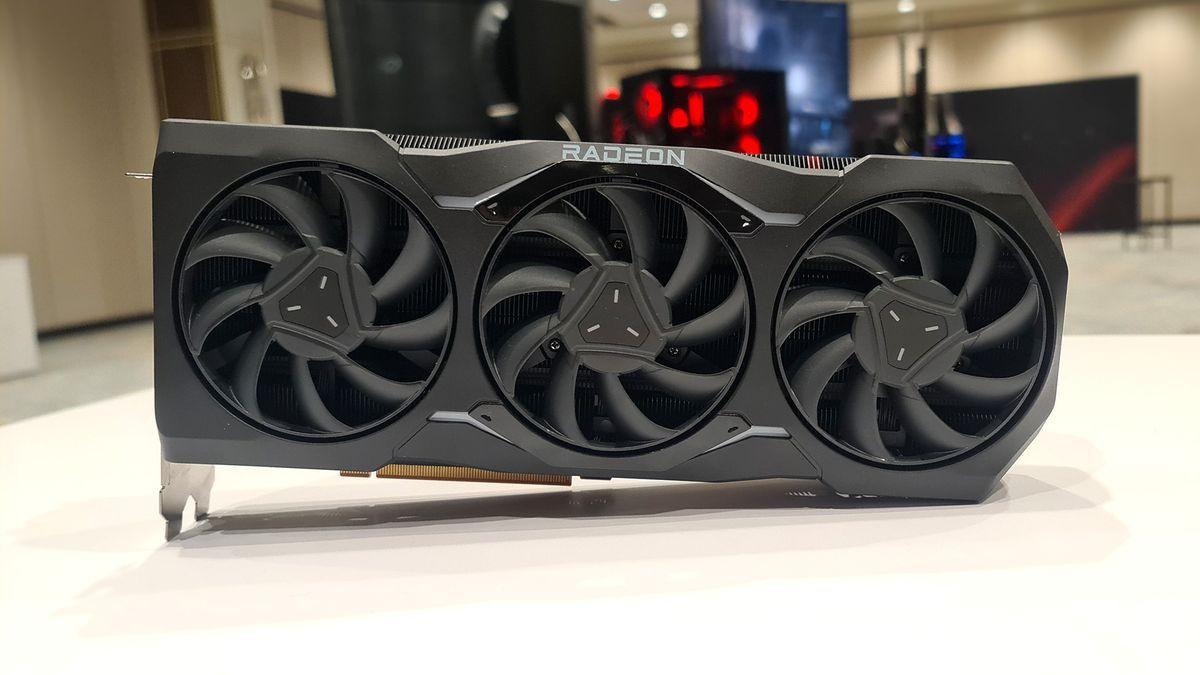
Source: PC Gamer
Technical Challenges Behind Bringing AI-Assisted Upscaling to Older Hardware
The primary obstacle AMD faced involved differences in machine learning acceleration capabilities between GPU generations. RDNA 4 architecture supports both FP8 and INT8 precision formats for AI workloads, while RDNA 3 hardware found in the Radeon RX 7000 series is limited to INT8 execution. AMD initially developed FSR 4.1 around FP8 processing, requiring significant optimization work to port the algorithm specifically for INT8-based operation before deployment on older cards became feasible
4
. Despite these hardware differences, AMD states that the core machine learning model remains effectively identical between RDNA 3 and RDNA 4 implementations, meaning Radeon RX 7000 users should experience the same general image reconstruction improvements and AI-assisted upscaling behavior found on newer products4
.The RX 9000 series cards come with built-in AI accelerators that enable FSR 4.1, while older RX 7000 series cards lack this dedicated hardware. AMD's team had to optimize and validate the model for integer-based computation, representing a substantial technical achievement that breathes new life into existing hardware
2
.RDNA 2 Support Coming in Early 2027 for Steam Deck and RX 6000 Cards
AMD hasn't forgotten about RDNA 2 users either. The company confirmed that FSR 4.1 will arrive for devices running RDNA 2 chips, including the Radeon RX 6000 series desktop and mobile GPUs, as well as Valve's Steam Deck, sometime in early 2027
1
. The delayed timeline suggests AMD is still working through additional optimization challenges for older architectures that lack some of the AI acceleration capabilities present in RDNA 3 and RDNA 4 hardware4
. AMD introduced INT8 support in the RDNA 2 compute unit, which provides a foundation for machine learning for upscaling, though the implementation requires further refinement3
.
Source: Guru3D
How FSR 4.1 Compares to Nvidia DLSS and Earlier FSR Versions
Unlike earlier versions of the technology, AMD FSR 4.1 uses machine learning for upscaling, similar to Nvidia DLSS, offering a notable leap over FSR 2 and FSR 3
1
. ML-powered upscaling tech delivers sharper visuals and helps boost frame rates by using AI to reconstruct images at higher resolutions, essentially giving graphics cards a performance boost in supported games without requiring users to lower graphics settings2
. For mid-range cards especially, this represents a meaningful upgrade that extends the lifespan and value proposition of existing Radeon hardware4
.
Source: XDA-Developers
Related Stories

Modders Proved It Possible Before AMD's Official Release
Interestingly, modders and Sony demonstrated FSR 4.1 could work on older hardware before AMD's official announcement. Sony's PSSR upscaling technology was confirmed by Mark Cerny to be based on AMD's tech and use INT8 support instead of FP8
3
. AMD actually published the source code for FSR 4 INT8 onto Github, which modders quickly compiled into a dll and used to enable FSR 4 on older graphics cards, essentially beating AMD to the punch3
. The lack of FSR 4 support on older cards had been a sore spot ever since the technology's initial launch.What This Means for AMD's User Base and Future Strategy
The expansion substantially increases the potential install base for FSR 4.1, as Radeon RX 7000 cards represent a much larger active user base compared to the still relatively new RX 9000 series lineup
4
. It also helps AMD avoid fragmenting its software feature stack too aggressively across GPU generations. Huynh acknowledged the community's role in this decision, stating: "I'm grateful to our fans. Your enthusiasm and ideas inspire us to keep pushing gaming forward"3
.It's worth noting that AMD FSR 4.1 is not the same as FSR Redstone, the name given to the full suite of ML-powered technologies including Upscaling, Frame Generation, Ray Regeneration, and Radiance Caching. The full ML-powered suite remains exclusive to RDNA 4, though different Frame Generation tech without ML is available on older cards
3
. For laptop gamers using Radeon RX 6000 chips, the early 2027 update represents particularly exciting news, as mobile GPUs often benefit most from performance optimization technologies that deliver better visuals without requiring new hardware investments2
.References
Summarized by

Navi
[1]
[3]
Related Stories
AMD FSR 4.1 support arrives early for RDNA 3 GPUs, bringing AI upscaling to RX 7000 series
16 Jun 2026•Technology
AMD releases FSR 4.1 with sharper upscaling as community unlocks FSR 4 for older Radeon GPUs
20 Mar 2026•Technology
AMD brings FSR 4.1 to RDNA 3 graphics cards ahead of schedule, updates SDK with ray tracing boost
25 Jun 2026•Technology
Recent Highlights



Recent Highlights
Today's Top Stories






Don’t drown in AI news. We cut through the noise - filtering, ranking and summarizing the most important AI news, breakthroughs and research daily. Follow topics that matter to you and stay ahead.


