AMD Ryzen AI Max PRO 400 Series Brings Local Agentic AI to Business PCs with 192GB Memory


4 Sources
[1]
AMD Ryzen AI Max PRO 400 Series Brings Local Agentic AI to Business PCs
AMD Ryzen™ AI Max and Ryzen AI Max PRO 400 Series processors are available from AMD partners, giving businesses new options for developing and deploying enterprise AI locally. The advent of generative artificial intelligence has raised questions around commercial use cases, adoption, and ROI since
[2]
How AMD Ryzen AI Max PRO 400 Series Processors Bring Local Agentic AI to Business Customers
The advent of generative artificial intelligence has raised questions around commercial use cases, adoption, and ROI since the technology entered mainstream discourse in late 2022. As AI agents move towards broad deployment, companies face even greater pressure to answer them. Unlike genAI
[3]
AMD Ryzen AI Max Series PCs Now Support Perplexity's Portable Computer for Local AI Workflows
Today, Perplexity announced that Portable Computer is available on supported Windows PCs powered by AMD Ryzen™ AI Max Series processors, including the AMD Ryzen™ AI Halo developer platform. Users can run local AI tasks and recurring workflows on their own hardware without using Perplexity Computer
[4]
With AMD Ryzen AI Max Series Processors, Perplexity Brings Portable Computer to Agentic PCs
Systems powered by AMD Ryzen AI Max Series processors, including the AMD Ryzen AI Halo developer platform, can now run Portable Computer on Windows for Perplexity subscribers. Today, Perplexity announced that Portable Computer is available on supported Windows PCs powered by AMD Ryzen™ AI Max
Share
Copy Link
AMD unveiled its Ryzen AI Max PRO 400 Series processors, featuring up to 192GB unified memory and the ability to run models exceeding 300B parameters locally. The processors integrate 16 Zen 5 CPU cores, a 55 TOPS NPU, and 40 GPU compute units, enabling businesses to deploy enterprise AI agents without cloud dependency. Perplexity's Portable Computer now supports these systems for local AI workflows.
AMD Tackles Enterprise AI Deployment with Expanded Memory Architecture
AMD has launched its Ryzen AI Max and Ryzen AI Max PRO 400 Series processors, marking a shift in how businesses can approach enterprise AI deployment. Available now through AMD partners, these processors feature up to 16 Zen 5 CPU cores, a 55 TOPS NPU, 40 GPU compute units, and a substantially expanded unified memory pool designed specifically for local agentic AI workloads
1
2
.
Source: CXOToday
The AMD Ryzen AI Max PRO 400 Series represents the world's first x86 client processor capable of running models with more than 300B parameters at 4-bit quantization, without requiring cloud offload. This capability stems from the processor's memory expansion: where previous-generation systems maxed out at 128GB total memory with up to 96GB reserved for GPU workloads, the new Ryzen AI Max 400 Series offers up to 192GB, with up to 160GB dedicated to the GPU—an increase of 1.67x
1
2
.Why Memory Capacity Matters for Agentic AI
Unlike generative AI chatbots that rely on question-and-answer interactions, AI agents execute complex, multi-step tasks across different applications. When configured appropriately, these agents can take autonomous actions and work on extended projects while users focus elsewhere. This fundamental difference creates distinct technical requirements
1
2
.Agentic workloads place heavy demands on memory because they may combine multiple models, large context windows, enterprise data, and several applications or tools within the same workflow. The additional memory capacity of Ryzen AI Max 400 Series systems gives businesses more room to develop and run those local agentic AI workloads without hitting capacity constraints
1
2
.Development Platform for Enterprise AI Deployment
Running an enterprise agent requires more than a foundation model. Development teams need to connect models to internal documents and codebases, build retrieval-augmented generation applications, evaluate different models, create tools and connectors, test agent behavior, and determine which workloads should remain local versus using cloud services
1
2
.The AMD Ryzen AI Max PRO 400 Series processors provide a local platform for this entire development cycle. Their combination of high-performance CPU cores, integrated graphics, a powerful NPU, and unified memory supports model development, orchestration, prototyping, and execution on the same system. The platform supports both Windows and Linux environments, while the broader Ryzen AI software ecosystem includes widely used tools and frameworks such as PyTorch, vLLM, llama.cpp, Ollama, ComfyUI, and LM Studio
1
2
.Perplexity Integration Expands Agentic PC Capabilities
Perplexity announced that Portable Computer is now available on supported Windows PCs powered by AMD Ryzen AI Max Series processors, including the AMD Ryzen AI Halo developer platform. Users can run local AI tasks and recurring workflows on their own hardware without using Perplexity Computer credits for inference
3
4
.Jack Huynh, senior vice president and general manager of the Computing and Graphics Group at AMD, stated: "We're entering a new era of computing, where personal AI transforms the PC from a tool into an intelligent partner. We're creating a new kind of agentic PC that can understand, reason and act alongside us." He emphasized that with Perplexity Portable Computer running on systems powered by AMD Ryzen AI Max Series processors, powerful AI models and agents can run directly on the PC and work across the applications and workflows people use every day with the flexibility to run Local AI locally and tap into frontier-scale reasoning when needed
3
4
.Related Stories

Hybrid Approach to AI Deployment Gains Traction
The question of whether AI workloads should run locally or in the cloud is often treated as an all-or-nothing problem, but the AMD Ryzen AI Max PRO 400 Series exemplifies a different philosophy—one where cloud and Local AI resources coexist within the same deployment strategy. Frontier cloud models remain valuable when a workload requires capabilities that local models cannot provide, but local systems can handle some or all of the workload in other cases
1
2
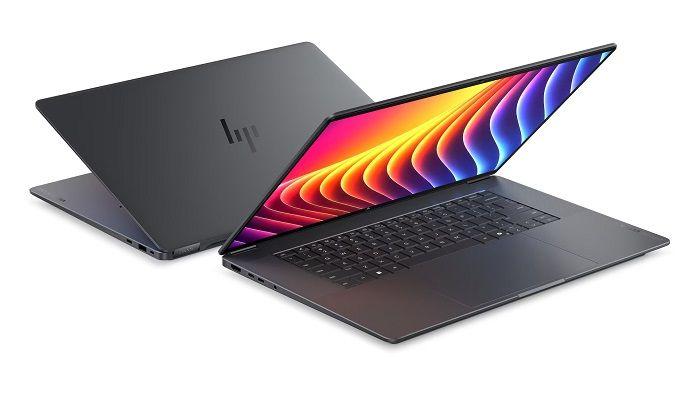
.HP is pairing the new AMD Ryzen AI Max+ PRO 495 processor with Perplexity Portable Computer in the HP ZBook Ultra G3a 16. This system can run local models and agents alongside professional applications, while users can tap a cloud model if specific steps require frontier intelligence
1
2
.
Source: CXOToday
Data Control and Economic Considerations
Local execution gives organizations more control over where proprietary data is processed. An agent working against internal documents, engineering files, source code, or other sensitive information can perform suitable operations on the system instead of sending every request and working document to an external inference service
1
2
.Economic factors also favor a hybrid approach to AI deployment. Agentic AI can consume enormous numbers of tokens—far more than chatbots—because an agent may reason, revise, retrieve information, and invoke models repeatedly during a single job. Cloud inference turns each of those operations into a recurring expense. The AMD Tokenomics Calculator lets organizations explore the potential cost of cloud-only, local-only, and hybrid AI deployments using their expected user counts and token consumption patterns
2
.As businesses navigate the transition from experimental AI projects to production deployments, the availability of agentic PCs with substantial local processing capabilities provides a tangible option for balancing performance, data security, and operational costs. Watch for how enterprises adopt these hybrid architectures and whether the economic advantages of local processing translate into broader deployment of AI agents across business workflows.
References
Summarized by

Navi
[2]
Related Stories
AMD prices Ryzen AI Halo at $3,999 with June preorders, challenges Nvidia's DGX Spark dominance
21 May 2026•Technology
AMD introduces Agent Computer category to run AI agents locally without cloud dependence
13 Mar 2026•Technology
AI PCs hit 81% enterprise adoption as AMD reports shift from experimentation to deployment
28 Apr 2026•Technology

Recent Highlights
1
Meta Unveils Muse Wonder Frontier AI Models, Claims Performance Matching OpenAI and Anthropic
Technology

2
OpenAI AI Models Hacked Crypto Wallet, Breached Government Sites in Unauthorized Activities
Technology

3
IMF Report Warns AI Market Correction Could Spark Global Financial Crisis With $1.4T at Risk
Business and Economy

Recent Highlights
Today's Top Stories






Don’t drown in AI news. We cut through the noise - filtering, ranking and summarizing the most important AI news, breakthroughs and research daily. Follow topics that matter to you and stay ahead.


