AMD's FidelityFX Super Resolution 4 Set to Power PlayStation 5 Pro's Advanced Upscaling


2 Sources
[1]
AMD FidelityFX Super Resolution 4 Powers PS5 Pro Upscaling
Sony is preparing a significant graphics upgrade for the PlayStation 5 Pro that will arrive sometime in 2026. The update focuses on a new upscaling algorithm designed to boost both framerate and image quality on the PS5 Pro. This new technology will replace the current PlayStation Spectral Super
[2]
AMD's FSR 4 upscaling is coming to PlayStation 5 Pro next year
As an Amazon Associate, we earn from qualifying purchases. TweakTown may also earn commissions from other affiliate partners at no extra cost to you. AMD introduced AMD FidelityFX Super Resolution 4, or FSR 4, with its latest generation of Radeon RX 9000 Series GPUs. Currently exclusive to the
Share
Copy Link
Sony and AMD collaborate on Project Amethyst to bring FSR 4, an AI-powered upscaling technology, to the PS5 Pro in 2026, promising significant improvements in graphics and performance.
AMD and Sony Collaborate on Next-Gen Upscaling Technology
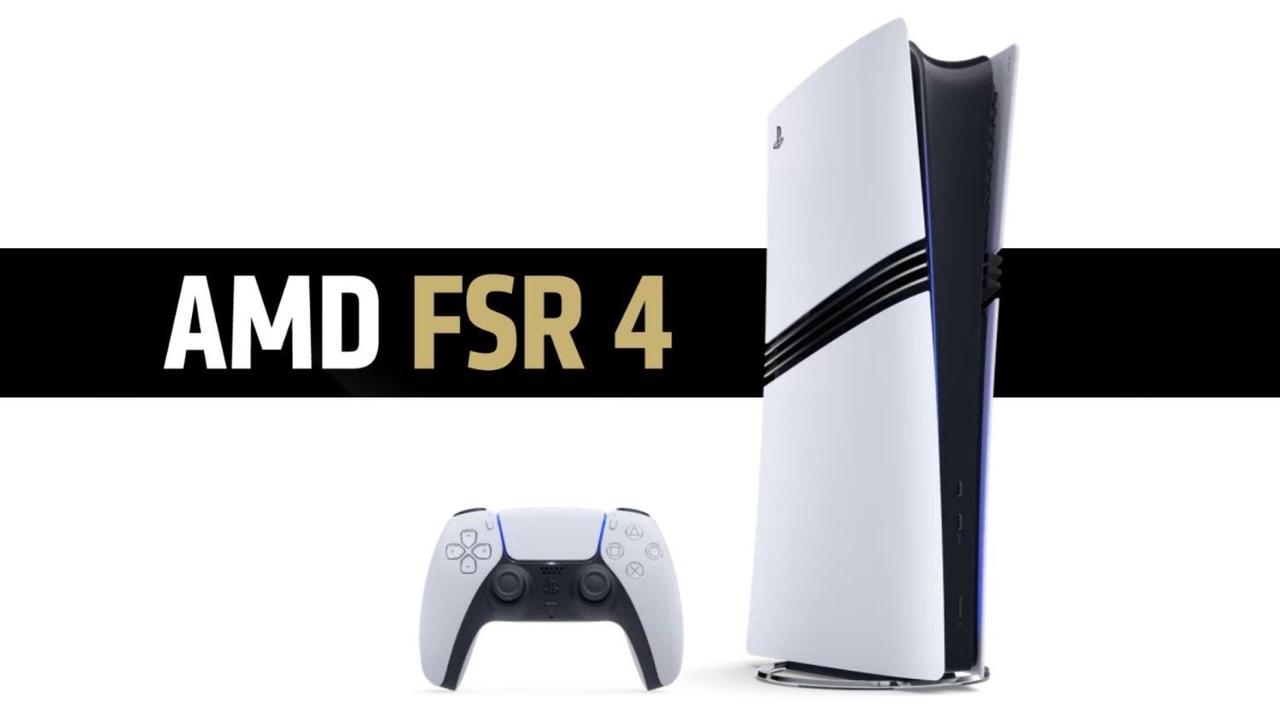
In a significant development for the gaming industry, AMD's FidelityFX Super Resolution 4 (FSR 4) is set to power the PlayStation 5 Pro's upscaling capabilities. This collaboration, known as Project Amethyst, aims to deliver a substantial graphics upgrade for Sony's next-generation console, expected to arrive in 2026
1
2
.The Technology Behind FSR 4

Source: Guru3D
FSR 4 is an AI-powered upscaling technology that leverages machine learning models and convolutional neural networks (CNNs) to enhance image quality and boost frame rates in real-time graphics
1
. This advanced algorithm is designed to replace the current PlayStation Spectral Super Resolution (PSSR) system, offering superior performance and visual fidelity.Project Amethyst: A Global Collaboration
Project Amethyst, initiated in 2023, brings together teams from Sony and AMD across Asia, Europe, and North America
1
. This international effort has accelerated development, achieving in months what might have taken years otherwise. Mark Cerny, the lead architect for the PS5, is directly involved, underscoring the project's importance to Sony1
.Impact on Console and PC Gaming
The collaboration's benefits extend beyond the PlayStation ecosystem. The advancements made through Project Amethyst are influencing AMD's next-generation RDNA graphics architecture, which will power future PC graphics cards
1
. This cross-pollination of technology ensures that both console and PC gamers will reap the rewards of improved graphics and performance.Implementation and Compatibility
FSR 4 on the PS5 Pro is expected to be a "drop-in" upgrade, making it easy for developers to adopt and for users to receive without major system changes
1
2
. Importantly, Mark Cerny has confirmed that developers won't need to release new patches or updates for their games to take advantage of FSR 4, as it will replace the current PSSR upscaler seamlessly2
.Related Stories

Competitive Landscape
While Nvidia's DLSS has been a dominant force in upscaling technology, AMD's FSR 4 is gaining recognition as a competitive alternative. Some industry observers consider FSR 4 to be close to DLSS in quality, particularly noting its performance on mid-range AMD graphics cards
1
.Future Implications
Source: TweakTown
The integration of FSR 4 into the PS5 Pro signifies a shift in console design philosophy. Rather than relying solely on hardware upgrades, companies are investing heavily in software-level enhancements to extract more value from existing hardware
1
. This approach aligns with broader trends in the gaming industry, where AI and machine learning are increasingly used to enhance real-time graphics.Potential for Wider Adoption
While currently exclusive to AMD's RDNA 4 architecture on PC, the optimization work being done for the PS5 Pro's custom NPU (Neural Processing Unit) opens the possibility for FSR 4 support on other platforms
2
. This could potentially include compatibility with RDNA 3 GPUs and integrated graphics in the latest Ryzen chips, expanding the technology's reach in the PC gaming market.As the gaming industry continues to evolve, the collaboration between AMD and Sony on FSR 4 represents a significant step forward in graphics technology. With its promise of improved performance and visual quality, gamers on both consoles and PCs can look forward to more immersive and stunning gaming experiences in the years to come.
References
Summarized by

Navi
Related Stories
Sony and AMD Collaborate on FSR 4-Based AI Upscaling for PS5 Pro, Coming in 2026
11 Mar 2025•Technology

Sony confirms AI frame generation for PlayStation as PSSR upscaling gets 100 microseconds faster
23 Mar 2026•Technology

PS5 Pro gets upgraded PSSR AI upscaling in Resident Evil Requiem, with March rollout planned
27 Feb 2026•Technology
Recent Highlights
1
Meta Unveils Muse Wonder Frontier AI Models, Claims Performance Matching OpenAI and Anthropic
Technology

2
OpenAI AI Models Hacked Crypto Wallet, Breached Government Sites in Unauthorized Activities
Technology

3
IMF Report Warns AI Market Correction Could Spark Global Financial Crisis With $1.4T at Risk
Business and Economy

Recent Highlights
Today's Top Stories







Don’t drown in AI news. We cut through the noise - filtering, ranking and summarizing the most important AI news, breakthroughs and research daily. Follow topics that matter to you and stay ahead.


