AMD launches FSR Redstone with AI frame generation to directly challenge Nvidia DLSS dominance


8 Sources
[1]
AMD just struck at Nvidia with a huge ray and frame-gen GPU driver update
AMD dropped FSR 4 earlier this year with the launch of the RX 9000 series graphics cards, and we're here yet again with one massive driver update. Codenamed Redstone, this colossal update implements machine learning frame and ray generation technologies. Although we already saw FSR upscaling with
[2]
AMD’s New Gaming Upscaler Is Here to Knock Nvidia Off Its Throne
AMD, eschewing a number in favor of an esoteric moniker, is now positioning the new version of its upscaling tech, dubbed “Redstone,†as a true competitor to Nvidia’s DLSS (deep learning super sampling) software suite. You’ll need the latest AMD GPUs to get most of these updated features,
[3]
AMD's FSR Redstone is finally here to take on Nvidia's DLSS 4 -- here's everything you need to know
It was first announced way back at Computex 2025, but finally, AMD has launched FSR Redstone -- its own platform of AI trickery to make supported PC games perform even better. This is Team Red's effort to close in on the reigning champ of resolution scaling and frame generation: Nvidia's DLSS
[4]
Confused about AMD's FSR Redstone update? You're not alone - here's what it all means for PC gamers
AMD's FSR Redstone update was finally launched earlier this week - roll out the rendered red carpet - and it arrived boasting four separate pieces of tech. Well, I say these four features have arrived, but they haven't - or one of them hasn't, rather, and it seems a long way off - plus one of them
[5]

FSR Redstone tested: AMD's long awaited AI-powered frame gen delivers the goods but it's very late to market
Actually, it's not FSR Redstone. It's all just FSR now because of reasons that only make sense to AMD. It's been almost seven months since it was first announced, but at long last, AMD's much-vaunted machine learning-powered update to FSR is finally here. With the AMD Adrenalin 25.12.1 driver
[6]
AMD's Redstone update could revitalize FSR for PC games - here's why Nvidia should be worried
Ray Regeneration is available in Call of Duty: Black Ops 7 and will come to other games later Nvidia is heavily focused on AI these days, having distanced itself from gaming, recently telling us that it's no longer (primarily) a gaming graphics card company - and now, with AMD's FSR Redstone
[7]

AMD FSR Redstone Official: Over 200 Games Supported By End of 2025, 40+ Games With Redstone Frame-Gen & Up To 3x Performance
AMD has officially unveiled its FSR Redstone update, coming to the latest Radeon RX 9000 "RDNA 4" GPU family with over 200 game support. AMD FSR Redstone is Available on Radeon RX 9000 "RDNA 4" GPUs, Over 200 Games Support With 40 Frame-Gen Titles Today, AMD introduces its biggest update to the
[8]

AMD's FSR 'Redstone' AI Upscaling Update Is Here - IGN
AMD has released FSR "Redstone," bringing a set of new upscaling tricks to the company's collection of ML-powered upscaling tools. Unfortunately, as was the case when it was just FSR 4, Redstone is only available for current-generation cards like the Radeon RX 9070 XT and Radeon RX 9060 XT - two of
Share
Copy Link
AMD released its FSR Redstone driver update, introducing machine learning-powered frame generation and ray tracing features for RDNA 4 graphics cards. The update brings AMD closer to feature parity with Nvidia DLSS 4, though it arrives seven months after its initial announcement and currently supports only around 30 games with full AI capabilities.
AMD Shifts to Machine Learning with FSR Redstone
AMD has officially launched FSR Redstone, a comprehensive AMD driver update that marks a fundamental shift in the company's approach to gaming upscaling technology. After months of anticipation since its Computex 2025 announcement, the update introduces machine learning-powered features that position AMD as a serious contender in competing with Nvidia and its established DLSS 4 technology
1
3
. The Redstone update represents AMD's transition from analytical-based algorithms to neural network-driven solutions, implementing AI frame generation, neural radiance caching, and FSR Ray Regeneration technologies that leverage the specialized hardware in RDNA 4 graphics cards1
.
Source: IGN
The shift to machine learning addresses longstanding criticisms that AMD's previous FSR versions lagged behind Nvidia's offerings in improved image quality and performance. By embracing AI-driven rendering, AMD aims to eliminate the ghosting and artifacts that plagued earlier iterations while delivering enhanced ray tracing performance through more efficient processing
3
.Understanding the Core Technologies in FSR Redstone
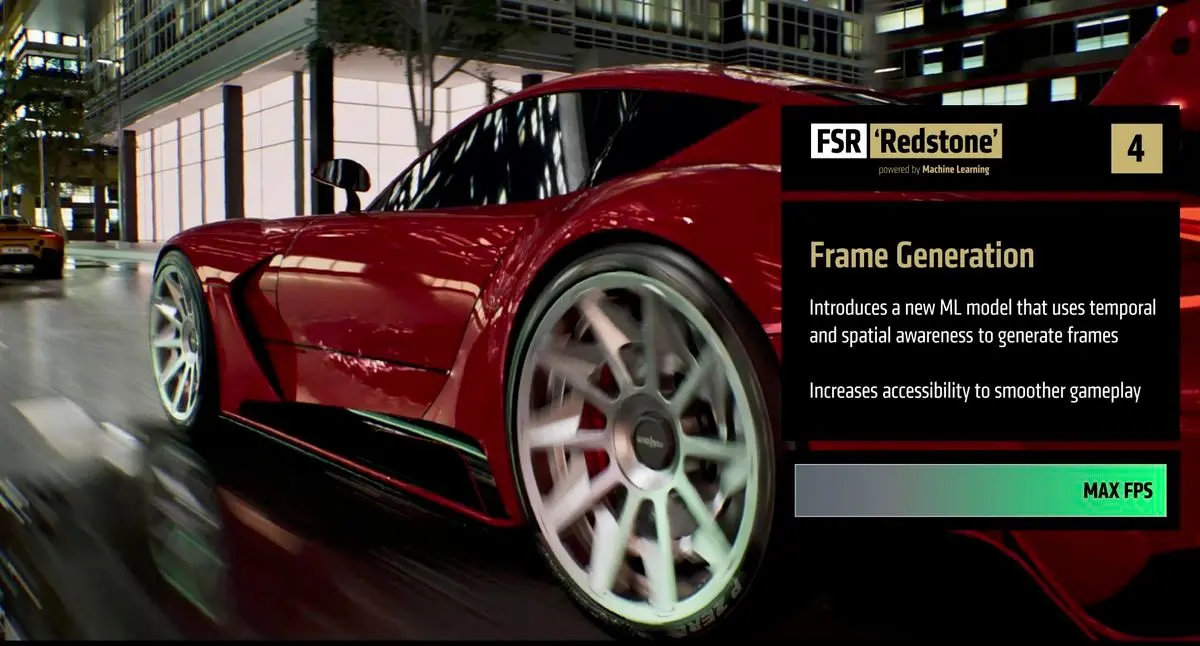
FSR Redstone bundles four distinct features under a unified platform, though AMD's naming conventions have created confusion among PC gamers. FSR Upscaling, formerly known as FSR 4, now uses machine learning instead of analytical methods to scale lower-resolution frames to higher resolutions while maintaining visual fidelity
4
. The new AI frame generation technology represents the most significant advancement, using neural networks to insert generated frames between real frames, dramatically improving frame rates. Early testing shows this approach virtually eliminates the weird artifacts present in FSR 3's analytical frame generation5
.FSR Ray Regeneration works to remove noise and enhance ray tracing details at lower rendering costs, functioning as AMD's answer to Nvidia's ray reconstruction technology
1
. Meanwhile, Radiance Caching enables GPUs to maintain a small cache of rays for AI models instead of tracing each ray for every pixel, significantly reducing render time in path-traced games1
. However, Radiance Caching won't appear in games until 2026, making it the only Redstone feature not yet available4
.Performance Gains and Hardware Requirements
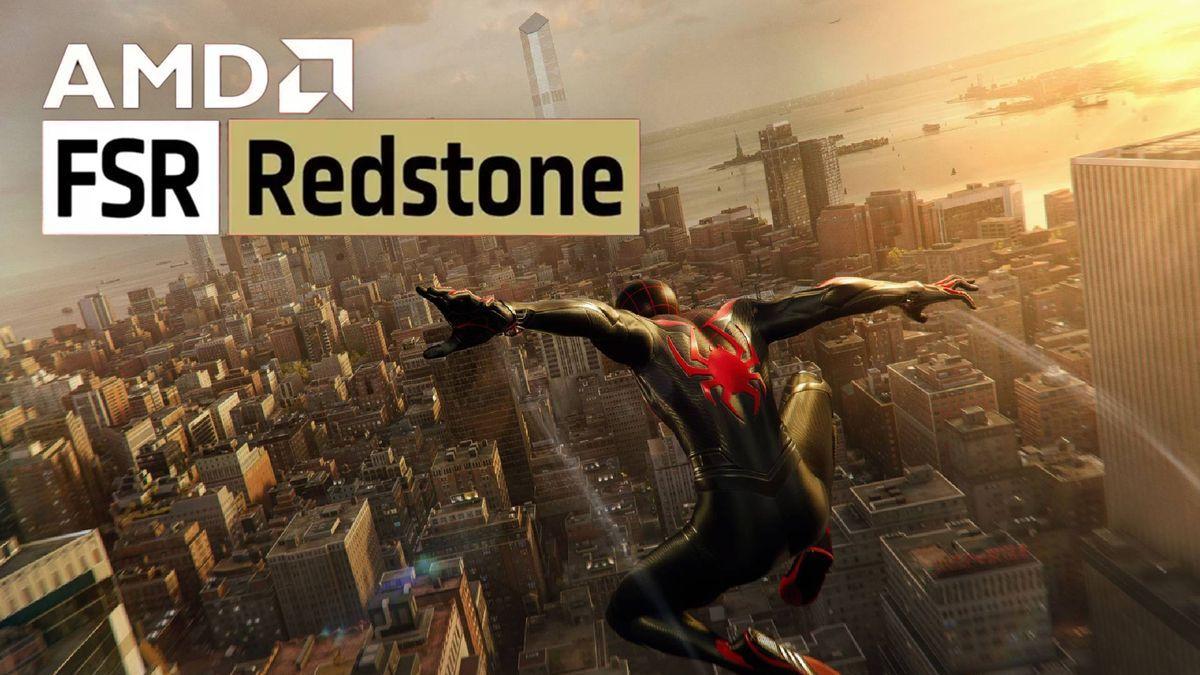
AMD claims substantial performance improvements with FSR Redstone enabled. In Call of Duty: Black Ops 7, the company demonstrated frame rates jumping from 23 fps to 109 fps when using performance settings with resolution scaling and frame generation
2
. However, AMD recommends games already run at a minimum of 60 fps after upscaling to avoid artifacts, meaning these technologies primarily enhance already playable experiences rather than salvaging poor performance1
2
.
Source: Tom's Guide
The catch is that all machine learning features in FSR Redstone require RDNA 4 graphics cards, specifically the Radeon RX 9000 series including the RX 9070 and RX 9070 XT
2
3
. Older RDNA 1 through 3.5 GPUs remain limited to analytical versions of upscaling and frame generation, missing out on the neural network advantages1
. This hardware restriction puts AMD at a disadvantage compared to Nvidia, which supports DLSS 4 features on cards dating back to the RTX 30-series3
.Game Support Remains a Critical Challenge
While AMD promises over 200 games will support FSR Redstone by the end of 2025, the reality is more nuanced
2
3
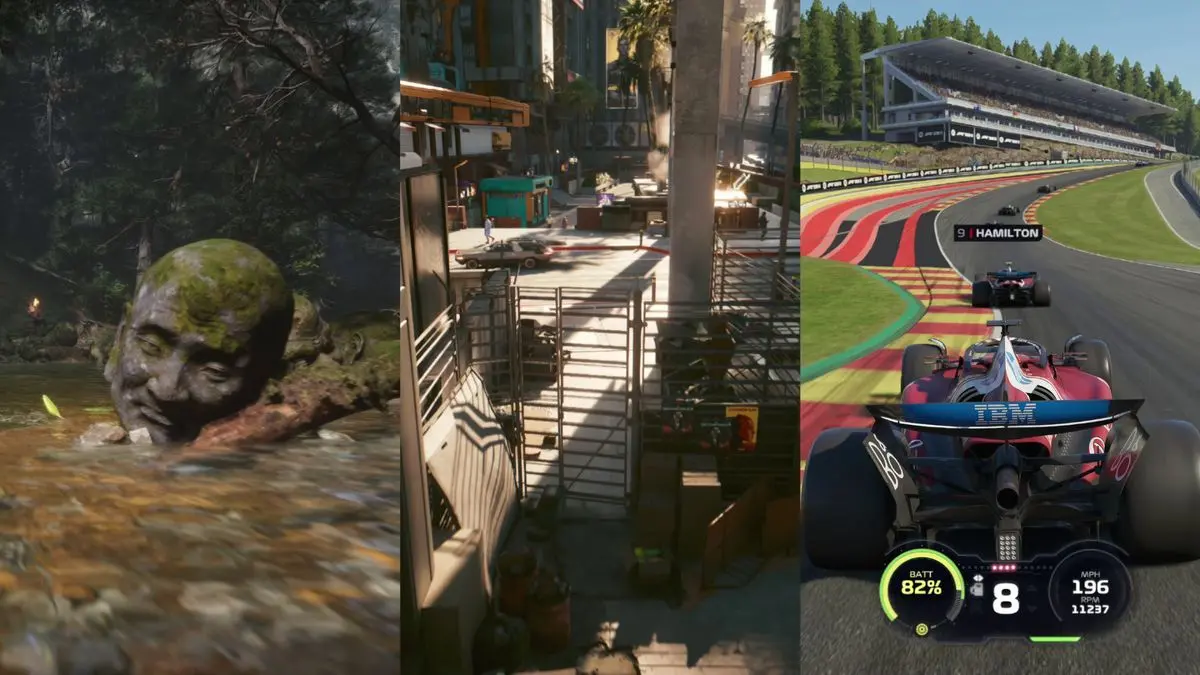
. Only around 30 to 40 games currently support the crucial machine learning-powered frame generation feature, with titles like Black Myth: Wukong, Cyberpunk 2077, and F1 24 among the early adopters2
5
. Radiance Caching and FSR Ray Regeneration have even more limited availability, with only Warhammer 40K: Darktide and Call of Duty: Black Ops 7 supporting these features respectively2
.
Source: PC Gamer
This represents a massive gap compared to Nvidia DLSS, which boasts compatibility with over 800 games
3
. The disparity highlights AMD's challenge in convincing developers to implement its technologies, though the company promises more games will arrive in 20262
. For now, users must manually enable Redstone features through AMD's Adrenalin Software on a per-game basis, adding complexity to the user experience5
.Closing the Gap with Nvidia but Missing Key Features
FSR Redstone brings AMD closer to feature parity with Nvidia DLSS 4, but notable differences remain. AMD's approach uses a 1:1 ratio for frame generation, inserting one AI-generated frame between each rendered frame
3
. In contrast, Nvidia's multi-frame generation technology offers a 3:1 ratio on RTX 50-series cards, potentially delivering smoother performance1
3
. The absence of multi-frame generation in Redstone means AMD hasn't fully matched its competitor's capabilities.However, AMD maintains one advantage: its modular approach allows users to selectively enable individual features rather than forcing adoption of the entire suite, as Nvidia does
1
. Early testing suggests the quality of AMD's AI frame generation delivers substantial improvements over FSR 3, with testers noting that artifacts and blurring during rapid camera movements have been virtually eliminated5
.Related Stories

Implications for Console Gaming and Future Hardware
The significance of FSR Redstone extends beyond PC gaming. Sony collaborated with AMD on developing FSR 4, which launched in March, and the company has indicated plans to bring the technology to PS5 Pro
2
. While the original PS5's RDNA 2 architecture presents challenges for implementation, speculation suggests Redstone could prove transformative for the rumored PlayStation 6, which would likely incorporate RDNA 4-based internals2
. Upscaling technology benefits lower-end systems more dramatically than high-end hardware, meaning future gaming handhelds from Sony or PC manufacturers could see substantial performance gains from these advancements2
.The potential integration with SteamOS also presents intriguing possibilities. With AMD-powered machines running Valve's Linux-based operating system, the combination of FSR Redstone and SteamOS could create compelling alternatives to traditional Windows-based gaming PCs
3
. This matters because it could accelerate adoption of AMD's GPU technologies across multiple gaming platforms, from handhelds to consoles to PCs.What This Means for the GPU Market
FSR Redstone arrives seven months after its initial announcement, giving Nvidia DLSS 4 nearly a year of market dominance
5
. The delayed launch and limited initial game support suggest AMD faces an uphill battle, yet the technical quality of the implementation demonstrates the company's commitment to catching up. For consumers, this competition drives innovation in gaming performance technologies, potentially making high-quality gaming experiences more accessible across different price points. The focus on machine learning and neural networks signals that AI will continue shaping how games render and perform, with implications for hardware requirements and game development practices going forward. AMD's success with Ryzen processors against Intel shows the company can execute comeback strategies, and FSR Redstone represents a critical step in applying that same approach to the GPU market1
.References
Summarized by

Navi
[3]
[4]
Related Stories
Recent Highlights



Recent Highlights
Today's Top Stories






Don’t drown in AI news. We cut through the noise - filtering, ranking and summarizing the most important AI news, breakthroughs and research daily. Follow topics that matter to you and stay ahead.


