AMD IFA 2026: Personal AI chips run 125B parameter models locally with new Halo Station supercomputer


3 Sources
[1]
AMD IFA 2026: Powering the Next Era of Personal and Agentic AI - CNET
AMD is shifting the paradigm from computers that just execute commands to agentic AI that understands your goals. From the jaw-dropping Strix Halo and Gorgon Halo chips to running 125-billion parameter models locally on Windows, local compute is getting a massive upgrade. Plus, a special appearance
[2]
AMD at IFA 2026: A new era of personal and agentic AI - ZDNET
AMD is shifting the paradigm from computers that just execute commands to agentic AI that understands your goals. From the jaw-dropping Strix Halo and Gorgon Halo chips to running 125-billion parameter models locally on Windows, local compute is getting a massive upgrade. Plus, a special appearance
[3]
AMD IFA 2026: Personal and agentic AI
AMD is shifting the paradigm from computers that just execute commands to Agentic AI that understands your goals. From the jaw-dropping Strix Halo and Gorgon Halo chips to running 125-billion parameter models locally on Windows, local compute is getting a massive upgrade. Plus, a special appearance
Share
Copy Link
AMD unveiled its vision for personal AI and agentic AI at IFA 2026, introducing Strix Halo and Gorgon Halo chips that break memory bottlenecks. The company also revealed the Threadripper Halo Station, a 96-core local supercomputer, and partnered with Microsoft on Project Zenith to enable secure, on-device AI experiences on Windows.
AMD Redefines Computing with Personal AI and Agentic AI at IFA 2026
AMD IFA 2026 marked a pivotal moment in computing as the company announced its shift from command-based computing to systems powered by agentic AI that understands user goals rather than just executing instructions
1
2
. The company positioned personal AI as the next frontier, emphasizing local execution of AI models that are private and contextual to individual users3
. This strategic pivot addresses growing concerns about data privacy while delivering the computational power needed for sophisticated AI workloads. AMD's vision centers on moving AI processing from cloud infrastructure to local devices, fundamentally changing how users interact with technology.Strix Halo and Gorgon Halo Chips Break Memory Bottlenecks
The centerpiece of AMD's hardware announcements included the Strix Halo and Gorgon Halo chips, designed specifically to eliminate memory bottlenecks that have constrained AI-focused hardware and software
1
. These processors enable the local execution of AI models with up to 125-billion parameter models running directly on Windows machines2
. The Gorgon Halo chip powers the Lenovo ThinkCenter X, demonstrating AMD's commitment to bringing enterprise-grade AI capabilities to desktop workstations3
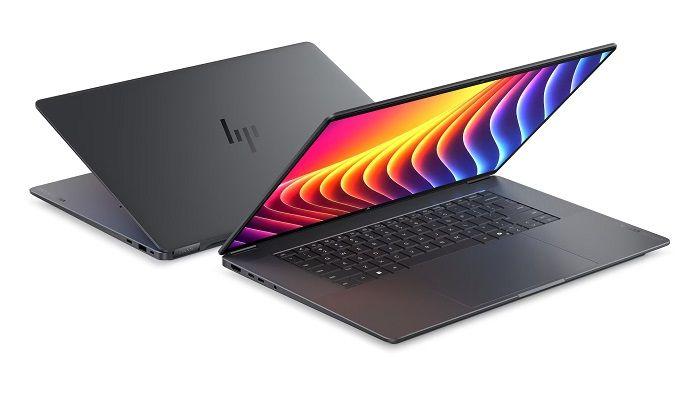
. AMD also showcased a new class of laptops under the code name "Sunday," including the HP ZBook, which integrates these advanced processors for mobile AI workloads1
. The architecture shift from cloud to local compute represents a fundamental change in how AI workloads are processed, giving users control over their data while maintaining performance.Real-Time 3D World Generation Demonstrates On-Device AI Power

Source: CNET
AMD demonstrated the practical capabilities of its new chips through real-time 3D world generation, showcasing how local, private, and contextual AI can handle computationally intensive tasks without relying on cloud infrastructure
2
. This demonstration highlighted the token processing growth that personal AI enables, allowing users to run complex generative models entirely on their devices3
. The ability to generate 3D environments in real-time on local hardware signals a shift in what's possible with on-device AI, potentially transforming industries from gaming to architectural visualization. These capabilities matter because they eliminate latency, reduce costs associated with cloud computing, and ensure sensitive data never leaves the user's device.Microsoft Partnership Brings Project Zenith to Windows Platform
Microsoft's Pavan Davuluri made a special appearance at AMD IFA 2026 to announce Project Zenith, a developer-focused initiative designed to make AI more accessible on the Windows open platform
1
2
. The partnership positions Windows as the foundation for secure agentic experiences, enabling developers to build applications that leverage AMD's powerful hardware for local AI processing3
. Project Zenith aims to democratize access to advanced AI capabilities by providing tools and frameworks that simplify development of personal AI applications. This collaboration between AMD and Microsoft signals a coordinated industry effort to establish standards for on-device AI, potentially accelerating adoption across enterprise and consumer markets.Related Stories
Threadripper Halo Station: A 96-Core Local Supercomputer
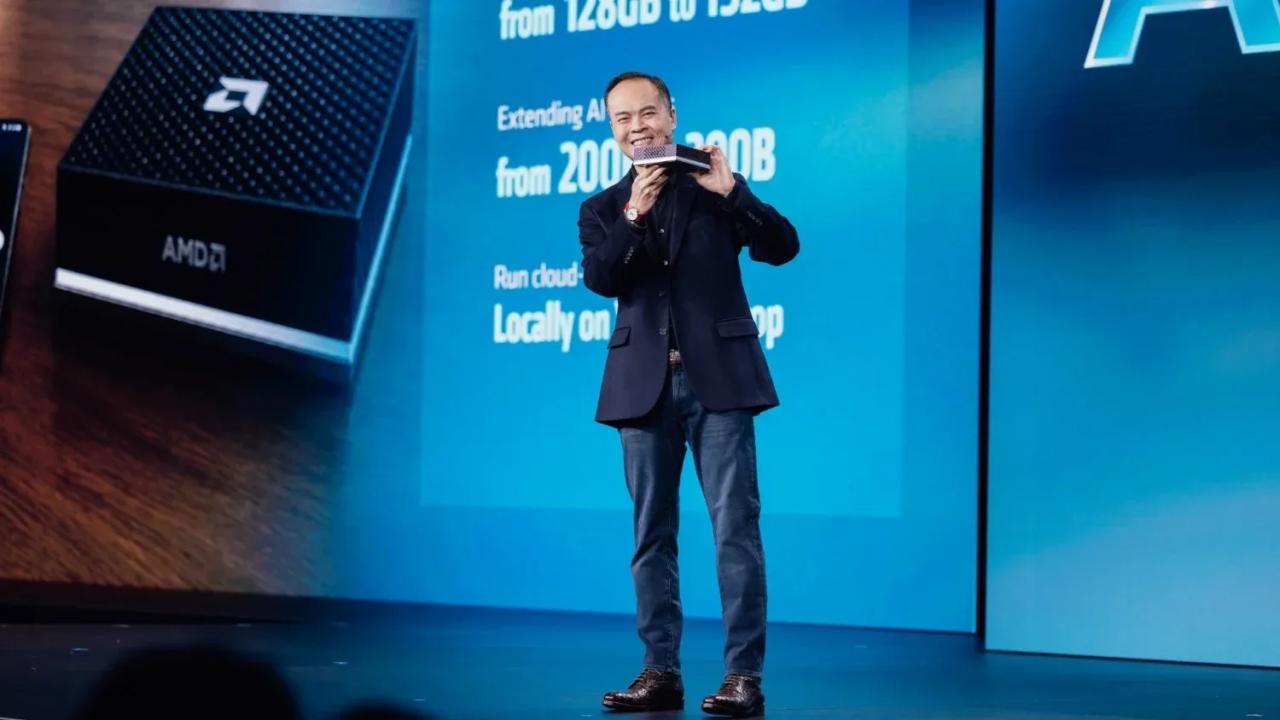
The most striking reveal at AMD IFA 2026 was the Threadripper Halo Station, described as a personal supercomputer featuring 96 cores designed for intensive AI workloads
1
2
. This local supercomputer represents AMD's answer to organizations and researchers who need massive computational power without relying on cloud infrastructure3
. The Threadripper Halo Station enables users to train and run large language models locally, maintaining complete control over proprietary data and algorithms. For enterprises concerned about intellectual property or regulatory compliance, this hardware offers a compelling alternative to cloud-based AI services. The 96-core configuration suggests AMD is targeting professional users who require sustained performance for tasks like model training, scientific simulations, and complex data analysis.Implications for the Future of Computing
AMD's announcements at IFA 2026 signal a broader industry trend toward decentralized AI processing. As personal AI and agentic AI mature, expect more hardware manufacturers to prioritize local execution capabilities over cloud dependency. The ability to run 125-billion parameter models locally could democratize access to advanced AI, allowing smaller organizations to compete with tech giants without massive cloud computing budgets. Short-term, watch for increased competition in the AI chip market as rivals respond to AMD's aggressive positioning. Long-term, the shift to local, private, and contextual AI could reshape data privacy regulations, reduce internet bandwidth requirements for AI applications, and enable new use cases in environments with limited connectivity. The success of Project Zenith will be critical in determining whether Windows becomes the dominant platform for agentic AI development, potentially influencing the trajectory of the entire AI ecosystem.
References
Summarized by

Navi
[3]
Related Stories
AMD Announces IFA 2026 Opening Keynote Focused on Era of Personal AI and Consumer Computing
05 Aug 2026•Technology
AMD Unveils AI-Optimized Processors at CES 2025, Advancing AI PC Market
01 Jan 2025•Technology

AMD unveils Ryzen AI Halo mini PC to challenge Nvidia in AI development market
06 Jan 2026•Technology

Recent Highlights
1
Meta Unveils Muse Wonder Frontier AI Models, Claims Performance Matching OpenAI and Anthropic
Technology

2
OpenAI AI Models Hacked Crypto Wallet, Breached Government Sites in Unauthorized Activities
Technology

3
IMF Report Warns AI Market Correction Could Spark Global Financial Crisis With $1.4T at Risk
Business and Economy

Recent Highlights
Today's Top Stories






Don’t drown in AI news. We cut through the noise - filtering, ranking and summarizing the most important AI news, breakthroughs and research daily. Follow topics that matter to you and stay ahead.


