AMD unveils Ryzen AI Halo mini PC to challenge Nvidia in AI development market


4 Sources
[1]
AMD unveils Ryzen AI Halo, an uber-powerful mini PC for AI
Expected to launch in the second quarter of this year, the Ryzen AI Halo represents AMD's strategic push into AI development tools. AMD may not be selling PCs, but it's providing a reference design to AI developers based on its Ryzen AI Max+ processor. Known as the Ryzan AI Halo, the small PC is
[2]
AMD finally launches Ryzen AI Halo in 2026 to compete against Nvidia
Ryzen AI Halo offers full ROCm support across Windows and Linux platforms AMD has confirmed it will launch its first PC in 2026, named Ryzen AI Halo, a system built around its Ryzen AI Max+ 395 processor with up to 16 Zen 5 CPU cores and 32 threads. The company describes the device as a reference
[3]
AMD's new Ryzen AI Halo Mini-PC: its answer to the NVIDIA DGX Spark, powered by Strix Halo APU
TL;DR: AMD unveiled the Ryzen AI Halo Mini-PC at CES 2026, featuring the powerful Ryzen AI Max "Strix Halo" APU with 16 cores, 40 RDNA 3.5 GPU cores, and up to 128GB RAM. Designed as an AI developer platform, it competes with NVIDIA DGX Spark, supporting ROCm and optimized for leading AI models and
[4]
AMD Just Showed Off Its Own DGX Spark Rival, The Ryzen AI Halo: Full ROCm Support, Day-0 Support For Leading AI Models, Available In Q2
AMD has just showcased its Ryzen AI Halo Mini PC powered by Ryzen AI MAX CPUs, designed to tackle NVIDIA's DGX Spark. The AMD Ryzen AI MAX CPU family, codenamed Strix Halo, has seen some major adoption in the past few months, from laptops to handhelds and Mini PCs; it's entering every consumer PC
Share
Copy Link
AMD CEO Lisa Su announced the Ryzen AI Halo at CES 2026, a compact AI developer platform powered by Ryzen AI Max+ processors. The system features 128GB of unified memory, full ROCm support, and can run AI models with up to 200 billion parameters locally. Set to launch in Q2 2026, it directly competes with Nvidia's DGX Spark mini PC in the local AI development space.
AMD Enters AI Developer Hardware Market
AMD has officially unveiled the Ryzen AI Halo, a compact AI developer platform designed to bring powerful local AI development capabilities to researchers and developers. CEO Lisa Su introduced the device during her opening keynote at CES 2026 in Las Vegas, positioning it as a strategic move into AI development tools
1
. The mini PC represents AMD's answer to Nvidia's DGX Spark, marking a significant expansion of the company's presence in the AI hardware ecosystem.
Source: PCWorld
The Ryzen AI Halo is built around AMD's Ryzen AI Max+ processor, specifically the flagship Ryzen AI Max+ 395 variant featuring the "Strix Halo" architecture
3
. This powerful processor integrates up to 16 Zen 5 CPU cores with 32 threads, 40 RDNA 3.5 GPU cores, and an XDNA 2-based NPU specifically designed for AI workloads2
. According to Su, the system can run AI models with up to 200 billion parameters locally, a capability that positions it as a serious contender in the AI development space1
.Technical Specifications and Developer-Focused Features
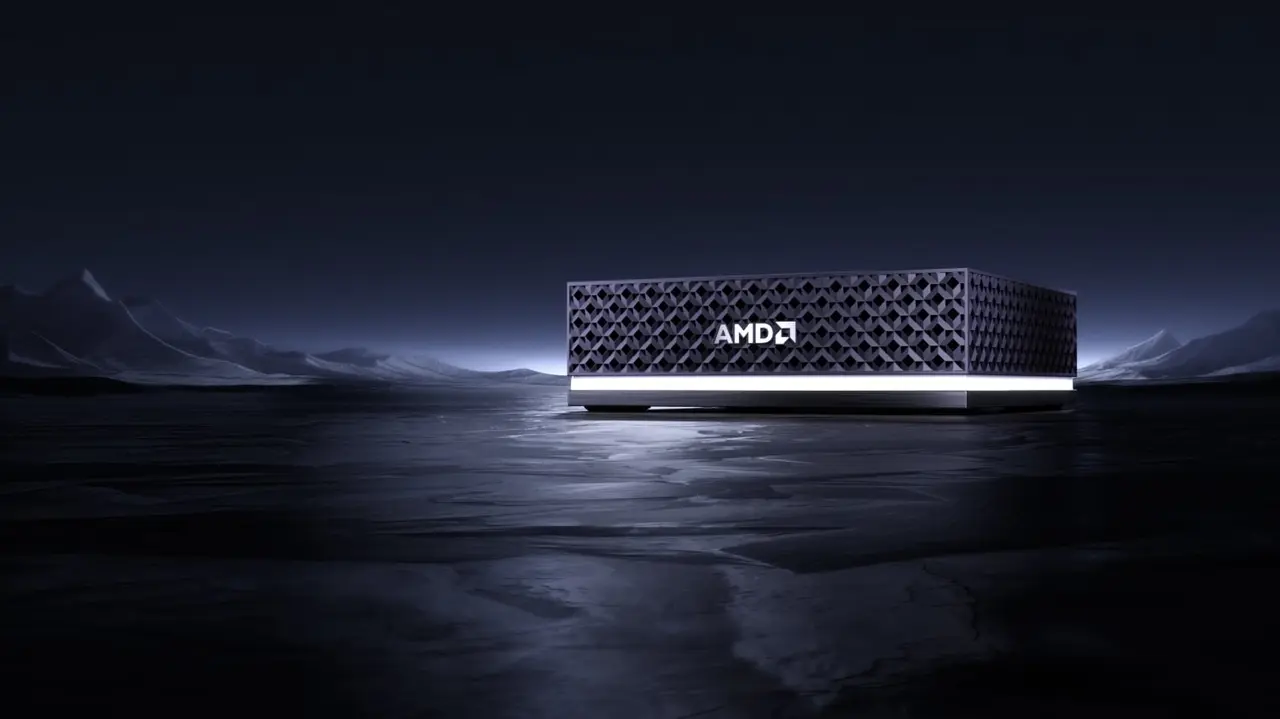
The Ryzen AI Halo comes equipped with 128GB of unified LPDDR5x-8533 memory across a 256-bit interface, providing developers with substantial capacity for handling large generative AI models
2
. The system delivers 126 TOPS of overall AI compute performance, including 50 TOPS from the integrated NPU alone2
. The processor utilizes 4nm process technology with boost clocks reaching up to 5.1GHz, complemented by 16MB of L2 cache and 64MB of L3 cache2
.
Source: TweakTown
What sets this AI developer platform apart is its comprehensive software support. The system ships with full ROCm support, including the latest ROCm 7.2.2 suite, and runs multiple operating systems natively, including both Windows and Linux
4
. AMD has optimized the platform for dev-ready applications such as LM Studio, ComfyUI, and VS Code, while enabling optimizations for several AI models including GPT-OSS, FLUX.2, and SDXL3
. The system will carry day-0 support for leading AI models, ensuring developers can immediately work with the latest frameworks4
.Competitive Positioning Against Nvidia
The Ryzen AI Halo directly targets Nvidia's DGX Spark mini PC, a compact AI system that has established benchmarks in the local AI development market
2
. While DGX Spark relies on Nvidia's HGX architecture and CUDA-optimized frameworks, AMD's approach integrates an NPU and Radeon GPU cores with full ROCm support, allowing developers to run AI models locally without relying on cloud-managed infrastructure2
. The 128GB memory capacity and 126 TOPS overall AI compute rating aim to match or exceed DGX Spark performance, though AMD will need to demonstrate comparable results in real-world AI workflows against Nvidia's mature ecosystem2
.Dr. Lisa Su emphasized the broader vision behind the launch: "At CES, our partners joined us to show what's possible when the industry comes together to bring AI everywhere, for everyone. As AI adoption accelerates, we are entering the era of yotta-scale computing, driven by unprecedented growth in both training and inference"
3
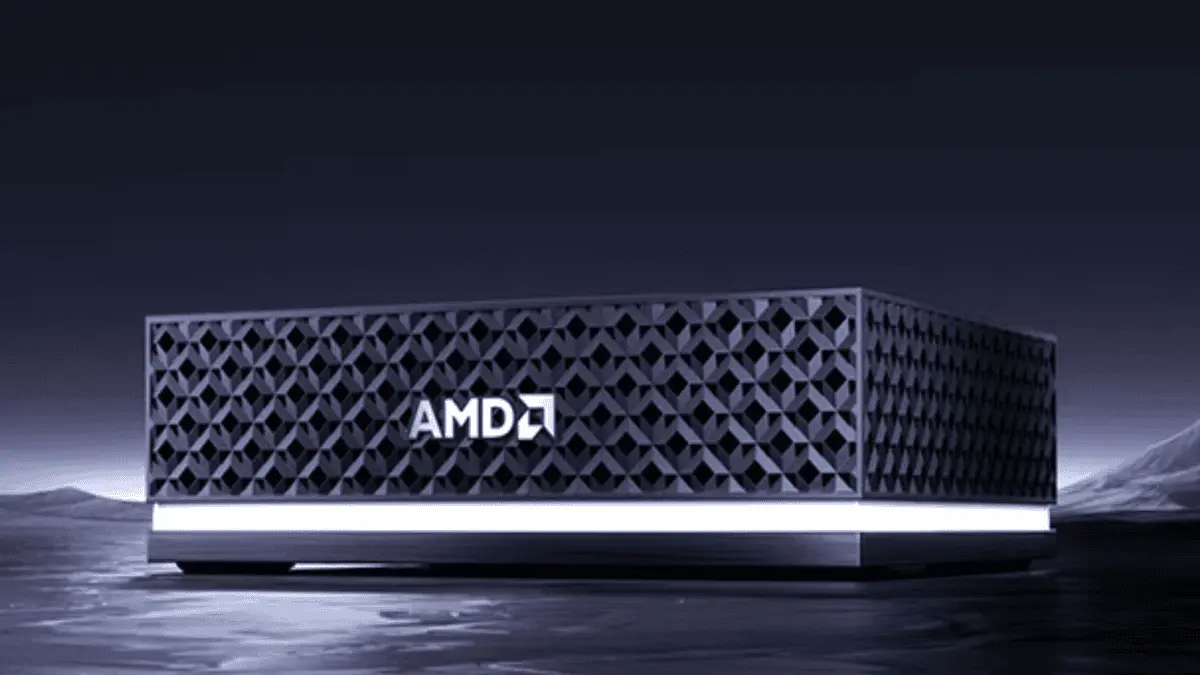
. The compact form factor, achieved through a dual-fan cooling system, demonstrates AMD's engineering focus on delivering high-performance computing in space-constrained environments3
.
Source: TechRadar
Related Stories


Launch Timeline and Market Implications
AMD confirmed the Ryzen AI Halo will launch in the second quarter of 2026, though pricing details remain undisclosed
4
. Industry observers expect competitive pricing against the DGX Spark to capture market share among institutions seeking local AI experimentation capabilities4
. The device serves as a reference design for AI developers, though AMD isn't directly entering the consumer PC market—the underlying Ryzen AI Max chips already appear in consumer devices like the Framework Desktop1
.For developers and institutions, the Ryzen AI Halo offers an alternative to cloud-dependent AI development, enabling local model training and inference with substantial memory and compute resources. The open-source development tools and multi-OS support provide flexibility that could appeal to developers seeking alternatives to Nvidia's ecosystem. As AI workloads continue expanding beyond cloud infrastructure, platforms like the Ryzen AI Halo may shape how developers approach local AI development in 2026 and beyond.
References
Summarized by

Navi
[3]
Related Stories
AMD Ryzen AI Halo mini PC targets developers in June with 128GB unified memory at half NVIDIA's price
01 May 2026•Technology

AMD prices Ryzen AI Halo at $3,999 with June preorders, challenges Nvidia's DGX Spark dominance
21 May 2026•Technology
AMD Ryzen AI Halo launches at $3,999, undercutting NVIDIA's DGX Spark in AI development race
13 Jun 2026•Technology
Recent Highlights
1
Meta Unveils Muse Wonder Frontier AI Models, Claims Performance Matching OpenAI and Anthropic
Technology

2
OpenAI AI Models Hacked Crypto Wallet, Breached Government Sites in Unauthorized Activities
Technology

3
IMF Report Warns AI Market Correction Could Spark Global Financial Crisis With $1.4T at Risk
Business and Economy

Recent Highlights
Today's Top Stories







Don’t drown in AI news. We cut through the noise - filtering, ranking and summarizing the most important AI news, breakthroughs and research daily. Follow topics that matter to you and stay ahead.


