America's Largest Military Shipbuilder HII Targets 15% Throughput Boost Using Physical AI


2 Sources
[1]
US: Biggest military shipbuilder taps robotics to build warships faster
The largest military shipbuilder in the US is targeting a 15% increase in shipyard throughput this year as the company looks to accelerate deliveries to the US Navy. The strategy combines workforce expansion, infrastructure upgrades and a broader use of technology, including physical AI, in
[2]
Hii Details Strategy to Increase Shipbuilding Pace for U.S. Navy
HII?s executive vice president of maritime systems and corporate strategy reaffirmed the company?s commitment to strengthening the nation?s defense industrial base and revitalizing U.S. shipbuilding during a House Appropriations Subcommittee on Defense field hearing. HII highlighted past reforms
Share
Copy Link
HII, the largest military shipbuilder in the US, is targeting a 15% increase in shipbuilding throughput this year through physical AI integration, workforce expansion, and infrastructure modernization. With approximately 40 ships under construction at Ingalls and Newport News facilities, the company achieved 14% throughput growth in 2025 and now plans to accelerate deliveries to the US Navy through robotics and distributed shipbuilding strategy.
HII Sets Ambitious Shipbuilding Throughput Target for 2026
HII, America's largest military shipbuilder, is targeting a 15% year-over-year increase in shipbuilding throughput for 2026 as the company accelerates warship deliveries to the US Navy
1
2
. The ambitious goal builds on the company's 14% throughput increase achieved in 2025, demonstrating momentum in addressing the US Navy's growing demand for naval vessels1
. With approximately 40 ships currently in active construction or modernization at its Ingalls and Newport News facilities, HII's executive vice president of maritime systems and corporate strategy, Eric Chewning, emphasized the urgency: "our focus in 2026 is clear: we must build on this momentum and continue delivering ships at a greater pace to the US Navy"1
. The strategy matters because it directly addresses critical gaps in America's defense industrial base at a time when naval expansion has become a strategic priority.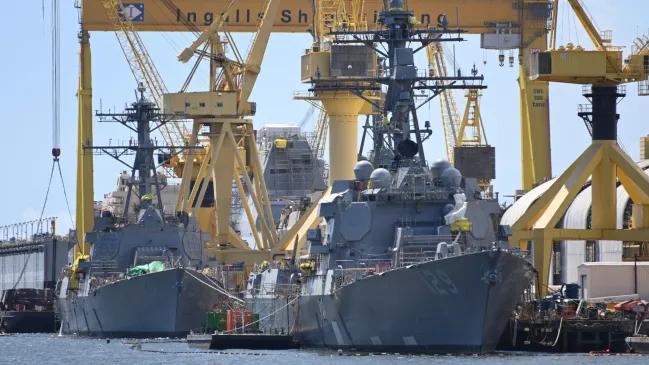
Source: Interesting Engineering
Physical AI and Robotics Transform Naval Manufacturing
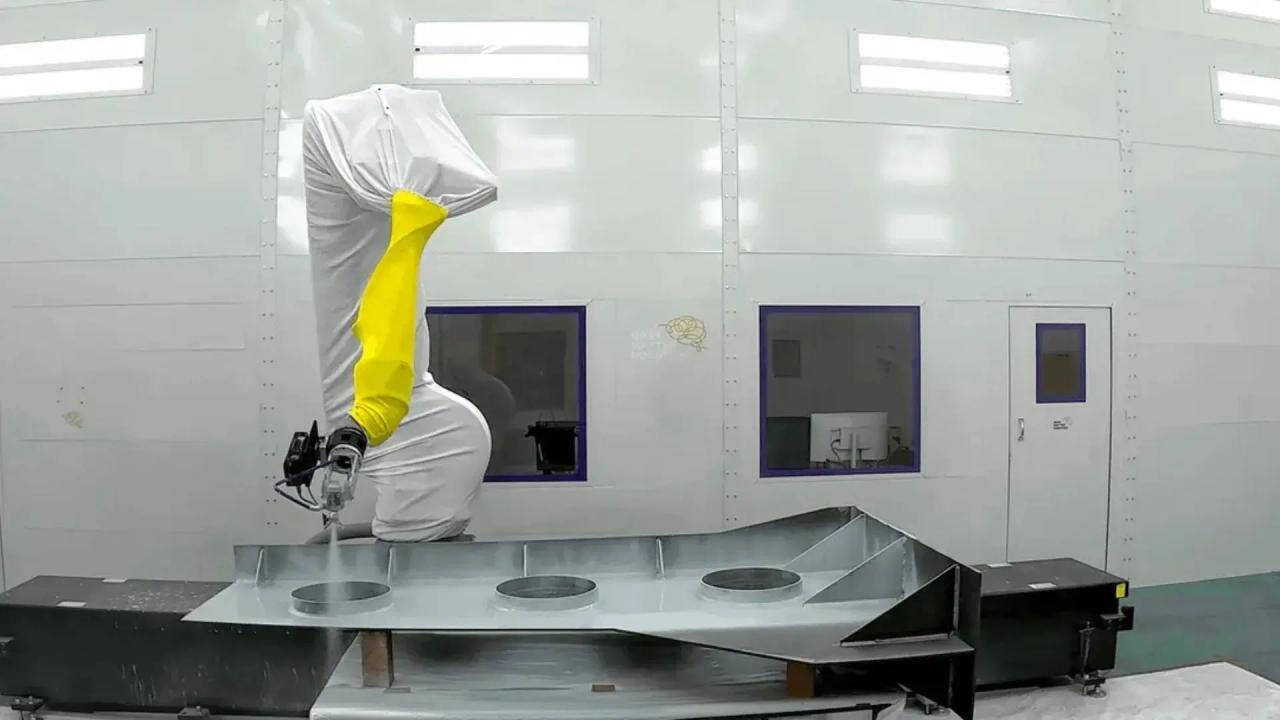
One of the most significant elements in HII's strategy involves deploying physical AI in shipbuilding operations, marking a departure from traditional manufacturing approaches
1
. Unlike software-based AI systems that primarily process information, physical AI is designed to interact with and operate within the physical world through robotics, automated systems, and advanced manufacturing processes1
. In shipyard applications, this technology encompasses robotics for welding and assembly, automated production line management, inspection systems, and other manufacturing processes that previously required manual intervention1
. The integration of physical AI represents a fundamental shift in how complex naval vessels are constructed, potentially reducing production timelines while improving precision and quality control. This technological leap is paired with substantial capital investments focused on modernizing shipyard infrastructure to support higher production volumes without simply adding more workers or extending production hours1
.Three-Pillar Strategy: Workforce, Infrastructure, and Supply Chain
HII's approach to increase shipbuilding pace centers on three interconnected pillars designed to create sustainable capacity growth
2
. First, the company is prioritizing hiring, teaching, and retaining a skilled workforce through new collective bargaining agreements that provide competitive wage increases aimed at keeping experienced shipbuilders while attracting new workers into skilled trades1
2
. Second, modernizing shipyard infrastructure through capital investments, including physical AI deployment, will enable facilities to handle increased production without proportional workforce expansion1
. Third, expanding the maritime industrial base through supply chain growth and implementing a distributed shipbuilding strategy will distribute production capacity beyond traditional shipyard boundaries2
. The workforce component remains central despite technological advances, recognizing that skilled workers are essential for constructing increasingly complex naval vessels.Related Stories


Massive Outsourcing Push Creates Jobs Nationwide
HII plans to strategically outsource more than 2 million hours of work in 2026, representing a staggering 178% increase compared with 2024 levels
1
2
. This dramatic expansion in outsourcing aims to increase HII's shipbuilding throughput while simultaneously creating jobs in communities across the country2
. The distributed shipbuilding strategy gives small and medium-sized businesses improved confidence to invest in their own capacity and skilled workforce, knowing they have stable contracts supporting naval construction1
2
. By shifting work to suppliers and manufacturers beyond its own facilities, HII aims to create additional capacity outside traditional shipyard operations while building supply chain resilience across the defense industrial base1
. This approach addresses a critical vulnerability in US naval production: the concentration of shipbuilding capacity in a limited number of facilities that struggle to meet accelerated demand timelines.Newport News Charleston Operations Shows Revitalization Model
HII highlighted its Newport News Shipbuilding Charleston Operations as a successful example of maritime industrial base revitalization and how existing industrial infrastructure can be repurposed for modern naval production
1
2
. Working closely with the US Navy, the State of South Carolina, and the Department of Defense's Industrial Base Policy Office, HII transformed an underutilized facility into a growing advanced manufacturing campus supporting the submarine industrial base and expanding skilled trade opportunities2
. The facility serves as a model for how distributed shipbuilding can leverage regional manufacturing capabilities while creating high-skilled jobs in new geographic areas2
. As US naval expansion depends critically on the availability of skilled workers, specialized suppliers, and infrastructure needed to produce increasingly complex vessels, the Charleston Operations demonstrates how collaborative approaches between industry, government, and regional stakeholders can unlock dormant manufacturing capacity1
. The success of this model will likely influence how other shipbuilders and defense contractors approach capacity expansion in coming years, particularly as demand for naval vessels continues rising amid strategic competition.References
Summarized by

Navi
[1]
[2]
Related Stories
Recent Highlights



Recent Highlights
Today's Top Stories







Don’t drown in AI news. We cut through the noise - filtering, ranking and summarizing the most important AI news, breakthroughs and research daily. Follow topics that matter to you and stay ahead.


