Americans Fear AI Will Slash Job Opportunities as Trust Plummets Despite Rising Adoption


8 Sources
[1]
15% of Americans say they'd be willing to work for an AI boss | TechCrunch
Would you trade your manager for a chatbot? A growing number of Americans are saying yes. According to a Quinnipiac University poll published Monday, 15% of Americans say they'd be willing to have a job where their direct supervisor was an AI program that assigned tasks and set schedules.
[2]
As more Americans adopt AI tools, fewer say they can trust the results | TechCrunch
Americans are increasingly turning to artificial intelligence to help with things like research, writing, school or work projects, and analyzing data -- but they're not exactly happy about it. Even as AI use and adoption rises, Americans continue to lack trust in the new tool, according to a
[3]
Americans Are Worried About AI Job Loss, But 15% Would Work for an AI Boss
Silicon Valley might be all-in on AI, but American workers have a more nuanced relationship with the technology. In a new Quinnipiac University survey of just under 1,400 US adults, 30% worry that their jobs will become obsolete due to AI, and 70% are concerned about reduced job opportunities in
[4]
More Than Half of US Says AI Likely to Harm Them, Poll Finds
Americans are increasingly turning against artificial intelligence, with growing majorities saying they fear the fast-moving technology will take away their jobs and hurt education, according to a new Quinnipiac poll. Fifty-five percent of Americans say AI will do more harm than good in their
[5]
Americans are using AI more, but fear of job losses is growing
Serving tech enthusiasts for over 25 years. TechSpot means tech analysis and advice you can trust. A hot potato: A new survey to discover Americans' views on AI has found that 30% of participants fear their jobs may become obsolete as a result of the technology, while 70% believe it will lead to
[6]

More and more workers say they'd be happy with an AI boss -- but don't expect it to give them a raise any time soon
* As many as 15% of American workers would accept an AI boss * Most are still worried about job losses, especially the younger generations * Americans are calling for greater regulation and transparency to protect workers New data from Quinnipiac University has claimed that while four in five
[7]

80 percent in new survey concerned about AI
Eight in 10 Americans are concerned about artificial intelligence (AI), according to a new poll. In the Quinnipiac poll released Monday, 80 percent of respondents said they are "very concerned" or "somewhat concerned" when it comes to AI. Eighteen percent are "not so concerned" or "not concerned
[8]

As Research Reports on AI Abound, Here's One that Says Americans Do Not Trust AI
The problem with these research reports often relate to a small sample size and the possibility of a homogenized group where the study is conducted. But then, it is what it is! Sir Humphrey Appleby of 'Yes Minister' fame once found an instant solution for his subordinate's concern about a public
Share
Copy Link
A new Quinnipiac University poll shows 70% of Americans believe artificial intelligence will decrease job opportunities, with Gen Z most pessimistic at 81%. Despite growing AI adoption—down to just 27% who've never used it—76% rarely or only sometimes trust the technology, and 55% say AI will do more harm than good in their daily lives.
Americans Embrace AI Tools While Fearing Job Market Collapse
Americans are caught in a striking contradiction: they're using artificial intelligence more than ever, yet their concerns about its impact on job opportunities have reached alarming levels. According to a Quinnipiac University poll of 1,397 adults conducted between March 19 and 23, 2026, a staggering 70% of Americans believe advances in artificial intelligence will lead to a decrease in the number of job opportunities for people—a significant jump from 56% who held this view just a year ago
1
2
. Only 7% think AI will increase job opportunities, down from 13% in the previous year2
.
Source: The Hill
The Quinnipiac University poll reveals a troubling paradox in public sentiment. While AI adoption continues to climb—only 27% of Americans say they've never used AI tools, down from 33% in April 2025—low trust in AI remains pervasive
2
. A full 76% of respondents say they trust AI rarely or only sometimes, compared to just 21% who trust it most or almost all of the time2
. "The contradiction between use and trust of AI is striking," said Chetan Jaiswal, a computer science professor at Quinnipiac University. "Fifty-one percent say they use AI for research, and many also use it for writing, work, and data analysis. But only 21 percent trust AI-generated information most or almost all of the time"2
.Gen Z Bears the Brunt of AI-Driven Job Obsolescence Fears
The anxiety about workplace disruption cuts deepest among younger Americans. Gen Z, born between 1997 and 2008, emerges as the most pessimistic demographic, with 81% foreseeing a decrease in jobs due to automation
2
5
. Millennials follow closely at 71%, while even 57% of the Silent Generation—those born between 1928 and 1945—share these concerns3
. Among employed Americans specifically, 30% are either very concerned or somewhat concerned that AI will make their job obsolete, up sharply from 21% last year1
5
.
Source: TechCrunch
"Younger Americans report the highest familiarity with AI tools, but they are also the least optimistic about the labor market," said Tamilla Triantoro, a professor of business analytics and information systems at Quinnipiac University. "AI fluency and optimism here are moving in opposite directions"
2
. These job fears aren't unfounded. Entry-level job postings in the U.S. have sunk 35% since 2023, and AI leaders like Anthropic CEO Dario Amodei have warned that the tech will wipe out jobs and trigger an "unusually painful" disruption in the labor market2
4
.Would You Work for an AI Boss? 15% Say Yes
As companies explore AI supervisor models and what some are calling "The Great Flattening," 15% of Americans say they'd be willing to work for an AI boss—a direct supervisor that assigned tasks and set schedules
1
3
. While 80% remain opposed to the idea, the willingness of a notable minority signals shifting attitudes in the labor market3
.
Source: TechRadar
Companies are already deploying AI in management roles. Workday has launched AI agents that file and approve expense reports on employees' behalf, while Amazon has deployed new AI workflows to replace some responsibilities of middle management, laying off thousands of managers in the process
1
. Engineers at Uber even built an AI model of CEO Dara Khosrowshahi to field pitches before meetings with their actual boss1
.Related Stories
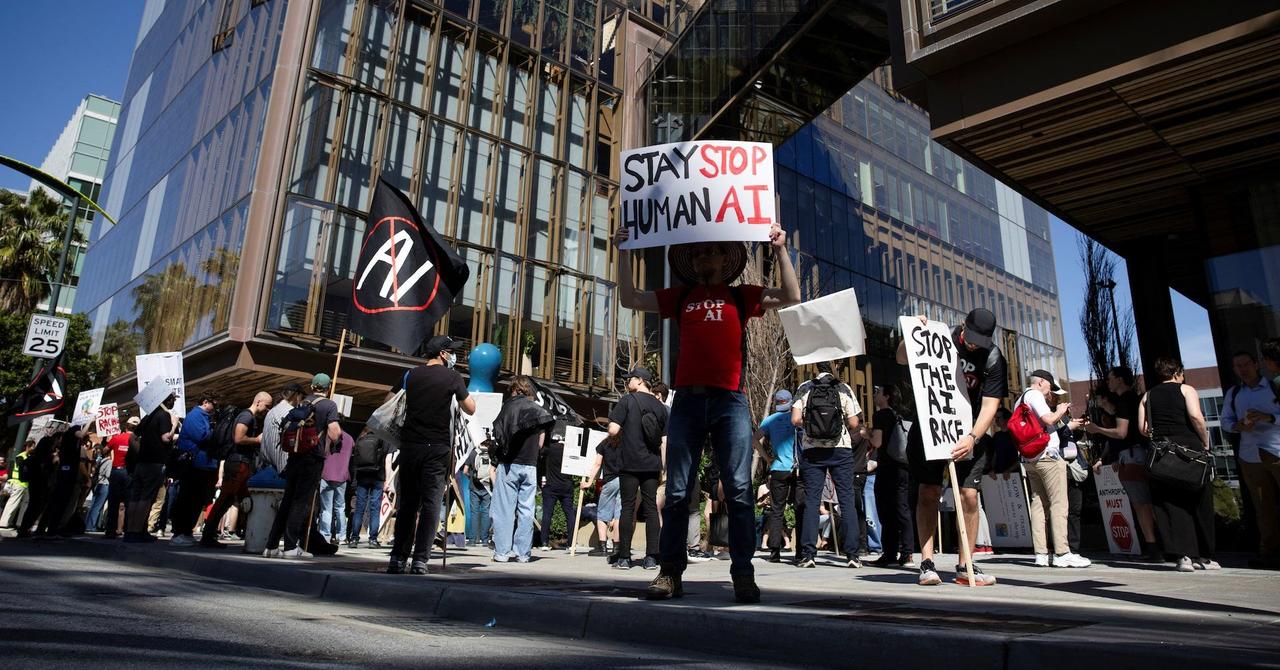
AI's Potential Negative Impact Dominates Public Perception
Public sentiment has soured considerably over the past year. Fifty-five percent of Americans now say AI will do more harm than good in their day-to-day lives, an 11% increase since last April, while only 34% believe the opposite
2
4
. Only a paltry 6% were "very excited" about AI while 62% were either not so excited or not at all excited2
. When it comes to concern, the numbers flip: 80% are either very concerned or somewhat concerned about AI, with Millennials and Baby Boomers taking the mantle of most worried, and Gen Z following not far behind2
.This growing negativity may stem from a turbulent year marked by Big Tech layoffs, reported AI psychosis cases, and energy-grid-straining data centers
2
. Americans across the board oppose building AI data centers in their communities, with 65% saying they wouldn't want one built, primarily citing high electricity costs and water use2
4
. This concern emerges as Amazon.com Inc., Meta Platforms Inc., Google and Microsoft Corp. plan to spend a combined $650 billion this year on AI infrastructure4
.Demands for Government Regulation of AI Intensify
Americans are demanding action on transparency and regulation. A striking 74% think the government is not doing enough to regulate AI use, up from 69% the year before
3
5
. Two-thirds of respondents said businesses aren't doing enough to be transparent about their AI use2
5
. The sentiment comes as states push to maintain their authority over AI rules, even as federal officials—including under Trump's latest, largely light-touch AI framework—and industry leaders advocate for limiting state-level regulation2
.Concerns extend to military use of AI, with 51% of Americans opposing the military using AI to select military targets, while 36% support it
4
5
. The polling was conducted after reports revealed the Pentagon used Anthropic PBC's AI technology to conduct military operations in Venezuela and Iran4
. Nearly two-thirds of Americans said they think AI will worsen education in the country while only 27% said they thought the technology will improve schools4
."Americans are not rejecting AI outright, but they are sending a warning," Triantoro said. "Too much uncertainty, too little trust, too little regulation, and too much fear about jobs"
2
5
. As AI billionaires such as venture capitalist Marc Andreessen and OpenAI President Greg Brockman pour tens of millions of dollars into the upcoming U.S. midterm elections to elect AI-friendly candidates and lobby for light-touch regulation, the disconnect between Big Tech's vision and public sentiment has never been more apparent4
.References
Summarized by

Navi
Related Stories
Americans Express Deep Concerns Over AI's Impact on Jobs, Politics, and Society
19 Aug 2025•Technology

Americans Express Concerns Over AI's Impact on Personal Lives and Human Abilities
18 Sept 2025•Technology

Half of US employees now use AI at work, but waste nearly 8 hours weekly managing the tools
13 Apr 2026•Business and Economy

Recent Highlights



Recent Highlights
Today's Top Stories






Don’t drown in AI news. We cut through the noise - filtering, ranking and summarizing the most important AI news, breakthroughs and research daily. Follow topics that matter to you and stay ahead.


