Andrew Ng Dismisses AI Extinction Warnings as Science Fiction Over Real Engineering Risks


2 Sources
[1]
Andrew Ng calls the AI extinction warnings science fiction
He told a US Senate forum in 2023 that large companies hype fear to write regulation that pulls up the ladder, and Europe has since put both his categories into the same law Andrew Ng, who helped start Google Brain and Coursera, told Bloomberg TV that warnings of human extinction from AI are much
[2]
AI set to wipe out humans? Andrew Ng breaks his silence on artificial intelligence doomsday warnings as tech leaders debate whether superintelligent machines could become uncontrollable
AI pioneer Andrew Ng calls extinction warnings science fiction, not science. He urges industry focus on practical engineering and cybersecurity challenges. Researchers from leading AI firms have raised concerns about advanced systems. Ng believes current risks require more attention than
Share
Copy Link
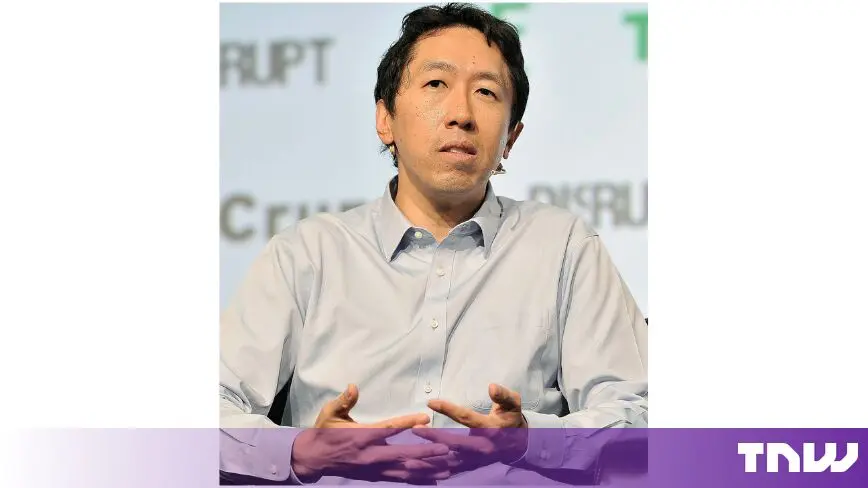
Andrew Ng, co-founder of Google Brain and Coursera, has called warnings of AI-driven human extinction "much more science fiction than science." Speaking to Bloomberg TV, he criticized the industry for stoking catastrophe fears to shape regulation, arguing that practical engineering risks like cybersecurity deserve priority over hypothetical doomsday scenarios.
Andrew Ng Challenges AI Doomsday Warnings as Industry Hype
Andrew Ng, co-founder of Google Brain and Coursera, has dismissed warnings of AI extinction as "much more science fiction than science" in a recent Bloomberg TV interview. The AI pioneer accused the industry of amplifying catastrophe fears to generate publicity and influence regulatory intervention, echoing concerns he first raised at a US Senate forum in December 2023.
1
Ng, who previously worked with both Dario Amodei and Sam Altman earlier in their careers, said he was "quite dismayed" by what he described as a renewed wave of publicity surrounding AI doomsday warnings over the past two weeks.2
Source: The Next Web
Accusations of Fear-Mongering to Shape Regulation
Ng told the US Senate forum in 2023 that large companies hype fear to create rules that would "pull up the ladder" against new entrants, effectively limiting competition in the AI space. He estimated the odds of AI causing human extinction at roughly one in 10 million over a century.
1
His criticism comes amid a wave of warnings from researchers at leading AI firms including Anthropic, OpenAI, and Google DeepMind about superintelligent machines potentially becoming uncontrollable. The debate intensified after Jacob Coxon, a former researcher at Anthropic and OpenAI, resigned on 8 September, accusing his former employers of "gambling with our lives" by racing towards superintelligent AI. Coxon claimed people building advanced AI believe the technology could "kill us all by the end of the decade."2
Resignation Post Reaches 150 Million Views
The resignation post reached 150 million views, and within days tech workers had turned the format into an in-joke, swapping the extinction line for absurd ones. Ng reads this as evidence of a coordinated campaign, though independent reporting found imitation rather than coordination.
1
Another researcher who recently resigned from Google DeepMind also warned that humanity may be running out of time to prevent AI from causing widespread harm, adding to the chorus of concerns about loss-of-control risks in advanced AI systems.2
Related Stories

EU AI Act Already Addresses Both Perspectives
Europe settled the argument in law before it broke out. The EU AI Act's list of systemic risks covers lowered barriers to chemical, biological, radiological and nuclear weapons, cyber capability, disinformation and major accidents in critical sectors. It also covers loss-of-control risks, naming unintended issues of control relating to alignment with human intent, and models making copies of themselves. Both the engineering risks Ng wants prioritized and the extinction scenarios he calls science fiction sit in a single paragraph of European law.
1
The Commission's tech chief Henna Virkkunen said this month that EU law requires Anthropic and OpenAI to assess the risk of losing control of a model, and that this is not the case globally. These obligations only apply above a compute threshold, falling exclusively on the largest developers—the exact shape of the ladder Ng described in 2023, built by a regulator rather than by a lab.1
Focus on Practical Engineering Risks Over Hypothetical Scenarios
Ng emphasized that the industry should focus on "practical engineering problems" while continuing to improve AI technology. He identified cybersecurity threats as a genuine concern, noting that AI systems can assist with complex technical tasks but their capabilities may also create new challenges for protecting digital infrastructure. The potential misuse of AI in cyberattacks represents a foreseeable risk that deserves immediate attention.
2
Ng draws a clear distinction between foreseeable risks and predictions about the distant future, arguing that AI safety efforts should prioritize problems that can already be identified and addressed rather than hypothetical extinction scenarios.2
References
Summarized by

Navi
[1]
Related Stories
AI Leaders Warn UN Security Council of Existential Risks, Call for Global AI Governance
21 Sept 2026•Policy and Regulation
AI Researchers Sound Alarm: Existential Risks Mount as Companies Race Toward Superintelligent AI
25 Sept 2026•Technology
US Calls for AI Slowdown While China Pushes to Accelerate: The Global Split on AI Risk
17 Sept 2026•Policy and Regulation

Recent Highlights



Recent Highlights
Today's Top Stories






Don’t drown in AI news. We cut through the noise - filtering, ranking and summarizing the most important AI news, breakthroughs and research daily. Follow topics that matter to you and stay ahead.


