4 Sources
[1]
AI minister role boosted but tech department axed in Burnham shake-up
The AI Minister, Kanishka Narayan, will be given a seat at the top table of government but the Department for Science, Innovation and Technology (DSIT) has been scrapped. DSIT was created by the Conservative Sunak government in 2023 - its responsibilities will now be split between other government departments. It means there is no longer a dedicated technology secretary, a position filled by Liz Kendall until she was sacked by new Prime Minister Andy Burnham. However, Narayan, who was appointed by Sir Keir Starmer, said the new prime minister inviting him to attend cabinet as minister for AI was a "sign of his deep commitment to AI's importance." Born in India and raised in Cardiff, Narayan worked in government and business before entering Parliament in 2024 as the MP for the Vale of Glamorgan. As Parliamentary Under-Secretary of State within Sir Keir Starmer's government, his responsibilities spanned AI opportunities, the AI Security Institute, semiconductors and online safety. He is expected to continue shepherding some of those briefs, though now without Kendall's leadership. "AI is likely the most significant technology in human history. Its impact will dwarf other things," Narayan wrote on X in the early hours of Tuesday. "The best case for it is compelling beyond our dreams: a reindustrialised Britain, stronger national security, public services transformed for the better." He added that, however, AI also poses real risks to the public, adding "it is right that the British public shares those worries, for jobs, for the pace of change". Dom Hallas, head of tech trade body, the Startup Coalition, said it was key that, with the dismantling of DSIT, the government did "not take the foot off the pedal" with tech. He said the previous department had provided good foundations - and now the priority should be spreading AI tech adoption through government and the wider public. The minister has multiple policy challenges to address, Professor Gina Neff, head of the Minderoo Centre for Technology and Democracy at the University of Cambridge said. One of the most pressing is how society deals with the threat of AI replacing jobs. But Neff said elevating an AI Minister to cabinet at least sent a signal the Prime Minister was "serious about having someone serious in this key role". Professor Adam Beaumont, chairman of telecoms and digital infrastructure firm AQL, said the most pressing issue for a new AI Minister was ensuring resilience. He said there was a danger another reorganisation of science and tech within government could be "changing too many things at once", "We're a small island but the internet is borderless, we need more compute within our shores," he said - suggesting the UK needed to build more data centres. That has proven extremely controversial - and the BBC was told in February government plans to make the UK a "world leader" in AI could put already stretched supplies of drinking water under strain. But Prof Beaumont said to supply data centres, the government needed to focus on delivering abundant and reliable energy for the grid immediately. "Without power there's no compute, without the compute there's no knowledge economy," he said. "All our aspirations on digital growth are reliant on the assumption of readily available energy, but that is not growing in line with the exponential growth of AI." Prof Neff said the electorate could see things differently though. "For any Labour government to hitch their future electability to benefits to AI, then the political challenge for a new government is people need to feel the benefits before any job losses," she said. "How do you jump start the British economy to get growth? AI may be that solution, or it might be a longer term investment. "People want to see the economy improving and kids getting jobs." Sign up for our Tech Decoded newsletter to follow the world's top tech stories and trends. Outside the UK? Sign up here.
[2]
Kanishka Narayan becomes the UK's first cabinet-level AI minister
A junior brief becomes a cabinet seat as Andy Burnham scraps DSIT and rewires Whitehall around artificial intelligence. Kanishka Narayan has become the first UK minister for artificial intelligence to sit at the cabinet table, a promotion that arrives as new prime minister Andy Burnham reshapes Whitehall around the technology. Narayan, the MP for the Vale of Glamorgan and until this week a junior minister for AI and online safety, said Burnham had asked him to attend cabinet "as minister for AI, a sign of his deep commitment to AI's importance." The elevation coincides with the scrapping of the Department for Science, Innovation and Technology (DSIT), the body that had steered Britain's pro-innovation AI rules and its push for homegrown compute. Its remit has been folded into a new Department for Business, Innovation, Science and Trade under Jonathan Reynolds, with online safety and digital duties moving to other departments. Burnham took office on 21 July, and the reshuffle claimed several senior figures. Liz Kendall, Narayan's former boss as technology secretary, left her post, while Lord Patrick Vallance stepped down as science minister after nearly a decade in government, citing personal reasons. The reorganisation folds a standalone science department, created less than two years ago, back into a broader economic ministry, a decision likely to be read as a bet that AI policy now belongs closer to the centre of government rather than in a specialist silo. For Narayan, the job is less a change of subject than a change of altitude. He reached Parliament only in July 2024, winning the Vale of Glamorgan and becoming the first ethnic minority MP elected in Wales, before taking the AI and online safety brief that September in place of Feryal Clark. His route there was unusually well suited to the file. After a spell in the civil service during the coalition government, he worked at the investment bank Lazard, studied for an MBA at Stanford, and spent time with the venture firm Atomico and the fintech investor Clocktower before running Labour's tech policy. That background has earned him a rare reputation among people who watch the sector closely. Leo Ringer of Form Ventures described him as "a minister whose understanding of his brief has been there from day one," while Matt Clifford, a former government AI adviser, welcomed the move and said Narayan "understands the scale and opportunity" of the technology. The in-tray is heavy. Britain has promised long-delayed legislation on the most powerful AI models, and ministers are still weighing how far to regulate without deterring the investment flowing into UK AI. Questions over compute capacity, the safety of frontier systems, and the future of the AI growth zones meant to spread jobs beyond London now report, in effect, to a cabinet minister. Narayan has also inherited an online safety agenda mid-implementation, though responsibility for that brief has moved elsewhere in the restructure, leaving the exact boundaries of his role to be drawn. Narayan has framed the stakes in expansive terms. "AI is likely the most significant technology in human history," he wrote after the appointment, arguing that "nations have a narrow window to decide whether they shape AI or get shaped by it. Britain is in that window right now." He has also signalled a wish to push the gains beyond the usual clusters, backing regional innovation hubs and investment in places such as his own Welsh seat, part of a wider argument for domestic capability and a sovereign UK AI model. Whether a cabinet seat carries the budget and authority to match that rhetoric is the question the coming months will settle. The change puts Britain alongside France and Canada, which have already given AI its own senior political berth, Silicon Republic reported. For now, officials have offered little detail on how the reshaped department will operate day to day, or when the promised AI bill will finally reach Parliament, leaving Narayan to define a job that did not exist a week ago.
[3]
AI gets a seat at new UK PM Andy Burnham's cabinet table
All eyes were on Andy Burnham's new cabinet picks as he assumed office yesterday as the UK's newest Prime Minister. AI got its own seat for the first time. As new UK Prime Minister Andy Burnham entered No. 10 for the first time yesterday, it was clear that this would be a new cabinet, not a cabinet reshuffle. Technology and Science got a do-over at cabinet with responsibilities changing hands and newly created portfolios. Notable was the importance given to AI with a new AI minister, Kanishka Narayan being handed a seat at cabinet for the first time. Burnham also dissolved the Department for Science, Innovation and Technology (DSIT) and merging it with the Department for Business and Trade, under the auspices of Jonathan Reynolds, who previously led the latter. Until now part of the DSIT remit, digital transformation and online safety will now come under the auspices of the Department of Culture. Most notable however is the clear importance beiong given to AI, with its own seat at cabinet in the new Burnham government. Narayan had previously held the post of Parliamentary Under Secretary of State at the DTIS. "AI is likely the most significant technology in human history," said Welsh MP Narayan in a social media post after his appointment. " Its impact will dwarf other things. The best case for it is compelling beyond our dreams: a reindustrialised Britain, stronger national security, public services transformed for the better." He also recognised the inherent risks of AI. "The risks, too, are real: it is right that the British public shares those worries, for jobs, for the pace of change. The central fact is that it is happening. Nations have a narrow window to decide whether they shape AI or get shaped by it. Britain is in that window right now. While that window is still open, I will act with pace, I will act with ambition, and I will focus relentlessly on securing British influence in shaping AI." Don't miss out on the knowledge you need to succeed. Sign up for the Daily Brief, Silicon Republic's digest of need-to-know sci-tech news.
[4]
UK PM Andy Burnham promotes British Indian AI minister to Cabinet post, sweeps away Kier Starmer supporters
Prime Minister Andy Burnham has formed his new Cabinet team in London. British Indian minister Kanishka Narayan was promoted to the Cabinet as AI Minister. Lisa Nandy retained her department and gained new digital responsibilities. Shabana Mahmood continues as Home Secretary, and Jonathan Reynolds resumes trade. Several senior ministers allied with predecessor Keir Starmer were removed. British Prime Minister Andy Burnham finalised his top team within hours of taking charge at 10 Downing Street and promoted British Indian minister for artificial intelligence (AI) Kanishka Narayan to the Cabinet, and purging allies of predecessor Keir Starmer from the government. Burnham, who was invited to form the government by King Charles on Monday, set about unveiling the team of ministers who will join him around the Cabinet table soon after. Lisa Nandy is another Indian-origin minister who holds on to her department, with additional responsibilities as Secretary of State for Digital, Culture, Media and Sport. Narayan said his elevation, as Minister for AI, falling jointly within the Cabinet Office and the Department for Business, Innovation, Science and Trade, is a sign of the new PM's "deep commitment to AI's importance". "AI is likely the most significant technology in human history. Its impact will dwarf other things. The best case for it is compelling beyond our dreams: a reindustrialised Britain, stronger national security, public services transformed for the better," said Narayan, who was elected as the first Indian-origin member of Parliament from Wales in the July 2024 general election. "The risks, too, are real: it is right that the British public shares those worries, for jobs, for the pace of change. The central fact is that it is happening. Nations have a narrow window to decide whether they shape AI or get shaped by it. Britain is in that window right now," he said. The 36-year-old Bihar-born Labour MP for the Vale of Glamorgan, who held the AI brief as a junior minister in former prime minister Keir Starmer's team, pledged to act with "pace and ambition" and "focus relentlessly on securing British influence in shaping AI". "I will also bring to this job the place I represent - a constituency in Wales, a nation with industry and ambition at its heart, a proud history of punching above its weight on the global stage. A nation which welcomed a 12-year old and his family, gave us the best chance at opportunity, put me in Parliament as Wales' first ethnic minority MP, and now affords me the chance to make a mark in Cabinet," he said. With roots in Muzaffarpur, Narayan's family moved to the Welsh capital of Cardiff when he was a little boy. He studied at Oxford and Stanford universities before entering politics after a stint in the private sector and has been vocal about the importance of the India-UK relationship. "The question being asked is one of policy continuity in a slightly transitioning political moment; on this question, I feel absolutely convinced that the stability of the depth of our relationship (with India) is a stability we'll continue to see in the months and years ahead," said Narayan, addressing the India All Party Parliamentary Group (APPG) last month. Meanwhile, Lisa Nandy is reappointed to the ministerial role she has been in charge of since July 2024 with the additional responsibility for digital services too. The 44-year-old Manchester-born daughter of Calcutta-born academic Dipak Nandy and English mother Luise Byers is a close ally of Burnham as his Makerfield constituency neighbour in Wigan, within the Greater Manchester region. In the lead-up to the elevation of the region's former mayor to prime minister, she vouched for her new boss being "faster and bolder" in the Labour Party's reform agenda. Among the other key Cabinet appointments, South Asian heritage Shabana Mahmood holds on to her role as Home Secretary, which she described as "the best job in the business". "We have begun the work of major reform to make our streets safer and our immigration system fair for all. Now let's finish the job," she said, after her meeting with Burnham. Jonathan Reynolds, who oversaw the completion of the India-UK free trade agreement last year with Commerce Minister Piyush Goyal, resumes the trade brief in a bulked-up Department for Business, Innovation, Science and Trade. "I look forward to partnering with you once again to build on this momentum and strengthen investment flows, mobility provisions, and the shared vision of our leaders for a modern, resilient trade corridor between our two nations," said Goyal, with reference to the Comprehensive Economic and Trade Agreement (CETA) entering into force last week. While former defence secretary John Healey has been elevated to the crucial post of Chancellor of the Exchequer, former energy minister Ed Miliband is the new Foreign Secretary. Yvette Cooper moves from the Foreign, Commonwealth and Development Office (FCDO) to Secretary of State for Health and Social Care and the previous incumbent of that role, Wes Streeting, has been appointed Defence Secretary. Burnham removed several of Starmer's senior ministers from the government including ex-deputy prime minister David Lammy, former business secretary Peter Kyle and Starmer's chief secretary Darren Jones.
Share
Copy Link
UK Prime Minister Andy Burnham has promoted Kanishka Narayan to cabinet as the nation's first cabinet-level AI minister, while dismantling the Department for Science, Innovation and Technology. The 36-year-old Bihar-born MP for Vale of Glamorgan now sits at the government's top table, signaling a strategic shift in how Britain approaches AI governance amid mounting pressure to balance innovation with public concerns over job displacement and infrastructure demands.
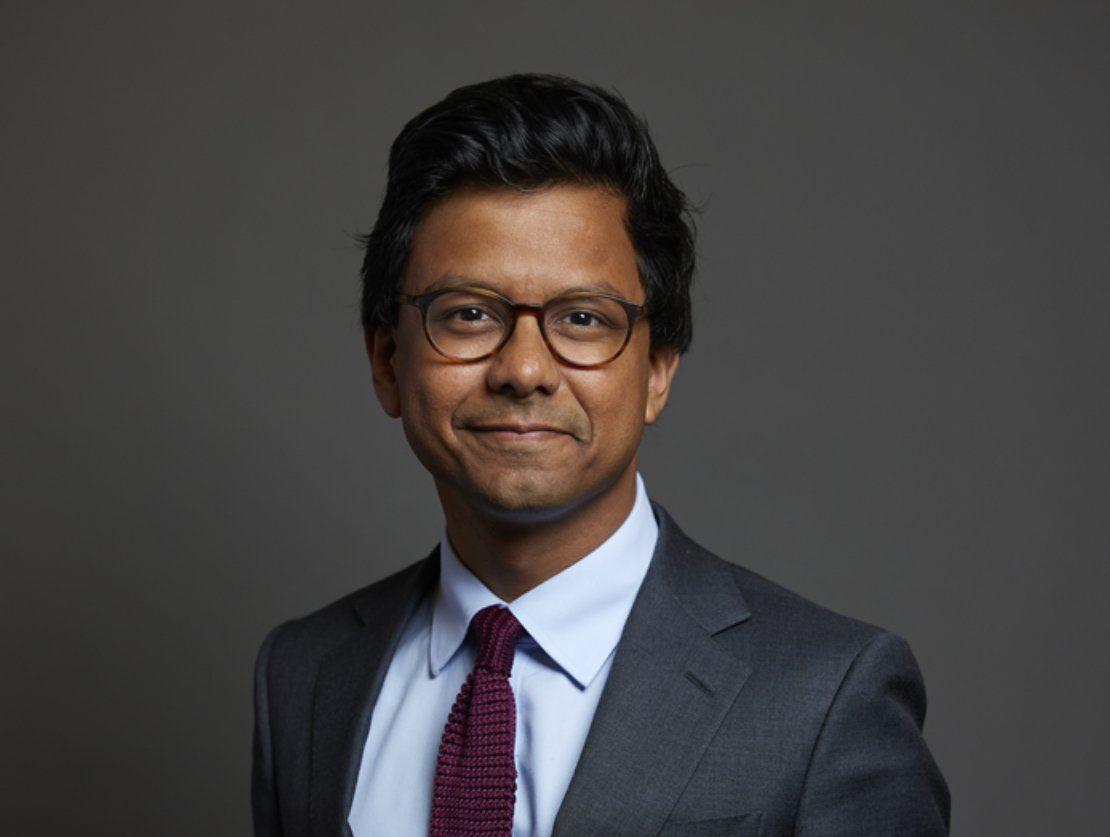
Kanishka Narayan has become the UK's first cabinet-level AI minister, marking a significant elevation for artificial intelligence within government priorities. Prime Minister Andy Burnham invited Narayan to attend cabinet shortly after taking office on 21 July, a move the 36-year-old minister described as "a sign of his deep commitment to AI's importance"
1
. The promotion arrives alongside a major Whitehall reorganization that saw the Department for Science, Innovation and Technology (DSIT) scrapped less than two years after its creation by the Conservative Sunak government in 20232
.
Source: Silicon Republic
Born in Bihar, India, and raised in Cardiff, Narayan entered Parliament only in July 2024 as the MP for the Vale of Glamorgan, becoming Wales' first ethnic minority MP . Before politics, he worked in the civil service during the coalition government, spent time at investment bank Lazard, earned an MBA at Stanford, and worked with venture firm Atomico and fintech investor Clocktower
2
. As Parliamentary Under-Secretary of State within Sir Keir Starmer's government, his responsibilities spanned AI opportunities, the AI Security Institute, semiconductors and online safety1
.The dissolution of DSIT represents a fundamental shift in UK government AI policy architecture. The department's remit has been folded into a new Department for Business, Innovation, Science and Trade under Jonathan Reynolds, with online safety and digital duties moving to other departments
2
. The reorganization claimed several senior figures, including Liz Kendall, who was sacked as technology secretary, and Lord Patrick Vallance, who stepped down as science minister after nearly a decade in government2
. Digital transformation and online safety responsibilities now fall under the Department of Culture3
.

Source: ET
Dom Hallas, head of tech trade body the Startup Coalition, emphasized that with the dismantling of DSIT, the government must "not take the foot off the pedal" with tech, noting the previous department had provided good foundations
1
. The decision folds a standalone science department back into a broader economic ministry, likely signaling that AI policy now belongs closer to the center of government rather than in a specialist silo2
.Narayan has framed his mandate in expansive terms, declaring that "AI is likely the most significant technology in human history" and arguing that "nations have a narrow window to decide whether they shape AI or get shaped by it"
3
. He outlined AI opportunities and risks in stark terms: "The best case for it is compelling beyond our dreams: a reindustrialised Britain, stronger national security, public services transformed for the better," while acknowledging "it is right that the British public shares those worries, for jobs, for the pace of change"1
.Professor Gina Neff, head of the Minderoo Centre for Technology and Democracy at the University of Cambridge, identified job displacement as one of the most pressing policy challenges, noting that "for any Labour government to hitch their future electability to benefits to AI, then the political challenge for a new government is people need to feel the benefits before any job losses"
1
.Professor Adam Beaumont, chairman of telecoms and digital infrastructure firm AQL, warned that compute capacity demands present immediate infrastructure challenges. "Without power there's no compute, without the compute there's no knowledge economy," he said, adding that "all our aspirations on digital growth are reliant on the assumption of readily available energy, but that is not growing in line with the exponential growth of AI"
1
. Government plans to make the UK a "world leader" in AI could put already stretched supplies of drinking water under strain due to data centers requirements1
.Related Stories
The in-tray facing Narayan is substantial. Britain has promised long-delayed AI legislation on the most powerful AI models, and ministers are still weighing how far to regulate without deterring investment flowing into UK AI
2
. Questions over compute capacity, the safety of frontier systems, and the future of AI growth zones meant to spread jobs beyond London now report to a cabinet minister2
. Narayan has signaled support for regional innovation hubs and investment in places such as his own Welsh seat, part of a wider argument for domestic capability and a sovereign UK AI model2
.Leo Ringer of Form Ventures described Narayan as "a minister whose understanding of his brief has been there from day one," while Matt Clifford, a former government AI adviser, welcomed the move and said Narayan "understands the scale and opportunity" of the technology
2
. The change puts Britain alongside France and Canada, which have already given AI its own senior political berth2
. Whether a cabinet seat carries the budget and authority to match Andy Burnham AI's ambitious rhetoric remains the question the coming months will settle, as officials have offered little detail on when the promised AI bill will finally reach Parliament2
.Summarized by
Navi
[3]
1
Technology

2
Policy and Regulation

3
Science and Research