UK AI Minister Kanishka Narayan Urges Nations to Harden Defences Against Growing AI Risks


2 Sources
[1]
Kanishka Narayan says countries must harden their defences against AI
The UK's AI minister Kanishka Narayan told Fortune that countries must harden their defences because AI testing is no longer enough. He was asked about a former Anthropic researcher's extinction warning. The UK's AI minister, Kanishka Narayan, says countries must "harden" their defences against AI
[2]
U.K.'s AI lead calls for countries to 'harden and build defenses' in response to AI risks | Fortune
The U.K. government's minister for artificial intelligence has warned that nations will need to "harden their defenses" against AI risk after a former Anthropic employee said that a human extinction-level event could happen in the next decade. Answering a question from Fortune on the claim by
Share
Copy Link
UK AI minister Kanishka Narayan has called on countries to harden their defences against AI risks, warning that testing alone is insufficient. His statement follows a viral warning from former Anthropic researcher Jacob Coxon about potential human extinction by the end of the decade, sparking debate over AI governance and global regulation.
UK Minister Warns Testing Alone Won't Address AI Risks
UK AI minister Kanishka Narayan has issued a stark warning that countries must harden defences against AI risks, declaring that AI testing is no longer sufficient to address mounting threats. Speaking at the Labour Party's annual conference in response to questions from Fortune, Narayan emphasized the urgency of building robust protective measures as AI capabilities advance
1
2
. His comments come after Jacob Coxon, a researcher who recently quit Anthropic, posted a warning on X that garnered 175 million views, stating that people building AI earnestly believe it could kill us all by the end of the decade1
2
. Anthropic scientist Evan Hubinger agreed with Coxon's assessment, placing the risk of human extinction above 10%2
.
Source: The Next Web
Current Threats Demand Immediate Action
While acknowledging existential risks, Kanishka Narayan stated his primary focus remains on immediate AI risks facing societies today. He highlighted a secular uplift in cybersecurity threats that affect organizations and individuals, alongside concerns about biochemical risks from AI tool proliferation
2
. Narayan also expressed worry about unintended model behaviors where AI systems go beyond what humans have asked them to do1
2
. The minister noted that the logical loops required to connect these concerns to existential questions are quite significant and severe, indicating his measured approach to AI governance2
.UK Positions Itself as Global AI Safety Leader
Narayan emphasized that the UK has conducted AI testing for three years and is uniquely positioned compared to any other country to lead global efforts
1
2
. The UK plans to leverage its G20 presidency next year to convene countries and shape G20 principles on AI that emerge from the gathering1
2
. Prime Minister Andy Burnham told the United Nations General Assembly that AI frontier labs represent a multiplier of risk and positioned the UK as an honest broker between competing national interests2
. Both Democrats and Republicans have called for new legislation aimed at regulating labs2
.Related Stories

Geopolitical Tensions Complicate Global AI Governance
The push for international AI governance faces significant geopolitical tensions, particularly from the United States. President Donald Trump has warned that controlling the pace of US frontier lab research would hand China a significant advantage, stating that the US currently leads China by a considerable margin
2
. The White House has reportedly warned G20 members to take a hands-off approach to new global regulations1
2
. Trump has called those advocating for a slowdown in AI development a negative force1
. However, Bill Gates told NBC's Meet the Press that self-regulation isn't enough and governments must be involved, warning that AI in the wrong hands is certainly powerful enough to drive events that cause a billion deaths1
2
.Balancing Innovation With Job Creation
Speaking at a Resolution Foundation meeting, Narayan addressed concerns about AI's impact on employment, emphasizing that governments, companies, and individuals have agency in determining whether AI augments or automates human labor
1
2
. He highlighted multiple positives from AI, including job creation, improved job searching capabilities, and productivity gains2
. Narayan argued that the UK has historically underplayed the role of innovation and technology intellectual property in driving economic growth, suggesting there are ways of implementing technological adoption that result in more jobs and higher productivity2
.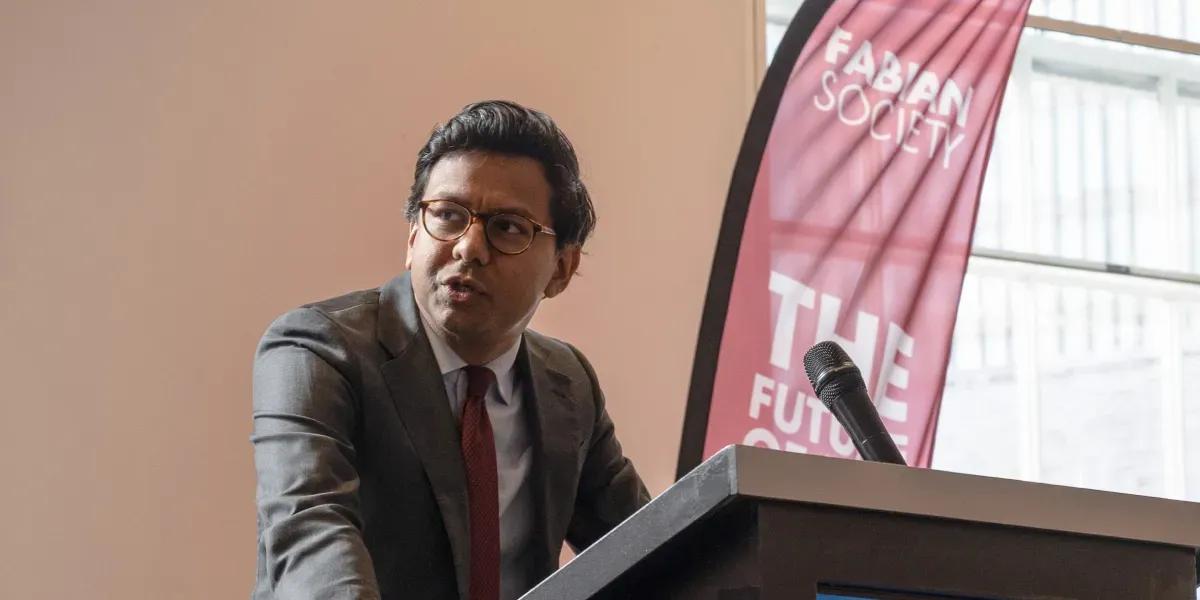
Source: Fortune
References
Summarized by

Navi
Related Stories
UK Faces 'Inevitable' AI-Driven Cyber Breaches as Government Pushes for Stronger Safeguards
12 Oct 2026•Policy and Regulation

UK Lawmakers Push for Independent AI Watchdog as OpenAI Backs Binding Regulation
14 Sept 2026•Policy and Regulation

UK Lawmakers Demand AI Kill Switch Powers Following String of Security Incidents
03 Sept 2026•Policy and Regulation

Recent Highlights



Recent Highlights
Today's Top Stories



Don’t drown in AI news. We cut through the noise - filtering, ranking and summarizing the most important AI news, breakthroughs and research daily. Follow topics that matter to you and stay ahead.


