7 Sources
[1]
The AI legal services industry is heating up. Anthropic is getting in on the action. | TechCrunch
Anthropic announced Tuesday that it is launching a host of new chatbot features designed to provide automated assistance to law firms. The new features expand Claude for Legal -- the law-focused offering that launched earlier this year -- offering users a new set of legal plugins and MCP connectors designed for specific areas of law. The new tools come amid hot competition in the legal AI space. In March, the AI law startup Harvey, which uses agentic AI to automate legal workflows, raised $200 million at a valuation of $11 billion. Last month, a rival startup, Legora, raised a $600 million series D, and launched a high-profile ad campaign featuring Jude Law. Legora offers similar services to Harvey -- automated solutions built to simplify the often byzantine law processes that have traditionally involved entire teams of humans. Anthropic's new tools are designed to help law firms automate specific clerical functions -- things like document search and review, case law resources, deposition prep, document drafting, and other related areas. The plugins -- which represent a bundle of functions and automated tools -- are designed to work across legal fields like commercial, privacy, corporate, employment, product, and AI governance, Anthropic says. Anthropic is also offering a number of model context protocol connectors. MCPs connect specific data sources and third-party systems to AI models, allowing the models to interact with them directly. In this case, the new MCP connectors integrate Claude into a variety of software applications that are already routinely used by law firms -- applications for document management like DocuSign and file search platforms like Box. Legal research sites like Thomson Reuters (which operates Westlaw) can also be connected. The new connectors and plugins are being made available to all paying Claude customers, the company said. The new features also build upon other plugins designed for the legal industry that the company launched in February. "The legal sector is facing mounting pressure to adopt AI, and the firms and in-house teams that move are pulling ahead fast," a spokesperson for the company said. "Claude is making a deeper push into knowledge work, with the legal sector emerging as one of its most significant and fastest-growing industries." As AI companies have sought to court law firms, AI-related failures have caused real problems in court. Dozens of lawyers have been caught using AI to generate error-ridden legal documents, as has at least one major law firm. Last year, California issued a first-of-its-kind fine against an attorney who had used ChatGPT to draft an appeal riddled with fake quotes. Federal judges have also been caught using it to draft rulings, a trend that drew the scrutiny of Congressional leaders last year. Meanwhile, AI-generated lawsuits are said to be clogging the arteries of justice -- overwhelming courts with stacks of bizarrely argued legal "slop."
[2]
Anthropic expands Claude's AI tools for law firms, lawyers
WASHINGTON, May 12 (Reuters) - Artificial intelligence company Anthropic on Tuesday released an expanded suite of features for lawyers using its Claude AI assistant, including tools for specialized legal topics and access within Claude to other legal research and AI products. San Francisco-based Anthropic said the release allows law firms and other Claude customers to connect securely with third-party platforms including Thomson Reuters for legal research, document management and other services. It said the new features would be available to existing Claude customers. The announcement comes amid intensifying competition among technology companies to develop and market professional artificial-intelligence tools, as information-heavy industries such as the legal sector rush to adopt AI tools. The new Anthropic release builds on plug-ins for Claude Cowork that the company announced in late January, sparking a major selloff by investors of U.S. and European data analytics, professional services and software companies. Anthropic said Thomson Reuters customers would now have access within Claude to Thomson Reuters' Westlaw Primary Law database of court records and other documents and its Practical Law legal practice guides. LEGAL RESEARCH INTEGRATION Thomson Reuters also announced the integration of its Westlaw-enabled AI platform CoCounsel with Claude on Tuesday, saying the connection will allow its customers using Claude to access CoCounsel's "fiduciary grade" legal research tools directly. "We are actively building integrations that connect general-purpose AI to professional environments, ensuring that wherever lawyers are working, the full power of CoCounsel Legal is available to them," Thomson Reuters Chief Technology Officer Joel Hron said in a statement. Hron said the integration "doesn't replace the CoCounsel Legal platform or provide standalone access to that underlying content and workflow system." Financial terms were not disclosed. Thomson Reuters (TRI.TO), opens new tab is the parent of Reuters. Anthropic said another connection with AI startup Harvey will bring that company's legal assistant into Claude, including supporting general legal inquiries. Users of Claude for legal will also be able to connect directly with content-management platform Box (BOX.N), opens new tab, cloud-based electronic-discovery platform Everlaw and software company DocuSign (DOCU.O), opens new tab, Anthropic said. "We're seeing an incredible uptick in adoption of AI in the legal industry," Mark Pike, associate general counsel at Anthropic, told Reuters. A recent webinar focused on how legal teams use Claude drew more than 20,000 registrations, he said. Anthropic said Tuesday's release includes 12 new legal practice plug-ins including "commercial counsel," "employment counsel," "litigation associate" and "law student." It said the new tools can be deployed directly inside Anthropic's Cowork or embedded into a firm's own systems. Reporting by Mike Scarcella in Washington; Editing by Matthew Lewis Our Standards: The Thomson Reuters Trust Principles., opens new tab
[3]
Anthropic reveals a host of new legal tools for Claude, including 12 new plugins
* Anthropic is adding 20+ MCP connectors and 12 plugins to Claude for legal workers * They'll be available across Claude, Claude Cowork and other third-party office apps * Claude continues to get new industry-specific releases Anthropic has lifted the wraps off a series of tools and plugins designed specifically for the legal space, including more than 20 MCP connectors to link Claude to dedicated legal software and 12 plugins to tackle specific workflows. With connections to the likes of DocuSign, LexisNexis, Thomson Reuters and Everlaw, it means Claude can access things like case files, research tools and other documents for fuller context. This comes amid rising engagement from legal workers, with Anthropic now declaring that they're the "most engaged Claude Cowork users of any knowledge-work function." Anthropic's latest push is for the legal sector In its announcement, Anthropic explained the current legal system relies on a complex mix of systems that create silos and fragmentation across workflows, thus tying them together with connectors and plugins will aim to streamline many processes. As for how they work, the MCP connectors focus on bringing context into Claude from documents, communications and records, while plugins focus on packaging frequently-run tasks to make them quicker in future iterations. Anthropic also stressed that, because they're built on open protocols, law firms can adapt them specifically to how they work rather than be tied to Claude's way of working. However, rather than being restricted to Claude's chatbot interface, Anthropic is embedding these tools into wherever Claude works, including across Word, Outlook, Excel and PowerPoint. Those connectors and plugins are also available within the agentic Claude Cowork platform, where lawyers can automate repetitive and administrative work to focus on their cases. The new legal tools come shortly after the company launched a similar suite for finance workers, with AI companies now going after industry-specific use cases rather than relying on general- and multi-purpose AI chatbots. Follow TechRadar on Google News and add us as a preferred source to get our expert news, reviews, and opinion in your feeds.
[4]
Even as hallucinations show up in legal filings, Big Law goes all in on AI with new Anthropic release | Fortune
Judges have been issuing sanctions. Bar associations have been issuing warnings. And in courtrooms across the country, lawyers have been caught submitting briefs containing citations to cases that never existed -- ghost precedents conjured by AI tools that state falsehoods with quiet authority. None of it has slowed down BigLaw's AI bet. If anything, the industry is doubling down. On Tuesday, Anthropic announced its most expansive push yet into legal workflows, releasing more than 20 new integrations with the tools law firms already rely on. They include 12 role-specific AI plugins covering everything from M&A due diligence to employment handbook drafting, and a cross-app integration with Microsoft 365 that embeds Claude across Word, Outlook, Excel, and PowerPoint as a single context-carrying agent. The underlying model, Claude Opus 4.7, scored 90.9% on Harvey's BigLaw Bench, the legal industry's most closely watched AI benchmark that puts the tech through rigorous legal test uses with the ultimate goal of using LLMs to substitute for billable hours. Anthropic boasted many big-name adopters as it unveiled the tools. Freshfields, Quinn Emanuel Urquhart & Sullivan, Holland & Knight, and Crosby Legal are all using Claude on live matters, the firms jointly announced alongside Anthropic. And they said that a plethora of legal AI products -- Harvey, Legora, Solve Intelligence, and Eve -- are built on Claude's underlying models. More than 20,000 legal professionals signed up for Anthropic's most recent legal webinar, which the company described as the largest legal session it has ever held. Claude's capabilities have become an "essential part" of Freshfields' proprietary AI-powered solutions, said Gerrit Beckhaus, Partner and Co-Head, adding that the firm is co-developing agentic workflows with Anthropic that can handle multi-step legal tasks end-to-end. Christopher D. Kercher, Partner, Founder & Head of AI & Data Analytics at Quinn Emanuel, said he personally built the firm's litigation platform on Claude "with virtually no coding background," because he needed it for a real trial. "The breakthrough was treating Claude like a member of the case team: onboard it with chronology, key excerpts, and themes the way you'd onboard a partner joining mid-case. The work product is far beyond what I would've done on my own -- probably ever." It's quite a contrast from just several weeks ago, when Sullivan & Cromwell, another white-shoe law firm, was found by rival lawyers to have included a hallucination in a bankruptcy court filing. "We deeply regret that this has occurred," partner Andrew Dietderich wrote to the judge in the case. Anthropic's answer to the hallucination problem is "grounding," meaning that its new connector architecture is designed so that Claude can only draw from live, verified sources -- case law in the massive database Westlaw; CourtListener's archive of actual court opinions; iManage document repositories -- rather than generating answers from memory. The argument is that an AI reading a real document behaves differently from one synthesizing text from training data. "In litigation, an authoritative-sounding hallucination is worse than no answer," said Jay Madheswaran, CEO and co-founder of Eve, a legal AI company built on Claude. His company, he said, evaluates every model against "24+ legal-specific scorers -- citation accuracy, ungrounded case quotes, memory leakage, refusal correctness." Claude, he said, "wins our internal bake-offs every time on the metrics that matter for legal work, particularly grounding and citation faithfulness. That's why the highest-stakes parts of our pipeline run on Anthropic." Jake Lauritzen, CTO of Legora, described Claude Opus 4.7 as showing "stronger consistency across long documents, better handling of nuanced instructions, and improved reliability in high-stakes workflows" compared to earlier models. The business stakes for Anthropic are significant, with the company disclosing that legal is now the top power-user job function inside its Cowork platform. Tuesday's announcement positions Anthropic not just as a model provider -- the invisible layer underneath Harvey or Legora -- but as a direct participant in legal workflows, which puts it in complicated territory with the incumbents it is simultaneously partnering with. Thomson Reuters, for instance, is both a Claude data connector -- giving Claude access to Westlaw primary law -- and a seller of its own competing AI products. Anthropic is also making an access-to-justice argument alongside the BigLaw story. Roughly 80% of civil litigants appear in court without a lawyer, according to Anthropic. Through partnerships with the Free Law Project, Courtroom5, and other legal aid organizations -- whose connectors will be available to Claude users at no additional cost -- the company is framing the expansion as something more than a productivity play for firms billing by the hour. "Most people don't know they have legal rights until it's too late to use them," said Sonja Ebron, CEO and co-founder of Courtroom5. "Claude can now meet them where they are -- in the moment they're scared and searching for answers." The legal industry has made its calculation. Whether the guardrails are good enough will be settled, eventually, in court.
[5]
Anthropic expands Claude's AI tools for law firms, lawyers
Artificial intelligence (AI) company Anthropic has launched new tools for lawyers using its Claude AI assistant. These features offer specialized legal topic support and access to other legal research and AI products. Law firms can now securely connect Claude with platforms like Thomson Reuters for research and document management. Artificial intelligence company Anthropic on Tuesday released an expanded suite of features for lawyers using its Claude AI assistant, including tools for specialised legal topics and access within Claude to other legal research and AI products. San Francisco-based Anthropic said the release allows law firms and other Claude customers to connect securely with third-party platforms including Thomson Reuters for legal research, document management and other services. It said the new features would be available to existing Claude customers. The announcement comes amid intensifying competition among technology companies to develop and market professional artificial-intelligence tools, as information-heavy industries such as the legal sector rush to adopt AI tools. The new Anthropic release builds on plug-ins for Claude Cowork that the company announced in late January, sparking a major selloff by investors of US and European data analytics, professional services and software companies. Anthropic said Thomson Reuters customers would now have access within Claude to Thomson Reuters' Westlaw Primary Law database of court records and other documents and its Practical Law legal practice guides. Legal research integration Thomson Reuters also announced the integration of its Westlaw-enabled AI platform CoCounsel with Claude on Tuesday, saying the connection will allow its customers using Claude to access CoCounsel's "fiduciary grade" legal research tools directly. "We are actively building integrations that connect general-purpose AI to professional environments, ensuring that wherever lawyers are working, the full power of CoCounsel Legal is available to them," Thomson Reuters Chief Technology Officer Joel Hron said in a statement. Hron said the integration "doesn't replace the CoCounsel Legal platform or provide standalone access to that underlying content and workflow system." Financial terms were not disclosed. Thomson Reuters is the parent of Reuters. Anthropic said another connection with AI startup Harvey will bring that company's legal assistant into Claude, including supporting general legal inquiries. Users of Claude for legal will also be able to connect directly with content-management platform Box, cloud-based electronic-discovery platform Everlaw and software company DocuSign, Anthropic said. "We're seeing an incredible uptick in adoption of AI in the legal industry," Mark Pike, associate general counsel at Anthropic, told Reuters. A recent webinar focused on how legal teams use Claude drew more than 20,000 registrations, he said. Anthropic said Tuesday's release includes 12 new legal practice plug-ins including "commercial counsel," "employment counsel," "litigation associate" and "law student." It said the new tools can be deployed directly inside Anthropic's Cowork or embedded into a firm's own systems.
[6]
Anthropic Targets Law Firms With Custom Claude Cowork Legal AI Tools And Westlaw Integration - Microsoft
Anthropic on Tuesday unveiled expanded legal tools for Claude Cowork, enabling law firms to connect existing software and automate complex legal tasks at scale. The release integrates platforms including Thomson Reuters' Westlaw, CourtListener, Definely, Courtroom5, Box and OpenAI-backed Harvey. Lawyers can now access case law databases, manage contracts and run deep legal research within a single interface. From General Tool To Custom-Tailored Unlike the initial Cowork launch in February, whose legal and sales plugins sparked the "SaaSpocalypse" sell-off, Tuesday's tools are specifically designed for specialized practice areas such as employment, privacy and product law. Legal Disruption Is Just the Opening Act The stakes in legal matters are particularly acute. Chief Justice John Roberts recently warned that AI will make it "really tough for young lawyers," noting that a partner can now have a statute reviewed in three minutes, work that previously could take a junior associate several days. In February, Microsoft AI chief Mustafa Suleyman similarly predicted that most professional legal and white-collar tasks could be fully automated within 12 to 18 months. More than 20,000 professionals registered for a recent Anthropic legal webinar, signaling strong enterprise demand. Photo courtesy: Shutterstock Disclaimer: This content was partially produced with the help of AI tools and was reviewed and published by Benzinga editors. Market News and Data brought to you by Benzinga APIs To add Benzinga News as your preferred source on Google, click here.
[7]
Thomson Reuters Connecting Anthropic's Claude to CoCounsel Legal Product
Thomson Reuters is integrating Anthropic's Claude into its CoCounsel Legal artificial-intelligence tool. The next generation of Thomson Reuters's legal-assistant platform is rebuilt on Anthropic's Claude Agent SDK, which it said marks a shift to a system that plans, selects tools, retrieves authoritative content, and adapts mid-workflow. Lawyers will be able to describe a matter in plain language and have CoCounsel Legal pursue the right inquiry, draft with citations, and include validated references in the fiduciary-grade work product, it said. CoCounsel Legal is already used by legal professionals across law firms, corporate legal departments and government agencies. With the latest version, Thomson Reuters said professionals will be able to move work between Claude and CoCounsel Legal's fiduciary-grade workflows. The company said adoption of legal AI continues to accelerate, though alongside a widening gap between the speed and convenience of general-purpose AI and the accuracy and verifiability of professional-grade systems. "Thomson Reuters is building CoCounsel Legal to be the fiduciary-grade system at the center of how legal work gets done, connected to the tools lawyers use and built to the standard their work demands," David Wong, Thomson Reuters's chief product officer, said.
Share
Copy Link
Anthropic announced Tuesday it's launching 12 new legal plugins and over 20 MCP connectors for Claude, expanding its AI tools for law firms. The release integrates Claude with Thomson Reuters, DocuSign, and Harvey, positioning Anthropic to compete in the rapidly growing legal AI sector where startups have raised hundreds of millions in recent months.
Anthropic announced Tuesday it is launching an expanded suite of AI legal tools designed to provide automated assistance to law firms, marking its most significant push yet into the legal AI sector
1
. The new release includes 12 legal practice plugins and more than 20 MCP connectors that integrate Claude with third-party platforms including Thomson Reuters, DocuSign, Box, and Everlaw2
. These tools build upon Claude for Legal, which launched earlier this year, and are now available to all existing Claude customers5
.

Source: Benzinga
The plugins cover specialized areas including commercial counsel, employment counsel, litigation associate, and law student roles, designed to automate clerical functions for law firms such as document review, case law research, deposition preparation, and document drafting
1
. The MCP connectors enable Claude to interact directly with software applications already used by legal professionals, bringing context from documents, communications, and records into AI workflows3
.The announcement comes amid fierce competition in the legal AI sector. In March, Harvey raised $200 million at an $11 billion valuation, while rival startup Legora secured a $600 million Series D round and launched a high-profile advertising campaign featuring Jude Law
1
. Both companies offer agentic AI to automate legal workflows that traditionally required entire teams of humans. Mark Pike, associate general counsel at Anthropic, told Reuters that a recent webinar on how legal teams use Claude drew more than 20,000 registrations, demonstrating significant interest in AI adoption in the legal field[2](https://www.reuters.com/legal/litigation/anthropic-ఉ expands-claudes-ai-tools-law-firms-lawyers-2026-05-12/).
Source: Fortune
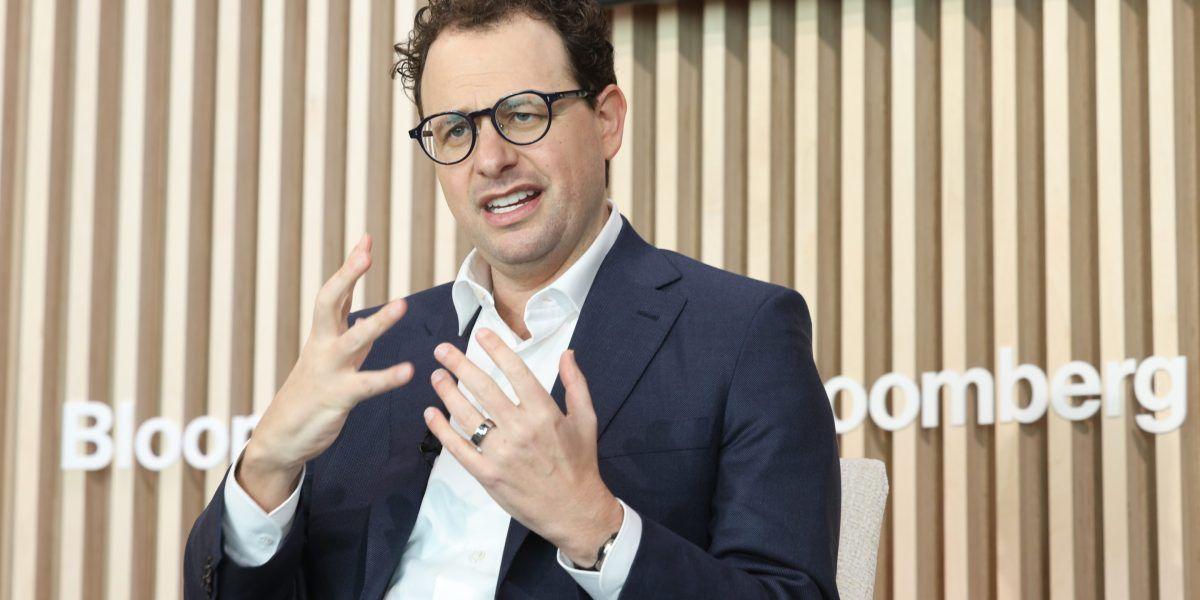
Anthropic is positioning itself not just as a model provider for companies like Harvey and Legora, but as a direct participant in legal workflows
4
. Major law firms including Freshfields, Quinn Emanuel Urquhart & Sullivan, and Holland & Knight announced they are using Claude on live matters4
. Legal professionals are now the most engaged Claude Cowork users of any knowledge-work function, according to Anthropic3
.Thomson Reuters customers will now have access within Claude to Westlaw Primary Law database of court records and Practical Law legal practice guides
2
. Thomson Reuters also announced integration of its Westlaw-enabled AI platform CoCounsel with Claude, allowing customers to access CoCounsel's "fiduciary grade" legal research tools directly. Joel Hron, Thomson Reuters Chief Technology Officer, stated the company is "actively building integrations that connect general-purpose AI to professional environments"5
.The tools are embedded across Microsoft 365 applications including Word, Outlook, Excel, and PowerPoint, functioning as a single context-carrying agent
4
. Because they're built on open protocols, law firms can adapt them to their specific workflows rather than being restricted to Claude's interface3
.Related Stories

Despite Big Law's enthusiasm for AI for legal professionals, AI hallucinations continue to pose risks. Dozens of lawyers have been caught using AI to generate error-ridden legal documents containing citations to cases that never existed
1
. Last year, California issued a first-of-its-kind fine against an attorney who used ChatGPT to draft an appeal riddled with fake quotes. Sullivan & Cromwell, a white-shoe law firm, was recently found to have included a hallucination in a bankruptcy court filing4
.
Source: TechRadar
Anthropic's response focuses on "grounding," with its connector architecture designed so Claude can only draw from live, verified sources like Westlaw's case law database and CourtListener's archive of actual court opinions, rather than generating answers from memory
4
. Claude Opus 4.7 scored 90.9% on Harvey's BigLaw Bench, the legal industry's most closely watched AI benchmark. Jake Lauritzen, CTO of Legora, described Claude Opus 4.7 as showing "stronger consistency across long documents, better handling of nuanced instructions, and improved reliability in high-stakes workflows"4
.Anthropic is framing the expansion beyond a Big Law productivity play. With roughly 80% of civil litigants appearing in court without representation, the company announced partnerships with Free Law Project, Courtroom5, and other legal aid organizations, whose connectors will be available to Claude users at no additional cost
4
. This positions AI in the legal industry as a potential solution for access to justice challenges.As information-heavy industries rush to adopt AI tools, the legal sector faces mounting pressure to integrate these technologies
2
. Anthropic stated that "firms and in-house teams that move are pulling ahead fast," signaling that AI adoption in the legal field may soon become a competitive necessity rather than an option1
. The challenge ahead involves balancing rapid innovation with the accuracy demands of e-discovery and legal workflows where mistakes carry serious consequences.Summarized by
Navi
[1]
23 Apr 2026•Technology

15 Jul 2025•Technology

07 May 2026•Technology

1
Technology

2
Technology

3
Technology