29 Sources
[1]
WhatsApp adds an incognito mode in Meta AI chats | TechCrunch
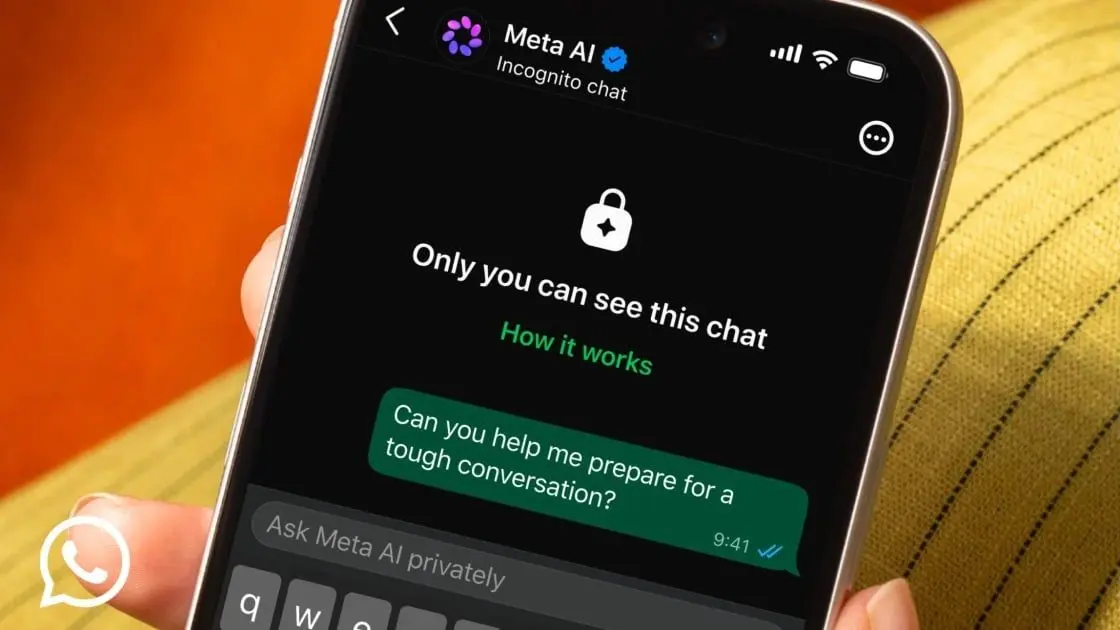
Meta on Wednesday said it is adding the ability to start "incognito" conversations with its Meta AI chatbot within WhatsApp. These conversations, the company said, will be processed in a secure environment and can't be seen by anyone. Users can start an incognito session by tapping on a new icon in one-on-one chats with Meta AI. The company said the feature will also be available on the standalone Meta AI app as well. Incognito chats will roll out to WhatsApp and the Meta AI app over the next few months. Meta said these incognito conversations are not saved, and messages will disappear by default once you close the chat. The session will also end if you close the app or lock your phone, and Meta AI will lose the context of that particular conversation, the company said. "People are starting to use AI for everything, including some of their most private thoughts, whether that's tackling financial or health questions, or for advice on how to respond to a tricky message from a friend or a colleague. We think it's really important to give people the ability to ask these questions as privately as possible," Alice Newton-Rex, VP of Product at WhatsApp, told TechCrunch over a call. The company has been laying down the groundwork for secure AI chats on WhatsApp for a while now. Last year, it detailed its private processing infrastructure that would let it build AI features without breaking end-to-end encryption. Since then, WhatsApp has added features like AI-powered summaries of messages that use this architecture. Newton-Rex said Meta used smaller models to power its previous features, but the new incognito chat uses its latest Muse Spark model, which was released last month. The company is already working on its next feature that taps its private processing infra. Called Side Chat, it will let users invoke Meta AI within chats to ask questions and get answers privately without notifying or showing it to other people in the chat. Currently, you need to tag a message and ask a question to the AI assistant to get an answer that other participants in the chat can see. If you privately need to ask a question, you have to paste the text in a separate chat window. ChatGPT and Claude offer incognito modes, too, and companies like DuckDuckGo and Proton have launched their own privacy-first chatbots. Meta's move towards private AI chats comes at a key time. Last month, Reuters cited lawyers who opined that users' conversations with an AI chatbot could be used against them in litigation.
[2]
WhatsApp Adds Meta AI Chats That Are Built to Be Fully Private
WhatsApp said on Wednesday it is launching an AI chat function known as Incognito Chat that is built to allow users to converse privately with Meta AI -- such that Meta itself cannot access the questions or answers. The feature is based on WhatsApp's Private Processing scheme, which debuted a year ago and already underlies WhatsApp's existing AI features, including message summarization and composition tools. The idea of Incognito Chat is to create a way for WhatsApp to offer AI chat integration that does not conflict with the communication platform's commitment to end-to-end encryption, the privacy scheme in which only direct participants in a conversation can read messages or hear a call. Most generative AI platforms now offer some type of "incognito mode," but these features are usually designed to separate users from the questions they ask and the answers they receive rather than including a mechanism to entirely shield those questions and answers from the provider's view. With Incognito Chat, WhatsApp will only be able to see that an account used the feature, according to Meta. Meta invites third-party audits and vulnerability reports on Private Processing and says Incognito Chat itself is going to be subject to expert oversight so third parties can verify that code Meta ships for the feature is durable. But as with any cloud system, chatting with Meta AI on WhatsApp will ultimately involve trusting Meta in the same way using WhatsApp for communication does. "A big part of our work at WhatsApp relates to when there's a perfect solution that's very hard to use -- how do you give people other options that still bring them the privacy benefits?" WhatsApp head Will Cathcart tells WIRED. "With AI, from a privacy standpoint, you'd want to run everything on your own phone, but the benefit of these models is using larger and larger compute to make them work. So the challenge is how do you build something in a data center that's not going to fit in your pocket but has the same types of security properties. Incognito Chat is kind of like we're running a giant phone for AI and we don't have the passcode." Incognito chats are ephemeral by default and will disappear once your conversation is over. Cathcart says that WhatsApp may work on developing an option within Private Processing to retain some or all of these conversations over time for users who want that history. And for now, Incognito Chat is text-only. Cathcart says support for image processing and voice recognition is in the works. Reducing latency in any way possible, including by optimizing routing, has been key to making Incognito Chat usable given the extra demands of running AI within the secure cloud environment of Private Processing. "Incognito Chat handles all AI inference in a Trusted Execution Environment that ensures your messages are not accessible to us," Meta CEO Mark Zuckerberg wrote in a post on Wednesday. "The conversations on your phone also disappear when you exit the session. This is different from other disappearing AI products where your conversations logs often remain on other companies' servers for many months." Meta is also adding Incognito Chat as an option in the Meta AI app. Another feature announced on Wednesday alongside Incognito Chat is "Side Chat with Meta AI," which integrates the ability to essentially DM with Meta AI about a text chat you're having with another person or group of people. The idea is to give users a way to ask AI for restaurant suggestions or about a movie your friends are discussing without essentially leaking these locations or interests to a company.
[3]
Meta Says Its AI's New Incognito Mode Is So Private Even Meta Can't See Your Chats
Meta is introducing a new private mode for its AI chatbot and says it's so private that not even the company will be able to see what you talk about. You'll be able to create these private chats in WhatsApp or the standalone Meta AI app as the feature rolls out in the coming months, Meta said Wednesday. Other chatbots, including Google's Gemini and OpenAI's ChatGPT, have private modes. But those are temporary chats, which disappear after a certain number of hours, and they're still viewable by the company that runs the chatbot. Meta says that this won't be the case for its incognito mode. "Your messages are processed in a secure environment that even Meta cannot access. Your conversations are not saved, and by default, your messages disappear -- giving you space to ask questions and explore ideas without anyone watching," the company wrote on Wednesday in a blog post. The idea is that with the more private version of Meta AI, you may feel more comfortable asking personal questions. This could be info about your health, finances or career planning. Even if Meta can't see what you're telling the incognito chatbot, you really shouldn't share confidential or sensitive information with AI. These systems aren't perfect, even in incognito mode. Read more: 8 Essential Security Tips for Using AI Chatbots Safely It's unclear whether Meta could produce these incognito chats if asked in the course of a lawsuit. We've seen this happen with wrongful death lawsuits against OpenAI and Google, where the victim's chats with AI are central to the case. Chat logs have also come up in copyright lawsuits. In a case between OpenAI and The New York Times, a judge sided with the Times, ordering the ChatGPT maker to produce anonymized logs of user interactions. (Disclosure: Ziff Davis, CNET's parent company, in 2025 filed a lawsuit against OpenAI, alleging it infringed Ziff Davis copyrights in training and operating its AI systems.)
[4]
Mark Zuckerberg announces 'completely private' encrypted Meta AI chat
Meta CEO Mark Zuckerberg says its new Incognito Chat is "the first major AI product where there is no log of your conversations stored on servers." Messages in Incognito Chat aren't saved or stored in users' chat history, similar to incognito modes on other AI chatbots, but Meta says its version is different because it also uses end-to-end encryption, which Meta recently removed from Instagram DMs: "Other apps have introduced incognito-style modes, but they can still see the questions coming in and the answers going out. Incognito Chat with Meta AI is truly private, meaning no one -- not even Meta -- can read your conversations." Google says it keeps data from temporary chats in Gemini for up to 72 hours. Temporary chats in ChatGPT can be stored for up to 30 days, while incognito chats in Claude are kept for a minimum of 30 days. Anthropic and OpenAI did not immediately respond to a request for comment. Logs from ChatGPT are central to recent lawsuits over mass shootings in Tumbler Ridge, Canada, and at Florida State University last year, and a lawsuit from the New York Times has included a court order to store conversations "indefinitely." Google is being similarly sued by the family of a 36-year-old man who Gemini allegedly instructed to carry out a series of "missions" leading up to his death. Meta's Incognito Chat is built on the same Private Processing tech launched last year for processing data in WhatsApp, and will roll out "over the coming months" in both WhatsApp and the Meta AI app.
[5]
WhatsApp Adds an Incognito Mode to Keep Your Chats With Meta AI Private
WhatsApp already supports end-to-end encryption, meaning not even its developer, Meta, can view your chats. So it may surprise you to hear the app is adding an "Incognito" mode focused on keeping your conversations with AI private. The option could appeal to users worried about companies peeking at their sensitive conversations with AI chatbots. "Incognito Chat with Meta AI is truly private -- no one can read your conversation, not even us," WhatsApp wrote in a blog post. Chatbot providers, including OpenAI, are known for keeping records of user conversations to train their new AI models. But Meta sees an opportunity to address privacy-conscious users, noting that AI-focused chats "can be deeply sensitive, or include situations where people are including private financial, personal, health, or work data with their questions. In June, for example, Meta updated its Meta AI app to show people a warning prompt before they shared any chats to the public Discover feed. "When you start an Incognito Chat with Meta AI, you're creating a private, temporary conversation that only you can see," WhatsApp explains. "Your messages are processed in a secure environment that even Meta cannot access. Your conversations are not saved and by default, your messages disappear -- giving you a space to think and explore ideas without anyone watching." The company points to a technical white paper with more details about how the "private processing" works for the AI chats. Meta's approach essentially extends end-to-end encryption from the user's phone to specialized AMD- and Nvidia-powered servers that host the company's AI models, while routing the output back to a WhatsApp account in an anonymized fashion. "To uphold the principle of confidential processing, we have designed Private Processing in a way that Meta or WhatsApp cannot observe information, such as size of the traffic between the Orchestrator service and any classification models, that could enable inference about the output of any classification models used," the company adds. Meta CEO Mark Zuckerberg also chimed in on the feature, saying: "This is the first major AI product where there is no log of your conversations stored on servers." "The conversations on your phone also disappear when you exit the session," he added. "This is different from other disappearing AI products where your conversations logs often remain on other companies' servers for many months." Still, Incognito Chat might face scrutiny, as it could shield Meta's AI from liability, given that chatbots have made headlines for sharing bad advice or even encouraging malicious behavior. Last month, OpenAI's CEO apologized for failing to warn law enforcement about a woman who talked about gun violence with ChatGPT and later shot and killed eight people in British Columbia, Canada. In the meantime, WhatsApp plans on expanding the Incognito Chat feature. "In the coming months, we'll also introduce Side Chat protected by Private Processing. Side Chat with Meta AI will give you private help with any chat, with context of what's being discussed, without disrupting the main conversation," it says.
[6]
Meta launches WhatsApp 'incognito' mode to address privacy concerns for AI chats
LONDON (AP) -- Meta Platforms said Wednesday it's rolling out an "incognito" mode for WhatsApp users to have private conversations with its AI chatbot, a move intended to ease privacy concerns about sensitive information that users share in chats. The social media company said in a blog post that incognito chat mode provides a way to have private, temporary conversations with Meta AI, its artificial intelligence assistant that's been available on WhatsApp for a few years. Messages will be processed in a "secure environment" that even Meta can't access, won't be saved by default and will disappear when exiting a session, Meta said. Generative AI systems have been dogged by privacy concerns because the large language models that underpin these systems are trained on vast troves of data, sometimes including personal information provided by users themselves in their conversations with AI chatbots. Rival chatbot makers already have some privacy features. Google's Gemini chatbot has the option to disable chat history and opt out of allowing one's data to be used in training its AI models. ChatGPT has similar controls. Meta says it's rolling out incognito chats because users often ask chatbots sensitive questions or include private financial, personal, health or work data in their questions. "We're starting ask a lot of meaningful questions about our lives with AI systems, and it doesn't always feel like you should have to share the information behind those questions with the companies that run those AI systems," Will Cathcart, Meta's head of WhatsApp, told reporters. Incognito chat mode has safety features to prevent the chatbot from answering questions about harmful topics, Cathcart said. It will "steer the user towards helpful information if it can and then refuse (to answer) and eventually even just stop interacting with the user completely," Cathcart said. Users will only be able to type in questions and get text responses; they won't be able to upload or generate images. They'll also have to confirm their age because Meta doesn't allow users under 13 on its platforms.
[7]
WhatsApp users can soon have private conversations with Meta AI - Engadget
Meta is introducing an option for WhatsApp users to have private chats with its AI assistant that not even the company can read. It's pitching Incognito Chat with Meta AI as a way to have clandestine conversations with the chatbot under the protection of end-to-end encryption, which WhatsApp has long offered for chats between humans. Meta revealed it was working on such a feature at its LlamaCon generative AI conference in April 2025. The company built Incognito Chat with Meta AI using its Private Processing tech. It said that messages exchanged with the chatbot in this mode are handled in a secure environment that no one else has access to. The messages are not saved and they disappear by default. So they won't, for instance, be used to train Meta's AI models. Some folks ask AI assistants questions about sensitive topics like health, finances, work and personal issues. Meta noted that while other apps offer supposedly incognito ways to converse with AI chatbots, they can still see both sides of the conversation. The company will gradually make Incognito Chat with Meta AI available to all users via WhatsApp and the Meta AI app over the coming months. The company is also working on a feature called Side Chat with Meta AI. It says this will allow users to privately chat with Meta AI regarding any conversation. You'll be able to ask it questions about the chat or get it to summarize messages. Side Chat with Meta AI will arrive in the coming months too. Meta announced these new features just after it started publicly testing a Grok-style Meta AI chatbot feature on Threads. It quickly faced a backlash from Threads users who don't want to have anything to do with Meta AI and found that there was no way to block the @meta.ai account on the platform.
[8]
WhatsApp launches AI private chat feature
WhatsApp has introduced private chats with its AI chatbot which not even the tech company will be able to read in a new "incognito" mode. It means neither the user nor the AI's responses will be monitored if the feature is activated, and past conversations will disappear from the chat for the user. Will Cathcart, the head of WhatsApp, said he felt people wanted to have private conversations with AI on sensitive subjects including health, relationships and finances and didn't want them to be accessible. But a cyber security expert has told the BBC this could lead to a lack of accountability for WhatsApp if things go wrong, as they would have no access to chat history. WhatsApp is owned by Meta, which also owns Instagram, Facebook and Messenger. When Meta AI was added to WhatsApp last year, it was criticised by some users angry at not being able to turn it off. But in May 2025, Meta boss Mark Zuckerberg said Meta AI had reached a billion users across its apps. "We've heard from a lot of people that they feel some discomfort about sharing [personal] information with the company, yet they want the answers," Cathcart said of the latest announcement. Currently most AI companies do store some data from chatbot use, and outside of businesses who pay premiums for enterprise accounts, that data can also be used to train future models of the product. Zuckerberg described it as the "first major AI product where there is no log of your conversations stored on servers". The technology behind WhatsApp's incognito mode is not the same as the end-to-end encryption the platform uses to protect other messages, but it is "the equivalent," Cathcart added. Prof Alan Woodward, a cyber security expert at Surrey University, said there was a low risk of compromising WhatsApp's existing security by introducing a second system. However there are concerns about how incognito mode could hide AI malfunction or abuse. A number of AI companies, including OpenAI and Google, have been the subject of wrongful death lawsuits. Woodward said there was a risk of a lack of accountability for the AI's responses. "Personally I think what you ask an AI should remain private as some people ask it very personal matters - but you are placing a great deal of trust in the AI not to lead users astray," he told the BBC. The concern is that disappearing messages which cannot be retrieved by the user or by Meta would mean it would be impossible to find evidence whether somebody's chats led to harm, death or suicide. Cathcart said incognito mode would initially only process text rather than images, and Meta AI's guardrails would err on the side of caution in refusing to answer requests which could be interpreted as harmful or illegal. WhatsApp has blocked other AI chatbots from being accessible from its systems, so the only AI that its billions of users can interact with on the platform is Meta's own. "Meta is on track to shell out $145bn [£107bn] on AI infrastructure in 2026, and investors want to see a lot more bang for those mega bucks," said Susannah Streeter from investment platform Wealth Club. "Investors are nervous about the scale of the spending, but Meta is counting on the push leading to significant returns. It's building out AI infrastructure to supercharge its platforms and if it works it could make its advertising and commerce empire even more dominant." Sign up for our Tech Decoded newsletter to follow the world's top tech stories and trends. Outside the UK? Sign up here.
[9]
Meta launches Incognito Chat on WhatsApp, the first AI mode it says even Meta cannot read
The new mode runs Meta AI on WhatsApp inside the company's Private Processing enclave, with conversations deleted by default and no server-side record retained. Meta has launched an Incognito Chat mode for Meta AI on WhatsApp and the Meta AI app, an effort to address the awkward fact that its assistant, like every other major AI chatbot, has until now been able to read the conversations users have with it. The new mode, the company announced on Tuesday, processes user messages inside what Meta describes as a secure environment that even Meta cannot see, with conversations deleted by default once the session ends. The technical foundation is WhatsApp's Private Processing system, the architecture the company published in April 2025 to let AI features run on encrypted data inside Trusted Execution Environments on Meta's servers. Inside that enclave, the model can read and respond to a query, but the contents are not accessible to Meta's engineers, its logging systems, or any of its commercial pipelines. Other apps offer what they call incognito modes for AI conversations, but Meta's framing in the announcement is pointed: "they can still see the questions coming in and the answers going out." The launch responds directly to a category-wide privacy concern. AI chatbots have become a default tool for the sort of question users would once have asked a doctor, a lawyer, or a partner, with all the data exposure that implies. OpenAI, Google, and Anthropic each store conversation histories by default, with varying user controls. Apple Intelligence routes some queries through Apple's Private Cloud Compute, an enclave architecture that is the clearest existing analogue to what Meta is now shipping inside WhatsApp. Two product details follow from the design. First, the conversations are not saved server-side at all; users cannot pull up Incognito Chat history later because there is nothing to pull up. Second, the disappearing-by-default behaviour means even a compromised device leaks less, since the chat residue clears between sessions. Meta has published a technical whitepaper describing the cryptographic architecture for outside review. A second feature is on the way. Sidechat with Meta AI, also protected by Private Processing, will let users get AI help inside an existing WhatsApp conversation, with the assistant aware of the chat's context but its responses kept invisible to the other participants. Meta said Sidechat will arrive on WhatsApp "in the coming months," without a firmer date. The launch's commercial logic is straightforward. WhatsApp has been built for a decade around end-to-end encryption as a selling point, and Meta's pitch for AI on the platform has had to find a way around the central tension that a conversational AI assistant needs to read your messages to be useful. Private Processing is the company's attempt at squaring that circle. The Incognito Chat product is the first time the architecture has been put behind a user-facing feature on this scale. Whether the implementation holds under scrutiny is a separate question. Trusted Execution Environment-based AI systems have been audited and criticised across the industry, with researchers periodically demonstrating side-channel attacks against similar architectures from Apple, Google, and the hyperscalers. Meta has invited external review of its Private Processing design, and the new whitepaper extends that posture, but the model's resistance to subpoena, in particular, has not yet been tested in court. Incognito Chat with Meta AI begins rolling out on WhatsApp and the Meta AI app this week, with broader availability over the coming months. The launch lands at the end of a difficult fortnight for Meta on the privacy front, with US employees protesting the company's new mouse-tracking software on Monday and the company a week out from layoffs of roughly 8,000 staff. Inside Meta, the bet appears to be that consumer-facing privacy moves like this one will outweigh the internal-surveillance optics.
[10]
Meta says its new Incognito AI chats are 'completely private'
Incognito chats with Meta AI are automatically deleted, Meta says, and are strictly private -- the post makes the point more than once that Meta and WhatsApp can't access your chat content. Today's announcement never outright says that the content of your chats won't be used to train AI models, but the promise that human beings won't ever read your Incognito chats is explicit. Meta's announcement references the fact that "incognito-style modes" in other AI apps don't necessarily prevent platforms from accessing your chat content. That does seem to be the case: Last month, a proposed class action against Perplexity alleged that the service's Incognito Mode quietly shares chat content with third parties (including Meta, the suit says) for the purpose of ad targeting. If you want to be fully sure your information stays private, your best bet is not feeding it into an AI platform at all.
[11]
After Killing Encrypted DMs, Mark Zuckerberg Wants You to Trust His New Encrypted AI Chat
Meta just announced a new â€~Incognito Chat’ feature for Meta AI. Just days after Meta pulled support for encrypted direct messages on Instagram, the tech giant is now rolling out a new private AI chat feature. Meta announced on Wednesday that its new Incognito Chat feature will let users interact with its AI chatbot on WhatsApp and the Meta AI app in what the company describes as a secure environment. The social media giant is pitching the feature as a way for users to feel free to discuss sensitive topics like health, finance, or career advice with Meta AI without worrying that their conversations could be viewed by anyone else. "Other apps have introduced incognito-style modes, but they can still see the questions coming in and the answers going out. Incognito Chat with Meta AI is truly private, meaning no one â€" not even Meta â€" can read your conversations," the company said in a blog post. The feature is built on WhatsApp’s Private Processing technology, which Meta introduced last year to enable optional AI privacy features like this one. Essentially, the system lets users request an allegedly confidential and secure environment to process their AI interactions. In the case of Incognito Chat, users can start a private, temporary conversation with Meta AI that encrypts their messages and then processes them in a secure environment that Meta claims it can’t access. The company adds that those conversations are not saved by default and that the messages disappear on their own. The feature is expected to roll out on WhatsApp and the Meta AI app in the coming months. Meta also teased another feature it is calling Sidechat, which uses the same private processing technology to let users privately use Meta AI in a WhatsApp conversation without interrupting the main chat. In practice, this would allow users to ask Meta AI questions about, or summarize, their conversations with real people The timing of these new features is somewhat notable. It comes less than a week after Meta stopped supporting encrypted direct messages on Instagram. The company said on an Instagram support page that end-to-end encrypted messaging on Instagram would no longer be supported after May 8. Users with affected conversations should see instructions for how to save any media or messages they want to keep. Meta also pointed users toward WhatsApp if they want to keep using encrypted messaging. “For Meta's other end-to-end encrypted chat options, check out WhatsApp,†the page reads. A Meta spokesperson told PCMag at the time that the decision was made because “very few people were opting in to end-to-end encrypted messaging in DMs." The spokesperson added that users who want to keep messaging with end-to-end encryption "can easily do that on WhatsApp."
[12]
WhatsApp now lets you have incognito conversations with Meta AI - 9to5Mac
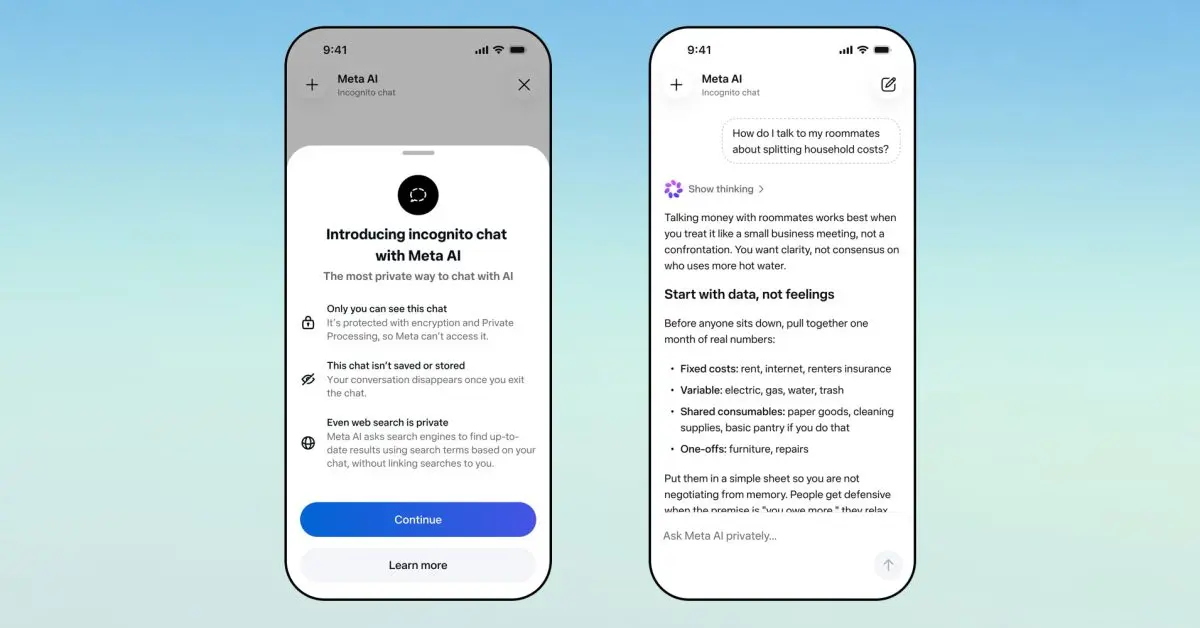
WhatsApp and the Meta AI app now let users turn on incognito mode when having sensitive conversations with Meta AI. Here's what that means and how to use it. Earlier today, Mark Zuckerberg announced on Threads that users can now activate Incognito Chat with Meta AI on both WhatsApp and the Meta AI app. In essence, this feature turns the conversation into an ephemeral chat, meaning it disappears as soon as the user leaves. Most chatbots, including ChatGPT, Gemini, and Claude, already offer a similar feature. WhatsApp and Meta AI's new Incognito Chat are also protected with Private Processing, which, in a nutshell, means that Meta can't access it. Here's Mark Zuckerberg: Incognito Chat handles all AI inference in a Trusted Execution Environment that ensures your messages are not accessible to us. The conversations on your phone also disappear when you exit the session. This is different from other disappearing AI products where your conversations logs often remain on other companies' servers for many months. Meta launched Private Processing last year as a way to bring AI features to WhatsApp without giving Meta or WhatsApp access to users' private messages. It sends requests to a protected cloud environment, where the AI model can process them without the contents being visible to Meta, and deletes the data once the request is complete. You can learn more about Private Processing here. Back to the feature, Meta says that in addition to keeping the content of the chat private and having it disappear once the user leaves the conversation, Incognito Chat also protects web searches made during the conversation:
[13]
Meta AI App Gets 'Incognito Chat' as OpenAI Faces Lawsuits Over Stored Chat Logs
The Meta AI app and Meta AI on WhatsApp have a new "incognito chat" option, which Meta CEO Mark Zuckerberg said is a "completely private way to interact with AI." Zuckerberg also said that Meta AI's incognito mode is the first major AI product where there is no log of conversations stored on servers. Zuckerberg likened the feature to end-to-end encryption, and said no one will be able to read the AI conversations, not even Meta or WhatsApp. AI inference for incognito chat is done in a Trusted Execution Environment that Zuckerberg said is not accessible to Meta. Conversations also disappear from the phone when exiting a chat session, and nothing is saved or logged. Web searches are conducted privately, with no search information linked to the user. "To get the most from personal superintelligence, we'll all need ways to discuss sensitive topics in ways that no one else can access," Zuckerberg said. WhatsApp head Will Cathcart told reporters that the AI has safety guardrails, and it will refuse to answer questions that could be interpreted as harmful or illegal, steering conversations in a different direction. The mode also only supports text, and users are unable to upload images. Incognito chat for Meta AI comes as OpenAI is facing a lawsuit for allegedly causing a teen's drug overdose. The teen asked ChatGPT for information on whether it was safe to take two drugs together, and was provided with an incorrect answer that led to his death. OpenAI has been sued several times by the families of people who used ChatGPT before dying by suicide. Lawsuits against OpenAI have involved chat logs recovered by the plaintiffs, and without those logs, there would be far less evidence for a legal complaint over AI actions and advice. Google and OpenAI also offer temporary chat options, but messages are still stored on remote servers. Google keeps data for up to three days, and OpenAI keeps logs for 30 days. Meta's private chat option is rolling out in the coming months in the Meta AI app and WhatsApp.
[14]
'Completely private': Meta AI gets Incognito Chat
A feature called Incognito Chat is coming to Meta AI and WhatsApp soon, according to Mark Zuckerberg. The Meta CEO announced the feature on his Facebook page and described it as allowing users a "completely private way" to interact with the company's AI assistant. "This is the first major AI product where there is no log of your conversations stored on servers," Zuckerberg wrote. He said the feature is similar to end-to-end encryption, which "means no one can read your conversations, even Meta or WhatsApp." While the conversations can't be read by the platforms themselves, they also vanish when a user ends their session. Mashable 101 Fan Fave: Vote for your favorite creator today! "To get the most from personal superintelligence, we'll all need ways to discuss sensitive topics in ways that no one else can access," Zuckerberg wrote. Disappearing chats raise safety questions that Zuckerberg and Meta's blog post on Incognito Chat didn't address. While absolute privacy may incline users to ask sensitive questions about their health, finances, or career, it will also shield Meta from knowing when users may need urgent help or intervention. For example, conversations with Meta AI in WhatsApp indicating that a user may be considering self-harm or suicide can trigger a human review, according to Mashable's testing. The same is true for discussions of violence. These messages couldn't be identified with Incognito Chat, nor would there be any retrospective record of them. Meta said that it implements safeguards designed to refuse potentially harmful prompts, and that Meta AI will not comply with dangerous requests. Additionally, users who repeatedly submit harmful prompts will be temporarily blocked, according to the company. Both scenarios -- suicidal behavior and acts of public violence -- are the subject of lawsuits and criminal inquiries against the biggest AI companies. OpenAI has been sued multiple times by the bereaved families of users. They allege that OpenAI's ChatGPT coached their loved one to take their own life. OpenAI has denied the allegations in one case involving a 16-year-old who died. Separately, the Florida state attorney general recently opened a criminal investigation into whether ChatGPT offered "significant" advice to a gunman who allegedly killed two people and five others in an April 2025 shooting. Google, maker of the chatbot Gemini, was sued for wrongful death earlier this year by the family of an adult man after Gemini allegedly convinced him to kill himself. "Our models generally perform well in these types of challenging conversations and we devote significant resources to this, but unfortunately AI models are not perfect," Google said in a statement following the allegations. The lawsuits against Google and OpenAI draw heavily on user chat transcripts. Meanwhile, in an effort to strength safeguards for teen Meta AI users, the company recently debuted a feature that allows parents to view their topics of discussion with AI. Incognito Chat is meant for users 18 and older, according to Meta. Users will be prompted to confirm their age prior to using the feature. When legally required, Meta will implement additional age assurance methods to verify that a user is an adult. Sarah Gardner, CEO of Heat Initiative, an advocacy group focused on online safety and corporate accountability, voiced concern over Incognito Chat, particularly given Meta's previous rollout of AI chatbots that permitted "sensual" conversations with children. "The new features announced today should absolutely raise alarm bells for parents," Gardner said in a statement to Mashable. "We don't have confidence in Meta's record on age verification, so they need to answer a lot more questions about how they are going to guarantee kids' safety."
[15]
Meta says WhatsApp is now the safest app to chat... with an AI
Meta, the company currently juggling multiple lawsuits and a string of AI controversies, wants you to chat more privately with its AI on WhatsApp. WhatsApp just introduced "Incognito Chat" with Meta AI, a new mode that will let you have a completely private conversation with the assistant. Your messages won't be saved, and they'll disappear when you close the chat. Meta says nobody, not even Meta itself, can read what you type. How WhatsApp's private Meta AI chat will work People are increasingly turning to AI for questions that are deeply personal, whether that involves financial decisions, health concerns, or sensitive work situations. When the feature rolls out, you'll get a new icon in your Meta AI chat to start a private, temporary session. Messages will vanish once you close the app or lock your phone. Meta AI will also lose all context from that chat once the session ends, meaning every incognito conversation will start completely fresh. The feature will gradually roll out across WhatsApp and the standalone Meta AI app over the coming months. Recommended Videos Another feature in the pipeline is Side Chat, which will let you privately ask Meta AI questions within a group conversation without other participants seeing it. Is Meta AI actually safe to use for private chats? This is the same Meta AI that was linked to the death of a cognitively impaired man who believed the chatbot was a real woman and traveled to meet her. Meta was also sued by five major publishers, alleging that Meta illegally pirated millions of books and journal articles to train its Llama model. Science publisher Elsevier separately joined a class-action lawsuit accusing Meta of scraping copyrighted research papers without permission. Whether that changes how you feel about sharing your most personal questions with Meta AI is entirely up to you. Meanwhile, Meta is also rolling out WhatsApp Plus, a paid subscription charging you for features that competing apps like Telegram already offer for free.
[16]
Meta adds encrypted Incognito Chat for private talks with Meta AI
Meta is set to introduce Incognito Chat with Meta AI, allowing WhatsApp users to have private conversations with the AI assistant. This feature will utilize end-to-end encryption to ensure messages are secure and inaccessible even to Meta itself. The company initially revealed its development at the LlamaCon generative AI conference in April 2025. Incognito Chat is built on Meta's Private Processing technology, which guarantees a secure environment for messages exchanged with the chatbot. According to Meta, messages sent in this mode will not be saved and will disappear by default, meaning they will not be used to train Meta's AI models. Meta emphasized that while some other apps claim to provide incognito modes for AI conversations, they retain access to both sides of the chat. The rollout of Incognito Chat is expected to occur gradually over the coming months for all users via WhatsApp and the Meta AI app. In addition to Incognito Chat, the company is developing a feature called Side Chat with Meta AI. This will permit users to engage with the AI about any specific conversation, ask questions, or request summaries of messages. The Side Chat feature is anticipated to be available in the coming months as well. These announcements follow Meta's recent public testing of a Grok-style Meta AI chatbot on Threads, which faced significant backlash from users who expressed discontent over the AI's presence without the option to block the associated @meta.ai account.
[17]
Meta launches WhatsApp 'incognito' mode to address privacy concerns for AI chats
LONDON (AP) -- Meta Platforms said Wednesday it's rolling out an "incognito" mode for WhatsApp users to have private conversations with its AI chatbot, a move intended to ease privacy concerns about sensitive information that users share in chats. The social media company said in a blog post that incognito chat mode provides a way to have private, temporary conversations with Meta AI, its artificial intelligence assistant that's been available on WhatsApp for a few years. Messages will be processed in a "secure environment" that even Meta can't access, won't be saved by default and will disappear when exiting a session, Meta said. Generative AI systems have been dogged by privacy concerns because the large language models that underpin these systems are trained on vast troves of data, sometimes including personal information provided by users themselves in their conversations with AI chatbots. Rival chatbot makers already have some privacy features. Google's Gemini chatbot has the option to disable chat history and opt out of allowing one's data to be used in training its AI models. ChatGPT has similar controls. Meta says it's rolling out incognito chats because users often ask chatbots sensitive questions or include private financial, personal, health or work data in their questions. "We're starting ask a lot of meaningful questions about our lives with AI systems, and it doesn't always feel like you should have to share the information behind those questions with the companies that run those AI systems," Will Cathcart, Meta's head of WhatsApp, told reporters. Incognito chat mode has safety features to prevent the chatbot from answering questions about harmful topics, Cathcart said. It will "steer the user towards helpful information if it can and then refuse (to answer) and eventually even just stop interacting with the user completely," Cathcart said. Users will only be able to type in questions and get text responses; they won't be able to upload or generate images. They'll also have to confirm their age because Meta doesn't allow users under 13 on its platforms.
[18]
Meta Launches WhatsApp 'Incognito' Mode to Address Privacy Concerns for AI Chats
LONDON (AP) -- Meta Platforms said Wednesday it's rolling out an "incognito" mode for WhatsApp users to have private conversations with its AI chatbot, a move intended to ease privacy concerns about sensitive information that users share in chats. The social media company said in a blog post that incognito chat mode provides a way to have private, temporary conversations with Meta AI, its artificial intelligence assistant that's been available on WhatsApp for a few years. Messages will be processed in a "secure environment" that even Meta can't access, won't be saved by default and will disappear when exiting a session, Meta said. Generative AI systems have been dogged by privacy concerns because the large language models that underpin these systems are trained on vast troves of data, sometimes including personal information provided by users themselves in their conversations with AI chatbots. Rival chatbot makers already have some privacy features. Google's Gemini chatbot has the option to disable chat history and opt out of allowing one's data to be used in training its AI models. ChatGPT has similar controls. Meta says it's rolling out incognito chats because users often ask chatbots sensitive questions or include private financial, personal, health or work data in their questions. "We're starting ask a lot of meaningful questions about our lives with AI systems, and it doesn't always feel like you should have to share the information behind those questions with the companies that run those AI systems," Will Cathcart, Meta's head of WhatsApp, told reporters. Incognito chat mode has safety features to prevent the chatbot from answering questions about harmful topics, Cathcart said. It will "steer the user towards helpful information if it can and then refuse (to answer) and eventually even just stop interacting with the user completely," Cathcart said. Users will only be able to type in questions and get text responses; they won't be able to upload or generate images. They'll also have to confirm their age because Meta doesn't allow users under 13 on its platforms.
[19]
Meta Just Made Chatting With AI Private: What the New Incognito Mode Means for Users
Meta is rolling out a new feature that allows its users to talk to AI through an incognito-style chat. The end-to-end encryption will make texting invisible to everyone except the user. The new feature is built on top of WhatsApp's Private Processing Technology, which allows for confidential processing. The new incognito chat lets users talk to Meta AI, and -- per the company -- Meta will not have access to those conversations. "Chatting with AI has quickly become a critical part of how people get information and ask important questions. These questions can be deeply sensitive or personal, like health issues, loan details, or career advice," said Meta in a blog post. "We believe this private way of chatting has potential to be part of several ways people chat with AI on WhatsApp." Sneaky Texts Under the new chat model, conversations will not be saved and will disappear by default, allowing users "a space to think and explore ideas without anyone watching." The data privacy feature follows new safety protocols that Meta is looking to uphold, following multiple lawsuits regarding the same nature.
[20]
WhatsApp Introduces Incognito Chat With Meta AI for Private Conversations
* Meta says chats are not saved after they end * Incognito Chat keeps AI conversations temporary * Side Chat with Meta AI is also in development WhatsApp has announced Incognito Chat with Meta AI, a new feature that lets users have private, temporary conversations with the company's AI assistant. The feature is aimed at people who want to ask sensitive questions involving personal matters, finances, health, or work without keeping a lasting record of the interaction. Incognito Chat is built on Meta's Private Processing technology and will begin rolling out to WhatsApp and the Meta AI app over the next few months. How Incognito Chats for Meta AI Work on WhatsApp Using an Incognito Chat opens a separate session with Meta AI on WhatsApp that only the user can access, according to Meta. These chats are not saved after they end, and messages disappear by default. Meta also says that neither it nor WhatsApp can view the contents of the conversation while it is being processed. The company says that the Incognito Chat with Meta AI feature is optional and will be available on WhatsApp and the Meta AI app as the rollout expands in the coming months. Meta also said that the Incognito Chat is powered by its Private Processing system, which is designed to handle AI requests without exposing them to the company. In simple terms, your messages are processed in a protected environment that is isolated from Meta's own servers, so the company says it cannot read what you ask or what the AI replies. The tech giant also says the system hides identifying details such as your IP address and does not keep a record of the conversation after the session ends. Your messages remain encrypted while they are being processed, and the temporary chat is deleted automatically once you close it. WhatsApp says the feature is meant to bring the same privacy-first approach that underpins end-to-end encryption to AI features that need cloud-based processing. Unlike regular AI chats that may retain conversation history for future responses, Incognito Chat starts with a clean slate each time and does not carry context over to later sessions, according to the company. The company also revealed that it is working on Side Chat with Meta AI, another feature that will offer private AI assistance inside existing conversations without exposing the contents of those chats.
[21]
WhatsApp's Incognito AI Push Signals Meta's Bigger Privacy Strategy
Meta is attempting to solve one of the biggest barriers slowing mainstream AI adoption: trust. With the launch of Incognito Chat for Meta AI on WhatsApp, the company is positioning privacy as a core feature rather than an afterthought. The move reflects a larger shift in how AI companies are competing, not just on capability, but on how secure and private their experiences feel to everyday users. Meta has introduced Incognito Chat for Meta AI on WhatsApp, a feature designed to give users more control over how they interact with AI inside private messaging environments. Instead of positioning AI purely as a productivity or entertainment layer, Meta is now framing it as something that must also feel safe, temporary, and discreet. Messaging platforms are among the most intimate digital spaces people use daily. Conversations on WhatsApp often include financial details, family discussions, health concerns, work updates, and highly personal exchanges. Bringing AI into that environment naturally raises a difficult question for users: how much of these interactions are truly private? Meta's answer appears to be a privacy-focused AI mode that allows users to interact with Meta AI in a more controlled environment. The company says Incognito Chat is designed so chats are not saved to chat history, notifications remain more discreet, and interactions feel separated from a user's broader messaging activity. Many users still avoid using AI for sensitive tasks because they remain uncertain about how their prompts, conversations, or personal information may be stored and used. While consumers may experiment casually with AI image generation or search assistance, trust becomes far more important when AI enters personal communication platforms. This is where Meta's strategy becomes significant. WhatsApp already has a strong reputation globally for encrypted messaging. By introducing an incognito-style AI experience within the app, Meta is attempting to extend that trust into the AI layer itself. It is not just selling an assistant anymore. It is selling reassurance. The timing is also important. AI companies worldwide are facing growing scrutiny around data usage, transparency, and digital safety. Governments are debating regulations, enterprises are tightening compliance standards, and users are becoming more aware of what happens to their data online. In this environment, privacy features can quickly become competitive differentiators. The companies that succeed in the next phase of AI may not necessarily be the ones with the most advanced models alone. They could also be the platforms that make users feel most comfortable engaging with AI regularly and personally. Meta's move may also signal a larger behavioural insight. People often want the convenience of AI without the permanence attached to it. Temporary interactions feel psychologically safer. Users are more likely to ask questions, experiment, or seek advice when they believe the interaction is not becoming part of a long-term digital record. That behavioural shift could influence how future AI assistants are designed across platforms. For Meta, integrating these experiences directly into WhatsApp could strengthen user engagement while normalising AI as part of everyday communication habits. Instead of requiring users to open separate AI applications, the assistant becomes embedded into the world's most familiar conversations. The challenge, however, will be perception. As AI becomes more embedded inside messaging ecosystems, users will continue demanding greater clarity around what remains private, what gets stored, and how these systems operate behind the scenes. Features like Incognito Chat may help reduce friction, but long-term trust will depend on how consistently companies communicate and uphold those privacy expectations. What Meta has introduced is more than just another AI feature rollout. It is an early signal that the future AI race may increasingly be defined by who users trust enough to talk to freely. Nominate Now for ET AI Awards 2026 and put your AI breakthrough in the spotlight! Disclaimer Statement: This content is authored by a 3rd party. The views expressed here are that of the respective authors/ entities and do not represent the views of Economic Times (ET). ET does not guarantee, vouch for or endorse any of its contents nor is responsible for them in any manner whatsoever. Please take all steps necessary to ascertain that any information and content provided is correct, updated, and verified. ET hereby disclaims any and all warranties, express or implied, relating to the report and any content therein.
[22]
WhatsApp adds an intriguing new mode
Meta announced a new mode in WhatsApp that will enable encrypted conversations with Meta AI, without the company being able to access the content or use it to train its models. The tech giant Meta is taking a step forward in user privacy regarding interactions with artificial intelligence tools, introducing an option for conducting private conversations with the company's AI under a heavy security veil. The new feature, named Incognito Chat, will allow WhatsApp users to manage a dialogue with the chatbot without even Meta itself being able to read the content of the messages. The move was first revealed at the LlamaCon conference held in April 2025, and it is now taking shape as a tangible product designed to provide users with a protected space for consultations on sensitive topics such as health, finances, and work, under the familiar protection of end-to-end encryption that accompanies the application in conversations between humans. The technology behind the move is based on a private processing system developed by the company, which ensures that messages exchanged with the AI in this environment are not saved and are deleted by default. The immediate significance is that the personal and private information of users will not be used to train Meta's future language models, a significant vulnerability that has troubled many users since AI tools burst into our lives. Meta emphasizes that while other applications offer similar "incognito" modes, they are usually still exposed to the conversation content from both sides, while the new solution severs access completely. Alongside the confidential conversation mode, Meta is working on an additional feature called Side Chat. This feature is designed to allow users to conduct a private conversation with the AI regarding any existing chat in the application, with the aim of asking the bot to summarize long messages or answer specific questions that arose during the discourse with friends or colleagues. The move comes against the backdrop of criticism recently absorbed by the company from Threads users, who complained about the inability to block the company's artificial intelligence account. Now, it seems that Meta is attempting to restore public trust through an emphasis on control and privacy, as the new features are expected to reach all users in the coming months.
[23]
For Meta AI, India Tops the Global Cha(r)ts
India has emerged as the largest user base of the Meta AI chatbot on WhatsApp, which has witnessed record conversations globally after the launch of the tech company's new frontier AI model, Muse Spark, Will Cathcart, global chief of WhatsApp at Meta Inc, told ET. India has emerged as the largest user base of the Meta AI chatbot on WhatsApp, which has witnessed record conversations globally after the launch of the tech company's new frontier AI model, Muse Spark, Will Cathcart, global chief of WhatsApp at Meta Inc, told ET. "India has the most monthly active users on Meta AI; it's the global leader," he said in an exclusive virtual interview. "The number of people in India, their need to access information, the familiarity with WhatsApp, and now (with) the privacy feature, I think we have this really huge opportunity to serve a lot of people in India and see tremendous usage," Cathcart said. Frequency of chats with Meta AI has grown multifold "since Muse Spark launched," he noted. Muse Spark is the company's first closed-source model developed by the Meta Superintelligence Labs under the leadership of new chief AI officer Alexander Wang. In May 2025, Meta AI had crossed one billion monthly active users globally. The company has not disclosed updated user numbers since then. To protect the privacy of users, WhatsApp is introducing 'incognito mode', or private/disappearing chats for those who are not comfortable with sharing their personal information with AI. "When you look at the types of things people ask AI, they're increasingly revealing sensitive information, financial questions, health-related queries," Cathcart said, adding that users have been seeking ways to interact with AI without exposing personal data. "The AI itself has to be secure. You just should have end-to-end encryption for an AI too," he said. "We've built something where we can't see what you say and we can't see what the answers are... You would think of it as a phone where we don't know the passcode." Cathcart described it as a first-of-its-kind approach among major AI providers. However, the privacy feature comes with a trade-off. It limits Meta's ability to train and improve its AI models due to the absence of a direct feedback loop. "For these conversations, we can't see what you're saying... So, we can't take those conversations and use them to train our models," Cathcart acknowledged. However, he said, "Muse Spark will continue to get better because there are other ways people interact with it," adding that the company will rely on other data sources to improve performance. WhatsApp's incognito feature is built on Meta's "private processing" technology which relies on a special "confidential computing" hardware built with AMD CPUs and Nvidia's H100 GPUs. The feature is currently being rolled out for free with no immediate plans to monetise Meta AI, but business models are still emerging. "Meta, across the board, is figuring out business models and how things work for heavy AI usage," said Cathcart, who is a part of the Mark Zuckerberg-led tech giant's top leadership team. In January 2026, Meta effectively barred any third-party AI chatbots such as ChatGPT, Perplexity, and Microsoft Copilot from operating on its platform when it updated its WhatsApp Business API terms. However, the company has been juggling lawsuits in global courts for breach of antitrust rules. Clarifying WhatsApp's stance on competition, Cathcart said, "There is tremendous competition and openness in the AI space. There are a lot of apps. People are not having trouble downloading their app and using it." WhatsApp business platform was built for businesses to interact directly with their customers and not for AI services, he added. You just should have end-to-end encryption for an AI too... We've built something where we can't see what you say and we can't see what the answers are...
[24]
Meta Launches Private Incognito Chat Mode Powered by Meta AI
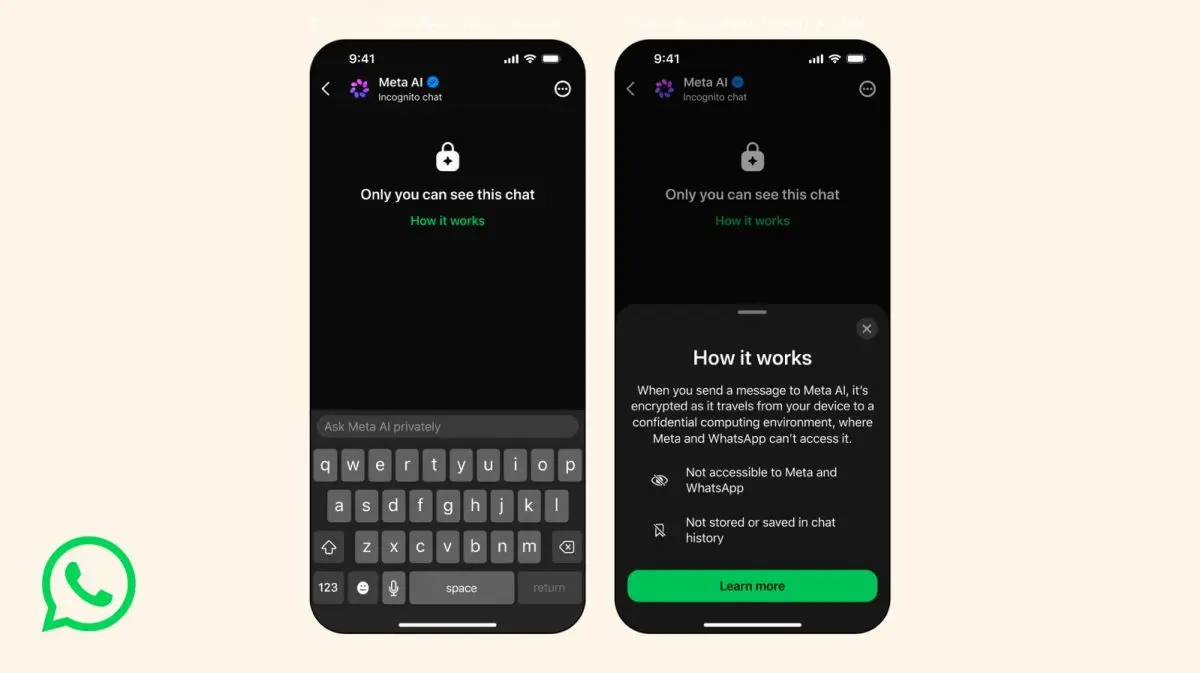
Built on top of our Private Processing technology, Incognito Chat lets you talk to Meta AI in a way that is invisible to anyone else. Chatting with AI has quickly become a critical part of how people get information and ask important questions. And many of these questions can be deeply sensitive, or include situations where people are including private financial, personal, health or work data with their questions. Ten years ago, we brought the world end-to-end encryption and now we are extending this privacy to chats with Meta AI. Today we're launching Incognito Chat with Meta AI, a new way to have completely private conversations with AI. Built on top of our Private Processing technology, Incognito Chat lets you talk to Meta AI in a way that is invisible to anyone else. Other apps have introduced incognito-style modes, but they can still see the questions coming in and the answers going out. Incognito Chat with Meta AI is truly private -- no one can read your conversation, not even us. Since we started exploring bringing AI to WhatsApp, we've been focused on how to deliver this power privately, at a global scale. When you start an Incognito Chat with Meta AI, you're creating a private, temporary conversation that only you can see. Your messages are processed in a secure environment that even Meta cannot access. Your conversations are not saved and by default, your messages disappear -- giving you a space to think and explore ideas without anyone watching. We believe this private way of chatting has potential to be part of several ways people chat with AI on WhatsApp. In the coming months, we'll also introduce Side Chat protected by Private Processing. Side Chat with Meta AI will give you private help with any chat, with context of what's being discussed, without disrupting the main conversation. We remain committed to delivering privacy for the world. Incognito Chat with Meta AI is rolling out on WhatsApp and the Meta AI app over the coming months. You can learn more about how Incognito Chat with Meta AI works here.
[25]
Meta introduces Incognito Chat with Meta AI on WhatsApp
Meta has announced the launch of "Incognito Chat with Meta AI," a feature designed to facilitate completely private conversations with its AI assistant. The new feature is built upon Meta's "Private Processing technology." According to the announcement, Incognito Chat handles all AI inference within a Trusted Execution Environment (TEE). This infrastructure is intended to ensure that conversations remain inaccessible to external parties, including Meta itself. Key aspects of the Incognito Chat feature include: Meta explicitly contrasts this release with other incognito-style AI modes currently available on the market. The company asserts that while other applications may hide conversations from the user interface, they often retain incoming queries and outgoing answers on their servers for months. Incognito Chat with Meta AI is scheduled to roll out on WhatsApp and the standalone Meta AI app over the coming months. In addition to the standalone Incognito mode, Meta also outlined plans to expand its Private Processing technology to other chat functionalities. In the near future, the company will introduce Side Chat with Meta AI. This feature is designed to provide users with private, contextual AI assistance within an ongoing chat, without disrupting or exposing the main conversation. The development lab behind the initiative, referred to as MSL, framed the release as a necessary step for users to safely discuss sensitive topics while utilizing advanced AI tools.
[26]
WhatsApp AI Gets a Stealth Mode as Meta Doubles Down on Privacy
Meta has launched a new feature, WhatsApp Incognito Chat, for users who want private AI conversations. The new feature focuses on strong WhatsApp privacy during chats with Meta AI. It gives a safer and more controlled way to talk with artificial intelligence inside WhatsApp. WhatsApp Incognito Chat works in a special private mode. Meta says this mode uses Private Processing technology. This system keeps conversations away from normal cloud servers. It also uses Trusted Execution Environments for added security. These environments keep data locked and isolated from other systems.
[27]
Meta launches WhatsApp 'incognito' mode to address privacy concerns for AI chats
LONDON -- Meta Platforms said Wednesday it's rolling out an "incognito" mode for WhatsApp users to have private conversations with its AI chatbot, a move intended to ease privacy concerns about sensitive information that users share in chats. The social media company said in a blog post that incognito chat mode provides a way to have private, temporary conversations with Meta AI, its artificial intelligence assistant that's been available on WhatsApp for a few years. Messages will be processed in a "secure environment" that even Meta can't access, won't be saved by default and will disappear when exiting a session, Meta said. Generative AI systems have been dogged by privacy concerns because the large language models that underpin these systems are trained on vast troves of data, sometimes including personal information provided by users themselves in their conversations with AI chatbots. Rival chatbot makers already have some privacy features. Google's Gemini chatbot has the option to disable chat history and opt out of allowing one's data to be used in training its AI models. ChatGPT has similar controls. Meta says it's rolling out incognito chats because users often ask chatbots sensitive questions or include private financial, personal, health or work data in their questions. "We're starting ask a lot of meaningful questions about our lives with AI systems, and it doesn't always feel like you should have to share the information behind those questions with the companies that run those AI systems," Will Cathcart, Meta's head of WhatsApp, told reporters. Incognito chat mode has safety features to prevent the chatbot from answering questions about harmful topics, Cathcart said. It will "steer the user towards helpful information if it can and then refuse (to answer) and eventually even just stop interacting with the user completely," Cathcart said. Users will only be able to type in questions and get text responses; they won't be able to upload or generate images. They'll also have to confirm their age because Meta doesn't allow users under 13 on its platforms.
[28]
Meta Brings Encrypted AI Processing to WhatsApp with Incognito Chat
The rollout has started globally on WhatsApp and the Meta AI app. The tech giant has already assured that the feature aims to address rising concerns around AI privacy and data security. In its statement, Meta explained, "Incognito Chat is a new mode inside Meta AI that focuses on keeping conversations private. The feature uses its Private Processing which was introduced last year for AI features on WhatsApp. Instead of processing requests on regular cloud servers, conversations are handled inside isolated and encrypted environments called Trusted Execution Environments." The upgraded feature is built using a system called 'Private Processing.' It operates through Trusted Execution Environments, which function as secure computing environments. Meta states that its protected environments to process conversations without any access to conversation contents, even by Meta itself. The tech giant also said AI prompts and replies remain encrypted during processing. The system automatically deletes conversations when sessions end, preventing long-term data storage problems. Meta added that users can close chats without leaving conversation histories behind. Reports indicate that sessions end when users lock their devices or exit the application. Meta has developed Incognito Chat as a secure method for users to discuss personal matters in their dialogues with . The company expects users to rely on the feature for conversations involving finances, workplace issues, health queries, and private planning.
[29]
Meta launches WhatsApp Incognito Chat for private AI conversations, check all details
The feature is rolling out slowly for Android and iPhone users. Meta CEO Mark Zuckerberg has recently announced a new privacy-focused feature for WhatsApp known as 'Incognito Chat' on WhatsApp channels. The new feature allows the users to chat with the Meta AI in incognito mode, allowing them to chat with the AI tool in a secured and isolated environment instead of regular cloud servers. Meta also said that neither the company nor outside parties can read these chats. Furthermore, the messages disappear after the session ends. This makes Incognito Chat different from many AI tools that may keep user prompts stored for long periods. WhatsApp has already used similar technology for writing help and chat summaries. Here's everything you need to know about Incognito Chat on WhatsApp. Incognito Chat is a new mode inside Meta AI that focuses on keeping conversations private. Meta says the feature uses its Private Processing technology, which was introduced last year for AI features on WhatsApp. Instead of processing requests on regular cloud servers, conversations are handled inside isolated and encrypted environments called Trusted Execution Environments. The company says this setup prevents Meta, WhatsApp, or third parties from reading user chats. Once a conversation ends, the messages disappear and are not stored. Meta claims this makes Incognito Chat different from other AI chat platforms, where prompts and responses may still remain saved on servers for months. WhatsApp already uses private processing for features such as writing help and AI-powered chat summaries. Meta says the same technology is now being expanded for Incognito Chat. Also read: Samsung Galaxy Z Fold 6 price drops by over Rs 15000 on this platform: Should you buy Meta says Incognito Chat is rolling out gradually to WhatsApp users on Android and iOS. To access the feature you're required to update your WhatsApp app to the latest version through the Google Play Store or Apple App Store. The feature is currently available only to selected accounts, so not everyone may see it immediately. Moreover, the availability of the feature can also depend on region and account type. The users who have received the update will reportedly see a dedicated option to start a private AI conversation with Meta AI. Also read: Hantavirus is spreading fast: Trusted apps, websites and digital safety tips you should know Meta says independent security firms such as NCC Group and Trail of Bits have audited private processing technology, and the company also claims these audits confirm that the system follows strong privacy and security standards.
Share
Copy Link
Meta has unveiled Incognito Chat for its Meta AI chatbot on WhatsApp and the standalone Meta AI app. The feature uses end-to-end encrypted conversations processed in secure environments, ensuring that not even Meta can view user interactions. Unlike standard incognito modes from ChatGPT or Google Gemini that store chat logs for 30-72 hours, Meta's version leaves no server-stored conversation logs.
Meta announced Wednesday it is rolling out Incognito Chat, a new feature enabling private conversations with Meta AI on WhatsApp and the standalone Meta AI app over the coming months
1
2
. Mark Zuckerberg described it as "the first major AI product where there is no log of your conversations stored on servers," positioning the incognito mode for Meta AI chats as a significant departure from existing privacy features offered by competitors4
.
Source: 9to5Mac
The feature addresses growing concerns about the privacy of AI chatbot conversations, particularly as users increasingly turn to AI for sensitive queries about health, finances, and personal matters. "People are starting to use AI for everything, including some of their most private thoughts, whether that's tackling financial or health questions, or for advice on how to respond to a tricky message from a friend or a colleague," Alice Newton-Rex, VP of Product at WhatsApp, told TechCrunch
1
.Incognito Chat leverages Meta's Private Processing infrastructure, which the company detailed last year to build AI features without compromising end-to-end encryption
1
. The system extends encryption from users' phones to specialized AMD- and Nvidia-powered servers hosting Meta's AI models, routing outputs back to WhatsApp accounts in an anonymized fashion5
.Messages are processed in a Trusted Execution Environment that ensures conversations remain inaccessible to Meta itself
2
. These ephemeral chats disappear by default once users close the conversation, and sessions end when the app closes or the phone locks, causing Meta AI to lose all context from that particular exchange1
.
Source: TechCrunch
WhatsApp head Will Cathcart explained the technical challenge: "With AI, from a privacy standpoint, you'd want to run everything on your own phone, but the benefit of these models is using larger and larger compute to make them work. So the challenge is how do you build something in a data center that's not going to fit in your pocket but has the same types of security properties"
2
.Meta's approach differs substantially from existing incognito features. Google Gemini keeps data from temporary chats for up to 72 hours, while ChatGPT stores incognito chats for up to 30 days
4
. Claude maintains incognito conversations for a minimum of 30 days4
. These competitors can still view questions and answers even in private modes, whereas Meta claims its system prevents the company from accessing any conversation content2
.The timing proves significant as chat logs have become central to recent litigation. Reuters cited lawyers last month noting that AI chatbot conversations could be used against users in legal proceedings
1
. ChatGPT logs feature prominently in lawsuits involving mass shootings in Canada and Florida, while a New York Times lawsuit against OpenAI includes a court order to store conversations indefinitely4
. Google faces similar legal action after Gemini allegedly instructed a 36-year-old man to carry out missions leading to his death4
.Related Stories
Meta is developing Side Chat with Meta AI, another feature utilizing Private Processing infrastructure
1
5
. This will enable users to invoke Meta AI within group conversations to ask questions privately without notifying other participants or displaying the interaction to them1
. Currently, tagging a message to query the AI chatbot makes responses visible to all chat participants.Incognito Chat currently supports text-only interactions, but Cathcart confirmed support for image processing and voice recognition is under development
2
. The company may also introduce options to retain conversation history for users who want access to past exchanges2
.Meta invites third-party audits and vulnerability reports on Private Processing, with Incognito Chat itself subject to expert oversight to verify that shipped code remains secure
2
. However, as with any cloud system, using Meta AI on WhatsApp ultimately requires trusting Meta in the same manner that standard WhatsApp communication does2
.
Source: PC Magazine
Security experts caution that despite enhanced AI privacy measures, users should still avoid sharing truly sensitive information with AI systems
3
. Questions also remain about whether Meta could produce incognito chat records if compelled by legal proceedings3
. The feature could also face scrutiny for potentially shielding Meta AI from liability, given recent incidents where chatbots provided harmful advice5
.Summarized by
Navi
30 Apr 2025•Technology

21 Oct 2024•Technology

24 Jul 2025•Technology

1
Technology

2
Policy and Regulation

3
Policy and Regulation