17 Sources
[1]
Anthropic Gets in Bed With SpaceX as the AI Race Turns Weird
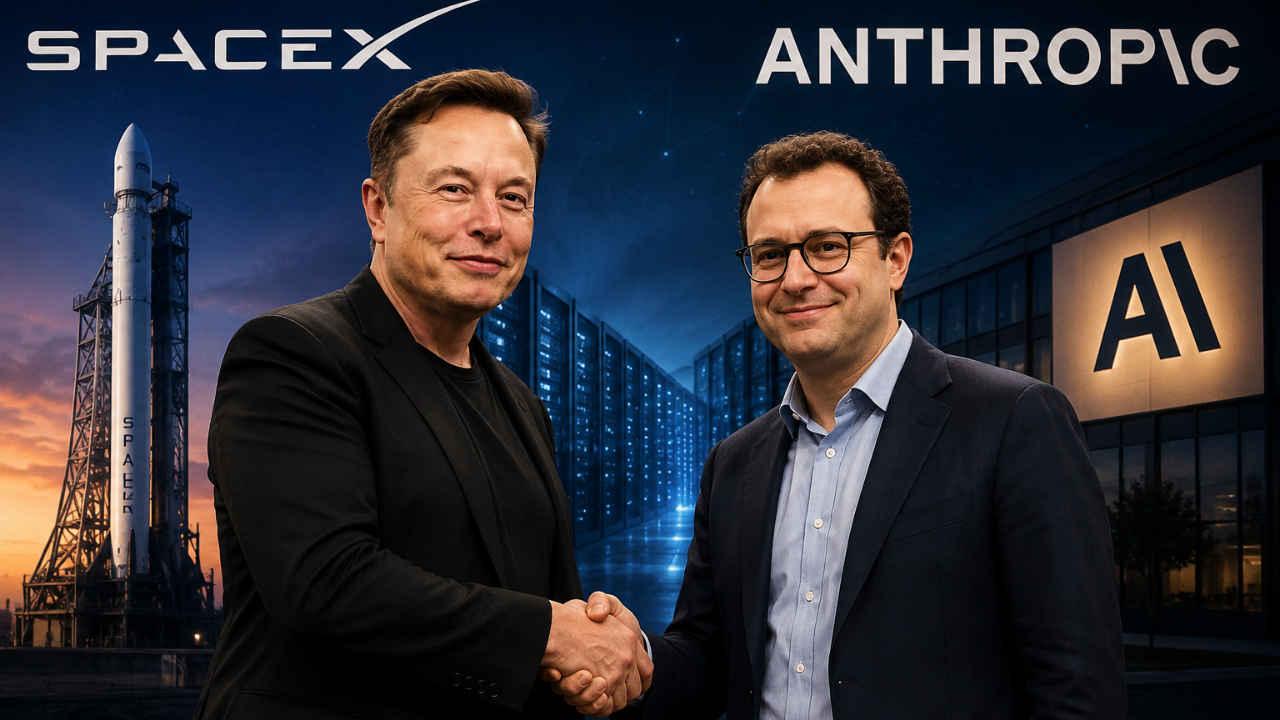
Anthropic and Elon Musk's SpaceX said on Wednesday that two entities have signed an agreement for Anthropic to use computing resources from xAI's data center in Memphis, Tennessee. It's the latest tie up in an industry that is scrambling to find enough computers to run complex AI software. SpaceX and xAI were previously separate companies, but the two merged earlier this year. The combined entity, also owned by Musk, is called SpaceXAI. Anthropic executives made the announcement on stage at the company's annual developer conference in San Francisco. SpaceXAI also put out a blog post sharing more details about the deal, which will see Anthropic draw power from the xAI's Colossus 1 supercomputer. The partnership comes at a pivotal time for SpaceXAI, which is seeking to go public as soon as next month. A relationship with a leading AI lab could bolster SpaceX's credibility as it pitches investors on the potential goldmine in establishing more data centers, including in space. Notably, Space XAI said in its blog post that Anthropic has "expressed interest" in partnering to develop "orbital AI compute capacity" -- essentially, data centers in space. Having Anthropic as a potential customer could help SpaceXAI boost investor confidence that there will be buyers for its super expensive, supercomputing project. Earlier this year, Musk criticized Anthropic's AI models in a post on X, calling the company's policies "misanthropic" and "evil," and alleging without evidence that the AI models showed racial and sexual biases. Now, he's significantly changed his tune, writing on X that he "spent a lot of time last week with senior members of the Anthropic team to understand what they do to ensure Claude is good for humanity and was impressed." Musk's SpaceXAI first broke ground on Colossus 1 on a former Electrolux site in 2024. The company claims that it is one of the largest and fastest AI supercomputers in the world. It includes roughly 220,000 Nvidia GPUs, ranging from Nvidia's H100 and H200 to its newer GB200 chips. The company likes to boast that it built the super computer in 122 days. Emissions from gas turbines at the data center have prompted numerous complaints from local residents. Last month, environmental protestors demonstrated at a nearby SpaceX investor gathering ahead of the IPO. Anthropic plans to use its newfound computing power to "directly improve capacity for Claude Pro and Claude Max subscribers," both companies said. The deal will give Anthropic access to more than 300 megawatts of new capacity, or approximately 220,000 Nvidia GPUs. In recent months, software developers have increasingly complained about rate limits and service disruptions to Claude Code, due to the physical limits of available computing resources. As more and more people use services like OpenAI's Codex and Anthropic's Claude Code -- sometimes running coding programs and agentic tasks for hours on end -- the services are being bogged down. According to Anthropic, the average developer is now spending at least 20 hours per week running Claude Code. Yesterday, The Information reported that Anthropic had committed to spend $200 billion on Google's AI cloud services and TPU chips. Anthropic has also used Amazon's cloud computing services and AI chips since 2023. Last month, Anthropic committed "more than $100 billion over the next ten years to [Amazon] technologies." According to the Information report, contracts with Anthropic and OpenAI now account for "more than half of the $2 trillion in backlogs at major cloud providers" like Amazon, Microsoft, and Google.
[2]
Anthropic Wants in on Elon Musk's Space Data Centers, Colossus Supercompute
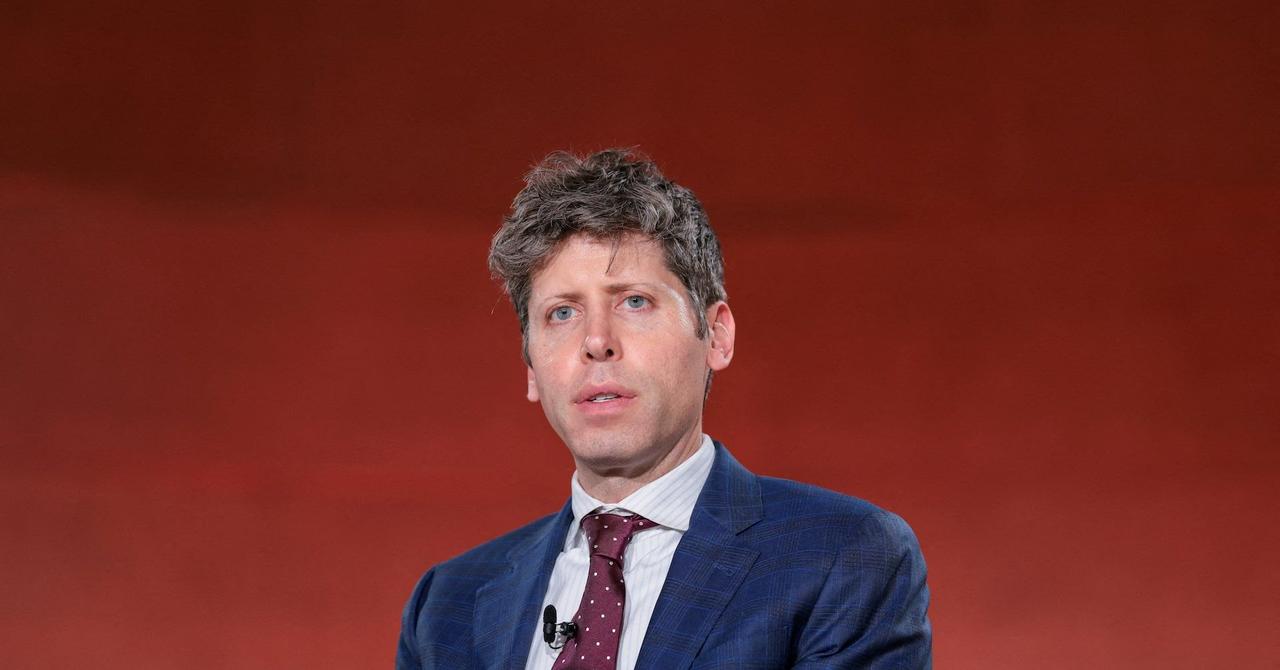
Elon Musk's ambitions for orbiting data centers might have a major partner in Anthropic, which said today that it's interested in working with SpaceX on the technology. Anthropic brought up the topic while announcing a deal to use the Memphis Colossus 1 supercomputer from xAI, which was absorbed by SpaceX in February. "We've signed an agreement with SpaceX to use all of the compute capacity at their Colossus 1 data center. This gives us access to more than 300 megawatts of new capacity (over 220,000 Nvidia GPUs) within the month," Anthropic said. For now, Anthropic's interest in orbiting data centers is vague. In a blog post, the company merely noted: "As part of this agreement, we have also expressed interest in partnering with SpaceX to develop multiple gigawatts of orbital AI compute capacity." The interest is notable, considering OpenAI CEO Sam Altman (and Musk nemesis) has been dismissive of orbiting data centers, an unproven technology. However, SpaceX is betting that the concept will win out in the long term, pointing to the benefits of harnessing solar power directly in Earth's orbit. Nvidia is also working on a chip for orbiting data centers, but experts say the industry will face major technical and environmental hurdles. In the meantime, the bigger, more immediate development is the Colossus 1 deal. The move is surprising considering Colossus was originally built to realize xAI's own ambitions for cutting-edge generative AI development, including taking on Microsoft. However, The Information reports that xAI has struggled to use the 500,000 Nvidia GPUs it acquired, resulting in GPU utilization of only 11%. "To be fair to xAI, everyone struggles with GPU utilization, and a researcher at a rival firm said cracking 40% was difficult for most of xAI's competitors. But a rate of 11% is appallingly low," The Information notes. It's also no secret that xAI has faced some turmoil; all of its original co-founders have now left the company, except for Musk. In March, the SpaceX CEO argued that, "xAI was not built right first time around, so [it's] being rebuilt from the foundations up. Same thing happened with Tesla." The partnership with Anthropic suggests that xAI can effectively lease GPUs, even though it risks supporting a competitor. And xAI also has additional GPUs it can rely on for its own business through the Colossus 2 supercomputer, also based in Memphis. For Anthropic, the deal adds some badly needed compute capacity. "This additional capacity will directly improve capacity for Claude Pro and Claude Max subscribers," it says. As part of the deal, Anthropic is also raising usage limits for Claude Code, a popular coding agent for developers.
[3]
Claude hitches ride on SpaceX's datacenter capacity
Anthropic is partnering with SpaceX to ease capacity constraints that have stranded Claude customers, a gesture that may soothe developer discontent about service availability and cost. Ami Vora, chief product officer at Anthropic, announced the expanded rate limits during Code for Claude, a developer event livestreamed from San Francisco. "As of today, we are increasing rate limits for developers on Claude Code and the Claude Platform," said Vora. "More specifically, we are doubling Claude Code's five-hour rate limits for Pro, Max, Team, and seat-based enterprise plans. And we're raising our API limits considerably for Claude Opus." Anthropic is also ending its peak hours limit reduction on Claude Code for Pro and Max accounts. The AI biz is able to do this, she explained, thanks to a partnership with SpaceX that expands available inference capacity. Anthropic has struck a deal to use "all the capacity of [SpaceX's] Colossus 1 data center." According to SpaceX, "Colossus 1 features over 220,000 Nvidia GPUs, including dense deployments of H100, H200, and next-generation GB200 accelerators." The deal adds more than 300 megawatts of new capacity within the month and follows similar compute arrangements with Amazon and Google/Broadcom. The company's insatiable hunger for processing power may even take it into space. Anthropic says that it "expressed interest in partnering with SpaceX to develop multiple gigawatts of orbital AI compute capacity." In recent months, Anthropic has struggled to meet unexpected demand for Claude services - its models became sufficiently capable to win over skeptical developers and usage patterns shifted as a result of the popularity of OpenClaw's long-running agents. "Year over year, API volume is up nearly 17x on the cloud platform," said Vora. "And on Claude Code, the average developer is now spending 20 hours per week running Claude." Amid this growing popularity, Anthropic has also wrestled with bugs that affected model performance. During her presentation, Vora tempered expectations by noting that no new model would be announced. Instead, she presided over a review of new and recent Claude features in an effort to frame model improvements as exponential. The salient exponent here would be two - the doubling of Claude's five-hour rate limits. Model performance, as measured by benchmarks, has been incremental. Opus 4.7 is a few percentage points better than Opus 4.6 in various measurements, not twice as capable or more. That didn't stop Vora from claiming, "even though model capabilities are improving on an exponential, most organizations are still adopting AI on a linear path." Vora's use of "exponential" may be more of a thematic framing device than a literal assertion of progress, a device to draw a contrast between Claude's capabilities and a more cautious pace of corporate AI adoption. She cast the upcoming feature review as an opportunity for customers to see where Claude development is headed, "So you can plan for it and ride the exponential with us." The remainder of the presentation consisted of a summary of recent Claude feature improvements. These include: multi-agent orchestration, outcomes, and dreaming - a capability that showed up in the recent Claude Code source leak. "With Dreaming," explained Angela Jiang, head of product for the Claude platform, "Claude is actually able to self-learn. It's able to actually inspect over its previous sessions, figure out skills that it missed, lessons it should have learned, and actually apply those directly to memory on its own." Boris Cherny, head of Claude Code, took a turn on stage to remind everyone about Routines, a way to trigger and run Claude jobs locally or on cloud servers. "Routines can be run on a schedule, they can be kicked off by webhooks, or they can even be kicked off by arbitrary API calls, you can run them locally on your machine or on remote cloud compute," he said. Cherny said, "for me personally, a lot of my code nowadays is written by routines. I'm not the one doing the prompting. I'm the one creating a routine that does the prompting." Who wouldn't want to "ride the exponential" when one's company is paying the API bill? ®
[4]
SpaceX to give Anthropic access to its massive AI supercomputer
May 6 (Reuters) - Elon Musk's SpaceX said on Wednesday it has signed a deal to give Anthropic access to Colossus 1, a massive AI supercomputer, bringing together two of the most prominent players in the artificial intelligence race. Anthropic plans to use the additional computing power to boost capacity for subscribers of its Claude Pro and Claude Max AI assistants, SpaceX said in a post on its website. Anthropic has also expressed interest in working with SpaceX to develop multiple gigawatts of orbital AI computing capacity, the rocket company added. Reporting by Aditya Soni in Bengaluru; Editing by Sahal Muhammed Our Standards: The Thomson Reuters Trust Principles., opens new tab
[5]
SpaceX reaches deal to rent data centre space to Anthropic
Anthropic has struck a deal with Elon Musk's SpaceX to access computing power from its Colossus 1 data centre, which houses more than 220,000 advanced Nvidia processors. The data centre deal comes as fast-growing Anthropic has sought out new providers as it works to boost capacity to serve its models, and has this year raised tens of billions of dollars and signed deals with Amazon and Google. Musk's AI lab xAI, which has merged with SpaceX, has rapidly built out data centres but has had lower demand for its Grok models. Anthropic said the additional capacity of 300 megawatts would improve its ability to serve its models and announced it would raise usage limits on its Claude Code tool. The SpaceX deal adds to several recent compute agreements for Anthropic, including up to 5 gigawatts with Amazon, a similar scale agreement with Google and Broadcom, $30bn in Azure capacity through Microsoft and Nvidia, and a $50bn US infrastructure investment with Fluidstack. It will also boost usage of SpaceX's AI infrastructure as the company prepares for a blockbuster listing in the coming months. Anthropic said the agreement includes a deal to explore "partnering with SpaceX to develop multiple gigawatts of orbital AI compute capacity".
[6]
Anthropic is doubling Claude Code rate limits after deal with SpaceX - Engadget
Anthropic and SpaceX have struck a deal to allow the company behind Claude to use xAI's Colossus 1 data center. As a result, Anthropic is doubling the rate limits for paid users of Claude Code and loosening other limits, the company said. The arrangement with SpaceX allows Anthropic to use "all the compute capacity" at SpaceX's Colossus 1 data center, which will add more than 300 megawatts of new capacity "within the month." Anthropic also recently struck deals with Amazon and Google. As part of the deal, Anthropic has also "expressed interest in partnering with SpaceX to develop multiple gigawatts of orbital AI compute capacity," the companies said. SpaceX recently filed paperwork with the FCC indicating it wanted to launch a million satellites in order to create an orbital data center. Paid users of Claude Code (which includes people on Pro, Max, Team and Enterprise plans) should see immediate benefits from the deal. Anthropic is doubling the five-hour rate limits for Claude Code. It's also removing the "peak hours" restrictions for Pro and Max users, and increasing the API rate limits "considerably" for Claude Opus models. Anthropic partnering with Elon Musk's SpaceX (which now owns xAI) may seem like an unlikely move. Musk recently called Anthropic "misanthropic and evil," and has long been critical of its CEO Dario Amodei. But in a post on X he said that he was "impressed" with the Anthropic team and that Claude will "probably" be good. "We reserve the right to reclaim the compute if their AI engages in actions that harm humanity," he added in another post.
[7]
Anthropic doubles Claude Code limits, thanks to a deal with SpaceX
This partnership marks a surprising shift, as Elon Musk previously criticized Anthropic but recently expressed being impressed after meetings with company staff. Instead of downgrading its most affordable Claude subscription plan by dropping access to Claude Code, Anthropic has instead doubled Claude Code usage rates for subscribers, starting today. All it took was an eyebrow-raising alliance with an unlikely partner. On day one of the Code with Claude developer conference in San Francisco, Anthropic announced it had struck a deal with SpaceX that will "substantially increase" Anthropic's computing capacity. Thanks to the deal, Anthropic says it will double Claude Code five-hour usage limits for Claude Pro, Max, Team, and seat-based Enterprise plans, while also raising pay-per-token API rate limits for Claude's powerful Opus models. No mention was made of weekly Claude Code limits. I've reached out to Anthropic for more details. Anthropic also said it would lift peak-hour usage limits for Claude Pro and Max accounts, which Anthropic imposed in late March. In its deal with SpaceX, Anthropic will get access to all the compute capacity at SpaceX's Colossus 1 data center in Memphis, Tennessee, including use of more than 220,000 Nvidia GPUs. Anthropic -- who also struck computing capacity deals with Amazon, Google, and Microsoft -- said it was also interested in SpaceX's orbital AI compute capacity. The Anthropic-SpaceX partnership is surprising in that Elon Musk, who owns a commanding 42 percent stake in SpaceX, has been outspoken in his criticism of Anthropic, which he previously called "misanthropic and evil." But in an about-face social media post on Wednesday, Musk posted that he was "impressed" after recent meetings with Anthropic staffers. "No one set off my evil detector," he wrote. Anthropic, meanwhile, has been straining to meet capacity demands, with the company recently mulling the idea of dropping Claude Code access from its $20-a-month Claude Pro plan. That hasn't actually happened yet, but an Anthropic exec recently admitted that the company's consumer plans weren't built for token-hungry agentic tools like Claude Code and Cowork. Anthropic's deal with SpaceX should give it much-needed breathing room as it works to bridge the gap between what its Claude Pro and Max plans promise and what the company's computing capacity actually allows. But whether Anthropic's SpaceX alliance will be a long-term solution to its capacity woes -- not to mention the ever-shifting usage limits Pro and Max users must contend with -- remains to be seen.
[8]
Anthropic will get compute capacity from Elon Musk's SpaceX
Why it matters: Anthropic has been struggling to meet the needs of developers which has led to aggressive rate caps and a shift to usage-based pricing. Driving the news: In addition to the partnership with SpaceX, Anthropic said it will lift the five-hour rate caps for most paid subscribers including those on its Pro, Max, Team and Enterprise plans. * "We're partnering with SpaceX to use all the capacity of their Colossus One data center," Anthropic head of product Ami Vora said, speaking at the company's developer conference in San Francisco. * In a statement, Anthropic said the deal gives it "access to more than 300 megawatts of new capacity (over 220,000 Nvidia GPUs) within the month." Anthropic also announced changes that could address recent complaints about usage limits, including: * Removing peak hours limits reduction on Claude Code for Pro and Max users. * Raising API rate limits for Opus models. Zoom out: The move comes as SpaceX is working to become an AI powerhouse before an expected IPO this fall, which is slated to be the largest in corporate history. * SpaceX acquired xAI in January and has a deal with Cursor that it says gives it the option to buy the coding startup for $60 billion. What they're saying: Anthropic says a recent deal with Amazon will also help it expand geographically, which is key for customers in regulated industries who often need to store data within a specific country or region.
[9]
Elon Musk's SpaceX Will Help Power Anthropic's Claude in Surprise AI Deal - Decrypt
Elon Musk's SpaceX -- which merged with xAI earlier this year -- is teaming up with Anthropic to help power Claude, creating an unusual partnership between companies that have found themselves on opposite sides of President Donald Trump's administration. The companies announced Wednesday that Anthropic will gain access to Colossus 1, xAI's massive AI supercomputer cluster built to train and run advanced AI models. Anthropic said the agreement will give it access to more than 300 megawatts of additional compute capacity and help improve service for Claude Pro and Claude Max subscribers. "In the next few days, we'll be ramping up Claude inference on Colossus. Grateful to be partnering with SpaceX here," Anthropic co-founder Tom Brown wrote on X. "We are going to need to move a lot of atoms in order to keep up with AI demand, and there's nobody better at quickly moving atoms (on or off planet Earth)." In a follow-up post on X, Musk said conversations with senior Anthropic staff helped convince him the company was approaching AI development responsibly. "Everyone I met was highly competent and cared a great deal about doing the right thing," Musk wrote. "No one set off my evil detector. So long as they engage in critical self-examination, Claude will probably be good." Musk added that "SpaceXAI" had already moved training to Colossus 2, a much larger next-generation AI supercomputer cluster designed to surpass Colossus 1's roughly 220,000 Nvidia GPUs and support future Grok models. The partnership comes as Musk and Anthropic CEO Dario Amodei have increasingly represented different camps inside the AI industry. Musk has aligned himself closely with Trump and the U.S. Departments of Justice and Defense. At the same time, Anthropic has positioned itself as one of the industry's strongest advocates for responsible AI safety standards. That stance recently put the company in conflict with the Trump administration and the Pentagon after Anthropic refused demands to allow unrestricted military use of Claude. The dispute centered on safeguards blocking the model from being used for mass domestic surveillance or fully autonomous weapons. Trump later ordered federal agencies to phase out Anthropic's technology, while Pentagon officials argued military contractors must permit "any lawful use" of AI systems used by the government. The agreement underscores how the race for computing power is reshaping alliances across Silicon Valley. In February, Elon Musk folded xAI into SpaceX, arguing that electricity demand and cooling requirements are limiting the growth of Earth-based AI data centers. Musk clarified on X on Wednesday that the xAI entity will be dissolved, and that part of the business will be known as "SpaceXAI" going forward. Also in March, Musk accused Anthropic of being "misanthropic" after the Claude developer raised $30 billion in funding at a $380 billion post-money valuation. Despite his previous harsh words, Anthropic said the SpaceX deal adds to a growing list of infrastructure partnerships that already includes Amazon, Google, Broadcom, Microsoft, and Nvidia. "As part of this agreement, we have also expressed interest in partnering with SpaceX to develop multiple gigawatts of orbital AI compute capacity," Anthropic said in a statement. While orbital data centers remain experimental and face major engineering hurdles, SpaceX said terrestrial power, cooling infrastructure, and available land may not scale fast enough for future AI systems, driving interest in space-based compute as a potential source of larger and more sustainable energy supplies. "If engineering challenges can be overcome, space-based compute offers near-limitless sustainable power with less impact on Earth," the company said.
[10]
Anthropic and SpaceX announce major partnership as AI arms races continues
Elon Musk's SpaceX will give Anthropic access to its massive Colossus 1 artificial intelligence data center, bringing together two of the most prominent players in the artificial intelligence race. Under the deal announced on Wednesday, Anthropic will use the full computing power of SpaceXAI's Memphis, Tennessee facility to boost capacity for its Claude Pro and Claude Max AI assistants and raise usage limits for subscribers. The deal gives Musk's IPO-bound SpaceX a marquee customer as it looks to sell investors on its AI ambitions while helping Anthropic ease capacity constraints following surging demand for products such as its AI coding tool, Claude Code. Colossus 1 is one of the world's largest AI data centers, housing more than 220,000 Nvidia processors, including H100, H200 and next-generation GB200 accelerators. Anthropic has also expressed interest in working with SpaceX to develop multiple gigawatts of space-based data centers -- one of Musk's key goals and a major driver behind the SpaceX's initial public offering as the endeavor is expected to be highly capital intensive. The announcements were made as Anthropic held a developer day in San Francisco where it touted a new feature for its Claude AI, which it calls "dreaming." Available as a research preview, "dreaming" comes with its software for managing agents, or AI programs that perform tasks with little human involvement. The feature's goal is self-improvement. It can review agents' work in between sessions, unearth patterns, and update files that store user preferences and other context, Anthropic said. The new feature is part of Anthropic's efforts to win business customers, on the heels of an uptick in popularity for its AI-powered coding agent. On Tuesday, the startup unveiled 10 financially focused AI agents at an event in New York, in which it said the tech sector represented its largest source of enterprise revenue, followed by financial institutions. Moves by the Google and Amazon.com-backed startup have hammered software-as-a-service (SaaS) stocks as the market expects AI to disrupt legacy businesses. Anthropic announced wider availability for other features as well, such as one for its AI agent to break down and delegate tasks to other, specialist agents.
[11]
Anthropic taps SpaceX supercomputer to double Claude Code's 5-hour limit
TL;DR: Anthropic has partnered with SpaceX to access the Colossus 1 AI supercomputer, gaining over 300 megawatts of compute power with 220,000+ NVIDIA GPUs. This boost will ease Claude's usage limits, enhance availability for subscribers, and enable significant API expansion amid rising AI infrastructure competition. Anthropic is dramatically increasing Claude's usage limits after striking a massive compute partnership with SpaceX, highlighting how the AI arms race is quickly becoming a battle over infrastructure. The company announced it has secured access to SpaceX's Colossus 1 AI supercomputer, gaining more than 300 megawatts of new compute capacity powered by over 220,000 NVIDIA GPUs. Anthropic says the added power will directly improve availability for Claude Pro and Claude Max subscribers, while also allowing the company to raise API and usage limits for developers substantially. This is a major moment in the broader AI industry narrative. Companies like Anthropic, OpenAI, xAI, and Google are no longer just competing on models; they are competing on raw compute access. Anthropic has faced mounting criticism in recent months over aggressive Claude rate limits, especially surrounding Claude Code and Opus usage. The SpaceX deal appears designed to directly address those bottlenecks while positioning Anthropic to scale more aggressively against rivals. Reports also suggest Anthropic is exploring future orbital AI data centers with SpaceX, an idea that sounds extreme today but aligns with Elon Musk's long-term push toward space-based infrastructure. The timing is notable. AI demand is exploding across enterprise, coding, and finance sectors, and infrastructure has become one of the biggest constraints on growth. Anthropic is now effectively tying its future capacity expansion to one of the largest AI compute networks in the world, signaling that the next phase of AI competition may be won less by model quality alone and more by whoever can secure the most power, chips, and data centers.
[12]
Anthropic just doubled limits for Claude plans, and it could transform how you work
Summary Claude Pro/Max hourly API limits doubled from 5 to 10 for Code and API users. Peak-hour throttling removed for Pro and Max -- consistent access anytime. Access to Colossus 1 brings 220k+ GPUs and faster, more reliable responses across apps. Anthropic has announced that, effective today, a massive value upgrade for all Claude Pro and Max subscribers is on the way, thanks to its new partnership with SpaceX. This new partnership will substantially increase its compute capacity, which means that Anthropic is increasing usage limits for Claude Code and the Claude API. Here is everything you need to know about Anthropic's latest move and how it changes your daily workflow. Related Claude can now design your slide decks -- and a whole lot more Claude Design can make anyone a graphic designer Posts By Dave Schafer Higher usage limits for power users The first change is a major one: Claude Code's hourly API rate limits for Pro, Max, Team, and seat-based Enterprise plans will be doubled, from 5 to 10. This is a huge increase in how often you can use the chatbot, making it perfect for developers and anyone working on technical tasks. In the past, hitting a "usage wall" was a common frustration for anyone working on long coding projects. Now, with Claude, you can effectively do twice the work in the same five-hour window. Perfect for a full 8-hour workday! The end of "peak hour" restrictions One of the most annoying issues AI users run into is throttling when servers are busy. This usually happens during peak hours -- typically between 9am and 3pm. Previously, Claude Pro and Max users might have seen their message limits restricted during peak hours to prevent the system from crashing. Now, that's a thing of the past. As part of this update, Anthropic is removing peak-hour limit reductions for Pro and Max accounts. Monday morning chaos or a late-night study session, your access to Claude will remain consistent. This reliability is a key factor when choosing between Claude and ChatGPT, as consistent uptime is vital for professional workflows. Faster response times This landmark deal with SpaceX means that Claude can use the full computing capacity at the Colossus 1 data center. This means that more than 220,000 NVIDIA GPUs will be switched online within the next month. Simply put, this means faster response times, meaning you get answers generated quicker, and more complex instructions delivered without lag. This will impact third-party apps as well -- if anything is powered by Claude, you will likely see an improvement in performance and availability. Subscribe for deeper newsletter coverage of AI platform shifts Get smarter about AI platform changes -- subscribe to the newsletter for focused coverage and analysis of developments like Anthropic's SpaceX partnership and other product and infrastructure shifts across the AI ecosystem. Get Updates By subscribing, you agree to receive newsletter and marketing emails, and accept our Terms of Use and Privacy Policy. You can unsubscribe anytime. If you've been on the fence about a Claude subscription, the value proposition just doubled. For now, there's no price increase on the horizon. Will this get you to make the switch?
[13]
Anthropic and SpaceX Just Announced a Colossal Deal to Supercharge Claude AI
Anthropic has announced a surprising partnership with SpaceX, in which the Claude creator will use the entirety of Colossus 1, the Elon Musk-founded company's massive data center in Memphis, Tennessee. Anthropic also said that it has "expressed interest in partnering with SpaceX to develop multiple gigawatts of orbital AI compute capacity." The announcement came during Anthropic's second-annual "Code with Claude" event for software developers. Over the past few months, many paid Claude subscribers have complained that they can only use the AI for a few tasks before being informed that they've reached a temporary usage limit (also called a rate limit) and have to either wait for a few hours until their usage refreshes, or pay extra in order to continue working with the AI platform. Using the new compute capacity, Anthropic says it will be able to double rate limits for paid Claude subscribers on Claude Code, the company's mega-popular AI coding platform. The company is also removing a reduction to rate limits that occurred during the platform's peak hours of usage, and is "considerably" increasing rate limits for usage of its Claude Opus models on the API. In dual statements, the two companies confirmed that Anthropic will now use all of the compute capacity within Colossus, giving the company access to over 220,000 Nvidia GPUs. Anthropic has been signing deals with organizations like Amazon, Google, Nvidia, and Microsoft in order to get access to more compute capacity, but the capacity from those deals isn't expected to start coming online until late 2026 or early 2027. The SpaceX deal immediately gives Anthropic a significant boost to the amount of AI it can offer to its monthly subscribers. On X, Anthropic cofounder Tom Brown said that the company is "going to need to move a lot of atoms in order to keep up with AI demand, and there's nobody better at quickly moving atoms (on or off planet Earth)." Musk replied to the post in agreement, and wrote that last week, he spent "a lot of time" with senior members of the Anthropic team in order to "understand what they do to ensure Claude is good for humanity." Musk wrote that he came away from those meetings impressed by the Anthropic team, and that "no one set off my evil detector." Musk went on to say that the Anthropic team he met was "highly competent and cared a great deal about doing the right thing," and that "So long as they engage in critical self-examination, Claude will probably be good." With this in mind, Musk said he was comfortable leasing Colossus 1 to Anthropic, as xAI had already transitioned to Colossus 2, another data center, for training future versions of Grok. Although, he said in another X post, his company will "reserve the right to reclaim the compute if their AI engages in actions that harm humanity." Anthropic and SpaceX may seem like strange bedfellows, because Musk has been critical of Anthropic, referring to the company as "misanthropic" and writing that "winning was never in the set of possible outcomes for Anthropic." Musk is also a fervent support of President Donald Trump, whose Department of Defense is currently engaged in a drawn-out legal battle with the Claude creator. The super-early-rate deadline for the 2026 Inc. Power Partner Awards is Friday, May 29, at 11:59 PT. Apply now.
[14]
SpaceXAI Gives Anthropic A Fresh Injection of 220,000 NVIDIA GPUs While Also Planning on Multi-GW "Orbital" AI Compute Capacity
SpaceXAI has announced that it will provide Anthropic access to its Colossus 1 supercomputer with 220,000 NVIDIA GPUs and is also planning orbital compute clusters. Anthropic is starving for more compute for its AI requirements. The company is expanding its capabilities at a scale like none other, while reportedly making in-house chips & working with some big chipmakers. The company also announced a partnership with Amazon for a 6GW Trainium chip capacity for its Claude AI models, among several other partnerships. Today, SpaceXAI has announced that it will provide Anthropic with access to its Colossus 1 super cluster in a new partnership that aims to provide the AI firm with lots of AI compute capabilities in both land and space. The Colossus 1 supercomputer itself is a hefty piece of infrastructure, featuring over 220,000 NVIDIA GPUs in the form of H100s, H200s, and the latest GB200s "Blackwell". SpaceXAI states that this super-compute offers "unprecedented scale for AI training, fine-tuning, and high-performance computing workloads". Given its huge compute capabilities, the system is perfect for Anthropic, which will now be using the resources to improve its Claude model, offering higher capacity for Claude Pro and Claude Max subscriptions. Recently, reports have highlighted that xAI is only utilizing just 11% of its installed AI compute resources due to unoptimized software stacks. This means that xAI has lots of headroom available for rental, & that is where Anthropic comes in. At the same time, Anthropic has also expressed its interest in partnering with SpaceXAI to deploy multi-Gigawatts of compute capacity in orbit. That will be a huge undertaking, but SpaceXAI believes that an orbital compute installation will address some of the major bottlenecks of terrestrial-based systems such as Power, Land, and Cooling. SpaceX is the only organization with the launch cadence, mass-to-orbit economics, and constellation operations experience to make orbital compute a near-term engineering program rather than a research concept. If engineering challenges can be overcome, space-based compute offers near-limitless sustainable power with less impact on Earth. SpaceXAI With what SpaceX has shown so far, an orbital compute ecosystem doesn't sound too far-fetched; the only question is, how soon are we going to see it in action?
[15]
SpaceXAI And Anthropic Just Made A Deal That Could Push AI Beyond Earth
SpaceXAI has struck a partnership agreement with Anthropic to use all of the compute capacity at SpaceX's data center Colossus 1 in Memphis, Tennessee. "We've agreed to a partnership with @SpaceX that will substantially increase our compute capacity. This, along with our other recent compute deals, means that we've been able to increase our usage limits for Claude Code and the Claude API," Claude wrote in a post on X. The partnership will give Anthropic more than 300 megawatts of additional capacity (over 220,000 NVIDIA GPUs) to deploy within the month. Anthropic also highlighted three changes the company is making in an effort to "improve the experience" of Claude for its users. First, the company is doubling Claude Code's five-hour rate limits for Pro, Max, Team, and seat-based Enterprise plans. Next, Anthropic is removing the peak hours limit reduction on Claude Code for Pro and Max accounts. Additionally, the company is raising its API rate limits considerably for Claude Opus models. Anthropic has recently been expanding its computing capacity through multiple new agreements, including a multi-billion dollar deal with Amazon. The company also signed a 5 GW agreement with Google and Broadcom that is expected to be available next year. "We train and run Claude on a range of AI hardware -- AWS Trainium, Google TPUs, and NVIDIA GPUs -- and continue to explore opportunities to bring additional capacity online. As part of this agreement, we have also expressed interest in partnering with SpaceX to develop multiple gigawatts of orbital AI compute capacity," the company stated in the announcement. Anthropic added that they are "very intentional" about where they will add capacity, looking to partner with "democratic countries whose legal and regulatory frameworks support investments of this scale, and where the supply chain on which our compute depends -- hardware, networking, and facilities -- will be secure," the company said. xAI operates two facilities in the area known as Colossus and Colossus II, with Colossus II described as a roughly 1 million-square-foot site in Southaven. The lawsuit claims xAI installed and used as many as 27 gas turbines at the Southaven site, describing each unit as comparable in size to a bus. It also alleges the Southaven facility could produce more than 1,700 tons of nitrogen oxides annually, along with other toxic chemicals such as formaldehyde. Photo: Shutterstock Market News and Data brought to you by Benzinga APIs To add Benzinga News as your preferred source on Google, click here.
[16]
Elon Musk's SpaceX joins forces with Anthropic in AI deal ahead of blockbuster IPO
Elon Musk's SpaceX will give Anthropic access to its massive Colossus 1 artificial intelligence data center, bringing together two of the most prominent players in the artificial intelligence race. Under the deal announced on Wednesday, Anthropic will use the full computing power of SpaceXAI's Memphis, Tenn., facility to boost capacity for its Claude Pro and Claude Max AI assistants and raise usage limits for subscribers. The deal gives Musk's IPO-bound SpaceX a marquee customer as it looks to sell investors on its AI ambitions while helping Anthropic ease capacity constraints following surging demand for products such as its AI coding tool, Claude Code. Colossus 1 is one of the world's largest AI data centers, housing more than 220,000 Nvidia processors, including H100, H200 and next-generation GB200 accelerators. Anthropic has also expressed interest in working with SpaceX to develop multiple gigawatts of space-based data centers - one of Musk's key goals and a major driver behind the SpaceX's initial public offering as the endeavor is expected to be highly capital intensive. The announcements were made as Anthropic held a developer day in San Francisco where it touted a new feature for its Claude AI, which it calls "dreaming." Available as a research preview, "dreaming" comes with its software for managing agents, or AI programs that perform tasks with little human involvement. The feature's goal is self-improvement. It can review agents' work in between sessions, unearth patterns, and update files that store user preferences and other context, Anthropic said. The new feature is part of Anthropic's efforts to win business customers, on the heels of an uptick in popularity for its AI-powered coding agent. On Tuesday, the startup unveiled 10 financially focused AI agents at an event in New York, in which it said the tech sector represented its largest source of enterprise revenue, followed by financial institutions. Moves by the Google- and Amazon-backed startup have hammered software-as-a-service (SaaS) stocks as the market expects AI to disrupt legacy businesses. Anthropic announced wider availability for other features as well, such as one for its AI agent to break down and delegate tasks to other, specialist agents.
[17]
Anthropic partners with SpaceX to bolster AI capabilities
The deal is expected to enable Anthropic to enhance performance for subscribers of its Claude Pro and Claude Max offerings. This alliance comes despite a backdrop of public tension between Anthropic and Elon Musk, owner of SpaceX and founder of xAI. In recent months, Musk has ramped up his criticism of Anthropic, particularly on AI regulation issues, going so far as to accuse the company of "hating Western civilization." Concurrently, xAI is pursuing the rapid expansion of its Memphis infrastructure to compete with OpenAI, Google, and Anthropic in the AI market. The Colossus 1 center is currently its most significant computing site. However, the project faces local criticism related to the use of natural gas turbines, which are accused of worsening air pollution in the region. Furthermore, the startup founded in 2021 by former OpenAI researchers and executives is reportedly in talks with investors for a funding round that could value the company at up to $900bn.
Share
Copy Link
Anthropic has signed a deal with Elon Musk's SpaceX to access computing power from the Colossus 1 supercomputer in Memphis, gaining over 220,000 Nvidia GPUs. The partnership addresses severe capacity constraints that have plagued Claude users, while SpaceX gains a major customer ahead of its IPO. Both companies have also expressed interest in developing orbital AI data centers.
Anthropic announced a significant partnership with Elon Musk's SpaceX to rent data center space at the Colossus 1 supercomputer facility in Memphis, Tennessee
1
. The deal grants Anthropic access to more than 300 megawatts of new AI compute capacity, encompassing approximately 220,000 Nvidia GPUs that include H100, H200, and next-generation GB200 accelerators2
. Ami Vora, Anthropic's chief product officer, revealed the partnership during the company's annual developer conference in San Francisco, emphasizing that this additional capacity will become available within the month3
.
Source: New York Post
The timing proves critical for both companies. SpaceX merged with Elon Musk's xAI earlier this year to form SpaceXAI, and the combined entity is preparing for a blockbuster IPO as soon as next month
1
. Having Anthropic as a customer could bolster investor confidence in SpaceX's data center ambitions. Meanwhile, reports indicate that xAI has struggled with GPU utilization at only 11%, far below the industry standard of 40%, making the partnership mutually beneficial2
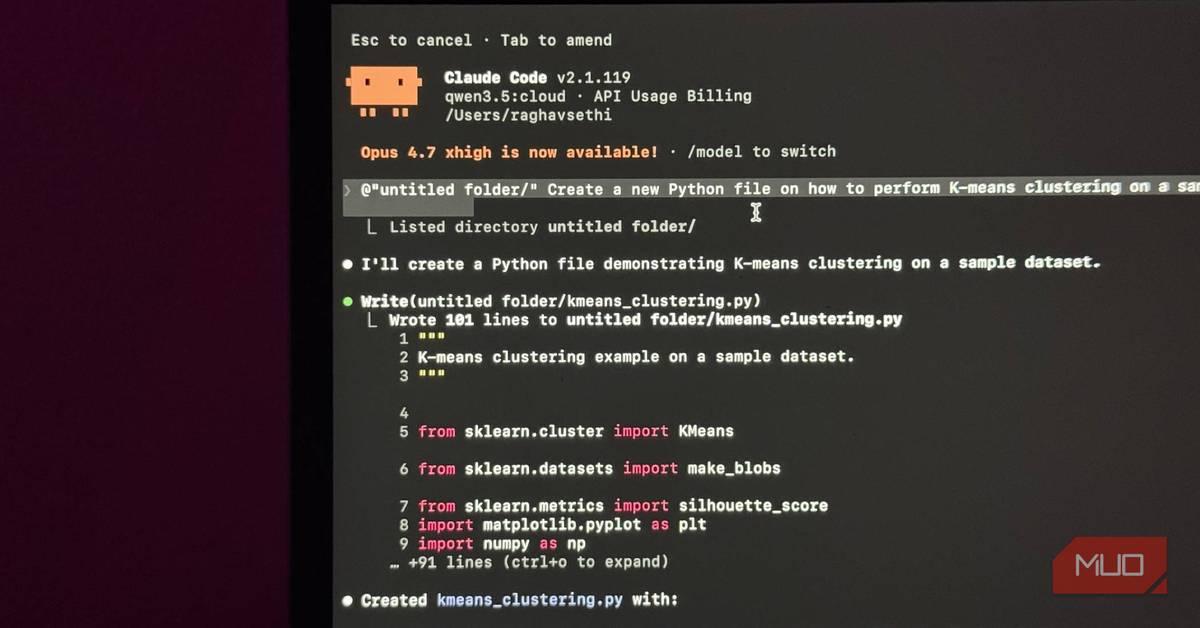
.The deal directly targets severe capacity issues that have frustrated developers using Claude AI models. In recent months, software developers have increasingly complained about rate limits and service disruptions to Claude Code, stemming from physical constraints of available computing resources
1
. According to Vora, the average developer now spends at least 20 hours per week running Claude Code, with API volume up nearly 17x year over year3
. This surge in usage has overwhelmed existing infrastructure, creating developer discontent about service availability and cost.
Source: MakeUseOf
To address these challenges, Anthropic announced it will double Claude Code's five-hour rate limits for Claude Pro, Claude Max, Team, and seat-based enterprise plans
3
. The company is also raising API limits considerably for Claude Opus and ending peak hours limit reduction on Claude Code for Pro and Max accounts. These improvements will directly enhance inference capacity for subscribers who have faced service disruptions as agentic tasks run for hours on end.Beyond the immediate Colossus 1 supercomputer agreement, Anthropic has expressed interest in partnering with SpaceX to develop multiple gigawatts of orbital AI compute capacity
4
. While details remain vague, this represents a notable shift in industry sentiment. OpenAI CEO Sam Altman, an Elon Musk nemesis, has previously dismissed orbiting data centers as unproven technology2
. However, SpaceX believes the concept offers long-term advantages by harnessing solar power directly in Earth's orbit, though experts warn of major technical and environmental hurdles ahead.
Source: Wccftech
The partnership also marks a dramatic shift in Musk's stance toward Anthropic. Earlier this year, Musk criticized Claude AI models on X, calling the company's policies "misanthropic" and "evil," alleging without evidence that the models showed racial and sexual biases
1
. Now, he has significantly changed his tune, writing on X that he "spent a lot of time last week with senior members of the Anthropic team to understand what they do to ensure Claude is good for humanity and was impressed."Related Stories
The SpaceX deal adds to Anthropic's aggressive expansion of computing infrastructure across multiple providers
5
. Yesterday, The Information reported that Anthropic committed to spend $200 billion on Google's AI cloud computing services and TPU chips1
. The company has also used Amazon's cloud computing services and AI chips since 2023, with a recent commitment of more than $100 billion over the next ten years to Amazon technologies. Additional agreements include $30 billion in Azure capacity through Microsoft and Nvidia, and a $50 billion US infrastructure investment with Fluidstack.According to The Information, contracts with Anthropic and OpenAI now account for more than half of the $2 trillion in backlogs at major cloud providers like Amazon, Microsoft, and Google
1
. This spending underscores the intense competition for computing resources as AI companies race to scale their models and serve growing user demand. For developers watching this space, the key question remains whether these massive infrastructure investments will translate into consistent service reliability and whether raise usage limits will keep pace with exponentially growing demand.Summarized by
Navi
[3]
22 Oct 2025•Technology

29 Jan 2026•Technology

Yesterday•Business and Economy

1
Health

2
Technology

3
Policy and Regulation