Anthropic IPO Valuation Cut to $1.5 Trillion as Investors Worry About Slowing Revenue Growth


4 Sources
[1]
Anthropic IPO: Investors temper Anthropic IPO valuation expectations over revenue growth slowdown
Some investors who attended Anthropic's investor day on Wednesday in San Francisco discussed a valuation of around $1.5 trillion, three of the people said, a significant step down from the roughly $2 trillion valuation that investors had previously expected for the November share sale. Some
[2]
Anthropic IPO Could Come in 'Weeks, Not Months' -- Top Hedge Fund Manager Sees $500 Billion Demand, Draws
Hedge fund manager and Altimeter Capital CEO Brad Gerstner expects AI firm Anthropic to go public within weeks, not months, and believes investor demand for the AI firm's shares could exceed $500 billion. Imminent Public Offering Speaking to Scott Wapner on CNBC's Halftime Report on Oct. 15,
[3]
Anthropic Q3 Revenues are Robust Enough but Worried Investors Talk Down Valuation to $1.5Tn
Investor concerns aren't around the revenue numbers per se but the percentage slow down which is a natural phenomenon Are the chinks in the AI armour starting to appear? First we heard about OpenAI plugging revenues $20 billion higherthan they actually were and now it looks like arch-rival
[4]
Some investors push Anthropic to cut IPO valuation to $1.5 trillion - report By Investing.com
Investing.com -- Some investors in Anthropic and potential participants in its upcoming initial public offering are considering a lower valuation for the artificial intelligence company following its latest financial disclosures, Reuters reported late Thursday. Investors who attended Anthropic's
Share
Copy Link
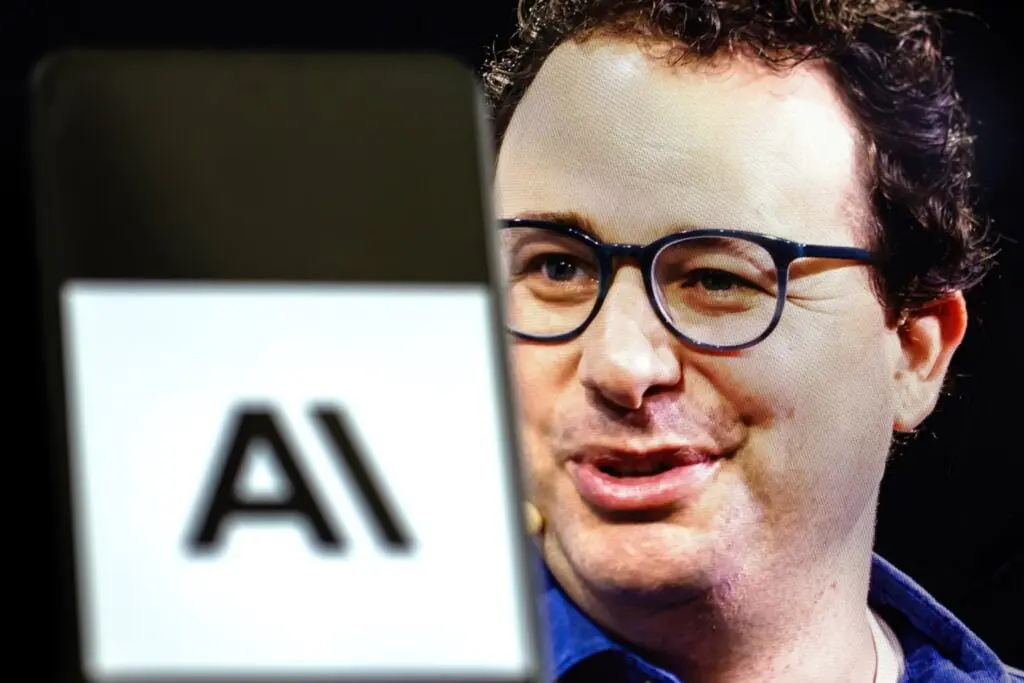
Anthropic's anticipated IPO hits a roadblock as investors slash valuation expectations from $2 trillion to $1.5 trillion following the company's investor day. Despite Q3 revenue reaching $16.8 billion with 45% sequential growth and adjusted profitability, concerns mount over decelerating momentum and the massive $518 billion infrastructure spending commitment ahead.
Anthropic IPO Valuation Expectations Drop Sharply
Investors attending Anthropic's investor day on Wednesday in San Francisco are now discussing an Anthropic IPO valuation of around $1.5 trillion for the November share sale, marking a significant decline from the roughly $2 trillion valuation previously anticipated
1
. This shift in IPO valuation expectations comes despite the generative AI developer reporting strong third-quarter financial results during the meeting with prospective investors and current stakeholders.The recalibration reflects growing investor concerns about the sustainability of growth rates and the escalating AI development costs facing the industry. Anthropic told attendees that third-quarter revenue jumped 45% sequentially to $16.8 billion, and the company achieved profitability on an adjusted basis
1
. However, some investors expressed disappointment with the slowing revenue growth rate compared to earlier quarters, when revenue more than doubled from $11.6 billion in Q24
.Competing Perspectives on Market Demand
Not all market observers share the pessimistic outlook. Hedge fund manager Brad Gerstner of Altimeter Capital, an early Anthropic investor, predicted the Anthropic IPO could happen in "weeks, not months" and estimated investor demand could exceed $500 billion
2
. Gerstner drew parallels with SpaceX, noting that a $100 billion offering generated approximately $350 billion in demand, suggesting similar enthusiasm for Anthropic shares among retail investors, mutual funds, and sovereign wealth funds2
.Despite this optimism, DA Davidson reportedly characterized the AI market reaction to Anthropic's investor day update as negative
2
. The divergence in perspectives highlights the uncertainty surrounding frontier models and their commercial viability as enterprises increasingly evaluate alternatives to expensive AI solutions.Financial Performance and Profitability Concerns
Anthropicâ€TMs financial trajectory shows both remarkable growth and substantial losses. Last year, the company's revenue surged twelvefold to nearly $4.6 billion, even as it lost more than $8 billion on an operating basis, excluding writedowns of liabilities tied to previous fundraising
1
. The company reported a staggering $42 billion net loss in 2025 and has committed to spending at least $518 billion over a decade for cloud services, computing and infrastructure4
.During Wednesday's meeting at Anthropic's San Francisco headquarters, CEO Dario Amodei and finance chief Krishna Rao presented to the company's most prominent investors
1
. The company reported 80% plus margins on an adjusted basis2
, suggesting strong unit economics despite the massive infrastructure investments required.Broader AI Market Pressures and Enterprise Adoption Challenges
The cooling reception for the Anthropic IPO reflects wider pressures across the AI market. A tech selloff has impacted AI infrastructure companies, chipmakers, and neocloud providers that rent computing power for AI applications. Shares and bonds of Nvidia-backed CoreWeave tumbled recently, reflecting growing investor concern about AI buildout financing increasingly reliant on borrowed money
1
.Enterprise adoption patterns are shifting as businesses reconsider spending on expensive frontier models. Consulting giant Accenture recently capped Claude spending at $29 per month per employee, with those exceeding the limit required to find project-specific funding
3
. This represents a dramatic reduction for employees who had previously spent as much as $1,000 monthly on Claude models3
. The emergence of alternatives, with TrustedRouter listing 665 available models, gives enterprises more options beyond premium offerings from Anthropic and OpenAI3
.Related Stories

Implications for Claude Models and Competition
Founded in 2021 by former OpenAI executives including Dario Amodei and his sister Daniela Amodei, now Anthropic's president, the company has emerged as a leading generative AI developer with its Claude family of models
1
. Anthropic's growth has been supported by Google and Amazon, which serve simultaneously as investors, suppliers of computing power, distribution partners, and AI competitors1
.The competitive landscape intensifies as companies like Microsoft adjust their AI strategies. Microsoft CEO Satya Nadella recently advocated for AI safety regulations, proposing "a human-controlled emergency break in case models behave unexpectedly," which Gerstner endorsed as "a good idea"
2
. Such regulatory considerations could impact how quickly Anthropic and OpenAI can release future models, adding uncertainty to growth projections.What This Means for the AI Market
A disappointing Anthropic IPO could significantly impact the broader AI market, whose near-term prospects investors view as hinging largely on this share sale's success, followed by OpenAI's potential listing next year
1
. Recent IPO market setbacks, including data center operator SB Energy delaying its listing and nuclear technology company Holtec Nuclear pulling its plans, add to concerns about market receptivity1
.Nvidia CEO Jensen Huang told Gerstner that AI lab revenues would grow "at least 2x next year," suggesting continued expansion despite current headwinds
2
. However, Gerstner himself reduced his AI exposure to "medium small" because stocks "got ahead of themselves" in spring, though he remains optimistic about frontier AI labs operating in "the most competitive market in all of technology"2
. Watch for how the November IPO pricing unfolds and whether enterprise customers continue migrating toward cost-effective alternatives, as these factors will shape the trajectory of AI development costs and market valuations across the industry.References
Summarized by

Navi
[1]
[2]
[3]
Related Stories
Nvidia in Talks for $10B Investment as Anthropic IPO Shifts to October Targeting $2 Trillion Valuation
05 Sept 2026•Business and Economy

OpenAI Revenue Projection Drops $20 Billion as Anthropic Reports 45% Q3 Growth to $16.8 Billion
08 Oct 2026•Business and Economy

Anthropic IPO Prospectus Warns of Existential Risks to Humanity Despite $2 Trillion Valuation Goal
29 Sept 2026•Business and Economy

Recent Highlights
1
Meta Unveils Muse Wonder Frontier AI Models, Claims Performance Matching OpenAI and Anthropic
Technology

2
IMF Report Warns AI Market Correction Could Spark Global Financial Crisis With $1.4T at Risk
Business and Economy

3
Eight States Sue OpenAI Over ChatGPT Safety Concerns and Unlawful Collection of Children's Data
Policy and Regulation

Recent Highlights
Today's Top Stories











Don’t drown in AI news. We cut through the noise - filtering, ranking and summarizing the most important AI news, breakthroughs and research daily. Follow topics that matter to you and stay ahead.


