7 Sources
[1]
Anthropic recruits army to sell Claude to nonprofits
AI may or may not be pushing lots of people out of the workforce, but Anthropic has good news as the Claude creator is creating temporary positions to promote the adoption of AI, even as CEO Dario Amodei ponders policy interventions to counter "job displacement." The AI biz has announced the launch of Claude Corps, a $150 million program that will pay 1,000 Claude Corps Fellows $85,000 (plus benefits and a token budget) for one year to help advance the missions of nonprofit organizations using generative AI. Meanwhile, the tech industry continues to take on debt to build datacenters while balancing its books by shedding employees. According to job search biz TrueUp, the tech sector this year has averaged 935 layoffs per day, up from 674 per day in 2025. Anthropic's program debuts alongside the publication of Amodei's latest musing about his optimism "that, even in a world with AIs that are better than everyone at everything, humans can live lives of deep purpose and strive to build awe-inspiring and beautiful things." Claude Corps' stated goal is to provide host organizations with valuable tools and systems and to help participating fellows "build AI skills that will serve them in their careers" - however long those careers last until AIs are better than everyone at everything. There is, of course, no guarantee that AI will surpass human cognition or folly. But Amodei likes to talk about the idling of human labor, just in case, even if that sort of chatter fuels the firebombers. Anthropic says that it is announcing Claude Corps alongside its policy framework for dealing with AI's impact on work. The framework is titled "Policy on the AI Exponential," which is the same title Amodei used for his post. The policy's call for company-endorsed regulatory intervention is predicated on the claim that "AI is advancing at exponential speed," though the document cites no evidence of exponential capability gains and offers no time frame - a necessary variable to calculate periodic gains. Judging by AI model benchmark metrics, recent AI improvement has been incremental, a rate of advancement too timid to turn heads in the attention economy. Using data from Stanford HAI's 2026 AI Index report, even impressive gains such as AI model performance on the SWE-bench Verified benchmark rising from 60 percent to nearly 100 percent of the human baseline in a single year are not, by themselves, evidence of broad "exponential" progress across AI. Alarmism aside, Claude Corps will be funded and steered by Anthropic and implemented by computer education nonprofit CodePath, which will serve as the employer of record for fellows. The 12-month-long fellowships begin with "intensive training on using Claude in non-profit settings," augmented by five hours of additional training each week. Fellows are expected to use their remaining time coaching their respective nonprofits on the ins and outs of AI workflows. The gig comes with support from a CodePath mentor and office hours from Anthropic, which may prove useful for reactivating Claude accounts that have been suspended after triggering Claude's overly sensitive safety guardrails. Some 400 nonprofits are expected to host Claude Corps Fellows over the next 12 months, including Braven (job prep for low-income students), Code the Dream (coding education), and Heartland Forward (economic growth for middle America). "If Claude Corps works, we'll have a foundation for something much larger: a model for widening AI's benefits during a period of vast economic change," Anthropic says. And if not, as New Yorker cartoonist Tom Toro put it, "Yes, the planet got destroyed. But for a beautiful moment in time we created a lot of value for shareholders." ®
[2]
Anthropic announces 'Claude Corps' to teach nonprofits to use AI more effectively
SAN FRANCISCO (AP) -- Anthropic will donate $150 million to launch a fellowship program that places coaches with nonprofits around the country to help them use artificial intelligence more effectively in their work. Claude Corps, named for the company's popular AI chatbot, will hire and embed 1,000 fellows trained in the use of Claude at a wide range of organizations for a year. Anthropic President Daniela Amodei told The Associated Press the company hopes the program will expand and become a pillar of its strategy to help humankind realize the benefits of AI while also managing its risks. Amodei said Claude Corps will be evaluated after its first year to see if it should continue and expand. "We're hoping it's a good idea that can take root and that other people can build on and learn from, whether that's public or private," Amodei said in an interview at Anthropic headquarters in San Francisco. "But I think my hope is that we'll learn, the people who do it will learn, and we'll be able to come back and do it again next time even better." Anthropic's commitment includes paying the Claude Corps members and providing at least 400 host organizations with a $10,000 grant and free credits to use Claude. Anthropic says it wants to balance profits and social impact Philanthropy is built into the way Anthropic's co-founders believe the company should be run, Amodei said. Amodei, her brother Dario, who is Anthropic's CEO, and the company's five other co-founders have already pledged that they will donate 80% of their wealth. They established Anthropic as a public benefit corporation, a designation that for-profit companies select to balance financial goals and social impact. Anthropic, which is valued at $965 billion, is moving toward going public on Wall Street, announcing earlier this month it submitted a confidential filing for an initial public offering. Amodei, interviewed before the SEC filing, said she could not comment about IPO plans but said the company's values are very clear to anyone looking to invest in it. "There's decisions and choices that we might make that might feel in conflict with just the pure commercial interests of the business and we're going to be really open about that," she said. "I think we have been very well served by our inclination to just be very honest about who we are because people who like that really like us. And for people, if it's not what they like, they don't work with us. And I think that's actually better for everyone." Anthropic has been outspoken about the risks inherent to the breakthrough technology. It warned last week that companies should coordinate a way to pause development of advanced AI systems if humans risk losing control of the self-improving technology. It collaborated with Pope Leo XIV as he developed his encyclical on AI and the need for increased regulation. And it found itself in a high-profile fight with President Donald Trump's administration when Anthropic refused to allow the U.S. military unrestricted use of its AI technology. Amodei said Anthropic is an "unusual" company because its business teams and research teams are run separately. "Sometimes research says things like 'AI is doing bad things' and we really want to be open about what those things are," she said. "Because I don't think there's a way for the broader community that is the world to adapt to these changes if we don't understand the challenges." Bella DeVaan, director of the Charity Reform Initiative at the progressive research organization the Institute of Policy Studies, said she is skeptical that any AI company will willingly set aside enough of its profits to support all the people affected by the adoption of AI. "The fox can't guard the henhouse," said DeVaan, who has studied the donations of the ultra-rich. "They can't be responsible for their own regulation or for their own definition of what their altruistic mandate is. That has to be determined by the public." Like Pope Leo outlined in his encyclical, DeVaan is calling for more stringent government regulation of AI companies. Without government intervention, she worries AI will create a permanent underclass of workers. She said governments also need to do their own research about the potential benefits and harms of AI rather than leaving it up to the AI companies. Anthropic announced separately Wednesday that it will donate $200 million to support an economic framework to help workers displaced by AI. It will start with investment into studying the issues created by AI adoption. "We can't understand what the societal disruption might look like if we don't study it, publish it and talk about it," Amodei said. Claude Corps aims to enlist AI-minded people early in their careers To create Claude Corps, Anthropic partnered with CodePath, the San Francisco-based nonprofit created to help first-generation and low-income students enter the tech workforce through higher education courses and career support. CodePath CEO Michael Ellison said he had long been thinking about redesigning AmeriCorps to account for AI adoption. The federal agency for volunteer service was gutted by Trump administration cuts last year. "I think we need programs that are meeting folks where they are when you're looking at the traditional late adopters -- from nonprofits to governments, to schools," Ellison said. "We're putting humans into the organizations that serve the majority of Americans as a way to bring them along and bring our communities along." He said CodePath will manage the initiative, which will accept fellowship applications through July 17. Ellison said the fellowship will be available to a wide range of young people early in their careers. "We are intentionally trying to be extremely accessible," he said. "We're not requiring that you have a certain degree. We want the initial group of fellows to be representative of a broad section of the population in this country." Jennifer Blatz, CEO and president of StriveTogether, a Cincinnati-based nonprofit network that helps prepare young people for better economic opportunities, said she was thrilled her organization was chosen to host two Claude Corps fellows. Though her nonprofit already uses AI to analyze some of the data it gathers on the impact of its programs, she hopes that Claude Corps can help standardize its usage in her organization and throughout its network, which spans 27 states. Blatz said she wants both her network and the people it supports to understand "AI is a tool - not the whole strategy." "AI can help us work smarter, but trust building and community collaboration, that's a deeply human part of the work," she said. "And that's not going away just because we use this tool." _____ Associated Press coverage of philanthropy and nonprofits receives support through the AP's collaboration with The Conversation US, with funding from Lilly Endowment Inc. The AP is solely responsible for this content. For all of AP's philanthropy coverage, visit https://apnews.com/hub/philanthropy.
[3]
Anthropic is spending $150M to embed 1,000 AI fellows inside nonprofits. No degree required.
Anthropic is donating $150 million to place 1,000 AI fellows inside nonprofit organisations across the United States. The programme, called Claude Corps, will pay early-career workers $85,000 plus benefits for a year-long placement where they help nonprofits use Claude more effectively. Applications opened Wednesday and close on July 17. No college degree is required. Applicants must be 18 or older, hold US work authorisation, and have no more than two years of full-time work experience. The first cohort of 100 fellows starts in October 2026. Subsequent cohorts begin in January and August 2027. Each of the 400+ host organisations will receive a $10,000 grant and free Claude credits. Anthropic partnered with CodePath, a San Francisco nonprofit that helps first-generation and low-income students enter the tech workforce, to manage recruitment and training. "We hope this program will expand and become a pillar of our strategy to help humankind realize the benefits of AI while also managing its risks," said Anthropic President Daniela Amodei. The programme is modelled loosely on service corps like AmeriCorps and Teach For America, but with a corporate sponsor and a product at its centre. Fellows are trained specifically on Claude. The organisations they serve will build their workflows around Claude. When the fellowship ends, the nonprofits are left with AI infrastructure tied to Anthropic's ecosystem. That dual purpose has drawn criticism. Fortune noted the "fox guarding the henhouse" dynamic: a $965 billion AI company is training the nonprofit sector to depend on its own product, funded by a donation that represents less than 0.02% of its valuation. Anthropic frames it as philanthropy. Sceptics see distribution strategy wrapped in a public benefit narrative. Regardless of the framing, the programme addresses a real gap. Most nonprofits lack the staff, budget, and technical knowledge to adopt AI tools, even when those tools could meaningfully improve operations. Anthropic's $100M Claude Partner Network, launched earlier, targets enterprises. Claude Corps targets the organisations that cannot afford enterprise partnerships. The timing is deliberate. Anthropic is preparing for an IPO and positioning itself as the responsible AI company in a field dominated by OpenAI's commercial aggression and Google's scale. A $150 million nonprofit fellowship is a narrative play as much as a product play. Whether 1,000 fellows can make a meaningful difference across 400 organisations depends on whether the programme outlasts its PR value. Anthropic's policy framework, published this week, calls for AI's benefits to be "broadly shared." Claude Corps is its first concrete attempt to deliver on that promise.
[4]
Anthropic is worth $965 billion and just hired 1,000 coaches for nonprofits: 'The fox can't guard the henhouse' | Fortune
Anthropic will donate $150 million to launch a fellowship program that places coaches with nonprofits around the country to help them use artificial intelligence more effectively in their work. Claude Corps, named for the company's popular AI chatbot, will hire and embed 1,000 fellows trained in the use of Claude at a wide range of organizations for a year. Anthropic President Daniela Amodei told The Associated Press the company hopes the program will expand and become a pillar of its strategy to help humankind realize the benefits of AI while also managing its risks. Amodei said Claude Corps will be evaluated after its first year to see if it should continue and expand. "We're hoping it's a good idea that can take root and that other people can build on and learn from, whether that's public or private," Amodei said in an interview at Anthropic headquarters in San Francisco. "But I think my hope is that we'll learn, the people who do it will learn, and we'll be able to come back and do it again next time even better." Anthropic's commitment includes paying the Claude Corps members and providing at least 400 host organizations with a $10,000 grant and free credits to use Claude. Anthropic says it wants to balance profits and social impact Philanthropy is built into the way Anthropic's co-founders believe the company should be run, Amodei said. Amodei, her brother Dario, who is Anthropic's CEO, and the company's five other co-founders have already pledged that they will donate 80% of their wealth. They established Anthropic as a public benefit corporation, a designation that for-profit companies select to balance financial goals and social impact. Anthropic, which is valued at $965 billion, is moving toward going public on Wall Street, announcing earlier this month it submitted a confidential filing for an initial public offering. Amodei, interviewed before the SEC filing, said she could not comment about IPO plans but said the company's values are very clear to anyone looking to invest in it. "There's decisions and choices that we might make that might feel in conflict with just the pure commercial interests of the business and we're going to be really open about that," she said. "I think we have been very well served by our inclination to just be very honest about who we are because people who like that really like us. And for people, if it's not what they like, they don't work with us. And I think that's actually better for everyone." Anthropic has been outspoken about the risks inherent to the breakthrough technology. It warned last week that companies should coordinate a way to pause development of advanced AI systems if humans risk losing control of the self-improving technology. It collaborated with Pope Leo XIV as he developed his encyclical on AI and the need for increased regulation. And it found itself in a high-profile fight with President Donald Trump's administration when Anthropic refused to allow the U.S. military unrestricted use of its AI technology. Amodei said Anthropic is an "unusual" company because its business teams and research teams are run separately. "Sometimes research says things like 'AI is doing bad things' and we really want to be open about what those things are," she said. "Because I don't think there's a way for the broader community that is the world to adapt to these changes if we don't understand the challenges." Bella DeVaan, director of the Charity Reform Initiative at the progressive research organization the Institute of Policy Studies, said she is skeptical that any AI company will willingly set aside enough of its profits to support all the people affected by the adoption of AI. "The fox can't guard the henhouse," said DeVaan, who has studied the donations of the ultra-rich. "They can't be responsible for their own regulation or for their own definition of what their altruistic mandate is. That has to be determined by the public." Like Pope Leo outlined in his encyclical, DeVaan is calling for more stringent government regulation of AI companies. Without government intervention, she worries AI will create a permanent underclass of workers. She said governments also need to do their own research about the potential benefits and harms of AI rather than leaving it up to the AI companies. Anthropic announced separately Wednesday that it will donate $200 million to support an economic framework to help workers displaced by AI. It will start with investment into studying the issues created by AI adoption. "We can't understand what the societal disruption might look like if we don't study it, publish it and talk about it," Amodei said. Claude Corps aims to enlist AI-minded people early in their careers To create Claude Corps, Anthropic partnered with CodePath, the San Francisco-based nonprofit created to help first-generation and low-income students enter the tech workforce through higher education courses and career support. CodePath CEO Michael Ellison said he had long been thinking about redesigning AmeriCorps to account for AI adoption. The federal agency for volunteer service was gutted by Trump administration cuts last year. "I think we need programs that are meeting folks where they are when you're looking at the traditional late adopters -- from nonprofits to governments, to schools," Ellison said. "We're putting humans into the organizations that serve the majority of Americans as a way to bring them along and bring our communities along." He said CodePath will manage the initiative, which will accept fellowship applications through July 17. Ellison said the fellowship will be available to a wide range of young people early in their careers. "We are intentionally trying to be extremely accessible," he said. "We're not requiring that you have a certain degree. We want the initial group of fellows to be representative of a broad section of the population in this country." Jennifer Blatz, CEO and president of StriveTogether, a Cincinnati-based nonprofit network that helps prepare young people for better economic opportunities, said she was thrilled her organization was chosen to host two Claude Corps fellows. Though her nonprofit already uses AI to analyze some of the data it gathers on the impact of its programs, she hopes that Claude Corps can help standardize its usage in her organization and throughout its network, which spans 27 states. Blatz said she wants both her network and the people it supports to understand "AI is a tool - not the whole strategy." "AI can help us work smarter, but trust building and community collaboration, that's a deeply human part of the work," she said. "And that's not going away just because we use this tool." _____ Associated Press coverage of philanthropy and nonprofits receives support through the AP's collaboration with The Conversation US, with funding from Lilly Endowment Inc. The AP is solely responsible for this content. For all of AP's philanthropy coverage, visit https://apnews.com/hub/philanthropy.
[5]
Anthropic Announces 'Claude Corps' to Teach Nonprofits to Use AI More Effectively
SAN FRANCISCO (AP) -- Anthropic will donate $150 million to launch a fellowship program that places coaches with nonprofits around the country to help them use artificial intelligence more effectively in their work. Claude Corps, named for the company's popular AI chatbot, will hire and embed 1,000 fellows trained in the use of Claude at a wide range of organizations for a year. Anthropic President Daniela Amodei told The Associated Press the company hopes the program will expand and become a pillar of its strategy to help humankind realize the benefits of AI while also managing its risks. Amodei said Claude Corps will be evaluated after its first year to see if it should continue and expand. "We're hoping it's a good idea that can take root and that other people can build on and learn from, whether that's public or private," Amodei said in an interview at Anthropic headquarters in San Francisco. "But I think my hope is that we'll learn, the people who do it will learn, and we'll be able to come back and do it again next time even better." Anthropic's commitment includes paying the Claude Corps members and providing at least 400 host organizations with a $10,000 grant and free credits to use Claude. Anthropic says it wants to balance profits and social impact Philanthropy is built into the way Anthropic's co-founders believe the company should be run, Amodei said. Amodei, her brother Dario, who is Anthropic's CEO, and the company's five other co-founders have already pledged that they will donate 80% of their wealth. They established Anthropic as a public benefit corporation, a designation that for-profit companies select to balance financial goals and social impact. Anthropic, which is valued at $965 billion, is moving toward going public on Wall Street, announcing earlier this month it submitted a confidential filing for an initial public offering. Amodei, interviewed before the SEC filing, said she could not comment about IPO plans but said the company's values are very clear to anyone looking to invest in it. "There's decisions and choices that we might make that might feel in conflict with just the pure commercial interests of the business and we're going to be really open about that," she said. "I think we have been very well served by our inclination to just be very honest about who we are because people who like that really like us. And for people, if it's not what they like, they don't work with us. And I think that's actually better for everyone." Anthropic has been outspoken about the risks inherent to the breakthrough technology. It warned last week that companies should coordinate a way to pause development of advanced AI systems if humans risk losing control of the self-improving technology. It collaborated with Pope Leo XIV as he developed his encyclical on AI and the need for increased regulation. And it found itself in a high-profile fight with President Donald Trump's administration when Anthropic refused to allow the U.S. military unrestricted use of its AI technology. Amodei said Anthropic is an "unusual" company because its business teams and research teams are run separately. "Sometimes research says things like 'AI is doing bad things' and we really want to be open about what those things are," she said. "Because I don't think there's a way for the broader community that is the world to adapt to these changes if we don't understand the challenges." Bella DeVaan, director of the Charity Reform Initiative at the progressive research organization the Institute of Policy Studies, said she is skeptical that any AI company will willingly set aside enough of its profits to support all the people affected by the adoption of AI. "The fox can't guard the henhouse," said DeVaan, who has studied the donations of the ultra-rich. "They can't be responsible for their own regulation or for their own definition of what their altruistic mandate is. That has to be determined by the public." Like Pope Leo outlined in his encyclical, DeVaan is calling for more stringent government regulation of AI companies. Without government intervention, she worries AI will create a permanent underclass of workers. She said governments also need to do their own research about the potential benefits and harms of AI rather than leaving it up to the AI companies. Anthropic announced separately Wednesday that it will donate $200 million to support an economic framework to help workers displaced by AI. It will start with investment into studying the issues created by AI adoption. "We can't understand what the societal disruption might look like if we don't study it, publish it and talk about it," Amodei said. Claude Corps aims to enlist AI-minded people early in their careers To create Claude Corps, Anthropic partnered with CodePath, the San Francisco-based nonprofit created to help first-generation and low-income students enter the tech workforce through higher education courses and career support. CodePath CEO Michael Ellison said he had long been thinking about redesigning AmeriCorps to account for AI adoption. The federal agency for volunteer service was gutted by Trump administration cuts last year. "I think we need programs that are meeting folks where they are when you're looking at the traditional late adopters -- from nonprofits to governments, to schools," Ellison said. "We're putting humans into the organizations that serve the majority of Americans as a way to bring them along and bring our communities along." He said CodePath will manage the initiative, which will accept fellowship applications through July 17. Ellison said the fellowship will be available to a wide range of young people early in their careers. "We are intentionally trying to be extremely accessible," he said. "We're not requiring that you have a certain degree. We want the initial group of fellows to be representative of a broad section of the population in this country." Jennifer Blatz, CEO and president of StriveTogether, a Cincinnati-based nonprofit network that helps prepare young people for better economic opportunities, said she was thrilled her organization was chosen to host two Claude Corps fellows. Though her nonprofit already uses AI to analyze some of the data it gathers on the impact of its programs, she hopes that Claude Corps can help standardize its usage in her organization and throughout its network, which spans 27 states. Blatz said she wants both her network and the people it supports to understand "AI is a tool - not the whole strategy." "AI can help us work smarter, but trust building and community collaboration, that's a deeply human part of the work," she said. "And that's not going away just because we use this tool." _____ Associated Press coverage of philanthropy and nonprofits receives support through the AP's collaboration with The Conversation US, with funding from Lilly Endowment Inc. The AP is solely responsible for this content. For all of AP's philanthropy coverage, visit https://apnews.com/hub/philanthropy.
[6]
Anthropic announces 'Claude Corps' to teach nonprofits to use AI more effectively
AI company Anthropic is launching a new program called Claude Corps. This initiative will place 1,000 fellows with non-profit organizations across the country. These fellows will be trained to help these groups use artificial intelligence effectively. Anthropic is investing $150 million to fund this effort. The program aims to expand AI benefits while managing its risks. Anthropic will donate $150 million to launch a fellowship program that places coaches with nonprofits around the country to help them use artificial intelligence more effectively in their work. Claude Corps, named for the company's popular AI chatbot, will hire and embed 1,000 fellows trained in the use of Claude at a wide range of organizations for a year. Anthropic President Daniela Amodei told The Associated Press the company hopes the program will expand and become a pillar of its strategy to help humankind realize the benefits of AI while also managing its risks. Amodei said Claude Corps will be evaluated after its first year to see if it should continue and expand. "We're hoping it's a good idea that can take root and that other people can build on and learn from, whether that's public or private," Amodei said in an interview at Anthropic headquarters in San Francisco. "But I think my hope is that we'll learn, the people who do it will learn, and we'll be able to come back and do it again next time even better." Anthropic's commitment includes paying the Claude Corps members and providing at least 400 host organizations with a $10,000 grant and free credits to use Claude. Anthropic says it wants to balance profits and social impact Philanthropy is built into the way Anthropic's co-founders believe the company should be run, Amodei said. Amodei, her brother Dario, who is Anthropic's CEO, and the company's five other co-founders have already pledged that they will donate 80% of their wealth. They established Anthropic as a public benefit corporation, a designation that for-profit companies select to balance financial goals and social impact. Anthropic, which is valued at $965 billion, is moving toward going public on Wall Street, announcing earlier this month it submitted a confidential filing for an initial public offering. Amodei, interviewed before the SEC filing, said she could not comment about IPO plans but said the company's values are very clear to anyone looking to invest in it. "There's decisions and choices that we might make that might feel in conflict with just the pure commercial interests of the business and we're going to be really open about that," she said. "I think we have been very well served by our inclination to just be very honest about who we are because people who like that really like us. And for people, if it's not what they like, they don't work with us. And I think that's actually better for everyone." Anthropic has been outspoken about the risks inherent to the breakthrough technology. It warned last week that companies should coordinate a way to pause development of advanced AI systems if humans risk losing control of the self-improving technology. It collaborated with Pope Leo XIV as he developed his encyclical on AI and the need for increased regulation. And it found itself in a high-profile fight with President Donald Trump's administration when Anthropic refused to allow the U.S. military unrestricted use of its AI technology. Amodei said Anthropic is an "unusual" company because its business teams and research teams are run separately. "Sometimes research says things like 'AI is doing bad things' and we really want to be open about what those things are," she said. "Because I don't think there's a way for the broader community that is the world to adapt to these changes if we don't understand the challenges." Bella DeVaan, director of the Charity Reform Initiative at the progressive research organization the Institute of Policy Studies, said she is skeptical that any AI company will willingly set aside enough of its profits to support all the people affected by the adoption of AI. "The fox can't guard the henhouse," said DeVaan, who has studied the donations of the ultra-rich. "They can't be responsible for their own regulation or for their own definition of what their altruistic mandate is. That has to be determined by the public." Like Pope Leo outlined in his encyclical, DeVaan is calling for more stringent government regulation of AI companies. Without government intervention, she worries AI will create a permanent underclass of workers. She said governments also need to do their own research about the potential benefits and harms of AI rather than leaving it up to the AI companies. Anthropic announced separately Wednesday that it will donate $200 million to support an economic framework to help workers displaced by AI. It will start with investment into studying the issues created by AI adoption. "We can't understand what the societal disruption might look like if we don't study it, publish it and talk about it," Amodei said. Claude Corps aims to enlist AI-minded people early in their careers To create Claude Corps, Anthropic partnered with CodePath, the San Francisco-based nonprofit created to help first-generation and low-income students enter the tech workforce through higher education courses and career support. CodePath CEO Michael Ellison said he had long been thinking about redesigning AmeriCorps to account for AI adoption. The federal agency for volunteer service was gutted by Trump administration cuts last year. "I think we need programs that are meeting folks where they are when you're looking at the traditional late adopters - from nonprofits to governments, to schools," Ellison said. "We're putting humans into the organizations that serve the majority of Americans as a way to bring them along and bring our communities along." He said CodePath will manage the initiative, which will accept fellowship applications through July 17. Ellison said the fellowship will be available to a wide range of young people early in their careers. "We are intentionally trying to be extremely accessible," he said. "We're not requiring that you have a certain degree. We want the initial group of fellows to be representative of a broad section of the population in this country." Jennifer Blatz, CEO and president of StriveTogether, a Cincinnati-based nonprofit network that helps prepare young people for better economic opportunities, said she was thrilled her organization was chosen to host two Claude Corps fellows. Though her nonprofit already uses AI to analyze some of the data it gathers on the impact of its programs, she hopes that Claude Corps can help standardize its usage in her organization and throughout its network, which spans 27 states. Blatz said she wants both her network and the people it supports to understand "AI is a tool - not the whole strategy." "AI can help us work smarter, but trust building and community collaboration, that's a deeply human part of the work," she said. "And that's not going away just because we use this tool." Associated Press coverage of philanthropy and nonprofits receives support through the AP's collaboration with The Conversation US, with funding from Lilly Endowment Inc. The AP is solely responsible for this content.
[7]
Anthropic Launches $150 Million Fellowship to Seed AI Talent at Nonprofits | PYMNTS.com
Anthropic is betting $150 million that placing them there for a year changes something durable. Claude Corps is a national fellowship program that embeds early-career workers inside nonprofits across the United States for 12 months, Anthropic said in a Thursday (June 11) press release. Fellows are trained on Anthropic's Claude tools, matched with host organizations, and paid a full-time salary for the duration. The program runs as a three-way partnership, the release said. CodePath, the largest collegiate computer science education nonprofit in the country, serves as the employer of record and runs weekly training throughout each placement. Social Finance, a nonprofit and registered investment advisor, leads measurement and will build the financial structure needed if the program scales. The first cohort of 100 fellows begins in October, and applications close July 17. Two additional cohorts will follow in January and August 2027, with rolling applications open for both. Anyone older than 18 with less than two years of full-time work experience is eligible, regardless of educational background, according to the release. Anthropic expects at least 400 nonprofits to participate over the next year, the release said. Host organizations already confirmed include a food bank, a veteran support program, marine conservation, workforce development and more. The premise of the program is that the gap between AI's potential and its actual reach is partly a talent problem. Nonprofits serving the populations most exposed to economic disruption from AI are also the least equipped to deploy it. Claude Corps is structured around the idea that sending trained people in, rather than just offering tools or grants, is what produces lasting organizational capacity. Anthropic said it plans to scale the program beyond 1,000 fellows, open-source the core infrastructure so others can build similar initiatives, and eventually extend the model to other countries. The company released a policy framework alongside the announcement addressing AI's broader impact on work. For all PYMNTS AI coverage, subscribe to the daily AI Newsletter.
Share
Copy Link
Anthropic unveils Claude Corps, a $150 million initiative placing 1,000 paid fellows with nonprofit organizations to help them adopt AI. The program offers $85,000 salaries plus benefits, but critics question whether it's philanthropy or a distribution strategy for the $965 billion company preparing for an IPO.
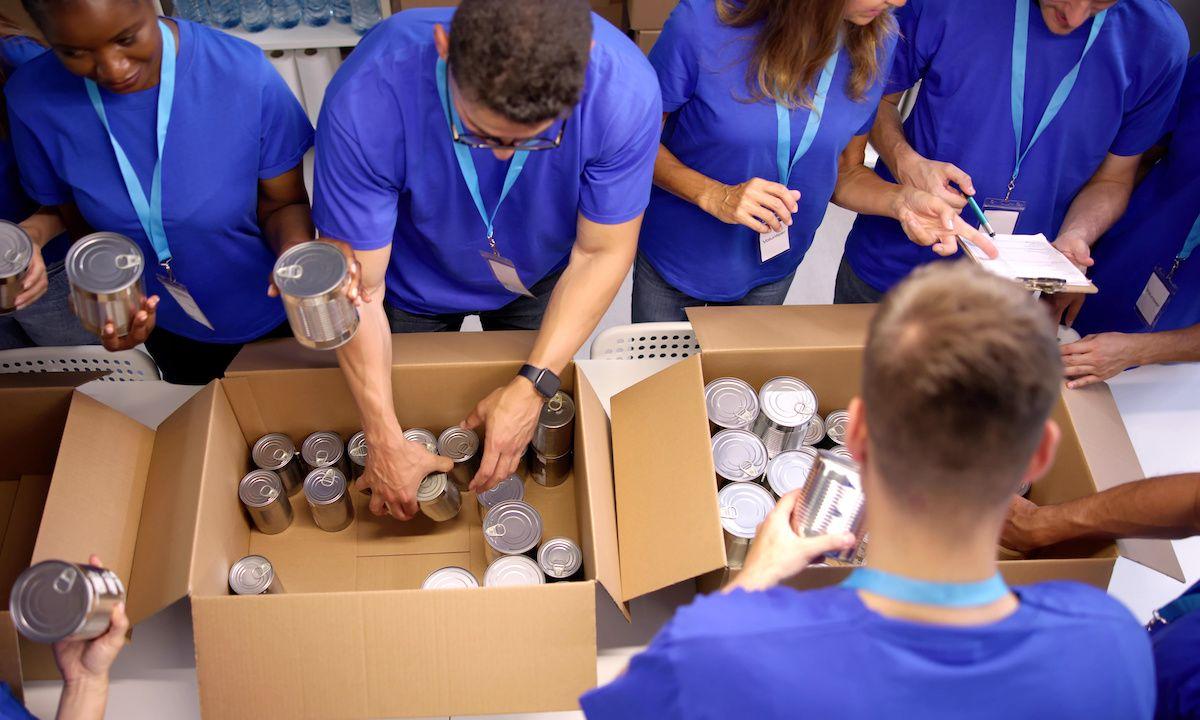
Anthropic has unveiled Claude Corps, a $150 million initiative designed to embed AI fellows inside nonprofits across the United States
1
. The AI fellowship program will hire 1,000 fellows and pay them $85,000 plus benefits and a token budget for one year to help nonprofit organizations integrate the Claude AI model into their operations2
. Applications opened Wednesday and close on July 17, with no college degree required—applicants need only be 18 or older with US work authorization and no more than two years of full-time work experience3
.Anthropic President Daniela Amodei told The Associated Press the company hopes the program will expand and become a pillar of its strategy to help humankind realize the benefits of AI while managing its risks
2
. The initiative will provide at least 400 host organizations with a $10,000 grant and free credits to use Claude, addressing a real gap in AI adoption for nonprofits that lack the staff, budget, and technical knowledge to implement AI tools effectively3
.
Source: Fortune
To implement Claude Corps, Anthropic partnered with CodePath, the San Francisco-based nonprofit that helps first-generation and low-income students enter the tech workforce
4
. CodePath will serve as the employer of record for fellows and manage recruitment and training3
. The 12-month fellowships begin with intensive training on using Claude in nonprofit settings, supplemented by five hours of additional training each week1
.Fellows will spend their remaining time coaching their respective nonprofits on AI workflows, with support from a CodePath mentor and office hours from Anthropic
1
. The first cohort of 100 fellows starts in October 2026, with subsequent cohorts beginning in January and August 20273
. Host organizations include Braven, which provides job preparation for low-income students, Code the Dream for coding education, and Heartland Forward focused on economic growth for middle America1
.The program debuts as CEO Dario Amodei ponders policy interventions to counter job displacement, even as the tech sector averaged 935 layoffs per day in 2026, up from 674 per day in 2025
1
. Anthropic announced the initiative alongside its policy framework titled "Policy on the AI Exponential," which addresses AI's impact on work and calls for company-endorsed AI regulation1
.Philanthropy is built into how Anthropic's co-founders believe the company should operate, according to Daniela Amodei
2
. The company was established as a public benefit corporation, a designation that allows for-profit companies to balance financial goals and social impact5
. Amodei and her brother Dario, along with the company's five other co-founders, have pledged to donate 80% of their wealth4
.
Source: PYMNTS
Related Stories
The dual purpose of Claude Corps has drawn scrutiny from observers who question whether this represents genuine philanthropy or a distribution strategy. Bella DeVaan, director of the Charity Reform Initiative at the Institute of Policy Studies, expressed skepticism: "The fox can't guard the henhouse," she said, arguing that AI companies can't be responsible for their own regulation or definition of their altruistic mandate
4
. DeVaan worries that without government intervention, AI will create a permanent underclass of workers and calls for more stringent AI regulation5
.For a company valued at $965 billion and preparing for an IPO, the $150 million investment represents less than 0.02% of its valuation
3
. Critics note that fellows are trained specifically on Claude, and the organizations they serve will build workflows around Anthropic's ecosystem, potentially creating long-term dependency3
. Separately, Anthropic announced it will donate $200 million to support an economic framework to help workers displaced by AI, starting with investment into studying the issues created by AI adoption for nonprofits4
.The timing is deliberate as Anthropic positions itself as the responsible AI company while moving toward going public on Wall Street, having submitted a confidential filing for an IPO earlier this month
4
. Daniela Amodei acknowledged that Anthropic is an "unusual" company because its business teams and research teams run separately, allowing researchers to openly discuss when "AI is doing bad things"5
.Whether 1,000 AI coaches can make meaningful impact across 400 organizations depends on whether the program outlasts its PR value, observers note
3
. Claude Corps will be evaluated after its first year to determine if it should continue and expand2
. "We can't understand what the societal disruption might look like if we don't study it, publish it and talk about it," Amodei said4
. The program represents Anthropic's first concrete attempt to deliver on its promise that AI's benefits should be broadly shared, even as questions persist about whether this addresses the scale of economic disruptions AI may create.Summarized by
Navi
[1]
[3]
02 Dec 2025•Technology

07 Mar 2026•Technology

13 Feb 2026•Technology

1
Policy and Regulation

2
Technology

3
Health