Anthropic Claude enters healthcare with HIPAA tools, but AI accuracy questions linger


20 Sources
[1]
ChatGPT's AI Health-Care Push Has a Fatal Flaw
Anthropic's chatbot Claude has shown high accuracy in certain medical tasks, but the company couldn't provide complete answers on its accuracy rate for making diagnoses, highlighting the need for more transparency in the industry. OpenAI and Anthropic have both announced big plans to enter
[2]
Claude joins the ward as Anthropic eyes US healthcare data
AI firm promises HIPAA-compliant integrations as chatbot moves into hospital admin Fresh from watching rival OpenAI stick its nose into patient records, Anthropic has decided now is the perfect moment to march Claude into US healthcare too, promising to fix medicine with yet more AI, APIs, and
[3]
Anthropic brings Claude to healthcare with HIPAA-ready Enterprise tools
Anthropic is bringing Claude for healthcare, following a similar move by OpenAI for ChatGPT. In a blog post, Anthropic explained that Claude is expanding into Healthcare, and it's testing new connectors specifically tailored for healthcare needs. With AI, healthcare can improve its billing and
[4]
Anthropic Launches Claude AI for Healthcare with Secure Health Record Access
Anthropic has become the latest Artificial intelligence (AI) company to announce a new suite of features that allows users of its Claude platform to better understand their health information. Under an initiative called Claude for Healthcare, the company said U.S. subscribers of Claude Pro and Max
[5]
Anthropic Adds Features for Doctors, Patients in Health Care Push
Anthropic's medical responses are grounded with citations from respected publications, and the company said it will not train its models on health care user data. Anthropic is making it easier for patients and clinicians to use its artificial intelligence chatbot to access medical information,
[6]

Anthropic brings Claude into healthcare -- skip the ChatGPT Health waitlist
Claude is moving into healthcare -- here's what Anthropic's new AI tools can do Anthropic, the AI lab behind the Claude family of LLMs (large language models), is making a major push into the healthcare space with a new set of tools designed to help patients and clinicians work with medical data
[7]

Claude just joined your healthcare team -- and might be ready to help your doctor help you
Healthcare professionals can use Claude to speed up tasks like prior authorizations and claims appeals Anthropic's Claude AI chatbot is scrubbing into your medical care. The company has debuted a new initiative called Claude for Healthcare, and is inviting U.S. users to let their digital assistant
[8]

Anthropic's Claude will soon help you make sense of your Apple Watch health data
The AI assistant will analyze your wearable metrics and offer clearer health insights. Anthropic just stepped into the healthcare AI space with the launch of Claude for Healthcare, a new suite of tools designed for providers, payers, and patients. Following in the footsteps of OpenAI's ChatGPT
[9]

Anthropic rolls out new healthcare and life science features for Claude | Fortune
AI lab Anthropic is making a major push into healthcare with the launch of Claude for Healthcare and an expansion of its life sciences offerings. The announcement, timed to coincide with the start of the JPMorgan Healthcare Conference in San Francisco this week, comes just days after OpenAI
[10]

AI is uncannily good at diagnosis. Its makers just won't say so.
Sign up here to explore the big, complicated problems the world faces and the most efficient ways to solve them. Sent twice a week. In the past week, two of the biggest AI companies went all-in on that reality. OpenAI launched ChatGPT Health, a dedicated space within its larger chat interface
[11]

Anthropic joins OpenAI's push into health care with new Claude tools
The Anthropic app on a smartphone.Gabby Jones / Bloomberg via Getty Images Anthropic announced a new suite of health care and life sciences features Sunday, enabling users of its Claude artificial intelligence platform to share access to their health records to better understand their medical
[12]

The Billion Dollar Battle to Become Your AI Doctor | AIM
OpenAI and Anthropic are pushing AI into healthcare workflows, reviving old privacy fears while reframing the race around trust, accuracy and clinical responsibility. The competition in healthcare AI is heating up. Just days after OpenAI launched ChatGPT Health, Anthropic has rolled out Claude for
[13]

After OpenAI, Anthropic launches Claude for Healthcare
Claude for Healthcare provides 'HIPAA-ready' tools for consumers, as well as healthcare providers. In a strong push into the healthcare sector, enterprise AI giant Anthropic has launched a dedicated set of tools under Claude for medical queries, mimicking rival OpenAI's ChatGPT Health that
[14]

Anthropic pushes into healthcare to help patients understand their medical records - SiliconANGLE
Anthropic pushes into healthcare to help patients understand their medical records Artificial intelligence developer Anthropic PBC debuted new healthcare and life sciences capabilities in its flagship chatbot Claude on Sunday, saying users can now share their medical records with the service to
[15]

No waitlist: Claude Health arrives for U.S. Pro and Max users
Anthropic announced a suite of health-care and life-sciences features for its Claude AI platform on Sunday, allowing U.S. Pro and Max subscribers to share health records and fitness-app data, including from Apple's iOS Health app, to personalize health conversations. This launch follows OpenAI's
[16]

What Doctors Really Think of ChatGPT Health and A.I. Medical Advice
ChatGPT Health and similar tools promise access, but doctors worry about misinformation and how A.I. companies handle sensitive health data. Each week, more than 230 million people globally ask ChatGPT questions about health and wellness, according to OpenAI. Seeing a vast, untapped demand, OpenAI
[17]

Anthropic, OpenAI's healthcare push fans the flames of privacy unrest - The Economic Times
Anthropic has announced "Claude for Healthcare and Life Sciences" for payers, providers and pharma companies via cloud and enterprise integrations. Meanwhile, OpenAI has launched 'ChatGPT Health', a set of tools that can input medical records and patient histories and generate summaries, answers
[18]

OpenAI and Anthropic Take Divergent Paths Into Healthcare | PYMNTS.com
As OpenAI and Anthropic formalize their healthcare and life sciences divisions, they are doing more than just selling software; they are auditioning to become the foundational "operating system" for a multitrillion-dollar industry. While their goals are identical -- capturing clinical workflows and
[19]

Anthropic Launches Claude for Healthcare post OpenAI's ChatGPT Health
Unlike ChatGPT which focuses on answering health queries, Anthropic's product aims on automating non-medical part of healthcare One may question OpenAI around several aspects of its existence and journey but there's one aspect that generates consensus among its proponents and opponents. The sense
[20]

Anthropic follows OpenAI in rolling out healthcare AI tools By Investing.com
Investing.com-- Anthropic said on Sunday it is launching a new range of healthcare tools under its Claude chatbot, just days after rival OpenAI announced a similar move. Anthropic said its tools were compliant with the Health Insurance Portability and Accountability Act, and could be used by
Share
Copy Link
Anthropic launched Claude for Healthcare with HIPAA-compliant integrations for patient records and medical coding. While the company touts 99.8% accuracy for ICD-10 codes, it couldn't provide complete data on diagnostic accuracy. The move follows OpenAI's ChatGPT Health announcement, intensifying competition in the lucrative healthcare AI market despite ongoing concerns about AI hallucinations and patient data privacy.
Anthropic Claude Pushes Into Healthcare Market
Anthropic has launched Claude for Healthcare, marking its formal entry into the $4 trillion American healthcare sector just days after rival OpenAI unveiled ChatGPT Health
1
5
. The San Francisco-based company, currently in funding talks at a $350 billion valuation, announced HIPAA compliance and new integrations designed to connect its AI chatbot to industry-standard systems and databases2
. U.S. subscribers of Claude Pro and Max plans can now opt to give Claude secure health record access by connecting to HealthEx, Function, Apple Health, and Android Health Connect4
. The timing underscores Silicon Valley's intensifying race to capture ground in AI in healthcare, where companies see opportunities to prove artificial intelligence's broad benefits while bolstering sales.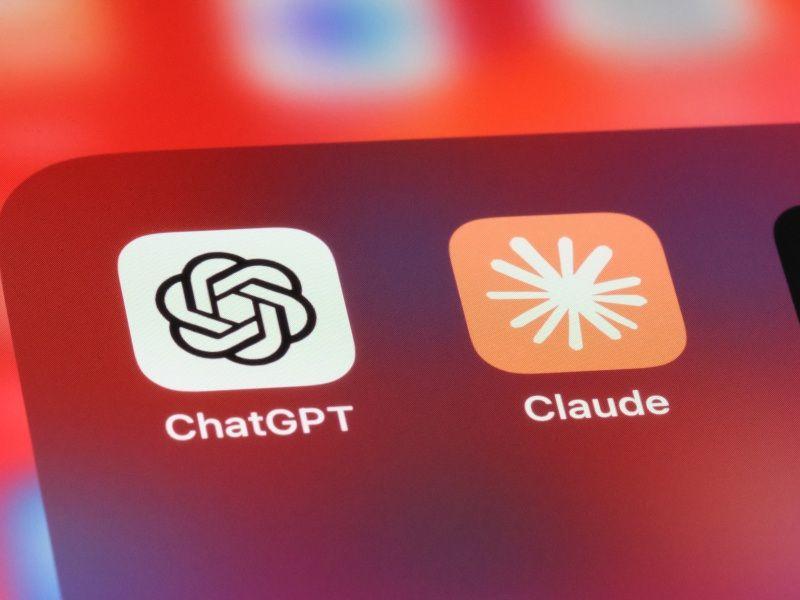
Source: Silicon Republic
HIPAA-Compliant Tools Target Administrative Burden
Claude for Healthcare connects to the CMS Coverage Database to check Medicare coverage rules, supports prior authorization, and handles medical coding tasks
3
. The system can look up ICD-10 codes to correct medical coding, reduce billing and claim errors, and improve claims processing3
.
Source: Hacker News
On the life sciences side, Anthropic added integrations with Medidata and ClinicalTrials.gov to assist with clinical trial planning and regulatory work
2
. Mike Krieger, Anthropic's chief product officer and Instagram co-founder, emphasized the goal of "empowering people to have more knowledge, both from their data, but also in conversation with their providers"5
. Banner Health, one of the largest nonprofit health systems in the U.S., now has more than 22,000 clinical providers using Claude, with 85% reporting faster work with higher accuracy5
.AI Accuracy in Healthcare Remains Unclear
While Anthropic showcased impressive numbers for specific tasks, critical questions about AI accuracy in healthcare remain unanswered. When asked about ICD-10 codes, the consumer version of Claude is correct 75% of the time, but the doctors' version trained on those codes achieves 99.8% accuracy, according to Krieger
1
. However, when pressed about diagnostic accuracy rates, Anthropic couldn't provide complete answers. The company cited its Claude Opus 4.5 model achieving 92.3% accuracy on MedCalc for medical calculations and 61.3% on MedAgentBench for clinical tasks in simulated electronic health records—a worryingly low score that doesn't indicate reliability with clinical recommendations1
. OpenAI similarly declined to provide hard numbers on hallucination rates when giving medical advice, though a spokeswoman noted models had become more reliable in health scenarios1
. According to data compiled by Scale, recently purchased by Meta Platforms Inc., Anthropic's models are more honest and likely to admit uncertainty than those made by OpenAI or Google, reducing the risk of AI hallucinations1
.
Source: Digital Trends
Related Stories

Patient Data Privacy Takes Center Stage
Both Anthropic and OpenAI have emphasized that patient data privacy protections are built into their healthcare offerings. Anthropic states it will not use healthcare data for model training, with data sharing remaining opt-in and connectors maintaining HIPAA compliance
2
5
. Users can explicitly choose what information to share with Claude and disconnect or edit permissions at any time4
. Anthropic's medical responses are grounded with citations from respected publications such as PubMed and the NPI Registry, ensuring clinicians can verify results5
. The careful positioning around data privacy concerns reflects lessons learned from Google Health's failure between 2008 and 2011, when public mistrust over uploading patient records to a company known for collecting personal information for ads contributed to the initiative's shutdown1
.Transparency Gap Threatens Trust
The lack of transparency about reliability metrics poses risks for both companies as they push deeper into healthcare. AI companies have long remained silent about how often their chatbots make mistakes, partly because doing so would highlight how difficult the problem has been to solve
1
. Instead, they provide benchmark data showing performance on medical licensing exams, which doesn't translate directly to real-world diagnostic accuracy. Both OpenAI and Anthropic emphasize their AI offerings can make mistakes and are not substitutes for professional healthcare advice . In its Acceptable Use Policy, Anthropic notes that qualified professionals must review generated outputs "prior to dissemination or finalization" in high-risk use cases related to healthcare decisions, medical diagnosis, or patient care4
. As more than 230 million people already ask ChatGPT for health-related advice every week1
, the stakes for accuracy and transparency continue to climb. Building trust with clinical professionals and the public will require more complete disclosure about diagnostic reliability and error rates, particularly as these AI systems move from administrative tasks into clinical decision support.References
Summarized by

Navi
[1]
[2]
[3]
Related Stories
ChatGPT Health rolls out to all US adults, reading medical records amid lawsuit controversy
24 Jul 2026•Technology
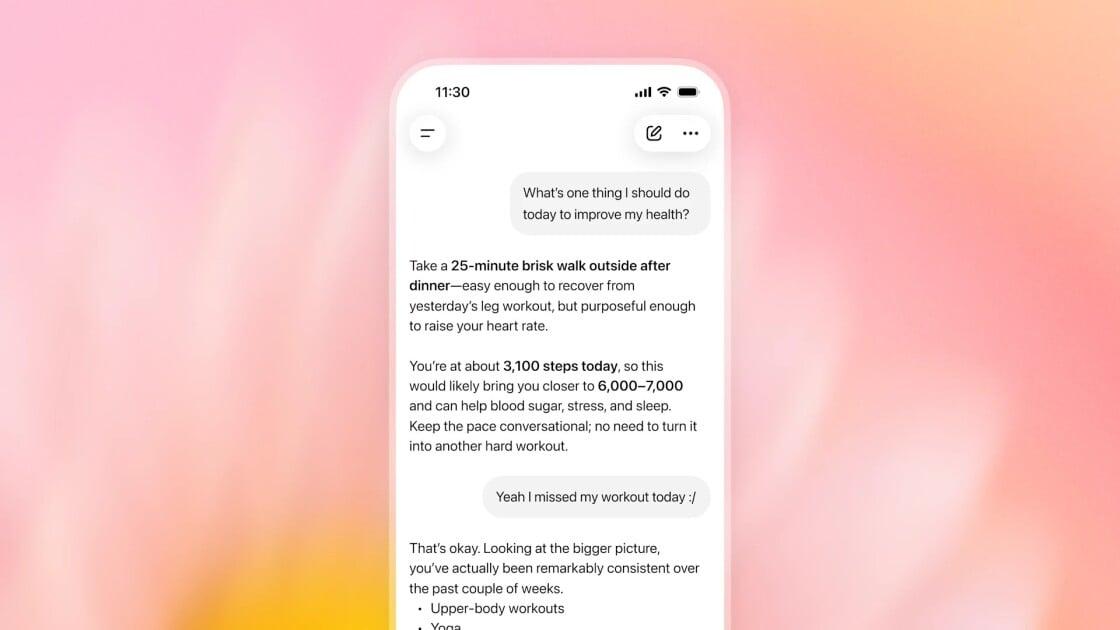
OpenAI launches ChatGPT Health to connect medical records to AI amid accuracy concerns
05 Jan 2026•Technology

ChatGPT Health fails to recognize half of medical emergencies in first independent safety test
24 Feb 2026•Health

Recent Highlights
1
Microsoft and Nvidia Launch Surface Laptop Ultra: A $2,599 AI-Ready PC With RTX Spark Chip
Technology

2
Meta Muse AI Agent Surges to 6.6M Downloads Despite Privacy and Security Controversies
Technology
3
Scientists Build AI Model That Reconstructs Images From Brain Scans in Record Time
Science and Research

Recent Highlights
Today's Top Stories






Don’t drown in AI news. We cut through the noise - filtering, ranking and summarizing the most important AI news, breakthroughs and research daily. Follow topics that matter to you and stay ahead.


